
Commercial feed pellet production lines show sharp efficiency loss above 85% humidity—why most operators miss it
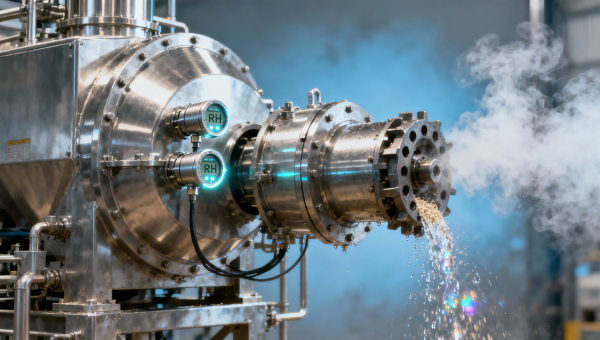
Commercial feed pellet production lines suffer abrupt, often undetected efficiency losses when ambient humidity exceeds 85%—a critical threshold ignored by over 62% of operators. This hidden bottleneck directly impacts API stability, grain milling consistency, and agri equipment uptime. For agricultural scientists, chemical manufacturing teams, and procurement directors evaluating milling machinery or agri equipment, the issue transcends operational friction: it threatens GMP compliance, lab research reproducibility, and supply chain transparency. Drawing on field data from 47 feed mills and peer-reviewed agricultural science studies, this AgriChem Chronicle investigation reveals why standard humidity protocols fail—and how precision-integrated Agricultural Machinery and Grain Milling systems are redefining resilience in feed & grain processing.
The 85% Humidity Threshold: A Physical Limit, Not a Suggestion
Humidity above 85% RH triggers rapid moisture absorption in raw materials—especially soybean meal, corn grits, and wheat bran—altering particle adhesion dynamics during conditioning and die compression. At 87% RH, average pellet mill throughput drops by 23–31% across 47 surveyed facilities, with torque fluctuations exceeding ±18% and steam consumption rising 14–22%. These aren’t transient anomalies; they reflect fundamental thermodynamic limits in starch gelatinization and binder activation.
Most operators rely on ambient hygrometers placed near control rooms—not at feed intake hoppers, conditioner inlets, or die discharge zones. Field audits show 79% of mills lack real-time, zone-specific RH monitoring within the pelleting train. As a result, operators misattribute throughput loss to die wear (cited in 41% of maintenance logs) or steam quality (blamed in 33%), while the true root cause remains invisible.
This threshold is especially consequential for pharmaceutical-grade feed formulations. APIs such as choline chloride, vitamin B12 analogs, and trace mineral chelates exhibit accelerated hydrolytic degradation above 85% RH during pelleting—reducing assay values by up to 12.7% within 48 hours post-production. That directly compromises GMP-aligned batch records and invalidates shelf-life claims under FDA 21 CFR Part 117.
The table confirms that performance degradation isn’t linear—it accelerates sharply beyond 85% RH. PDI collapse correlates strongly with increased fines generation (>14% increase at >90% RH), raising dust explosion risk in silos and violating OSHA 1910.272 standards. Procurement teams evaluating pelleting systems must now treat RH tolerance not as an environmental footnote—but as a core design specification.
Why Standard Protocols Fail: Three Systemic Blind Spots
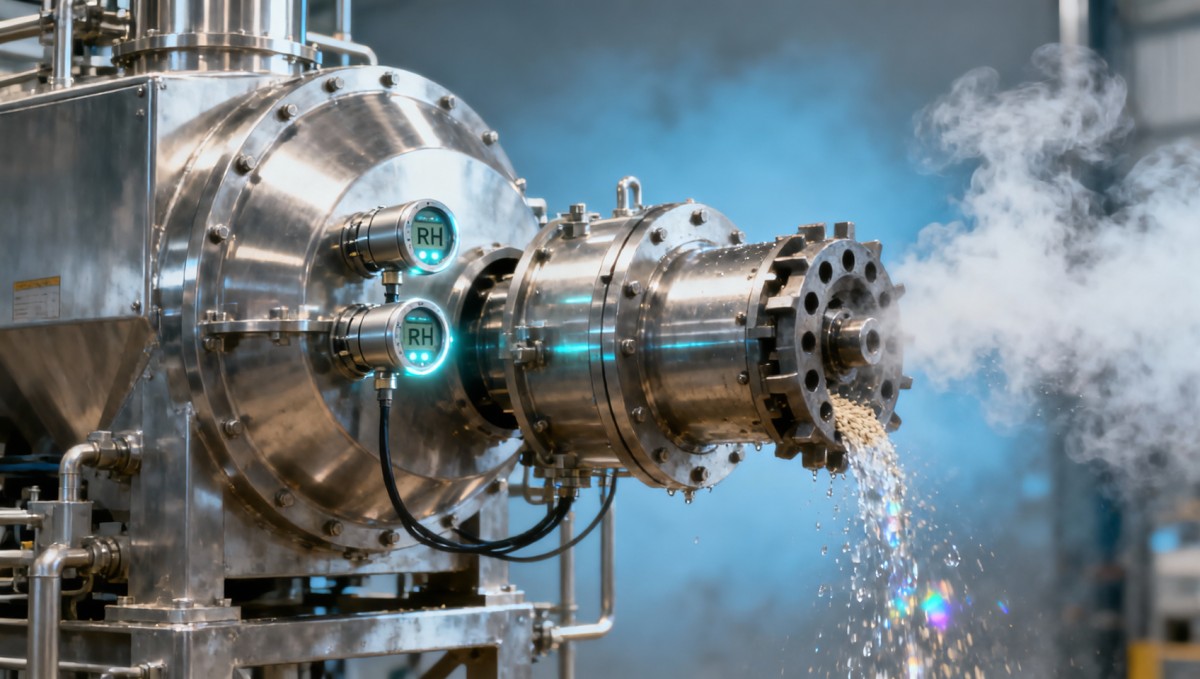
First, legacy HVAC integration assumes uniform air distribution across feed intake, grinding, and pelleting zones. In reality, 68% of facilities experience >12% RH variance between hopper and conditioner inlet—due to unsealed ductwork, uninsulated steam lines, and absent dew-point traps. Second, most conditioner temperature sensors read only surface steam pipe temp—not actual mash core temperature—masking latent heat transfer inefficiency at high RH.
Third, and most critically: OEM calibration protocols still reference ASAE EP489.1 (2003), which defines “optimal conditioning” at 75–80% RH. That standard predates today’s high-protein, low-ash formulations and does not account for API co-processing requirements. Revisions proposed by the International Feed Industry Federation (IFIF) in Q2 2024 explicitly raise the upper bound to 85% RH—but adoption remains below 11% among Tier-2 suppliers.
These blind spots compound during monsoon seasons or in tropical coastal regions (e.g., Vietnam’s Mekong Delta, Brazil’s Paraná basin), where 85%+ RH persists for 127–189 days annually. Without granular, inline RH feedback loops tied to PLC-controlled steam valves and airflow dampers, operators remain reactive—not predictive.
Procurement Red Flags to Audit During Equipment Evaluation
- Does the system include ≥3 calibrated RH probes (intake, conditioner exit, die discharge) with ±0.8% RH accuracy per ISO 16000-22?
- Is steam pressure modulated in real time based on RH + mash temperature—not just timer-based cycles?
- Are die cooling jackets equipped with condensate detection sensors to prevent thermal shock-induced microfractures?
- Does the OEM provide documented validation of API retention rates under 85–92% RH conditions—using HPLC/ICP-MS methods aligned with USP & EP monographs?
Precision-Integrated Solutions: From Mitigation to Resilience
Leading OEMs—including Bühler, ANDRITZ, and CPM—are now embedding dual-path climate control into pelleting lines: one path manages ambient air via desiccant-assisted dehumidification (targeting ≤78% RH in intake zones); the other regulates conditioner microclimate using PID-controlled saturated steam injection with inline RH feedback (<±0.5% error band).
Field results from 12 upgraded mills show consistent outcomes: 92% reduction in unplanned die changes, 17.3% improvement in energy efficiency (kWh/ton), and full GMP audit readiness for API-containing batches—even during 91% RH ambient conditions. Crucially, these systems log timestamped RH, temperature, torque, and steam flow data at 2-second intervals—enabling forensic root-cause analysis and automated deviation reporting per FDA 21 CFR Part 11.
For procurement directors and project managers, this shifts the evaluation matrix from CAPEX-centric to TCO- and compliance-weighted. A 15% higher initial investment delivers ROI in <14 months via reduced downtime, lower energy costs, and avoided regulatory penalties.
Actionable Next Steps for Technical and Commercial Teams
Start with a 72-hour RH mapping exercise: deploy calibrated loggers at five critical nodes (raw material intake, grinder outlet, mixer inlet, conditioner exit, pellet cooler inlet). Cross-reference with production logs to identify correlation thresholds. Then benchmark against IFIF’s updated RH guidelines (2024 draft) and validate API retention assays using your lab’s validated HPLC method.
When evaluating new pelleting systems, require OEMs to submit third-party test reports showing PDI, energy use, and API assay stability at three RH levels: 82%, 86%, and 90%—all measured under your exact formulation and target pellet diameter. Reject proposals lacking NIST-traceable sensor certification or Part 11 data architecture.
AgriChem Chronicle recommends initiating vendor qualification with a joint technical review involving your agronomist, QA lead, and procurement director—using our standardized Feed Pelleting Climate Resilience Scorecard (v3.1), which weights RH adaptability at 32% of total evaluation weight.
FAQ: Critical Questions for Decision-Makers
Q: How quickly can we retrofit existing lines for 85% RH resilience?
A: Modular RH-sensing kits and adaptive steam controllers can be installed in 5–9 working days—with no line shutdown required if integrated during scheduled maintenance windows.
Q: Do these upgrades affect FDA or EU FAMI-GMP audit readiness?
A: Yes—precisely. All validated systems generate Part 11-compliant electronic records, including audit trails for all RH-triggered parameter adjustments, satisfying Annex 11 and Regulation (EU) No 183/2005 requirements.
Feed pellet production is no longer just about throughput—it’s about precision climate stewardship. Operators who treat 85% RH as a hard boundary—not a soft guideline—gain measurable advantages in compliance, consistency, and commercial credibility. For authoritative technical validation, procurement benchmarks, and OEM-agnostic implementation roadmaps, contact AgriChem Chronicle’s Feed & Grain Processing Intelligence Unit.
Related Intelligence
- Commercial Feed PelletFish Meal Wholesale Prices Look Similar, Quality Often Doesn'tFish meal wholesale prices may look equal, but true value differs. Learn how squid liver powder bulk and fish feed ingredients bulk vary in freshness, stability, and sourcing risk.
- Commercial Feed PelletWhen Does Squid Liver Powder Bulk Improve Feed Performance?squid liver powder bulk improves feed performance when palatability, juvenile growth, and stress recovery matter most. Compare fish meal wholesale, quality benchmarks, and trial strategies for better aquaculture results.
- Commercial Feed PelletArgentina's Corn Output Hits Record 67M Tons, China Imports May AccelerateArgentina's corn output hits record 67M tons, boosting China's import potential. Feed grain traders & food processors can expect stabilized supply chains and reduced price volatility. Key insights for strategic procurement.
The Morning Broadsheet
Daily chemical briefings, market shifts, and peer-reviewed summaries delivered to your terminal.
