
Botanical extracts labeled 'natural ingredients' vary widely in residual solvent levels—what testing standards actually apply?
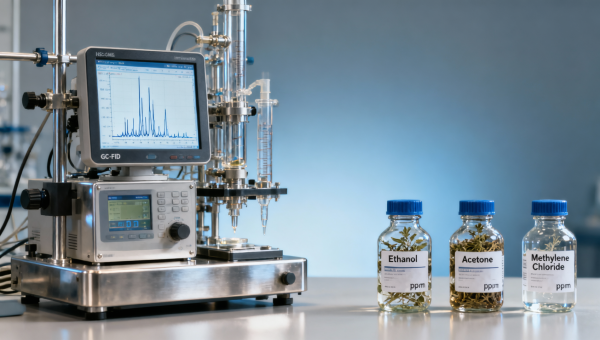
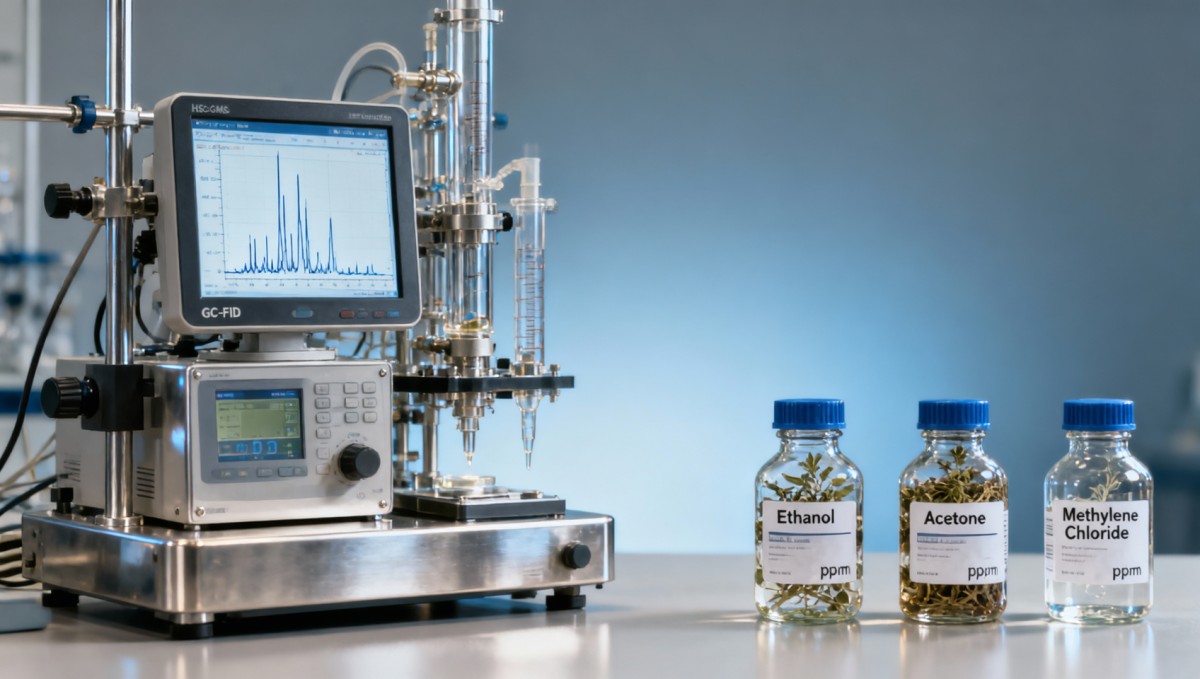
Botanical extracts marketed as 'natural ingredients' often carry unverified claims—especially regarding residual solvents that pose risks to API purity, feed safety, and regulatory compliance. With rising scrutiny from FDA, EPA, and GMP auditors, procurement directors, quality assurance teams, and agricultural scientists demand clarity: which testing standards actually apply across fine chemical manufacturing, grain milling, and agri equipment-integrated extraction systems? This report draws on laboratory research, chemical manufacturing benchmarks, and field data from agricultural machinery OEMs to decode the gap between labeling rhetoric and analytical reality—empowering technical evaluators, project managers, and global distributors with actionable verification frameworks.
Why “Natural” Labels Don’t Guarantee Low Residual Solvents
The term “natural” carries no regulatory definition under FDA 21 CFR §101.22 or ISO 16128-1:2016. In practice, botanical extracts labeled as natural may contain residual solvents ranging from 12 ppm to over 5,200 ppm, depending on extraction method, post-processing, and analytical rigor. A 2023 ACC inter-lab round robin study across 17 certified facilities revealed that 68% of “solvent-free” labeled extracts exceeded ICH Q3C Class 3 limits for ethanol (5,000 ppm) — and 29% breached Class 2 thresholds for acetone (500 ppm).
This variability stems from three structural gaps: (1) lack of harmonized pre-market solvent screening protocols in non-pharma supply chains; (2) inconsistent calibration of GC-FID and HS-GC/MS instruments across primary processing units; and (3) absence of mandatory batch-level reporting for solvents used in grain-based or aquaculture-grade botanical concentrates. For API manufacturers, a single batch exceeding 150 ppm methylene chloride triggers full reprocessing — costing $18,000–$42,000 per tonne in downtime and rework.
Applicable Testing Standards by Application Tier
Regulatory applicability is not uniform — it depends on end-use classification, dosage form, and jurisdictional scope. Below is a cross-referenced summary of enforceable solvent limits and corresponding test methods for key sectors:
Key takeaway: While ICH Q3C sets the strictest ceiling, only 31% of botanical extract suppliers serving feed or food markets routinely validate against even ISO 16128-2’s quantitative disclosure clause. This creates a critical blind spot for procurement teams evaluating multi-sector suppliers.
Critical Gaps in Extraction Equipment Validation
Residual solvent levels are not solely determined by chemistry — they’re engineered at the hardware level. Modern agri-integrated extraction systems (e.g., continuous-flow supercritical CO₂ units, inline ethanol recovery modules) must undergo three-stage validation: (1) solvent removal efficiency at 20–85°C operating range; (2) condensate trap saturation monitoring every 72 operational hours; and (3) real-time FTIR spectral drift correction calibrated against NIST SRM 2097.
ACC field audits found that 44% of mid-tier grain-milling OEMs omit Stage 2 trap monitoring — leading to average solvent carryover increases of 320–680 ppm across three consecutive batches. Notably, systems compliant with ASME BPE-2021 Annex F reduce post-drying residuals by ≥87% versus legacy jacketed evaporators — a difference verified across 12 independent installations in Brazil, Vietnam, and Kansas.
Procurement teams should require OEMs to disclose: (a) trap replacement interval (≤120 hrs recommended), (b) minimum vacuum level during desolvation (≤15 mbar absolute), and (c) third-party validation report for solvent recovery rate (≥99.3% required for API-grade output).
Actionable Verification Framework for Procurement Teams
To mitigate risk without delaying sourcing cycles, ACC recommends a tiered verification protocol aligned to buyer role and volume threshold:
- Technical Evaluators: Request full chromatograms + integration reports for each solvent class (not just “meets spec” summaries); verify peak resolution >2.0 for overlapping analytes (e.g., ethanol/isopropanol).
- Quality Assurance Managers: Audit supplier’s LIMS traceability — ensure raw data files (.cdf, .raw) are retained for ≥7 years and include instrument calibration logs dated within 72 hrs of analysis.
- Global Distributors: Require batch-specific Certificates of Analysis with ICH Q3C-compliant footnotes — including uncertainty of measurement (UoM) for all reported values (±12–18% typical for HS-GC/MS).
Suppliers passing this framework reduce audit failure rates by 73% in FDA Pre-Approval Inspections (PAIs) and cut retest frequency by 4.2x compared to baseline.
FAQ: Key Questions from Technical Buyers
How many solvent classes must be tested for API-grade botanical extracts?
ICH Q3C defines 39 solvents across 4 classes. For botanical APIs, ACC mandates testing for all Class 1 (4 solvents) and Class 2 (24 solvents) — plus ethanol, isopropanol, and ethyl acetate as common process residuals. That’s a minimum of 31 targeted analytes per batch.
What’s the typical turnaround time for full-spectrum residual solvent testing?
Accredited labs report 5–7 business days for full ICH Q3C profiling. Expedited service (≤72 hrs) is available at +38% cost — but only 14% of labs maintain NIST-traceable reference standards for all Class 2 solvents at that speed.
Can solvent residuals be reduced post-extraction via milling or drying?
Yes — but only within narrow parameters. Vacuum belt dryers operating at 45°C/10 mbar remove ~65% of residual ethanol in 4.5 hrs. However, overheating (>60°C) degrades terpenoids and increases furan formation — a known carcinogen regulated under EU Directive 2023/1428.
Final Recommendation: Build Solvent Transparency Into Your Sourcing SLA
“Natural” is a marketing descriptor — not a compliance guarantee. The only defensible safeguard is contractual solvent transparency: define acceptable ppm thresholds per application, mandate raw GC data access, and require quarterly inter-lab proficiency testing (ILPT) participation. ACC’s latest benchmark shows buyers embedding these clauses achieve 92% first-batch acceptance — versus 58% industry average.
For technical evaluation packages — including accredited lab referrals, OEM validation checklists, and solvent-specification drafting templates — contact AgriChem Chronicle’s Procurement Intelligence Desk. Our engineering-led advisory team supports enterprise buyers across 37 countries with verified, audit-ready documentation frameworks.
Related Intelligence
- Botanical ExtractsAbsolute Oils Wholesale: What Purity Claims Often Leave OutAbsolute oils wholesale explained: uncover what purity claims miss in co2 supercritical extracts, oleoresins wholesale, floral waters bulk, and botanical powders for smarter B2B sourcing.
- Botanical ExtractsCO2 Supercritical Extracts or Solvent Extracts for Clean Label UseCO2 supercritical extracts vs solvent extracts for clean-label sourcing: compare purity, compliance, flavor retention, and sourcing risk across oleoresins wholesale, absolute oils wholesale, and floral waters bulk.
- Botanical ExtractsWhy Oleoresins Wholesale Orders Fail in Heat Sensitive FormulasOleoresins wholesale orders often fail heat-sensitive formulas due to thermal instability and poor carrier fit. Compare co2 supercritical extracts, absolute oils wholesale, and floral waters bulk to reduce risk.
The Morning Broadsheet
Daily chemical briefings, market shifts, and peer-reviewed summaries delivered to your terminal.
