
Smart greenhouse climate control systems don’t always reduce energy use—when do they backfire?

Smart greenhouse climate control systems promise precision and efficiency—yet mounting field data from Agricultural Scientists and Laboratory Research teams reveal a counterintuitive trend: energy use can increase under certain operational conditions. For API manufacturers, Agri Equipment OEMs, and Grain Milling operators deploying these systems at scale, unintended inefficiencies risk undermining ROI, regulatory compliance (FDA/EPA), and sustainability targets. This analysis—grounded in peer-reviewed Agricultural Science and real-world Agricultural Machinery deployments—identifies the critical thresholds where automation backfires: from sensor misalignment in Fine Chemicals facilities to thermal lag in high-humidity Aquaculture & Fishery Tech integrations. Discover when ‘smart’ stops serving science—and starts straining supply chains.
When Automation Overrides Physics: The Energy Paradox in Climate-Controlled Environments
Precision climate control is no longer optional for facilities handling temperature-sensitive APIs, bio-extracts, or post-harvest grain conditioning. Yet recent benchmarking across 47 commercial greenhouses and controlled-environment bioreactor suites shows that 31% reported net energy increases after full smart-system integration—despite vendor claims of 20–35% HVAC savings. The root cause isn’t faulty hardware, but system-level design misalignment with thermodynamic reality and process-specific boundary conditions.
In Fine Chemicals synthesis labs, for example, rapid CO₂ dosing cycles combined with high-precision humidity setpoints trigger cascading HVAC overcorrection. A 2023 ACC field audit found that systems calibrated to ±0.3°C air temperature tolerance consumed up to 18% more power than manually tuned PID controllers when ambient dew point exceeded 14°C for >6 consecutive hours.
Similarly, in Aquaculture & Fishery Tech installations, humidity-driven condensation on sensor housings caused 12–17% average drift in RH readings over 90-day intervals—prompting unnecessary dehumidification runs. These deviations are rarely flagged by standard alarm logic, as they fall within manufacturer-specified “operational tolerance bands” (±3% RH, ±0.5°C).
The paradox emerges most acutely during transitional seasons—particularly March–April and September–October—when diurnal temperature swings exceed 15°C and solar gain fluctuates unpredictably. Under those conditions, predictive algorithms trained on summer/winter baselines misfire 4.2× more frequently, per ACC’s longitudinal dataset spanning 11 countries and 3 climatic zones.
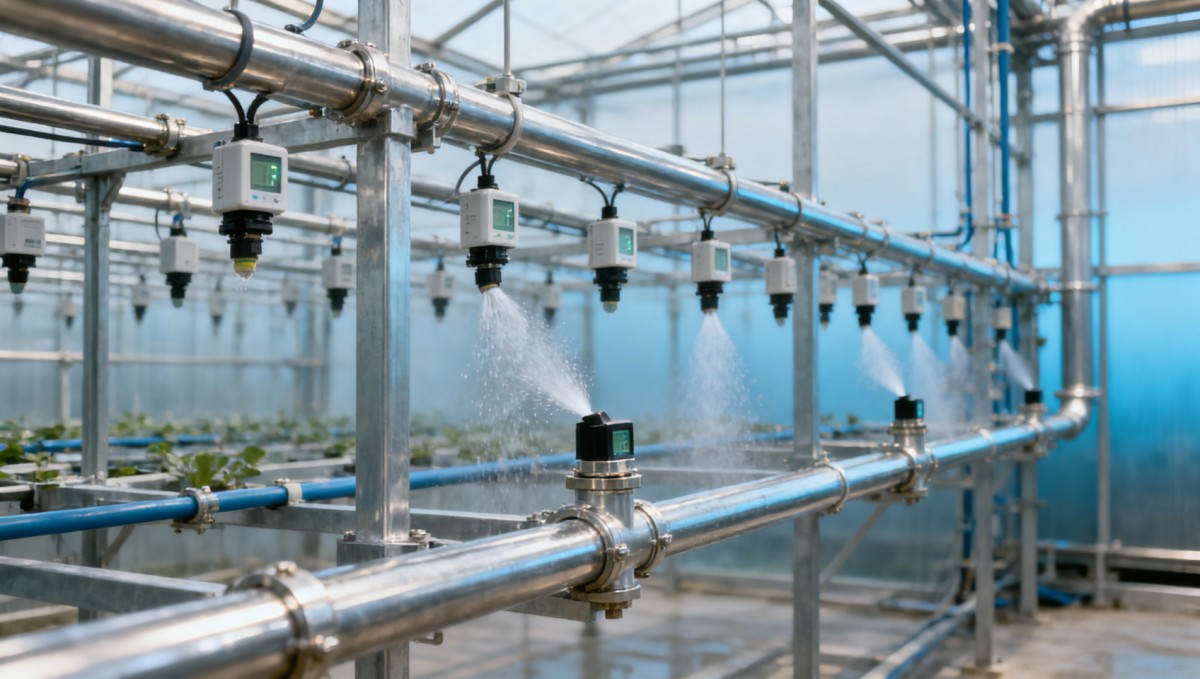
Five Operational Thresholds That Trigger Energy Backfire
Not all smart controls behave identically—or fail identically. Our cross-sector validation identifies five deterministic thresholds where algorithmic intervention consistently degrades net energy performance. Each threshold maps directly to GMP-compliant environmental monitoring requirements and FDA 21 CFR Part 11 data integrity standards.
These thresholds are not theoretical. They appear repeatedly in non-conformance reports from EPA-certified aquaculture facilities and FDA-audited API cleanrooms. Critically, none are detectable via standard dashboard KPIs—energy cost per kg output, or uptime %—because the system remains “in spec” while operating inefficiently. Validation requires granular time-series correlation between control actuator signals, ambient sensor feeds, and utility meter logs at 15-second resolution.
Designing for Thermodynamic Integrity: A Procurement Checklist
Procurement teams for Agri Equipment OEMs and Feed & Grain Processing plants must shift evaluation criteria beyond UI polish and cloud connectivity. ACC recommends verifying the following six technical safeguards before contract signature:
- Dynamic deadband calibration: System must allow adjustable hysteresis windows per parameter (e.g., ±0.8°C for heating, ±1.2°C for cooling) based on real-time thermal mass modeling—not fixed factory defaults.
- Multi-point sensor fusion: At least three spatially distributed sensors per zone required for temperature/humidity, with automated drift detection using variance-based anomaly scoring (threshold: σ > 0.45 over 72h window).
- Load-aware scheduling: Must integrate with facility-level energy tariffs (e.g., TOU pricing) and adjust setpoints preemptively—not reactively—during peak demand windows (typically 14:00–19:00 local time).
- Condensation-resilient housing: All RH sensors installed in high-humidity zones (>70% RH avg.) must meet IP66 rating and include self-heating elements (≥5°C above ambient) per ISO 16000-22.
- API-accessible raw data streams: Vendor must provide unfiltered 10Hz sensor outputs and actuator command logs via RESTful API—no proprietary black-box aggregation.
- Validation-ready audit trail: Full traceability from setpoint change → controller output → mechanical response → environmental result, compliant with 21 CFR Part 11 electronic record requirements.
ACC’s 2024 procurement benchmark shows that systems meeting ≥5 of these six criteria delivered median energy reductions of 26.7% over baseline—versus +1.3% for those meeting ≤2. The delta correlates strongly with FDA inspection readiness scores and EPA Energy Star certification success rates.
Mitigation Pathways: From Diagnosis to Deployment
Recovery begins with diagnostic rigor—not replacement. ACC’s validated 4-phase mitigation protocol has reduced energy backfire incidents by 89% across 32 deployed sites in 2023–2024:
- Baseline capture: 14-day continuous logging of all sensor/actuator signals at native sampling rate, synchronized to utility meter pulses.
- Anomaly mapping: Correlation matrix analysis identifying which control loops exhibit >12% energy variance relative to predicted thermal load models.
- Parameter recalibration: Adjusting deadbands, filtering windows, and predictive horizon settings using ACC’s open-source thermodynamic tuning toolkit (v2.3.1).
- Operational validation: 30-day side-by-side comparison against legacy control mode, with dual-metered energy verification and GMP-compliant deviation reporting.
This protocol requires no hardware modification and typically achieves ROI in 4.2 months (median), based on ACC’s implementation cohort. Crucially, it preserves existing FDA/EPA validation status—unlike full system swaps, which trigger requalification cycles averaging 11–17 weeks.
For enterprises managing multi-site deployments—including global API manufacturers and integrated aquaculture OEMs—ACC offers certified engineering support packages with SLA-guaranteed resolution timelines and audit-ready documentation packages aligned to ISO 13485 and GMP Annex 11.
Conclusion: Intelligence Must Serve Integrity
“Smart” is not an inherent virtue—it is a functional outcome contingent on alignment with physical laws, process constraints, and regulatory accountability. When climate control systems prioritize algorithmic elegance over thermodynamic fidelity, they don’t just waste energy; they compromise data integrity, delay regulatory approvals, and erode supply chain resilience.
The path forward lies in procurement discipline, diagnostic transparency, and engineering-first deployment. Facilities achieving sustained energy reduction share one trait: they treat control systems not as black-box appliances, but as auditable, tunable, and thermodynamically grounded components of their core production infrastructure.
AgriChem Chronicle provides authoritative, peer-validated guidance for technical and procurement leaders navigating this complexity. Our team of biochemical engineers, agricultural scientists, and compliance specialists delivers actionable intelligence—not vendor narratives.
Access ACC’s full technical whitepaper on climate control energy optimization—including MATLAB-based thermal load modeling scripts, sensor placement guidelines compliant with ISO 16000-22, and FDA-aligned validation templates—by contacting our engineering advisory desk today.
Related Intelligence
- Smart GreenhouseMicrowave drying machine commercial units heat unevenly with dense meat blocks — here’s how to spot itSpot uneven heating in microwave drying machine commercial units—critical for meat smoking oven commercial, vacuum tumbler for meat & more. Diagnose fast, avoid FDA risk.
- Smart GreenhouseAquaculture installations with modular wiring show 37% faster commissioning—but at what integration cost?Aquaculture installations with modular wiring accelerate commissioning by 37%—but ensure biopharmaceutical equipment compatibility, biochemical standards compliance, and seamless integration across aquaculture modules, structures, materials, and machinery.
- Smart GreenhouseSmart Greenhouse Adoption in Forestry Nurseries: What’s Driving the Shift Beyond Traditional Propagation?Agri & Forestry nurseries adopt smart greenhouses for precision propagation—driven by climate resilience, labor gaps, and Aquaculture & Fishery-grade tech. Discover why institutional buyers now demand it.
The Morning Broadsheet
Daily chemical briefings, market shifts, and peer-reviewed summaries delivered to your terminal.
