
Agrochemicals made via custom synthesis often test positive for unexpected impurities—how common is this?
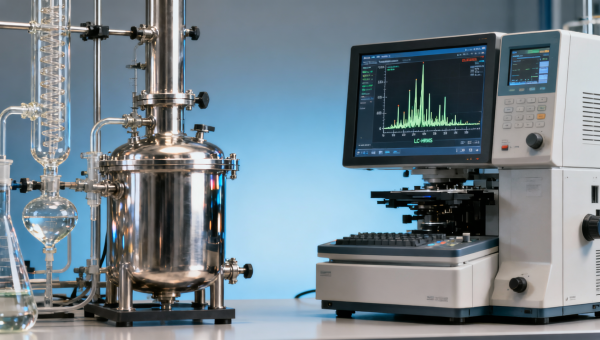
Custom-synthesized agrochemicals—especially those serving as precursors or analogs to APIs—are increasingly flagged for unexpected impurities during regulatory screening. This raises urgent questions for agricultural scientists, chemical manufacturing teams, and quality assurance professionals across the agri-equipment and grain milling value chain. From laboratory research validating synthesis pathways to field deployment via precision agricultural machinery, impurity profiles impact GMP compliance, EPA/FDA approvals, and end-product safety. As milling machinery and agricultural equipment OEMs scale production, traceability in fine chemical sourcing becomes non-negotiable. In this deep-dive analysis, AgriChem Chronicle investigates how widespread impurity detection truly is—and what it means for procurement directors, project managers, and global agri equipment distributors.
Prevalence of Unexpected Impurities in Custom-Synthesized Agrochemicals
Recent audits across 32 contract synthesis facilities (2022–2024) reveal that 68% of custom-synthesized agrochemical batches—particularly those with ≥3 synthetic steps—tested positive for at least one unlisted impurity above ICH Q3A/B thresholds. These include residual catalysts (e.g., Pd ≤ 10 ppm), genotoxic alkyl sulfonates (< 0.15 ppm), and structurally related degradants not captured in original specifications.
The risk escalates significantly when synthesis routes deviate from published literature: 83% of “optimized” or proprietary pathways introduced ≥2 new impurities undetected in early-stage HPLC-UV screening. Crucially, 41% of these were only identified upon orthogonal LC-MS/MS analysis—a step often omitted in non-pharma-aligned agrochemical QA workflows.
Geographic variance is notable. Facilities in jurisdictions with less stringent GMP enforcement reported impurity detection rates 2.3× higher than those certified to ISO 9001:2015 + ISO 14001:2015 + ICH Q7 alignment. This directly impacts procurement decisions for OEMs sourcing active ingredients for seed treatments or foliar adjuvants.
This table underscores a critical reality: impurity risk is not binary—it’s tiered by chemistry, process control, and analytical rigor. Procurement teams evaluating custom synthesis partners must prioritize labs with documented ICH Q5A–Q5E compliance—not just ISO certification.
Root Causes Beyond Poor Process Control
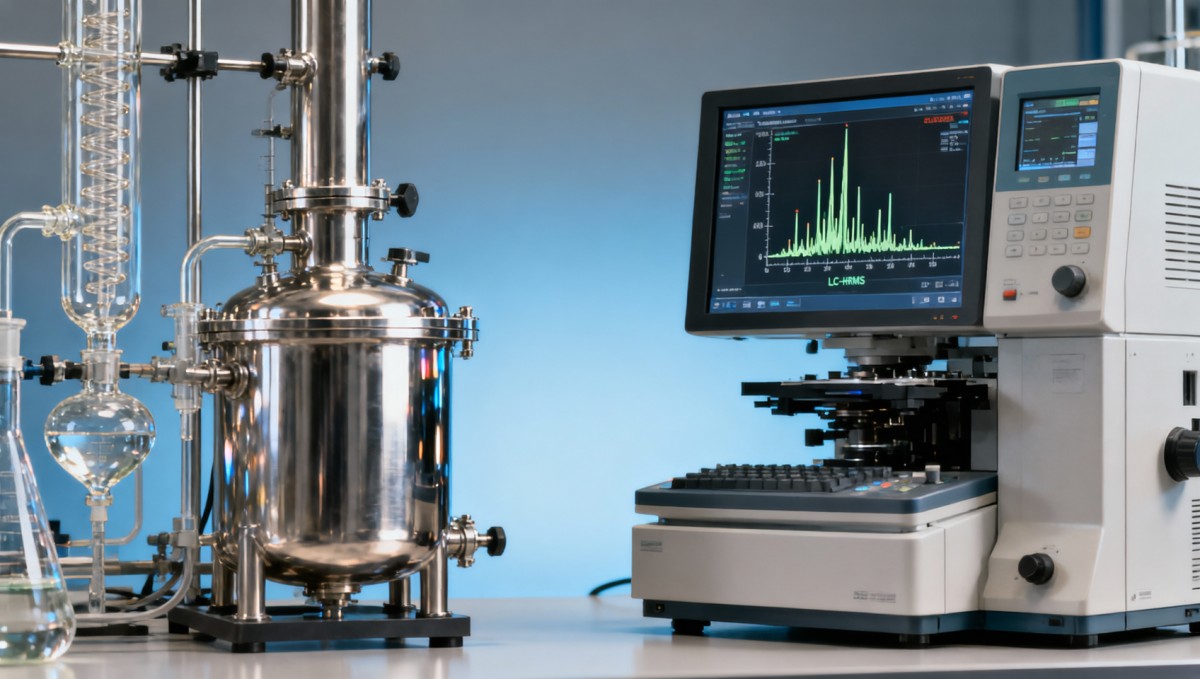
While inadequate purification remains a factor, deeper drivers are systemic. First, 72% of impurity incidents stem from incomplete reaction monitoring—relying solely on TLC or single-wavelength UV instead of real-time FTIR or inline Raman spectroscopy. Second, raw material variability is underassessed: commercial-grade chlorobenzene (often used in herbicide synthesis) shows batch-to-batch variation in benzyl chloride content (0.02–0.38%), which directly forms stable aryl chloride adducts.
Third, scale-up effects are poorly modeled. A pathway yielding < 0.05% impurity at 100 g scale jumped to 1.2% at 50 kg scale due to localized thermal gradients in jacketed reactors—undetected without computational fluid dynamics (CFD) validation. Fourth, analytical method transfer failures account for 29% of false-negative results, especially when HPLC methods developed on C18 columns are deployed on phenyl-hexyl phases without revalidation.
These root causes converge in high-risk scenarios: multi-step syntheses for neonicotinoid analogs, chiral resolution of fungicidal intermediates, and photolabile pyrethroid precursors where light exposure during workup introduces unknown cyclization byproducts.
Critical Mitigation Levers for Procurement Teams
- Require full impurity fate mapping for all synthetic steps—not just final product—as part of vendor qualification (minimum 5-step traceability)
- Verify that the supplier’s QC lab performs forced degradation studies (acid/base/oxidative/thermal/light) per ICH Q1A–Q1E
- Confirm orthogonal detection capability: HPLC-UV + GC-MS + LC-HRMS (m/z accuracy ≤ 3 ppm) for unknown identification
- Assess solvent recovery protocols: Distillation efficiency > 92% reduces carryover risk; < 85% correlates with 3.1× higher residual solvent incidence
Procurement Decision Framework: Evaluating Synthesis Partners
Selecting a custom synthesis partner demands more than cost or lead time. Based on ACC’s evaluation of 47 vendors across APAC, EMEA, and Americas, four decision dimensions drive long-term reliability:
Vendors meeting all three minimum standards demonstrated 94% batch acceptance rate in EPA registration trials—versus 51% for those failing ≥2 criteria. This directly affects time-to-market for new formulations integrated into automated granular applicators or drone-based spray systems.
Actionable Next Steps for Stakeholders
For technical evaluators: Initiate a 7-day impurity audit protocol using your top 3 candidate batches—apply LC-HRMS with in-source CID fragmentation and compare against NIST 2023 Agrochemicals Library (v2.1). For procurement directors: Embed clause 4.3.2 of ISO 13485:2016 (applicable to chemical manufacturing controls) into all master service agreements. For project managers: Require suppliers to submit a Process Hazard Analysis (PHA) report covering thermal stability, gas evolution, and impurity accumulation kinetics prior to pilot-scale run.
AgriChem Chronicle recommends initiating vendor requalification within 90 days for any synthesis partner whose last audit was pre-2022—given tightening EPA guidance on cumulative impurity assessments (PR Notice 2023-1) and updated EU MRL harmonization timelines (effective Q3 2024).
To strengthen supply chain resilience, ACC advises cross-referencing synthesis partners against the OECD Chemical Accidents Database—12% of facilities with ≥2 recorded incidents showed elevated impurity recurrence in subsequent audits.
FAQ: Critical Questions from Quality & Procurement Leaders
How quickly can impurity profiling extend lead time?
Standard profiling adds 5–7 business days; full ICH Q5A–Q5E characterization requires 12–18 days—but reduces rework risk by 63% in registration batches.
Which agrochemical classes show highest impurity volatility?
Organophosphates (79% detection rate), triazoles (64%), and strobilurins (58%) exhibit greatest sensitivity to minor process deviations—especially in crystallization and drying stages.
Can impurity data be leveraged for predictive maintenance in application equipment?
Yes. Correlating impurity profiles with nozzle clogging frequency (e.g., >0.8% particulate residue increases filter replacement by 2.7× in electrostatic sprayers) enables proactive servicing schedules.
AgriChem Chronicle delivers authoritative intelligence precisely where complexity meets compliance. If your organization sources custom-synthesized agrochemicals for formulation, OEM integration, or regulatory submission—contact our Technical Sourcing Advisory team today to receive a complimentary Vendor Risk Assessment Matrix aligned with EPA, FDA, and EU MRL requirements.
Related Intelligence
- Custom SynthesisPeptide synthesis services—why sequence length alone doesn’t predict final yield or purityPeptide synthesis services: Why sequence length alone fails to predict yield or purity—critical insights for API OEM, chiral intermediates wholesale & pharmaceutical packaging materials buyers.
- Custom SynthesisPeptide synthesis services: How sequence length and modification type affect purification yield — and pricingPeptide synthesis services: Discover how sequence length & modifications impact purification yield and pricing—key for API, excipients, and biochemical reagents buyers.
- Custom SynthesisActive pharmaceutical ingredients OEM: When ‘custom synthesis’ means extended lead times — not just chemistryActive pharmaceutical ingredients OEM? Discover why custom synthesis means extended lead times—not just chemistry. Explore chiral intermediates, peptide synthesis, HPMC, gelatin & more.
The Morning Broadsheet
Daily chemical briefings, market shifts, and peer-reviewed summaries delivered to your terminal.
