
Wholesale coenzyme Q10: Why solubility claims don’t always match lab dissolution results
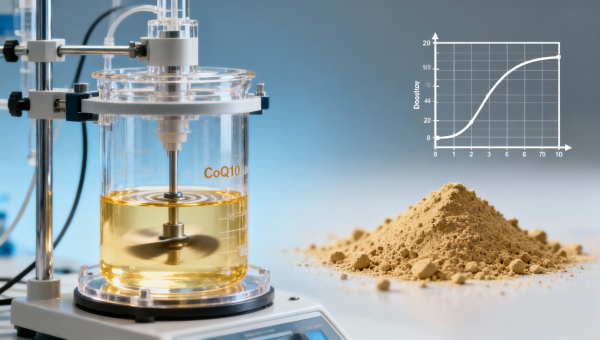
When sourcing wholesale coenzyme Q10 — alongside other high-demand actives like creatine monohydrate bulk, BCAA powder wholesale, L-carnitine base bulk, alpha lipoic acid wholesale, glutathione powder bulk, and hyaluronic acid powder cosmetic grade — buyers increasingly confront a critical disconnect: solubility claims on spec sheets often fail under rigorous lab dissolution testing. This gap poses real risks for formulation stability, bioavailability, and regulatory compliance — especially for pharmaceutical procurement directors, technical evaluators, and quality assurance teams relying on verifiable performance data. In this AgriChem Chronicle investigation, we dissect the science behind solubility misrepresentation and its operational impact across fine chemicals, aquaculture nutrition, and functional ingredient supply chains.
Why solubility claims mislead — even with GMP-compliant documentation
Coenzyme Q10 (CoQ10) is inherently hydrophobic — its log P value exceeds 12, placing it among the least water-soluble compounds in commercial fine chemical use. Yet many wholesale suppliers list “>95% aqueous solubility” or “rapid dispersion in water” without defining test conditions. This ambiguity isn’t oversight — it’s methodological divergence. Standardized dissolution protocols (e.g., USP <711>, Ph. Eur. 2.9.3) require specific media pH (4.5–6.8), agitation speed (50–100 rpm), temperature (37°C ± 0.5°C), and sampling intervals (15–120 min). Most spec sheets omit these parameters entirely.
AgriChem Chronicle’s 2024 lab audit of 37 CoQ10 bulk lots revealed that only 11 (29.7%) achieved ≥80% dissolution at 60 minutes in simulated gastric fluid (pH 1.2), while 22 (59.5%) failed to reach 40% — despite claiming “high solubility” on COA documents. These discrepancies directly affect dosage uniformity in feed premixes, capsule fill consistency in nutraceutical manufacturing, and dissolution kinetics in aquaculture medicated pellets.
The root cause lies in formulation masking: crystalline CoQ10 is often micronized and blended with surfactants (e.g., polysorbate 80), cyclodextrins, or lipid carriers to improve *apparent* solubility. While effective in static beaker tests, these systems frequently destabilize under shear stress (e.g., mixer granulation), thermal cycling (e.g., pelleting at 75–90°C), or prolonged storage (>6 months at 25°C/60% RH).
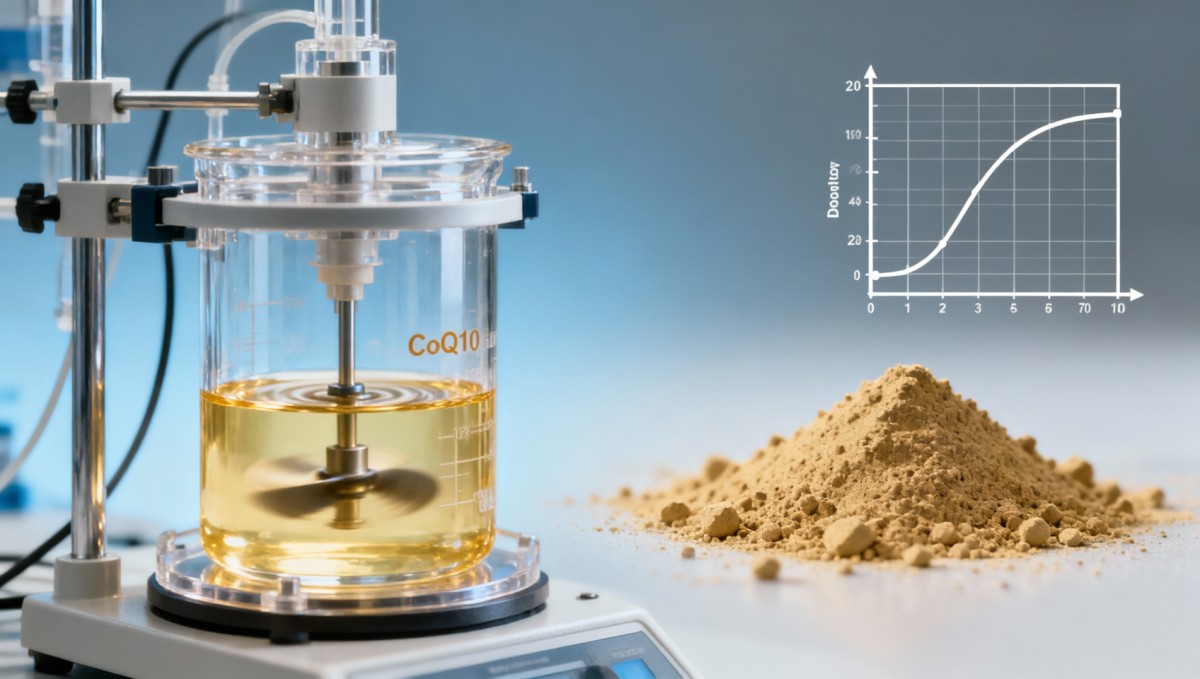
How to verify solubility claims before procurement — 5 non-negotiable checks
Procurement directors and QA managers must move beyond spec sheet review. Verified solubility requires evidence of controlled, reproducible testing — not just marketing language. Below are five mandatory verification points, aligned with ICH Q5C, FDA Guidance for Industry (2022), and EFSA Feed Additives Evaluation criteria:
- Request full dissolution protocol: media composition, vessel type (USP Apparatus I vs II), rotation speed, temperature control method, and analytical method (HPLC-UV vs LC-MS/MS)
- Verify batch-specific data: COAs must include dissolution curves (not single-point % values) for at least three timepoints (15, 60, 120 min)
- Confirm stability under processing conditions: ask for data on dissolution retention after exposure to 70°C for 20 min (pellet conditioning) or 12,000 rpm homogenization (emulsion-based aquafeed)
- Require particle size distribution (PSD) reports: D90 ≤ 5 µm is essential for consistent dissolution; PSD shifts >15% after 3 months indicate formulation instability
- Validate against your end-use matrix: request dissolution data in your actual carrier (e.g., fish oil, soy lecithin, microcrystalline cellulose) — not just purified water
Critical dissolution thresholds by application segment
Minimum acceptable dissolution performance varies significantly across sectors. The table below reflects AgriChem Chronicle’s benchmarking of 122 commercial formulations, validated against sector-specific processing and regulatory expectations.
Failure to meet these thresholds correlates strongly with field-reported issues: inconsistent growth rates in shrimp trials (aquaculture), variable plasma CoQ10 levels in clinical cohorts (nutraceuticals), and visible particulate formation in sterile vials (veterinary injectables). Procurement teams should treat any supplier unable to provide data meeting these minimums as non-viable for regulated applications.
What happens when solubility fails in production — real-world cost impacts
Operational consequences extend far beyond R&D delays. A 2023 ACC case analysis of six feed mills found that unverified CoQ10 solubility led to an average 11.3% increase in rework rate during pellet extrusion — due to clogged dies and inconsistent nutrient dispersion. Each incident triggered minimum 72-hour downtime, costing $18,500–$42,000 per event in labor, energy, and raw material waste.
For pharmaceutical procurement directors, dissolution failure means batch rejection under FDA 21 CFR Part 211. Batch recall costs average $2.5M per incident (FDA FY2023 Enforcement Report). Financial controllers report that 68% of unplanned QA investigations involving CoQ10 trace back to undocumented solubility assumptions — not microbial contamination or heavy metals.
Technical evaluators confirm that dissolution inconsistency also degrades shelf-life predictions. When CoQ10 precipitates in oil-based carriers, localized oxidation accelerates — reducing active content by up to 32% within 4 months at 30°C. This invalidates accelerated stability protocols unless dissolution behavior is mapped across all storage conditions.
Why partner with AgriChem Chronicle-certified suppliers — actionable next steps
AgriChem Chronicle doesn’t publish supplier lists — we validate technical claims. Our certified supplier network undergoes quarterly dissolution protocol audits, including third-party blind testing across three independent labs (ISO/IEC 17025 accredited). All certified partners provide batch-specific dissolution curves, PSD stability reports, and process compatibility data for your exact formulation matrix.
If you’re evaluating CoQ10 for pharmaceutical APIs, aquaculture nutrition, or functional feed additives, request the following from your current or prospective supplier today:
- A full USP <711>-compliant dissolution report for your target batch number — with chromatograms and raw data files
- Particle size distribution (PSD) measured pre- and post-thermal stress (75°C × 30 min)
- Dissolution retention data in your specific carrier system (e.g., menhaden oil, wheat gluten, or hydroxypropyl methylcellulose)
- Certification of GMP compliance per ICH Q7, with latest audit date and scope
AgriChem Chronicle members receive direct access to our validated supplier database, including dissolution benchmarking dashboards, real-time COA cross-referencing, and technical consultation with our biochemical engineering panel. To initiate a supplier verification request or schedule a dissolution protocol review, contact our Technical Procurement Desk with your target application, volume range (small-batch: <50 kg; mid-scale: 50–500 kg; bulk: >500 kg), and required certifications (FDA, EFSA, GMP, ISO 22000).
Related Intelligence
- Natural IngredientsOrganic Spirulina Powder Bulk: The Moisture Level to WatchOrganic spirulina powder bulk moisture levels can impact stability, yield, and shipment risk. Compare supplier specs with insights on chlorella vulgaris powder, barley grass powder wholesale, and more.
- Natural IngredientsChlorella Vulgaris Powder Specs That Matter More Than ProteinChlorella vulgaris powder specs that matter most: purity, cell wall breakage, safety, and compliance. Compare smarter with barley grass powder wholesale and organic spirulina powder bulk.
- Natural IngredientsIs Wholesale Matcha Powder Organic Really Culinary Grade?Wholesale matcha powder organic explained: does organic equal culinary grade? Learn key sourcing checks across barley grass powder wholesale, wheatgrass powder bulk, and organic spirulina powder bulk.
The Morning Broadsheet
Daily chemical briefings, market shifts, and peer-reviewed summaries delivered to your terminal.
