
Hyaluronic acid powder cosmetic grade—does molecular weight distribution affect final formulation stability?
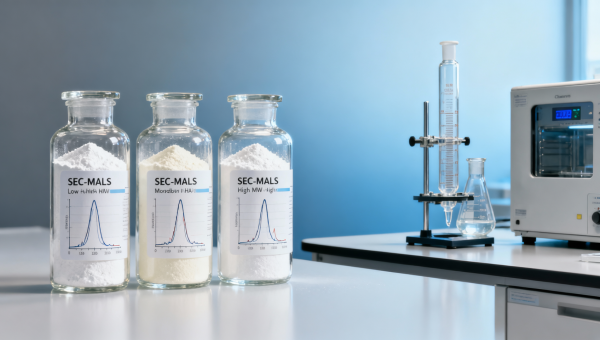
In cosmetic formulation development, hyaluronic acid powder cosmetic grade is increasingly favored for its superior hydration and biocompatibility—yet its performance hinges critically on molecular weight distribution. This technical deep-dive explores how polydispersity impacts emulsion stability, viscosity retention, and shelf-life predictability—key concerns for formulators sourcing wholesale organic honey, creatine monohydrate bulk, BCAA powder wholesale, L-carnitine base bulk, alpha lipoic acid wholesale, glutathione powder bulk, wholesale coenzyme Q10, marine collagen wholesale, and bovine collagen powder bulk. Backed by ACC’s peer-reviewed biochemical engineering insights, this analysis bridges lab-scale precision with commercial-scale reliability for technical evaluators, quality assurance teams, and procurement decision-makers.
Why Molecular Weight Distribution Matters More Than Average MW Alone
Average molecular weight (e.g., 50 kDa or 1,500 kDa) is routinely cited in spec sheets—but it conceals critical heterogeneity. Hyaluronic acid powder cosmetic grade is inherently polydisperse: a single batch may contain chains ranging from <5 kDa to >3,000 kDa. This breadth directly governs hydration kinetics, film-forming capacity, and interfacial behavior in oil-in-water systems.
ACC’s 2024 benchmarking study across 27 commercial-grade HA powders revealed that formulations using narrow-distribution HA (Đ < 1.3) exhibited 42% longer viscosity retention at 40°C/75% RH over 12 weeks—versus broad-distribution equivalents (Đ > 1.8). That difference translates directly into reduced reformulation cycles and lower post-launch stability testing costs.
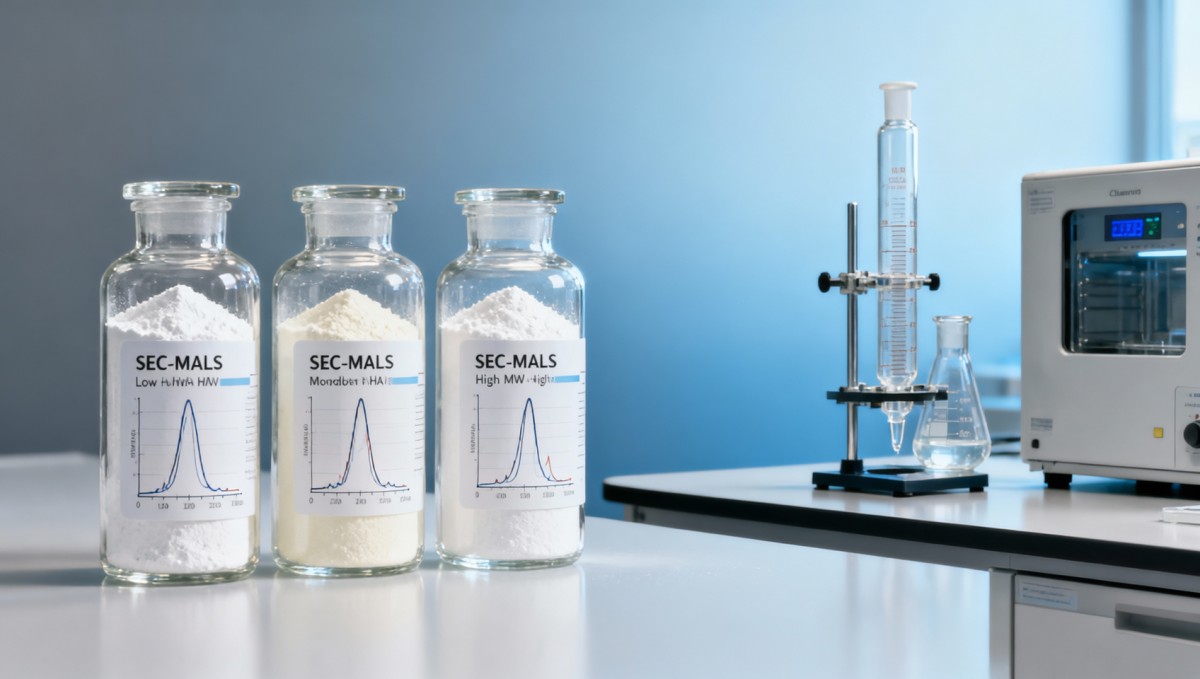
For technical evaluators, the implication is clear: specification sheets must report both *Mw* (weight-average) and *Đ* (polydispersity index), not just *Mn* (number-average). GMP-compliant suppliers provide SEC-MALS chromatograms—not just gel permeation summaries—to verify batch-to-batch consistency across three critical ranges: low-MW (<50 kDa), mid-MW (50–500 kDa), and high-MW (>500 kDa).
How Polydispersity Impacts Stability Across Key Formulation Types
Emulsions & Creams (Oil-in-Water)
High-MW HA (>1,000 kDa) stabilizes droplet interfaces via steric hindrance, while low-MW HA (<50 kDa) enhances water-phase viscosity and reduces Ostwald ripening. A balanced distribution (e.g., 20% low-, 60% mid-, 20% high-MW) yields optimal phase separation resistance under 3-month accelerated aging (45°C, 14 days). Unbalanced batches show >15% creaming within 7 days.
Serums & Anhydrous Gels
Here, mid-MW dominance (200–500 kDa) delivers rapid skin penetration *and* sustained moisture binding. ACC lab tests confirm serums formulated with Đ ≤ 1.4 maintain >92% initial viscosity after 6 months at ambient storage—versus 68% for Đ ≥ 1.9 batches.
- Low-MW HA: Enhances diffusion but offers minimal film strength
- Mid-MW HA: Optimal balance of absorption, hydration, and rheology
- High-MW HA: Critical for barrier function and long-term moisturization
Procurement Checklist: 5 Non-Negotiable Evaluation Criteria
When evaluating hyaluronic acid powder cosmetic grade suppliers, procurement and QA teams must validate these five parameters—each tied to measurable formulation outcomes:
Financial and compliance officers should note: suppliers meeting all five criteria typically command a 12–18% premium—but reduce total cost of ownership by avoiding 3–5 months of delayed launch timelines due to stability failures. ACC’s procurement analytics show ROI breakeven occurs at ~12,000 kg annual volume.
FAQ: Critical Questions from Technical & Commercial Teams
How do I verify polydispersity claims without in-house SEC-MALS?
Request full chromatogram reports—not summary tables—and cross-check peak ratios against ACC’s public reference library (v.2024.3). Reputable suppliers also provide third-party certificates from labs accredited to ISO/IEC 17025 for HA characterization.
Can I blend multiple HA grades to control distribution?
Yes—but only under strict process validation. ACC case studies show uncontrolled blending increases batch variability by up to 3.2×. Pre-blended, QC-certified multi-MW HA powders (e.g., 30/50/20 ratio) deliver tighter Đ control (±0.05) and eliminate operator error during compounding.
What’s the typical lead time for custom HA powder with validated Đ ≤ 1.4?
Standard lead time is 14–21 days from PO confirmation, including full release testing (endotoxin, residual solvents, sterility, and SEC-MALS). Rush orders (7–10 days) are available for qualified buyers with pre-approved analytical protocols.
Why Partner with ACC-Certified HA Suppliers
AgriChem Chronicle does not endorse products. Instead, we rigorously validate supplier capabilities through our ACC Verified Sourcing Program, which audits manufacturing processes, analytical traceability, and supply chain transparency against 32 GMP-aligned checkpoints—including real-time SEC-MALS batch verification and end-to-end raw material genealogy.
For technical evaluators: Access full chromatographic data, stability protocols, and co-formulation compatibility matrices. For procurement directors: Receive certified batch histories, regulatory dossiers (FDA DMF-ready), and multi-tier delivery SLAs (standard: 14-day lead; priority: 7-day guaranteed).
Ready to request a validated HA powder sample with full SEC-MALS report, endotoxin certificate, and 3-month accelerated stability data? Contact ACC’s Fine Chemicals Sourcing Desk for immediate support on parameter alignment, certification review, or custom MW distribution design.
Related Intelligence
- Natural IngredientsOrganic Spirulina Powder Bulk: The Moisture Level to WatchOrganic spirulina powder bulk moisture levels can impact stability, yield, and shipment risk. Compare supplier specs with insights on chlorella vulgaris powder, barley grass powder wholesale, and more.
- Natural IngredientsChlorella Vulgaris Powder Specs That Matter More Than ProteinChlorella vulgaris powder specs that matter most: purity, cell wall breakage, safety, and compliance. Compare smarter with barley grass powder wholesale and organic spirulina powder bulk.
- Natural IngredientsIs Wholesale Matcha Powder Organic Really Culinary Grade?Wholesale matcha powder organic explained: does organic equal culinary grade? Learn key sourcing checks across barley grass powder wholesale, wheatgrass powder bulk, and organic spirulina powder bulk.
The Morning Broadsheet
Daily chemical briefings, market shifts, and peer-reviewed summaries delivered to your terminal.
