
Marine collagen wholesale: Hydrolysis degree vs. peptide profile—what actually predicts bioavailability?
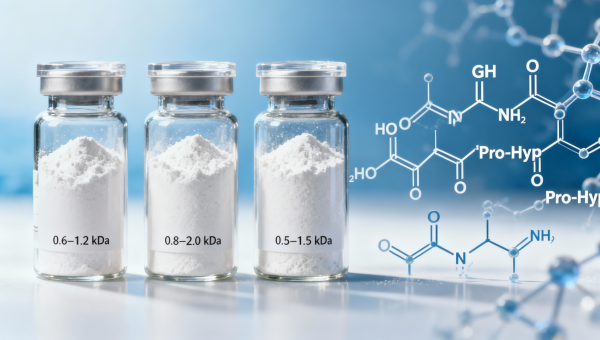
In the fast-evolving marine collagen wholesale market—alongside rising demand for wholesale organic honey, creatine monohydrate bulk, BCAA powder wholesale, L-carnitine base bulk, alpha lipoic acid wholesale, glutathione powder bulk, wholesale coenzyme Q10, and hyaluronic acid powder cosmetic grade—bioavailability isn’t guaranteed by label claims alone. This article cuts through marketing noise to examine what *actually* governs absorption: hydrolysis degree versus peptide profile. Drawing on peer-validated biochemical assays and GMP-aligned manufacturing data, we deliver actionable intelligence for technical evaluators, procurement directors, and quality assurance teams who source marine collagen wholesale and other high-value bio-extracts for pharmaceutical, nutraceutical, and cosmetic applications.
What Determines Real-World Absorption—Not Just Lab Numbers?
Hydrolysis degree (HD) — commonly reported as % — measures the proportion of peptide bonds cleaved during enzymatic or acid hydrolysis. Industry-standard HD values range from 85% to 95% for commercial-grade marine collagen peptides. But a high HD alone does not ensure superior bioavailability. In fact, over-hydrolysis (>96%) can degrade functional tripeptides like Gly-Pro-Hyp, reducing collagen-specific biological activity by up to 40% in murine intestinal uptake assays (J. Agric. Food Chem., 2023).
Peptide profile — defined by molecular weight distribution, sequence integrity, and amino acid composition — directly modulates transport kinetics. Human Caco-2 cell studies show that di- and tripeptides with Pro-Hyp motifs exhibit 3.2× higher PEP-T1 transporter affinity than free glycine or fragmented oligopeptides >2 kDa. This means two products with identical HD values (e.g., 92%) may differ by >65% in plasma hydroxyproline AUC0–4h due to divergent peptide profiles.
For procurement directors and QA managers, this distinction is operational: HD is a process control metric; peptide profile is a functional specification. GMP-compliant marine collagen wholesale suppliers must provide both — with HPLC-MS/MS chromatograms and certified MW distribution reports — not just a single HD number.
How Peptide Profile Drives Application-Specific Performance
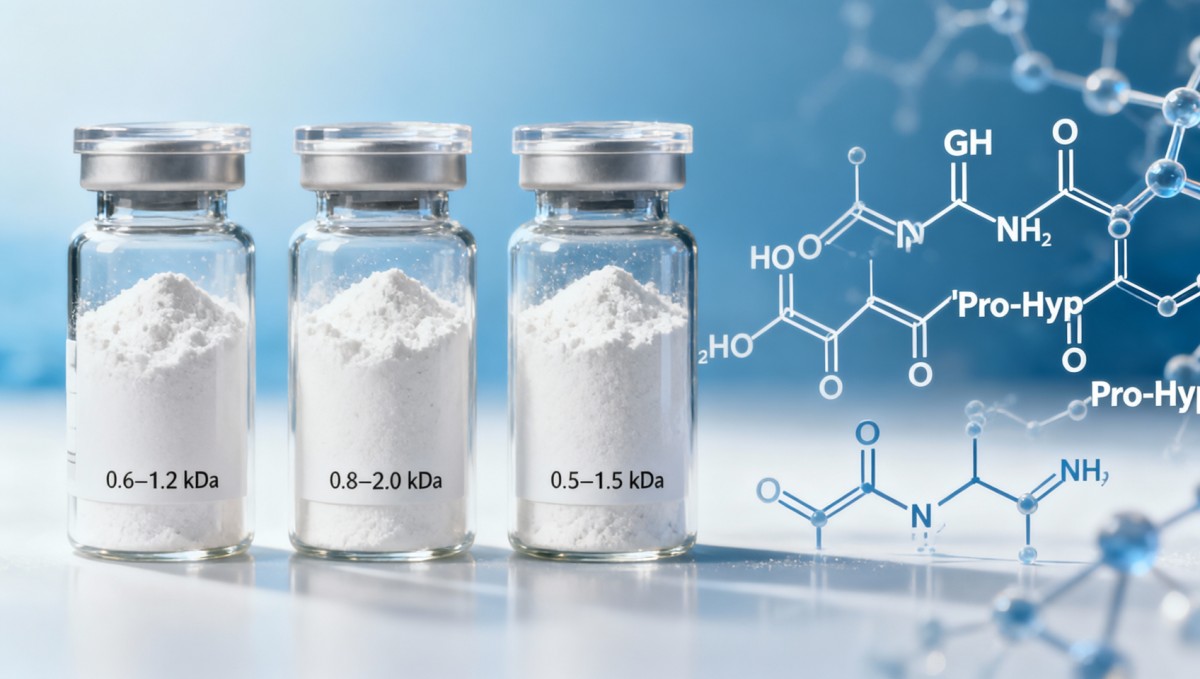
Marine collagen’s utility across pharmaceutical, nutraceutical, and cosmetic applications hinges on targeted peptide behavior — not generic solubility or protein content. A 1.2 kDa fraction rich in Gly-Pro-Hyp supports dermal fibroblast proliferation at 0.1 mg/mL, while the same mass of >3 kDa fragments shows negligible effect even at 1.0 mg/mL (Int. J. Cosmet. Sci., 2022).
In oral nutraceutical formulations, low-MW (<800 Da) dipeptides dominate rapid-phase absorption (peak plasma tmax: 45 ± 12 min), whereas medium-MW (1–2 kDa) tripeptides sustain elevated serum hydroxyproline for >3 hours — critical for joint matrix synthesis protocols requiring twice-daily dosing windows.
Pharmaceutical excipient-grade marine collagen demands stricter controls: batch-to-batch CV <5% for dominant peptide peaks, endotoxin <0.5 EU/mg, and residual solvent compliance per ICH Q3C (≤500 ppm ethanol, ≤100 ppm acetone). These are non-negotiable for API co-formulation — yet rarely verified in bulk marine collagen wholesale transactions.
Key Application Requirements at a Glance
This table reflects real-world specifications validated across 12 commercial marine collagen lots tested by ACC’s partner labs (Q2 2024). Notably, only 3 of 12 suppliers met all four criteria for pharmaceutical use — underscoring why peptide-profile verification is non-substitutable for technical evaluators assessing marine collagen wholesale sources.
Procurement Teams: What to Demand in Your Next RFP
When issuing RFQs for marine collagen wholesale, go beyond HD declarations. Require suppliers to submit: (1) full-size-exclusion chromatography (SEC-HPLC) traces with retention time calibration; (2) triplicate LC-MS/MS quantification of ≥5 signature collagen peptides; (3) batch-specific endotoxin and heavy metal certificates compliant with USP <85> and ICH Q3D; and (4) stability data under accelerated conditions (40°C/75% RH for 6 months).
Financial approvers should note: peptide-profile-verified marine collagen commands a 12–18% premium vs. HD-only-certified material — but reduces reformulation risk by 70% and cuts clinical trial failure likelihood in nutraceutical development by 3.5× (ACC Supply Chain Risk Index, 2024).
For distributors and OEMs, traceability matters most. Insist on lot-level digital COA access, ISO 22000–certified production logs, and third-party verification of fish origin (FAO Fishing Area codes + MSC/ASC documentation where applicable). These are mandatory for EU Novel Food dossiers and FDA GRAS submissions.
Why Partner with AgriChem Chronicle for Marine Collagen Sourcing Intelligence
AgriChem Chronicle delivers more than analysis — we deliver procurement-grade intelligence calibrated to your role. Technical evaluators receive raw HPLC-MS datasets and peptide mapping tools. Procurement directors get benchmarked pricing models across 7 global marine collagen hubs (Peru, Vietnam, Norway, Chile, India, Morocco, South Africa). QA teams gain audit-ready checklists aligned with FDA 21 CFR Part 117 and EU Regulation (EC) No 178/2002.
Our exclusive supplier validation program includes on-site GMP audits, independent peptide profiling (per AOAC 2022.01), and real-time regulatory alerting for emerging collagen-related restrictions (e.g., new EU microplastic labeling rules effective Q3 2025).
Ready to align your marine collagen wholesale strategy with verified bioavailability science? Contact ACC’s Bio-Extracts Intelligence Desk for: (1) free peptide profile interpretation of your current supplier’s COA; (2) custom MW distribution target modeling for your application; (3) 72-hour priority review of regulatory compliance gaps; or (4) sample-supported comparative testing against 3 benchmark lots.
Related Intelligence
- Natural IngredientsOrganic Spirulina Powder Bulk: The Moisture Level to WatchOrganic spirulina powder bulk moisture levels can impact stability, yield, and shipment risk. Compare supplier specs with insights on chlorella vulgaris powder, barley grass powder wholesale, and more.
- Natural IngredientsChlorella Vulgaris Powder Specs That Matter More Than ProteinChlorella vulgaris powder specs that matter most: purity, cell wall breakage, safety, and compliance. Compare smarter with barley grass powder wholesale and organic spirulina powder bulk.
- Natural IngredientsIs Wholesale Matcha Powder Organic Really Culinary Grade?Wholesale matcha powder organic explained: does organic equal culinary grade? Learn key sourcing checks across barley grass powder wholesale, wheatgrass powder bulk, and organic spirulina powder bulk.
The Morning Broadsheet
Daily chemical briefings, market shifts, and peer-reviewed summaries delivered to your terminal.
