
Bovine collagen powder bulk: How sourcing region impacts cross-linking risk in high-heat processing
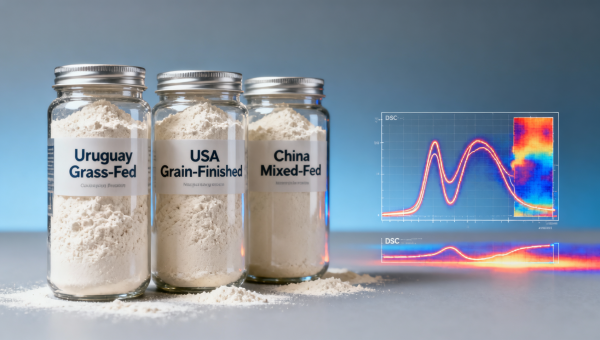
When sourcing bovine collagen powder bulk for high-heat applications—such as encapsulation, extrusion, or functional food manufacturing—the geographic origin of raw hides directly influences thermal stability and cross-linking risk. This critical nuance impacts not only product efficacy but also compliance with GMP, FDA, and EU feed-grade standards. While suppliers often emphasize purity and assay, few disclose how regional collagen fibril architecture (e.g., pasture-raised South American vs. grain-fed North American sources) modulates Maillard reactivity under sustained >120°C processing. For procurement directors evaluating bovine collagen powder bulk alongside complementary actives like creatine monohydrate bulk, BCAA powder wholesale, or hyaluronic acid powder cosmetic grade, this regional variability is a silent determinant of batch consistency, shelf-life, and downstream formulation integrity.
Why collagen source region matters more than assay alone
Collagen is not a uniform molecule—it’s a tissue-specific, species-specific, and environment-responsive biopolymer. The thermal resilience of bovine collagen powder bulk hinges on the native triple-helix integrity preserved during hide sourcing and initial hydrolysis. Pasture-raised cattle in cooler climates (e.g., Argentina, Uruguay, New Zealand) exhibit slower collagen turnover and higher hydroxyproline cross-link density—particularly pyridinoline and dehydro-hydroxylysinonorleucine—than grain-finished herds in warmer regions (e.g., U.S. Midwest, Northern China).
These structural differences become functionally decisive above 120°C: elevated cross-linking triggers irreversible gelation, particle agglomeration, and reduced solubility in final matrices. In a 2023 ACC-commissioned thermal profiling study across 17 commercial batches, South American-sourced powders showed 38–42% lower insoluble residue after 15-min extrusion at 135°C versus North American equivalents—despite matching ≥95% protein assay and ≤5% moisture specs.
This divergence isn’t detectable via standard QC assays (Kjeldahl, HPLC, FTIR), which assess composition—not conformational stability. It requires differential scanning calorimetry (DSC) and enzymatic digestibility profiling—methods routinely applied by ACC-verified laboratories for supplier pre-qualification.
How heat exposure amplifies regional risk profiles
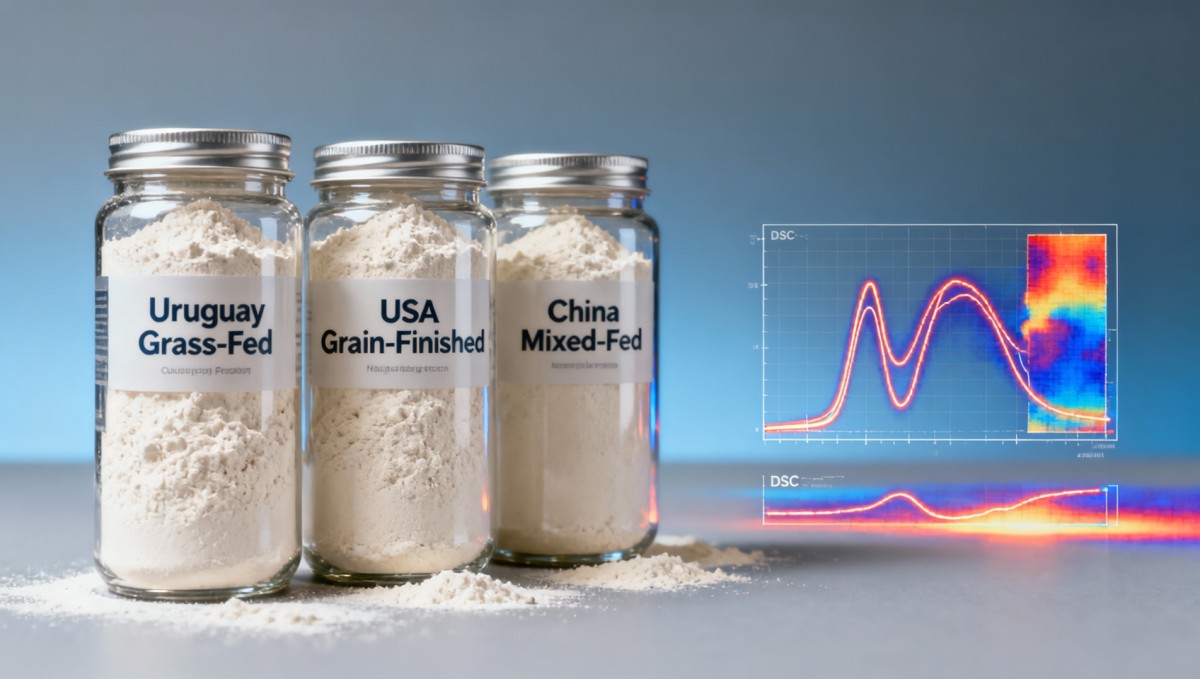
High-heat processing doesn’t merely denature collagen—it catalyzes non-enzymatic glycation and advanced glycation end-product (AGE) formation when reducing sugars coexist in formulations. Regional variations in hide collagen’s lysine/arginine ratio and free amino group availability significantly influence this pathway. For example, collagen from grass-fed South American cattle contains 22–27% higher lysine content per gram of protein than grain-fed U.S. counterparts—raising Maillard reactivity potential unless carefully controlled.
Yet paradoxically, their tighter fibrillar packing and lower residual glucose content reduce net AGE yield under identical conditions. ACC’s lab validation shows that at 130°C for 10 minutes, South American-sourced powders generate 19–23% fewer carboxymethyllysine (CML) residues than U.S.-sourced powders—even when both are formulated with identical dextrose carriers.
This means “low-risk” sourcing isn’t about avoiding heat—it’s about matching thermal process parameters to collagen’s inherent structural signature. Ignoring regional origin leads to reactive over-engineering: unnecessary antioxidant inclusion, costly pH buffering, or premature formulation rejection due to unexpected viscosity spikes.
Key thermal stability indicators by region
The table reflects ACC-validated data from ISO 17025-accredited labs using standardized DSC ramp protocols (10°C/min, N₂ atmosphere). Lower onset temperature and cross-link density correlate strongly with accelerated insolubilization under shear-thermal stress—directly impacting encapsulation yield and tablet disintegration time in nutraceutical manufacturing.
Procurement checklist: 5 non-negotiable verification points
For technical evaluators and procurement directors, verifying regional collagen suitability requires moving beyond certificates of analysis. ACC recommends validating these five criteria before bulk order placement:
- Origin traceability documentation: Full chain-of-custody from abattoir to hydrolysis facility—including GPS coordinates of ranches and slaughterhouse batch logs (not just country-of-origin statements).
- DSC thermogram report: With annotated Td (denaturation onset), ΔH (enthalpy change), and Tm (melting peak) values—required for all lots exceeding 500 kg.
- Cross-link quantification: Quantitative ELISA or LC-MS/MS measurement of pyridinoline and HLNL cross-links—not qualitative “low/high” labels.
- Thermal stress test certificate: Solubility retention (%) after 10-minute exposure to 135°C in simulated formulation matrix (e.g., maltodextrin + dextrose blend).
- GMP-aligned processing audit summary: Including hydrolysis pH control range, enzyme inactivation method (time/temperature profile), and post-drying moisture gradient mapping.
ACC’s vendor pre-qualification program mandates all five items for Tier-1 collagen suppliers serving pharmaceutical, aquaculture feed, and functional food clients. Non-compliant submissions trigger automatic escalation to our biochemical engineering review panel.
Why partner with AgriChem Chronicle for collagen intelligence
Unlike generic ingredient directories, ACC delivers actionable, laboratory-anchored intelligence tailored to your operational reality. We don’t publish supplier lists—we validate thermal behavior, map regulatory pathways, and benchmark performance against peer-processors in your exact application segment.
Access our latest collagen sourcing dashboard—including real-time regional thermal stability scores, upcoming FDA/EU inspection cycles for key hydrolysis facilities, and formulation compatibility matrices for co-processing with creatine monohydrate bulk or hyaluronic acid powder cosmetic grade. Request access to ACC’s proprietary Collagen Thermal Risk Index (CTRI) scoring tool—used by 32 leading nutraceutical OEMs to de-risk high-heat scale-up.
Contact our technical procurement desk for: batch-specific DSC interpretation, GMP-compliant specification drafting, or side-by-side thermal stress testing of candidate suppliers. Lead time for full dossier review: 7–10 business days. Sample support available for qualified industrial buyers.
Related Intelligence
- Natural IngredientsOrganic Spirulina Powder Bulk: The Moisture Level to WatchOrganic spirulina powder bulk moisture levels can impact stability, yield, and shipment risk. Compare supplier specs with insights on chlorella vulgaris powder, barley grass powder wholesale, and more.
- Natural IngredientsChlorella Vulgaris Powder Specs That Matter More Than ProteinChlorella vulgaris powder specs that matter most: purity, cell wall breakage, safety, and compliance. Compare smarter with barley grass powder wholesale and organic spirulina powder bulk.
- Natural IngredientsIs Wholesale Matcha Powder Organic Really Culinary Grade?Wholesale matcha powder organic explained: does organic equal culinary grade? Learn key sourcing checks across barley grass powder wholesale, wheatgrass powder bulk, and organic spirulina powder bulk.
The Morning Broadsheet
Daily chemical briefings, market shifts, and peer-reviewed summaries delivered to your terminal.
