
What Sets a Natural Flavors Manufacturer Apart Today?
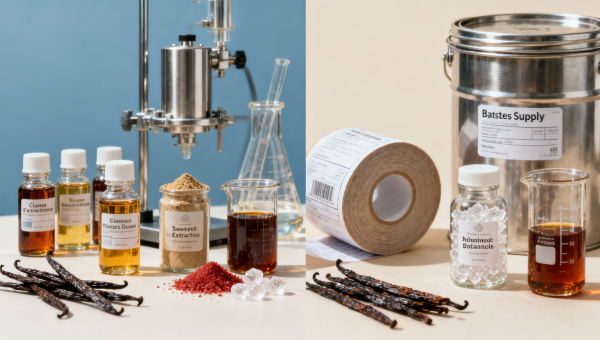
In today’s regulated ingredients market, a natural flavors manufacturer stands out through traceable sourcing, formulation expertise, and consistent quality across high-demand products such as erythritol powder bulk, stevia extract wholesale, liquid smoke flavoring wholesale, and vanilla bean extract bulk. For buyers and technical evaluators alike, the real differentiators are compliance, scalability, and the ability to deliver reliable performance across diverse food, nutraceutical, and industrial applications.
That distinction matters even more in B2B purchasing, where operators, quality teams, procurement managers, distributors, and executive decision-makers are no longer comparing suppliers on price alone. They are assessing whether a manufacturer can support validation, documentation, production continuity, and formulation performance across multiple SKUs, regions, and regulatory environments.
For institutional buyers following ingredient markets through specialized intelligence platforms such as AgriChem Chronicle, the key question is straightforward: what truly separates a capable natural flavors manufacturer from a vendor that only appears competitive on paper? The answer lies in how sourcing, processing, quality control, and technical service work together across the full commercial lifecycle.
Why traceability and raw material control now define supplier credibility
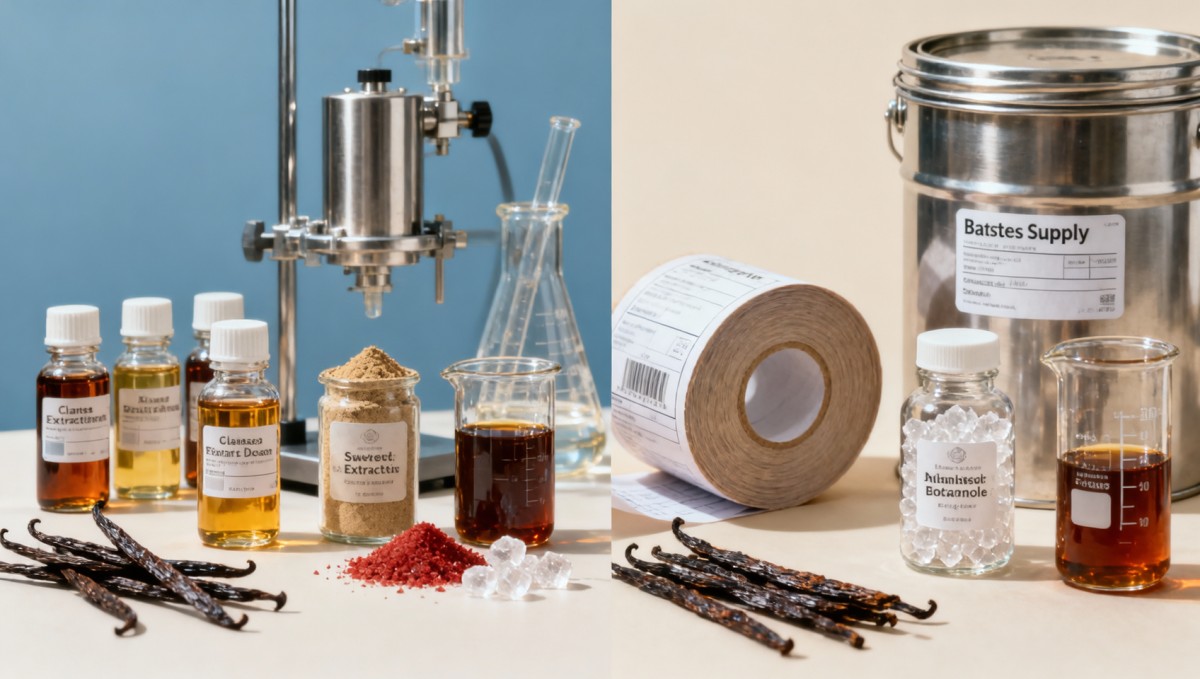
A modern natural flavors manufacturer is expected to document far more than origin claims. Buyers increasingly ask for batch-level traceability, processing records, allergen controls, and storage protocols that can be verified within 24–72 hours of a technical inquiry. This is particularly important for high-volume ingredients used in food systems, dietary supplements, and functional beverage lines.
Traceability begins at raw material intake. For products such as vanilla bean extract bulk, stevia extract wholesale, and liquid smoke flavoring wholesale, procurement and quality teams want visibility into source geography, harvest or extraction timing, contamination risk, and lot segregation. When a supplier cannot clearly explain these inputs, downstream formulation risk rises immediately.
The most reliable manufacturers typically operate with a 3-stage control model: supplier qualification, incoming inspection, and retained-sample verification. This structure helps reduce specification drift and supports investigations when flavor variation, color shift, or sensory inconsistency appears across multiple purchase orders.
What procurement and QC teams should review first
Before discussing annual volume, buyers should evaluate whether the manufacturer can provide the right documentation package for each material family. In many B2B transactions, incomplete records create more cost than a modest unit-price difference, especially when production schedules are tight or export compliance is involved.
- Raw material origin records and supplier qualification status
- Certificate of analysis with sensory, microbiological, and physicochemical data
- Retention sample policy, usually 12–24 months depending on product type
- Change notification process for source, solvent, carrier, or process adjustments
- Allergen, GMO, solvent, and contaminant declarations where applicable
The table below summarizes the practical difference between basic and advanced traceability capabilities in natural flavor manufacturing.
For technical evaluators, the practical conclusion is clear: a natural flavors manufacturer that manages raw material transparency well is usually better prepared to support audits, shelf-life review, customer complaints, and scale-up planning. In regulated or export-sensitive categories, that capability is often a gatekeeping requirement rather than a value-added feature.
Formulation depth separates commodity supply from application support
Not every natural flavors manufacturer is equally strong in formulation science. Some can provide standard flavor inputs, while others can help customers balance sweetness, mouthfeel, masking, heat stability, and processing compatibility across multiple end-use formats. This distinction becomes critical when a buyer is evaluating performance in ready-to-drink beverages, bakery systems, gummies, premixes, or savory applications.
Take erythritol powder bulk and stevia extract wholesale as an example. Both may be used in reduced-sugar formulations, but success depends on more than sweetness intensity. The manufacturer must understand interaction effects such as delayed sweetness onset, cooling impact, aftertaste management, and the influence of pH, solids content, and thermal treatment during production.
For liquid smoke flavoring wholesale, formulation depth also includes application dosing guidance, carrier compatibility, and process sequencing. In smoked sauces, meat analogs, or seasoning systems, the difference between 0.05% and 0.20% inclusion can affect aroma profile, label goals, and consumer acceptance. Suppliers with application labs can usually reduce customer trial cycles from 4–6 rounds to 2–3 rounds.
Core technical capabilities buyers should verify
A stronger technical supplier will usually be able to explain not just what ingredient they sell, but how it behaves in process. That matters to production operators, project managers, and commercial teams because a technically weak handoff can delay a launch by several weeks.
Application-relevant checkpoints
- Recommended dosage ranges by application, such as 0.05%–0.30% for certain flavor concentrates
- Heat and pH tolerance guidance for pasteurization, baking, or neutral beverage systems
- Carrier and solubility recommendations for water-based versus oil-based formulas
- Sensory adjustment support for bitterness masking, sweetness rounding, or smoke intensity balance
- Sample iteration process with clear target profile definitions and revision timing
The following comparison helps distinguish a transactional supplier from a formulation-capable natural flavors manufacturer.
For decision-makers, this capability often translates into reduced development risk, fewer internal testing delays, and more consistent launch planning. In practical terms, the best natural flavors manufacturer is not merely shipping ingredients; it is helping the customer reach a stable, repeatable commercial formula.
Quality systems, compliance discipline, and consistency at scale
Consistency is where many suppliers fail under commercial pressure. A sample may perform well, but repeat orders begin to drift once production shifts to larger runs or alternate raw material lots. For buyers managing monthly demand of 500 kg, 2 tons, or more, batch consistency is just as important as headline flavor quality.
A dependable natural flavors manufacturer should be able to explain how specifications are set, monitored, and adjusted. That includes sensory reference control, in-process checks, finished goods release criteria, and deviation handling. Even when natural raw materials vary seasonally, manufacturers need systems to keep end-product performance within an acceptable operating range.
Compliance expectations also continue to rise. Customers may request support documents relevant to food safety, environmental controls, export declarations, or customer-specific audits. While exact requirements vary by market, the manufacturer should have a disciplined way to manage records, label review, claims language, and change communication without disrupting normal supply.
Key signs that consistency is built into the operation
A robust quality system is usually visible in daily execution rather than in marketing language alone. Procurement, safety managers, and financial approvers should look for practical indicators that support repeatability over 12-month purchasing cycles.
- Defined specification ranges for aroma, appearance, key analytical values, and microbiological limits
- Retained sample and complaint investigation workflow with documented root-cause review
- Scheduled equipment sanitation and preventive maintenance based on production frequency
- Formal release process before shipment, rather than post-shipment paperwork correction
- Packaging controls that protect oxidation, moisture uptake, and cross-contact risk in transit
Operational metrics that matter in supplier reviews
Not every buyer needs the same level of control, but some metrics are broadly useful during qualification. Examples include standard lead times of 2–6 weeks, complaint response within 48 hours, specification review at least once every 12 months, and clear shelf-life guidance tied to storage conditions such as 15°C–25°C or protected ambient warehousing.
These details matter because a natural flavors manufacturer serving high-volume accounts must perform under real operating constraints. When quality systems are mature, customers spend less time on corrective actions, emergency substitutions, and internal escalation meetings. That improves both procurement efficiency and production continuity.
How buyers should evaluate commercial scalability and supply reliability
Scalability is not only a manufacturing question; it is a supply chain question. A natural flavors manufacturer may have strong technical capability but still struggle with raw material seasonality, packaging shortages, port delays, or single-site production exposure. This is why serious buyers review capacity planning, safety stock strategy, and communication discipline before expanding annual contracts.
For example, a distributor may begin with one pallet of vanilla bean extract bulk or stevia extract wholesale, then move to quarterly programs with multiple destinations. At that point, the manufacturer must support forecast alignment, packaging consistency, documentation by shipment, and workable minimum order quantities. A weak logistics process can erase the value of an otherwise good product.
Commercial reliability is especially important when ingredients are linked to customer launches, co-manufacturing schedules, or tender-based purchasing cycles. Missing a 10-day delivery window can trigger line downtime, relabeling costs, or lost retail placement. Strong suppliers plan for these realities instead of reacting to them after a delay occurs.
A practical supplier evaluation framework
The matrix below can help procurement teams, project leaders, and executives compare suppliers beyond price.
The key takeaway is that a scalable natural flavors manufacturer should be operationally predictable. Buyers do not need unrealistic guarantees, but they do need realistic capacity signals, documented timelines, and a clear path for issue escalation when demand, specification, or logistics conditions change.
Common buying mistakes and a smarter qualification process
One of the most common mistakes is evaluating a natural flavors manufacturer almost entirely on sample performance and quoted price. While both are important, they do not reveal whether the supplier can support quality consistency, paperwork accuracy, commercial scale, or reformulation needs over a 6–18 month supply relationship.
Another mistake is treating all flavor-related materials as interchangeable. Erythritol powder bulk, stevia extract wholesale, liquid smoke flavoring wholesale, and vanilla bean extract bulk each present different sourcing, application, and storage challenges. A supplier that is strong in one category may not be equally strong in another, so category-specific evaluation is essential.
A better approach is to run qualification in stages. This allows technical, procurement, quality, and business teams to align their criteria early and avoid late-stage rejection after time has already been spent on samples, documents, and negotiations.
Recommended 5-step qualification path
- Define use case, target dosage range, storage condition, annual demand, and destination market.
- Request documentation package, including specifications, declarations, shelf-life data, and change-control process.
- Conduct application testing with at least 2 batches where feasible, especially for sensitive flavor profiles.
- Review commercial terms such as MOQ, lead time, packaging, and deviation response expectations.
- Start with a controlled trial order before locking a larger quarterly or annual supply agreement.
FAQ for procurement and technical teams
These are the questions most often raised during supplier selection and project review.
How many batches should be tested before approval?
For lower-risk applications, one qualified batch may be sufficient for initial review. For products with tighter sensory tolerances or high-volume deployment, testing 2–3 batches gives a better picture of consistency and process fit.
What lead time is considered normal?
A common planning range is 2–6 weeks depending on product type, pack size, and export destination. Custom formulations or source-dependent materials may require longer. Buyers should confirm both normal lead time and disruption response procedures.
Which teams should join the review process?
At minimum, procurement, quality, and technical application teams should participate. For larger contracts, finance, project management, and commercial leadership should also review risk, cash-flow impact, and continuity planning.
A natural flavors manufacturer that performs well across these checkpoints is typically better equipped for long-term supply partnerships. For B2B buyers, that means lower approval friction, fewer post-purchase surprises, and stronger confidence when expanding into new product lines or regions.
What sets a natural flavors manufacturer apart today is not a single claim, but a combination of traceable sourcing, application-level formulation support, disciplined quality systems, and dependable commercial execution. These capabilities matter across sweetening systems, smoke profiles, botanical extracts, and premium flavor ingredients because they directly affect approval speed, product consistency, and supply continuity.
For information researchers, technical evaluators, procurement teams, distributors, and executive decision-makers, the smartest path is to compare suppliers through a structured review of documentation, process control, batch consistency, and scale readiness. If you are assessing ingredient partners for current sourcing or future expansion, now is the right time to request detailed specifications, discuss your application targets, and explore a tailored supply solution.
Contact us to discuss product details, qualification criteria, or a customized sourcing plan aligned with your operational and commercial goals.
Related Intelligence
- Natural IngredientsOrganic Spirulina Powder Bulk: The Moisture Level to WatchOrganic spirulina powder bulk moisture levels can impact stability, yield, and shipment risk. Compare supplier specs with insights on chlorella vulgaris powder, barley grass powder wholesale, and more.
- Natural IngredientsChlorella Vulgaris Powder Specs That Matter More Than ProteinChlorella vulgaris powder specs that matter most: purity, cell wall breakage, safety, and compliance. Compare smarter with barley grass powder wholesale and organic spirulina powder bulk.
- Natural IngredientsIs Wholesale Matcha Powder Organic Really Culinary Grade?Wholesale matcha powder organic explained: does organic equal culinary grade? Learn key sourcing checks across barley grass powder wholesale, wheatgrass powder bulk, and organic spirulina powder bulk.
The Morning Broadsheet
Daily chemical briefings, market shifts, and peer-reviewed summaries delivered to your terminal.
