
Lion's Mane Mushroom Powder That Clumps Too Easily?
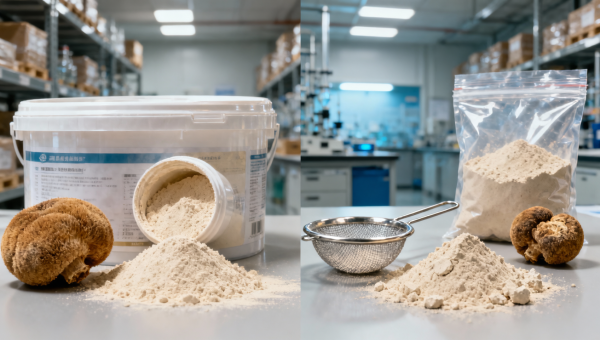
If your lion's mane mushroom powder clumps too easily, the issue may go beyond storage and point to particle size, moisture control, carrier ratios, or extraction quality. For buyers comparing maitake mushroom extract, shiitake mushroom powder, chaga mushroom extract, cordyceps extract wholesale, reishi mushroom extract bulk, astragalus root extract, echinacea purpurea extract, elderberry extract wholesale, and pomegranate seed extract, understanding flowability is essential for quality, compliance, and procurement decisions.
In industrial ingredient sourcing, clumping is not a minor cosmetic defect. It affects dosing accuracy, blending efficiency, packaging stability, warehouse handling, and even downstream product claims. For operators, quality managers, procurement teams, and technical evaluators, a powder that bridges in hoppers or hardens in drums can increase labor time by 15% to 30% during batching and raise nonconformance risk across multiple SKUs.
This matters particularly in the bio-extract and ingredients segment, where lion's mane mushroom powder may be used in capsules, beverage blends, sachets, tablets, or functional food premixes. A purchasing decision should therefore assess not only active content and price per kilogram, but also moisture behavior, mesh range, extract ratio, packaging barrier performance, and the supplier’s process discipline.
Why Lion's Mane Mushroom Powder Clumps in the First Place
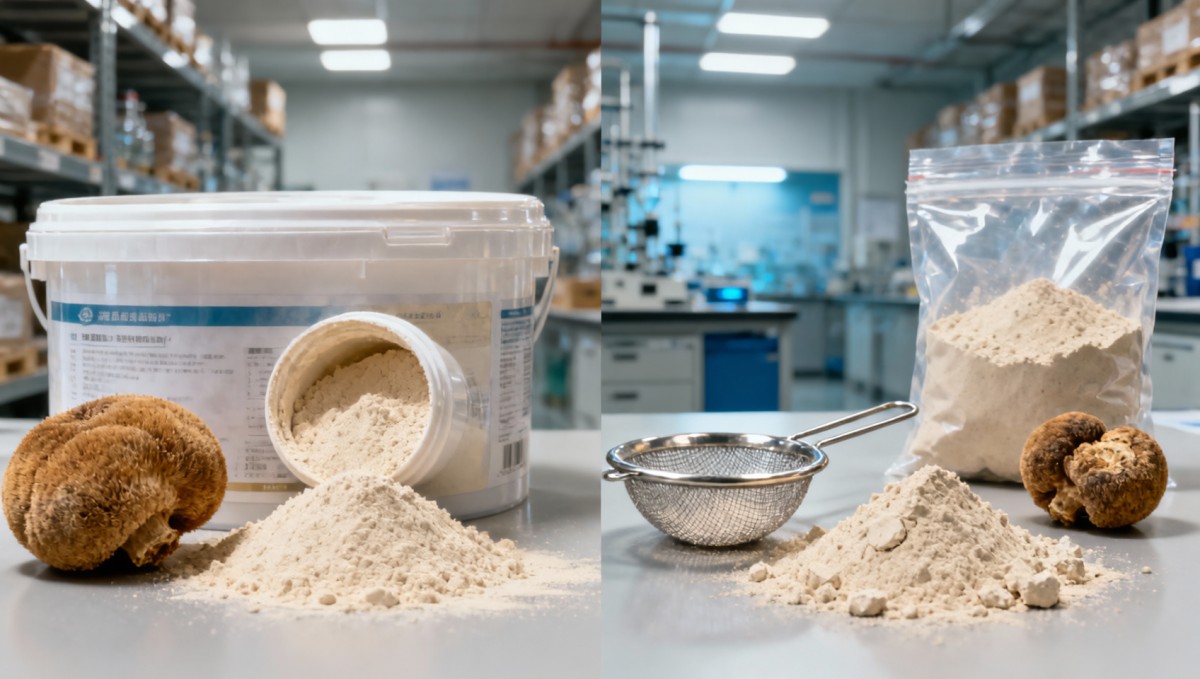
Lion's mane mushroom powder clumps when particles absorb ambient moisture faster than they can release it, or when the powder contains a distribution of fine particles that pack tightly under pressure. In practical terms, clumping often becomes visible when relative humidity rises above 55% to 60%, especially if the product has been opened, repacked, or exposed during line changeovers.
There are usually four root causes. First, particle size may be too fine, such as 200 mesh or above, which improves dispersibility in some applications but increases surface area and moisture pickup. Second, extraction and drying may leave residual hygroscopic compounds that encourage caking. Third, carrier systems such as maltodextrin may be too low, too high, or unevenly distributed. Fourth, packaging and storage conditions may not match the powder’s sensitivity profile.
For technical teams, the distinction between harmless soft agglomeration and serious caking is important. Soft agglomeration may still pass through a 20 to 40 mesh sieve with minimal force. Hard caking, by contrast, can indicate elevated water activity, inadequate drying, or repeated temperature swings during transport. That difference directly affects release decisions, rework planning, and claims risk.
Clumping also depends on whether the material is whole-fruiting-body powder, mycelium powder, or a concentrated extract such as 10:1 or 20:1. Extract powders often contain more soluble solids and can behave differently from simple milled powders. Buyers comparing lion's mane with shiitake mushroom powder or chaga mushroom extract should avoid assuming that all mushroom ingredients have the same flow profile under the same warehouse conditions.
Common process variables behind poor flowability
- Drying endpoint not consistently controlled, leaving moisture content above the commonly targeted 5% to 8% range.
- Excess ultra-fine fractions generated during grinding, which reduce free-flow behavior in bagging and blending.
- Insufficient moisture-barrier packaging, especially for long transit routes of 3 to 6 weeks.
- Carrier imbalance in extract powders, affecting both flow and label transparency.
- Repeated opening of bulk packs in production areas maintained above 25°C and moderate humidity.
How lion's mane differs from adjacent botanical extracts
Compared with elderberry extract wholesale or pomegranate seed extract, mushroom powders often present a more complex bulk density and fiber structure. Compared with echinacea purpurea extract or astragalus root extract, lion's mane may show a narrower process window if a buyer wants low moisture, high active preservation, and acceptable sensory characteristics at the same time.
For procurement and finance teams, this means the lowest quoted kilogram price can become misleading. A powder that arrives at a lower price but causes 2 extra labor hours per batch, or a 3% to 5% higher sifting loss, may end up costing more than a higher-grade alternative with better flowability and fewer handling deviations.
What Buyers Should Check on the Specification Sheet
A well-structured specification sheet should help buyers identify whether lion's mane mushroom powder is likely to remain workable through transport, storage, and manufacturing. At minimum, quality and sourcing teams should request moisture content, particle size distribution, bulk density, extract ratio if applicable, excipient disclosure, recommended storage conditions, shelf life, and packaging format. Missing 2 or 3 of these data points is often an early warning sign.
Moisture content alone is useful but not sufficient. Two products can both show 6% moisture and still behave differently depending on drying method, sugar or polysaccharide profile, and particle surface characteristics. When possible, buyers should ask for water activity guidance or at least practical flow observations from retained samples after 7, 30, and 90 days under controlled storage.
For operators and project managers, packaging details matter as much as lab values. A double PE liner inside a fiber drum may be adequate for short domestic transport, but export lanes with 20 to 35 days transit, port delays, and humidity shifts often require stronger barrier planning. The cost difference per drum may be modest, yet the impact on release and handling is substantial.
The table below summarizes the most relevant specification checkpoints for mushroom powders and adjacent extracts used in industrial procurement.
The key takeaway is that a good specification sheet reduces uncertainty before the first trial order. It also creates a common technical language for procurement, QA, operations, and finance. When comparing maitake mushroom extract, reishi mushroom extract bulk, or cordyceps extract wholesale, consistent specification requests make price comparisons far more meaningful.
Practical review checklist for technical and QA teams
- Confirm whether the product is powder, extract powder, or blended extract with carrier.
- Review moisture, mesh, and packaging together rather than in isolation.
- Check whether storage recommendation is below 25°C, below 60% RH, or both.
- Ask for retained sample photos or flow observations after transit simulation.
- Verify lot-to-lot consistency over at least 3 production batches when annual demand is material.
Storage, Handling, and Packaging Controls That Reduce Clumping
Even a well-made lion's mane mushroom powder can develop clumping if post-production controls are weak. Warehousing teams should treat mushroom powders as moisture-sensitive materials, particularly in coastal regions or multi-stop distribution networks. Standard good practice is to keep unopened goods in a cool, dry area, ideally below 25°C, away from direct heat sources, and protected from repeated temperature cycling.
Once opened, the risk rises sharply. In production environments, open exposure of 20 to 40 minutes may be manageable in low-humidity rooms, but repeated opening across a shift can accelerate caking. For this reason, many operators divide bulk packs into smaller controlled-use quantities. This reduces the number of exposure events and improves traceability if one bag shows abnormal flow or odor.
Packaging design should match shipping reality rather than ideal lab storage. A 25 kg drum with double inner liners may work well for many routes, but buyers should review desiccant use, seal integrity, pallet wrapping, and container loading patterns. For long export cycles of 4 to 8 weeks, moisture ingress from the external environment can be just as problematic as the powder’s initial moisture level.
For project managers and line supervisors, simple SOP adjustments can produce measurable gains. Rotating stock on a first-expiry-first-out basis, resealing opened packs within 10 minutes, and using dedicated dry scoops can cut handling variability. These are low-cost controls that often yield faster results than changing suppliers too quickly.
Recommended control points across the handling chain
The following matrix helps teams distinguish between acceptable routine control and areas that deserve corrective action. It is especially useful when the same facility handles lion's mane mushroom powder alongside shiitake mushroom powder, chaga mushroom extract, or botanical extracts with different moisture sensitivities.
The broad lesson is that clumping prevention is a system issue. A technically good powder can fail in weak storage conditions, while an average powder may perform acceptably under strong controls. Procurement teams should therefore assess both supplier capability and internal handling readiness before finalizing long-term contracts.
When to investigate beyond storage
- If clumping appears within 7 days of receipt in unopened packs, review manufacturing consistency and transit protection.
- If only some lots show caking, compare lot moisture, mesh variation, and packing dates.
- If flow problems occur mainly in high-speed filling lines, check bulk density and fine particle fraction, not only storage temperature.
How to Compare Suppliers Across Mushroom and Botanical Extract Categories
Supplier comparison should move beyond simple product matching. For institutional buyers evaluating lion's mane mushroom powder alongside maitake mushroom extract, cordyceps extract wholesale, reishi mushroom extract bulk, astragalus root extract, and elderberry extract wholesale, the best supplier is usually the one with the most reliable process transparency and the lowest total operational friction, not just the lowest offer.
A practical approach is to use a weighted scorecard covering five areas: technical fit, documentation quality, packaging suitability, consistency history, and commercial flexibility. If your annual requirement exceeds 500 kg or involves multiple finished-product formats, that scorecard becomes even more valuable. It reduces the risk of choosing a supplier that looks attractive in pilot volumes but becomes unstable at scale.
Documentation quality should include lot traceability, allergen and contaminant statements if relevant, storage instructions, and a clear explanation of whether any carrier or processing aid is present. Technical evaluators should also verify whether the supplier can support sample retention review, corrective action response, and batch-to-batch discussion with qualified personnel instead of only sales representatives.
Commercial terms also deserve scrutiny. A lower MOQ may help trial adoption, but extended lead times of 6 to 10 weeks can offset that benefit. Likewise, a supplier offering stable 2 to 4 week replenishment with predictable packaging may be more valuable for a fast-moving nutraceutical operation than one with slightly lower pricing but recurrent logistical variability.
Suggested B2B supplier evaluation scorecard
The following framework can be adapted by procurement managers, QA teams, and finance approvers to compare offers on a more complete basis.
This kind of comparison prevents false economies. It is especially useful when different extracts appear interchangeable on paper but behave differently in real operations. In many cases, the cost of one failed lot, delayed launch, or extra manual sieving event outweighs small differences in unit price.
Questions worth asking before approving a purchase order
- Can the supplier explain why this lion's mane mushroom powder should remain free-flowing for the stated shelf life?
- What packaging is standard, and what upgrades are available for humid or long-distance routes?
- Are sample and commercial lots produced with the same drying and milling settings?
- What is the expected lead time for repeat orders: 2 weeks, 4 weeks, or longer?
- How does the supplier handle deviations if a lot arrives with severe caking or poor dispersibility?
Implementation, Risk Control, and FAQ for Industrial Users
Once a supplier is selected, the next challenge is implementation. Quality, operations, and sourcing should align on a 3-stage acceptance process: pre-shipment document review, incoming inspection, and line-level trial verification. This prevents one team from approving the ingredient on paper while another team struggles with hopper bridging or inaccurate fill weights during production.
Incoming inspection can be simple but disciplined. Teams should record pack integrity, visible clumping level, odor, color consistency, and ease of break-up by hand or through a coarse sieve where appropriate. If a product is intended for automated filling or premix operations, a small production simulation with standard ambient conditions often reveals more than static lab review alone.
From a risk-control perspective, buyers should define acceptance limits before the first commercial shipment. That may include acceptable soft agglomeration, maximum open exposure time in the plant, or a requirement that no hard caking be present in unopened packs. Clear internal criteria reduce disputes and shorten corrective action cycles from weeks to days.
For multi-ingredient portfolios that include lion's mane mushroom powder, chaga mushroom extract, echinacea purpurea extract, and pomegranate seed extract, harmonizing SOPs across product families can save training time. However, do not force identical storage rules on all extracts. A category-based matrix with 2 to 3 sensitivity levels is more practical than a one-rule-fits-all policy.
FAQ: Does clumping always mean poor quality?
No. Light, breakable agglomeration can occur in fine natural powders without indicating contamination or spoilage. The real question is whether the powder still meets handling, dosing, and stability requirements. If lumps break apart easily and the product remains within agreed specifications, the issue may be manageable. Hard caking in sealed packs, however, usually warrants deeper review.
FAQ: What indicators should procurement prioritize first?
Start with five indicators: moisture range, particle size, packaging barrier quality, disclosure of carriers or excipients, and expected lead time. For larger programs, add batch consistency review across at least 3 lots. These indicators directly affect total cost of ownership, release speed, and manufacturing efficiency.
FAQ: How long is a reasonable evaluation cycle before full rollout?
A practical timeline is 2 to 6 weeks. This can include document review, sample testing, one pilot run, and short-term retained observation under your site conditions. If the ingredient will be used in multiple formats such as capsules, beverages, and sachets, allow extra time for each matrix because flowability can differ significantly by application.
Recommended rollout sequence
- Approve technical specification and packaging configuration.
- Run a controlled sample trial under normal plant humidity and temperature.
- Document handling observations from receiving through dispensing.
- Set written acceptance criteria for commercial lots.
- Monitor the first 2 to 3 deliveries before expanding volume commitments.
Lion's mane mushroom powder that clumps too easily should be evaluated as a process and procurement issue, not merely a storage inconvenience. The right decision combines specification discipline, realistic packaging requirements, line-level handling controls, and supplier transparency across mushroom and botanical extract categories. If your team is comparing ingredient options for nutraceutical, food, or functional formulation use, ACC can help you assess flowability risk, documentation quality, and sourcing fit with greater confidence. Contact us to discuss your application, request a tailored evaluation framework, or explore more ingredient intelligence for informed purchasing decisions.
Related Intelligence
- Natural IngredientsIndonesia BPOM Updates Natural Ingredients Labeling RulesIndonesia BPOM updates natural ingredients labeling rules: New 'Microbial Tolerance Statement' required for plant powders, fermented extracts & peptides—act now to avoid customs delays.
- Natural IngredientsIndonesia BPOM Updates Label Rules for Natural Ingredients ImportsIndonesia BPOM updates label rules for natural ingredients imports: New pH ≤4.6 & 60°C/30min tolerance statement required by Aug 1, 2026 — act now to avoid customs rejection.
- Natural IngredientsIndonesia BPOM Updates Natural Ingredients Import LabelingIndonesia BPOM Updates Natural Ingredients Import Labeling: New 'Microbial Resistance Profile' required for cosmetics, supplements & personal care imports—act now to avoid customs delays.
The Morning Broadsheet
Daily chemical briefings, market shifts, and peer-reviewed summaries delivered to your terminal.
