
How to avoid low-purity FOS wholesale offers

Low-purity fructooligosaccharides FOS wholesale offers can expose buyers to labeling risks, unstable formulations, and costly compliance issues. For procurement teams comparing wholesale collagen peptides, rice protein powder organic, pea protein isolate powder, or chicory root fiber bulk, purity verification is not optional. This guide explains how to identify credible suppliers, review specifications, and avoid hidden quality gaps before signing any FOS contract.
In industrial ingredient sourcing, FOS is often treated as a straightforward prebiotic sweetener or soluble fiber. In practice, wholesale quality varies widely depending on raw material origin, enzymatic conversion route, refining controls, drying consistency, and post-production handling. A low quoted price may hide elevated mono- and disaccharide content, inconsistent DP distribution, moisture drift, or weak traceability.
That matters to more than just formulators. Procurement managers must protect budget and supply continuity, quality teams must verify identity and purity, project managers must align delivery with launch schedules, and finance approvers need confidence that a lower unit cost will not create downstream losses. For distributors and contract manufacturers, one weak FOS lot can trigger relabeling, customer complaints, or rejected shipments.
The most reliable way to avoid poor wholesale FOS offers is to assess the product as a controlled industrial input rather than a generic commodity. That means reviewing specifications in detail, testing documents for completeness, checking process capability, and confirming the supplier can consistently reproduce the same quality across multiple batches over 6–12 months, not just one sample shipment.
Why low-purity FOS creates operational and commercial risk
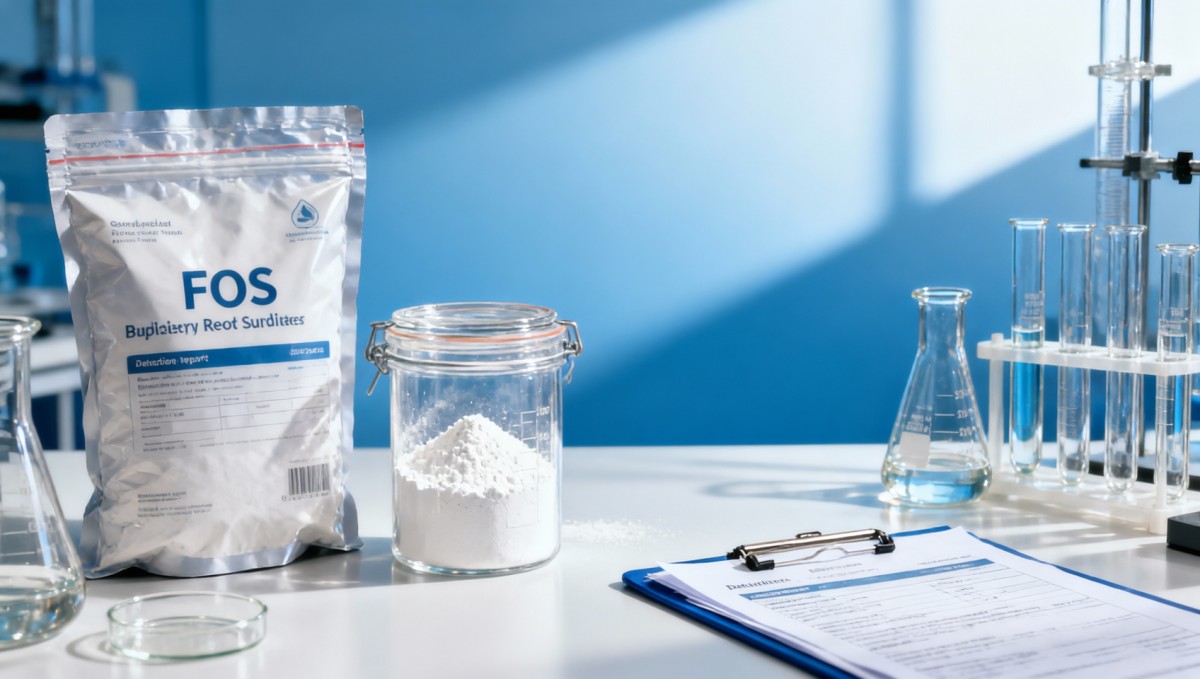
FOS purity affects functionality, labeling, taste profile, and formula behavior. A product sold as high-purity fructooligosaccharides may contain excessive glucose, fructose, sucrose, or unrelated carbohydrate fractions. In food, nutraceutical, feed, and specialty ingredient channels, even a 3%–8% gap between declared and actual oligosaccharide content can change sweetness intensity, hygroscopicity, digestive tolerance, and dosage claims.
For buyers using FOS in powder blends, sachets, beverages, tablets, or fiber systems, low purity can also destabilize manufacturing. Higher simple sugar content may increase stickiness during spray drying or blending, while elevated moisture can shorten shelf life from a typical 24 months to 12–18 months under standard storage. This is especially relevant where FOS is paired with proteins, probiotics, botanical extracts, or mineral fortification systems.
Commercially, the risk extends beyond formulation. If a supplier offers unusually cheap FOS but cannot support the claimed specification with a current COA, method references, or lot traceability, the buyer may face delayed import clearance, customer audit findings, or internal non-conformance reports. In regulated supply chains, one questionable document package can hold an entire order for 7–21 days.
Another common issue is substitution. Some low-end offers marketed beside chicory root fiber bulk or other prebiotic fibers may blend lower-grade syrup solids into the FOS supply chain without making the composition transparent. The problem is not that all lower-cost fibers are unsuitable; the issue is misrepresentation. Procurement must know exactly what is being purchased, in what ratio, and for which end-use tolerance.
Typical hidden problems behind “cheap” FOS wholesale offers
- Declared FOS purity is based on outdated testing, not the current production lot.
- Specification sheets omit DP composition, reducing visibility into functional performance.
- Moisture or ash values are too broad, allowing unstable product quality from batch to batch.
- Microbiological limits are generic and not aligned with the buyer’s market requirements.
- Packaging is insufficient for humidity-sensitive transport over 20–45 day export routes.
These issues are not unique to FOS. Teams that also buy wholesale collagen peptides, rice protein powder organic, or pea protein isolate powder will recognize the pattern: low headline pricing often transfers cost into testing, reformulation, returns, and extra vendor management. That is why purity should be tied to total procurement cost, not just price per kilogram.
How to evaluate FOS specifications before requesting final pricing
A credible wholesale FOS review starts with the specification sheet, but it should never stop there. Buyers should compare at least 6 document categories: product specification, certificate of analysis, manufacturing flow summary, allergen statement, contaminant declaration, and packaging/storage guidance. If two suppliers offer similar purity claims, the one with clearer analytical detail is usually the lower-risk option.
The first technical question is how purity is defined. Some suppliers describe FOS content as “total oligosaccharides,” while others report dry basis FOS, active basis, or a broader dietary fiber figure. Those are not interchangeable. A quotation that looks 10% cheaper may simply be using a less stringent calculation basis. Procurement and QA should request method alignment before comparing commercial offers side by side.
The second question is whether the product profile fits the intended application. For example, powder systems often need tighter moisture control, commonly below 5.0%, while syrup grades may focus more on solids concentration and microbial stability. A nutrition product with digestive tolerance claims may require stronger control over mono- and disaccharides than a general-purpose feed premix.
The table below shows practical specification checkpoints that can help filter weak FOS offers before moving into price negotiation or sample validation.
A strong specification package does not guarantee a perfect supplier, but it quickly eliminates the weakest ones. If values are presented as broad marketing claims instead of measurable limits, buyers should pause. In most B2B ingredient sourcing programs, a supplier unable to provide complete technical data within 48–72 hours is unlikely to perform well when deviations or urgent replenishment requests arise.
Minimum document review sequence
- Confirm product identity, grade, and intended application.
- Verify the analytical basis for purity, moisture, and sugar profile.
- Match the microbiological and contaminant limits to destination market needs.
- Request at least 2–3 recent batch COAs to assess variation.
- Check shelf-life statement, storage conditions, and packaging integrity.
What procurement should flag immediately
If a quotation omits test methods, fails to distinguish powder from syrup grade, or provides only one historical COA, it should be treated as incomplete. The same caution applies when the supplier claims broad compatibility with collagen peptides, protein powders, or chicory root fiber bulk but cannot explain blending behavior, particle flow, or hygroscopic control in those systems.
Supplier due diligence: what separates credible manufacturers from trading risk
A low-purity FOS offer often becomes visible only when buyers evaluate the supplier’s operating model. There is an important difference between a manufacturer with stable process control and a trader assembling offers from multiple factories. Both can be useful in the market, but the documentation burden and traceability expectations are higher when the commercial party is not the actual producer.
Procurement teams should ask a direct set of questions: Who manufactures the product? Is the source fixed or variable? Can the seller provide batch traceability back to production date and line? What is the normal MOQ—500 kg, 1 metric ton, or 5 metric tons—and does the same specification apply across volumes? Inconsistent answers often indicate elevated supply risk.
Capacity matters too. Buyers do not always need the largest producer, but they do need confidence that the supplier can sustain monthly demand. A pilot order of 300 kg is not operational proof if the commercial plan requires 8–12 metric tons per quarter. Ask whether the plant runs continuous or campaign production, and whether lead times stay within 2–4 weeks outside peak periods.
The most reliable suppliers also show process discipline through change control. If raw materials, enzymes, drying parameters, or packaging formats change, buyers should be notified before the next shipment. This is especially important where FOS is used in export markets with strict documentation or where product claims rely on stable compositional ranges.
Key supplier screening criteria
The following comparison framework is useful for procurement, QA, and project stakeholders reviewing FOS alongside other specialty ingredients. It helps separate commercial attractiveness from actual execution capability.
This type of screening is particularly valuable for distributors and multi-ingredient buyers. If the same supplier also quotes rice protein powder organic or pea protein isolate powder, consistency across documentation sets becomes a useful credibility signal. Vendors with strong systems tend to present aligned batch coding, shelf-life logic, and packaging controls across multiple product lines.
A practical rule for finance and approval teams
If the apparent savings from a low-cost FOS quote are below 5%–7%, but the supplier introduces new audit work, extended qualification time, or retesting on arrival, the total landed value may already be negative. Finance reviewers should ask for a risk-adjusted cost comparison rather than approving only on unit price.
Testing, sampling, and contract controls that reduce quality disputes
Even strong documents should be validated by a structured sampling plan. For first-time FOS suppliers, many buyers use a 3-stage approval path: desktop document review, laboratory verification, and limited commercial trial. This staged approach is faster and less costly than discovering a purity deviation after a full container shipment arrives at port or at the production site.
Sampling should reflect the commercial format. For powder FOS, ask for sealed samples from a recent lot rather than repacked bench material. For liquid or syrup grades, request sample retention details and solids data. A meaningful evaluation usually includes purity, moisture or solids, reducing sugar profile, sensory check, and basic microbiology. If the product is intended for sensitive applications, contaminant review should also be defined upfront.
Contract language matters just as much as testing. The purchase agreement should specify analytical basis, acceptance criteria, COA requirements, document timing, and the procedure for out-of-spec findings. Without this detail, even obvious quality gaps can become commercial disputes. Buyers should avoid vague wording such as “high purity” and instead use measurable thresholds tied to the agreed specification.
Lead time and logistics should also be written into the control process. If shipments require 20–35 days transit, humidity exposure and packaging integrity need to be considered in acceptance planning. A compliant product at dispatch can arrive with flow issues or clumping if packaging barriers are weak or pallets are poorly protected during export handling.
Recommended pre-contract control points
- Approve the exact specification version referenced in the PO and supply agreement.
- Request 2 retained samples: one for buyer testing and one for dispute resolution.
- Define whether results are judged on as-is basis or dry basis.
- Set document delivery timing, such as COA release within 24 hours of shipment.
- Clarify non-conformance handling, replacement terms, and credit procedures.
Typical validation timeline
For most B2B ingredient projects, first-pass vendor qualification can be completed in 2–6 weeks. That includes document collection, sample shipment, laboratory review, and internal approval routing. Buyers working across multiple ingredients—such as FOS, collagen peptides, and chicory root fiber bulk—can often shorten timelines by standardizing vendor questionnaires and acceptance checklists across all specialty carbohydrate and protein categories.
How different stakeholders should review a wholesale FOS offer
One reason low-purity FOS slips through sourcing is that each department reviews only part of the risk. Procurement sees price and lead time, QA sees specification compliance, operations sees usability, and finance sees budget impact. A stronger buying process assigns a clear question set to each stakeholder so that no critical issue is left untested before approval.
For operators and formulation users, the core concern is performance under real manufacturing conditions. Does the powder flow consistently? Does it cake after opening? Does the sweetness profile fit the formula target? For QA and safety teams, the priority is document integrity, batch conformity, and storage stability. For project managers, continuity and delivery predictability are often more important than a small price difference.
Distributors and agents need another layer of discipline. Since they may resell to multiple end users, they must confirm whether the same FOS grade suits all channels or whether separate grade positioning is required. A product acceptable for general food use may not meet the tighter expectations of premium digestive health, infant-adjacent, or export-focused formulations.
The matrix below provides a practical cross-functional review model that procurement teams can apply during supplier comparison meetings.
When all four functions review the same offer, poor-quality FOS becomes easier to identify early. This cross-functional discipline is increasingly important as ingredient portfolios widen and buyers compare FOS with adjacent materials such as chicory root fiber bulk or protein systems in the same sourcing cycle.
Common buying mistakes to avoid
- Approving on price before confirming the analytical basis of purity.
- Testing a hand sample but not validating a true production lot.
- Ignoring moisture and packaging controls for long-distance shipping.
- Using vague contracts that do not define acceptance criteria.
- Assuming a supplier strong in one ingredient is automatically strong in FOS.
FAQ for industrial buyers
How many supplier batches should be reviewed before approval?
As a practical minimum, review 2–3 recent commercial batches. One batch can look excellent by chance. Multiple lots provide a better view of process consistency, especially for purity, moisture, and sugar profile variation.
Is a lower-purity FOS always unsuitable?
Not necessarily. Some applications can tolerate broader composition ranges. The real issue is fit-for-purpose transparency. If the offered grade is lower purity but honestly specified, correctly priced, and technically suitable, it may still be usable. Problems arise when the material is marketed as a higher grade than it actually is.
What is a reasonable lead time for wholesale FOS?
Typical lead times often fall within 2–4 weeks for standard stocked grades, excluding transit. Custom packaging, new supplier qualification, or high-volume orders can extend that to 4–8 weeks. Buyers should separate production lead time from shipping time when planning launches.
What should distributors ask before adding a new FOS line?
Distributors should confirm target application range, documentation availability, packaging robustness, shelf-life support, and whether the supplier can maintain a stable grade over time. It is also worth checking how the product compares with adjacent ingredients like chicory root fiber bulk in positioning and technical claims.
Avoiding low-purity FOS wholesale offers requires more than spotting an obviously weak quote. It depends on disciplined specification review, supplier due diligence, structured sample validation, and contract terms that convert technical expectations into enforceable buying criteria. For B2B teams sourcing across fibers, proteins, and specialty ingredients, this approach reduces hidden cost, protects product performance, and strengthens supply reliability.
If your team is comparing FOS sources, reviewing adjacent ingredient categories, or building a more defensible supplier qualification process, now is the right time to tighten your evaluation framework. Contact us to discuss your sourcing criteria, request a tailored supplier assessment checklist, or explore more procurement intelligence for fine chemicals and industrial ingredient markets.
Related Intelligence
- Natural IngredientsIndonesia BPOM Updates Label Rules for Natural Ingredients ImportsIndonesia BPOM updates label rules for natural ingredients imports: New pH ≤4.6 & 60°C/30min tolerance statement required by Aug 1, 2026 — act now to avoid customs rejection.
- Natural IngredientsIndonesia BPOM Updates Natural Ingredients Import LabelingIndonesia BPOM Updates Natural Ingredients Import Labeling: New 'Microbial Resistance Profile' required for cosmetics, supplements & personal care imports—act now to avoid customs delays.
- Natural IngredientsWholesale inulin powder vs FOS: which fits better?Wholesale inulin powder vs fructooligosaccharides FOS wholesale: compare chicory root fiber bulk benefits, solubility, texture, tolerance, and B2B application fit to choose smarter.
The Morning Broadsheet
Daily chemical briefings, market shifts, and peer-reviewed summaries delivered to your terminal.
