
Fructooligosaccharides FOS wholesale price drivers
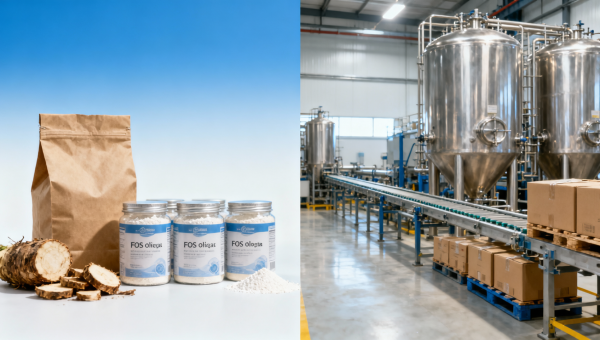
Fructooligosaccharides FOS wholesale price movements are shaped by raw material availability, chicory root fiber bulk trends, processing costs, freight volatility, and regional demand across food, nutraceutical, and feed markets. For buyers comparing wholesale inulin powder, monk fruit extract mogroside, or xylitol sweetener wholesale, understanding these pricing drivers is essential for smarter sourcing, margin control, and supplier risk evaluation.
What really drives fructooligosaccharides FOS wholesale price changes?

For most industrial buyers, fructooligosaccharides FOS wholesale price is not determined by one simple quote sheet. It is usually the result of 4 interconnected cost layers: feedstock sourcing, conversion technology, quality assurance, and logistics execution. In periods of stable demand, price shifts may appear moderate over 30–90 days. But when raw material supply tightens or ocean freight rates swing within a 2–6 week window, FOS offers can change much faster than annual procurement plans expect.
The first layer is agricultural input availability. Commercial FOS is commonly produced from sucrose-based or inulin-related processing routes, so buyers should watch sugar market movement, chicory root harvesting conditions, crop yield variability, and regional energy prices. A poor harvest season, lower extraction efficiency, or rising input competition from food and nutraceutical manufacturers can quickly narrow supplier margins. That often leads to shorter validity periods on quotations, sometimes only 7–15 days for bulk negotiations.
The second layer is manufacturing complexity. Two FOS products may both look similar on a specification sheet, yet differ in polymer distribution, sweetness profile, moisture control, and microbiological management. Production cost is influenced by enzymatic conversion efficiency, filtration, concentration, drying method, and packaging format. Spray-dried powder, low-moisture granules, or customized blend formats do not carry the same operating cost. This matters for procurement teams comparing FOS against wholesale inulin powder or xylitol sweetener wholesale in private-label or formulation programs.
The third and fourth layers are compliance and delivery. Documentation review, lot traceability, shelf-life management, and export paperwork all add cost, especially for shipments crossing multiple regulatory jurisdictions. Buyers in food, feed, and nutraceutical channels often need repeated checks at 3 stages: pre-order qualification, pre-shipment review, and inbound quality release. ACC’s sector coverage is useful here because pricing decisions in fine chemicals and bio-extract ingredients increasingly depend on operational transparency rather than nominal ex-works price alone.
Core variables procurement teams should track each month
A monthly pricing review is more effective when teams follow a consistent framework instead of reacting to isolated supplier messages. In practice, five variables explain a large share of short-term FOS price movement and sourcing risk.
- Raw material trend: sugar, chicory root fiber, or related carbohydrate feedstock direction over the previous 30–60 days.
- Processing cost: utility rates, enzyme cost, drying efficiency, and plant operating load.
- Freight and packaging: container availability, pallet material cost, and route congestion by region.
- Demand intensity: food reformulation demand, prebiotic ingredient seasonality, and distributor restocking.
- Compliance burden: documentation depth, testing frequency, and destination market labeling requirements.
When these variables are reviewed together, purchasing managers and finance approvers can better judge whether a supplier’s higher quotation reflects market conditions or simply weak pricing discipline. That distinction is important in multi-quarter contracts where a small per-kilogram difference can materially affect total landed cost.
How should buyers compare FOS with inulin, monk fruit, and xylitol on cost logic?
Many sourcing decisions do not involve FOS in isolation. Product developers and distributors often compare fructooligosaccharides FOS wholesale price with wholesale inulin powder, monk fruit extract mogroside, or xylitol sweetener wholesale because each ingredient can contribute to sweetness positioning, digestive health claims, sugar reduction strategy, or texture management. However, comparing price per kilogram alone is rarely enough. The real question is cost-in-use within the final formulation.
FOS often sits in a middle ground. It offers prebiotic positioning, moderate sweetness, and formulation flexibility in dairy alternatives, beverage powders, nutrition blends, bakery systems, and selected feed applications. Inulin may provide similar digestive health alignment but can differ in solubility, mouthfeel contribution, and fiber declaration profile. Monk fruit extract mogroside is used at much lower inclusion rates, so its unit price may be much higher while formulation cost impact remains controlled. Xylitol may deliver stronger sweetness equivalence, yet cost structure, cooling effect, and labeling considerations are different.
For R&D teams, the most useful purchasing view combines 3 metrics: inclusion rate, functional role, and compliance fit. For finance teams, the better lens is total batch economics across 500 kg, 1 ton, or container-level procurement. For quality and regulatory teams, the key issue is whether the ingredient specification matches the intended market. ACC regularly interprets such cross-functional tradeoffs because ingredient buyers in regulated supply chains cannot separate cost from technical suitability.
The table below gives a practical comparison framework for shortlist discussions. It is not a universal ranking, because the best option depends on formulation targets, label strategy, and regional market rules.
This comparison shows why procurement teams should avoid direct price conclusions without formulation context. A lower-cost bulk ingredient can create higher total cost if it requires additional masking, process adjustment, or claim revision. Conversely, a premium ingredient may reduce dosage enough to improve overall margin. That is why distributor, plant, and finance discussions should occur before final supplier negotiation.
Decision questions before switching ingredients
Before replacing FOS with another sweetener or fiber source, project teams should test several operational questions over a 2–4 week evaluation cycle.
- Will the inclusion rate increase or decrease the total batch cost at commercial scale?
- Does the alternative change sensory profile, processing behavior, or storage stability?
- Are additional documents needed for destination market compliance or customer approval?
- Can the supplier maintain the same quality lot after lot for at least 2–3 procurement cycles?
These checks reduce the risk of a short-term price saving becoming a medium-term reformulation problem.
What should procurement, QA, and finance check before approving a bulk FOS order?
In B2B purchasing, the most expensive mistake is often not the quoted price. It is approving a shipment with an incomplete technical file, unsuitable packaging, or unclear delivery terms. Buyers evaluating fructooligosaccharides FOS wholesale price should align procurement, QA, operations, and finance around a 5-point approval checklist before issuing a purchase order. This is especially important for import programs with lead times of 3–8 weeks, where correction after shipment is slow and costly.
Procurement teams should first confirm the commercial structure: Incoterms, minimum order quantity, quote validity, packaging size, and tolerance on quantity delivered. A low offer on an ex-works basis may become less attractive after palletization, inland trucking, export documentation, and destination port charges. Finance approvers should then translate the quote into landed cost per kilogram, not just invoice price. This becomes critical when comparing multiple suppliers across Asia, Europe, and local regional stock points.
QA and safety teams should focus on specification alignment. Typical checks include moisture range, assay or composition profile, microbiological limits, allergen statement, GMO status where relevant, shelf life, storage guidance, and packaging integrity. Operators and project managers should also verify how the material behaves in the plant: flowability, solubility, dust generation, and compatibility with existing batching systems. These factors affect real operating cost over every production run, not only the first trial.
The table below can be used as a cross-functional procurement screen for supplier comparison. It is designed for practical review meetings rather than marketing claims.
Using a checklist like this helps enterprises balance speed with control. A supplier with a slightly higher quotation may still be the stronger commercial choice if it delivers tighter documentation, shorter replenishment cycles, or more predictable lot performance. In regulated and quality-sensitive sectors, this difference frequently outweighs nominal price gaps.
A practical 4-step buying process
Step 1: Define the use case
Clarify whether FOS is being used for sweetness support, fiber positioning, digestive health formulation, or feed functionality. This determines the right grade and acceptable cost range.
Step 2: Confirm the technical file
Collect specification sheet, COA template, SDS, storage guidance, and any market-specific declarations before sample or trial approval. Do not wait until shipment booking.
Step 3: Model landed cost
Estimate the total cost at 500 kg, 1 ton, and full-container volume. Include freight, customs handling, warehousing, and internal QA release time where relevant.
Step 4: Approve supply resilience
Check whether the supplier can support repeat orders over at least 2 consecutive quarters, not only one promotional shipment. Continuity often matters more than a one-time price concession.
Which market signals usually indicate FOS prices may move next?
Experienced buyers rarely wait for formal price increases before adjusting their sourcing plan. In the fructooligosaccharides market, certain signals tend to appear 2–8 weeks before quotations change materially. Monitoring these indicators helps distributors, project managers, and plant buyers decide whether to lock in volume, split orders, or delay a non-urgent purchase. ACC’s advantage as a specialist journal lies in connecting these signals across agriculture, bio-extract ingredients, and industrial processing rather than treating them as isolated events.
One useful signal is feedstock tightness. If chicory-related inputs, sugar markets, or related carbohydrate streams show sustained pressure over one or two procurement cycles, FOS producers may respond with lower discount flexibility first and outright price increases later. Another signal is energy and drying cost. Powder ingredient pricing is sensitive to utility inflation, especially when concentration and drying are energy intensive. Freight volatility is also important: container shortages, route diversion, or seasonal port congestion can quickly alter delivered pricing even when ex-factory numbers stay unchanged.
Demand-side shifts matter too. Functional food launches, digestive health category growth, and distributor restocking often create regional spikes. In such periods, the best suppliers may prioritize long-term contract customers before spot buyers. That does not always mean the market is structurally short, but it does mean buyer response time should be faster. A 10-day delay in internal approval can mean a different shipment slot, different freight rate, or reduced packaging availability.
Risk control becomes stronger when businesses segment purchasing into three horizons: immediate coverage for 30 days, operational coverage for 60–90 days, and strategic contracting for the next quarter. This structure helps enterprises react to volatility without overcommitting inventory. It is especially useful when FOS is only one part of a broader sweetener and prebiotic ingredient portfolio.
Common market warning signs
- Quotation validity shortens from 30 days to under 10–15 days, suggesting unstable upstream cost.
- Suppliers limit discount bands for larger orders, indicating tighter capacity or reduced margin room.
- Lead times extend from standard dispatch windows to 3–6 weeks, often reflecting production load or export congestion.
- Document processing slows down, which may signal operational stress or changing destination requirements.
Individually, these signs may not justify immediate action. Together, they usually indicate that price and supply conditions are becoming less predictable.
FAQ for buyers evaluating fructooligosaccharides FOS wholesale price
The questions below reflect common search intent from researchers, plant users, sourcing managers, distributors, and executive reviewers who need actionable guidance rather than generic market commentary.
How should I compare FOS quotations from different suppliers?
Compare on a landed-cost basis and match the technical scope line by line. Check grade, composition profile, moisture, microbiological limits, package size, Incoterms, and quote validity period. A supplier offering a lower headline price but longer lead time or weaker documentation may create a higher actual cost once production delay and QA workload are included.
What order volume usually gives better pricing leverage?
The answer depends on supplier capacity, route, and packaging format, but pricing discussions often improve across three brackets: sample or pilot quantity, palletized medium volume, and container-level volume. Buyers should request tiered offers rather than one fixed quote. This gives finance and procurement teams a clearer view of where the real breakpoints in unit cost appear.
Is the lowest fructooligosaccharides FOS wholesale price always the best decision?
Usually no. If the lower-cost material has weaker solubility, inconsistent lot performance, or incomplete regulatory support, the apparent saving may disappear during plant use or customer approval. For repeat industrial use, supply reliability and technical consistency often protect margin better than a one-time discount.
How long is the normal delivery cycle for bulk FOS?
Delivery time varies by region and stock status, but many transactions fall into a 1–3 week dispatch range for available stock and 3–8 weeks for made-to-order or international shipments. Buyers should separate production lead time from transit time and from customs clearance time, because delays can occur at any of those three stages.
What documents should quality and compliance teams request?
At minimum, ask for a specification sheet, COA format, SDS, storage and shelf-life guidance, origin details, and relevant regulatory declarations for the destination market. If the ingredient is entering sensitive food, feed, or nutraceutical channels, additional statements may be required depending on customer policy and jurisdiction.
Why work with ACC when sourcing insight matters as much as the quote?
For institutional buyers, the real challenge is rarely just finding a supplier name. It is understanding whether a quotation is commercially sound, technically appropriate, and defensible to internal stakeholders. AgriChem Chronicle supports that process by translating complex ingredient market dynamics into decision-ready intelligence for agricultural, biochemical, and primary processing sectors. This matters when fructooligosaccharides FOS wholesale price must be evaluated alongside inulin, monk fruit extract mogroside, xylitol, and other specialty ingredients in a shared procurement portfolio.
Our editorial focus is particularly relevant for teams that need cross-disciplinary clarity: procurement wants price direction, QA wants documentation confidence, operations wants usable material, and finance wants margin predictability. ACC bridges these needs through industry-grounded analysis shaped by biochemical engineering, agricultural science, and trade compliance perspectives. That gives buyers a more practical foundation for supplier screening and contract timing.
If your team is reviewing bulk FOS procurement, we can help you narrow the discussion to the issues that actually affect buying outcomes. Typical consultation topics include parameter confirmation, grade comparison, quotation interpretation, delivery cycle planning, documentation readiness, alternate ingredient benchmarking, and supplier risk signals over the next 30–90 days.
Contact ACC if you need support with wholesale FOS market mapping, side-by-side supplier evaluation, sample and trial planning, contract timing assessment, or a broader comparison with wholesale inulin powder, monk fruit extract mogroside, and xylitol sweetener wholesale. A focused inquiry at the start of the buying cycle can reduce rework, protect margin, and help your internal approval chain move faster with better evidence.
Related Intelligence
- Natural IngredientsIndonesia BPOM Updates Label Rules for Natural Ingredients ImportsIndonesia BPOM updates label rules for natural ingredients imports: New pH ≤4.6 & 60°C/30min tolerance statement required by Aug 1, 2026 — act now to avoid customs rejection.
- Natural IngredientsIndonesia BPOM Updates Natural Ingredients Import LabelingIndonesia BPOM Updates Natural Ingredients Import Labeling: New 'Microbial Resistance Profile' required for cosmetics, supplements & personal care imports—act now to avoid customs delays.
- Natural IngredientsWholesale inulin powder vs FOS: which fits better?Wholesale inulin powder vs fructooligosaccharides FOS wholesale: compare chicory root fiber bulk benefits, solubility, texture, tolerance, and B2B application fit to choose smarter.
The Morning Broadsheet
Daily chemical briefings, market shifts, and peer-reviewed summaries delivered to your terminal.
