
Chicory root fiber bulk: what affects performance?
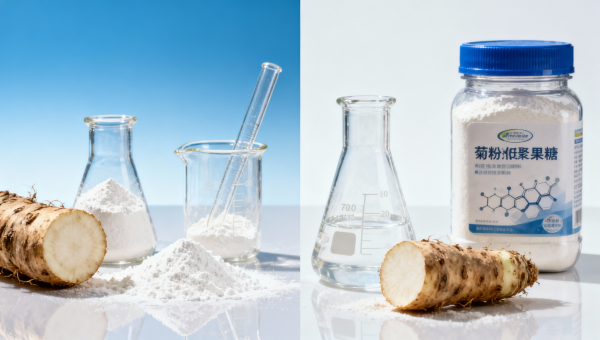
From formulation stability to supply consistency, the performance of chicory root fiber bulk depends on far more than fiber content alone. For buyers comparing wholesale inulin powder, fructooligosaccharides FOS wholesale, or adjacent ingredients such as pea protein isolate powder and monk fruit extract mogroside, understanding purity, process conditions, and application fit is essential. This article examines the technical and commercial factors that shape outcomes across food, nutraceutical, and industrial procurement.
What really determines chicory root fiber bulk performance in commercial use?
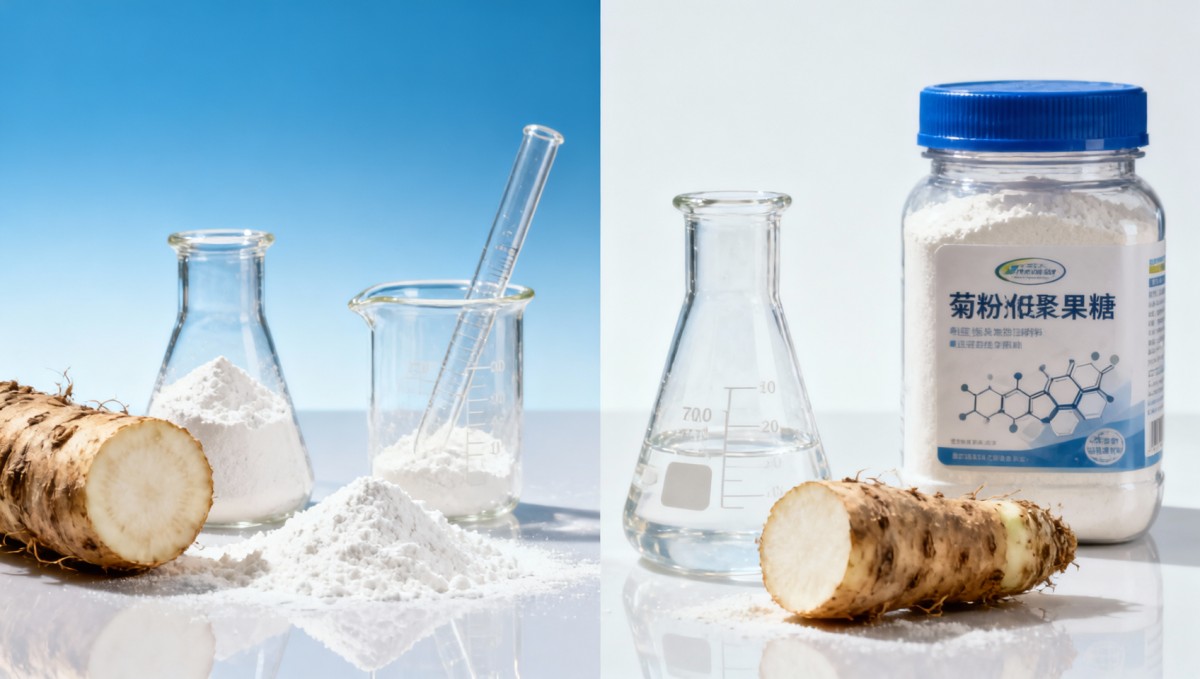
The short answer is that chicory root fiber bulk performance is driven by specification quality, process stability, and application matching, not by label claims alone. In practical procurement, two products may both be sold as chicory root fiber, inulin, or oligofructose, yet perform very differently in mixing, sweetness balance, moisture control, texture building, digestive tolerance, and shelf-life.
For technical buyers, operators, and decision-makers, the most important judgment is this: the best-performing bulk chicory root fiber is the one whose degree of polymerization, purity, particle behavior, microbiological profile, and supply consistency fit the end-use process. A low-cost bulk lot can become expensive if it causes filtration issues, clumping, formulation drift, out-of-spec fiber claims, or consumer complaints about digestive discomfort.
That is why performance should be assessed across three levels:
- Ingredient level: inulin/FOS ratio, fiber content, moisture, ash, sweetness, solubility, and particle size
- Process level: heat stability, pH tolerance, shear behavior, dispersion speed, and compatibility with other actives or proteins
- Supply level: lot-to-lot consistency, documentation, traceability, storage stability, and vendor quality systems
Which product specifications have the biggest impact on results?
When buyers search for chicory root fiber bulk, they are often trying to predict how the ingredient will behave in a real formula, not just whether it passes a basic COA. The following specifications matter most.
1. Degree of polymerization and chain length distribution
This is one of the biggest technical variables. Chicory root fiber may contain longer-chain inulin, shorter-chain fructooligosaccharides, or blended fractions. That affects:
- Solubility
- Sweetness perception
- Mouthfeel and fat-mimetic behavior
- Prebiotic positioning
- Digestive tolerance at intended dosage
Longer-chain inulin tends to contribute more body and texture, which may be valuable in dairy alternatives, nutrition powders, and reduced-sugar systems. Shorter-chain FOS generally dissolves more easily and contributes more sweetness, but may change osmotic behavior and digestive response at higher inclusion levels.
2. Purity and non-fiber solids
Fiber percentage alone is not enough. Residual sugars, plant solids, ash, and moisture can influence flavor, processing behavior, and specification compliance. Higher impurity levels may affect:
- Taste cleanliness
- Color in finished products
- Water activity management
- Powder flowability
- Regulatory labeling accuracy
For food and nutraceutical applications, tighter purity specifications often translate into more predictable performance and lower reformulation risk.
3. Moisture content and hygroscopicity
Bulk chicory root fiber can absorb moisture during storage and transport. In humid conditions, this may cause caking, reduced flow, poor dosing accuracy, and inconsistent blending. Procurement teams should not evaluate moisture as a minor housekeeping metric; it directly affects handling efficiency and inventory usability.
4. Particle size and bulk density
These factors shape how the powder behaves in conveying, blending, sachet filling, drum unloading, and hydration. Fine powders may disperse quickly but dust more. Coarser fractions may improve handling but require more mixing energy. In large-scale operations, this can become a material productivity issue, not just a lab preference.
How do process conditions affect functionality in food and nutraceutical formulations?
Even a high-quality chicory root fiber bulk material can underperform if process conditions do not match its technical profile. This is especially important for operators and project managers scaling from pilot runs to commercial production.
Thermal exposure
Extended heat treatment can change functional behavior, especially in systems with low pH or prolonged residence time. Depending on the grade, excessive thermal stress may reduce structure-building benefits or alter sweetness balance. Buyers should ask suppliers for stability guidance under actual process conditions, not only standard storage recommendations.
pH environment
Acidic systems such as beverages, gummies, syrups, and some nutraceutical applications may challenge certain chicory fiber grades. Hydrolysis risk and functionality shifts become more relevant when low pH combines with heat. If the end use includes acidic filling or hot processing, bench testing should be mandatory.
Hydration and dispersion method
Order of addition matters. Poor wetting can lead to fisheyes, clumps, and incomplete hydration. This creates apparent performance issues that are actually process-related. In powdered beverage bases or nutritional blends, proper dispersion equipment and mixing sequence often determine whether the ingredient performs as expected.
Interaction with proteins, sweeteners, and solids
Many buyers comparing wholesale inulin powder are not evaluating it in isolation. They are using it alongside proteins, sweeteners, minerals, or botanical actives. For example:
- With pea protein isolate powder, chicory root fiber may improve mouthfeel, body, and sugar reduction positioning, but the wrong grade can worsen chalkiness or viscosity imbalance.
- With monk fruit extract mogroside, fiber can help round sweetness perception and support bulking, but purity and flavor neutrality become more important.
- With fructooligosaccharides FOS wholesale options, buyers must compare sweetness contribution, labeling targets, and digestive tolerance at use level.
In short, performance is formulation-dependent. A strong supplier should be able to discuss application-specific compatibility, not just generic ingredient benefits.
What commercial and supply chain factors matter as much as technical quality?
For procurement managers, distributors, and financial approvers, ingredient performance is not only about functionality in the formula. It is also about whether the material can be sourced, controlled, and deployed reliably over time.
Lot-to-lot consistency
If a chicory root fiber bulk supplier cannot maintain narrow variation in moisture, particle size, color, and sensory profile, production teams may need constant adjustments. This increases labor, slows line efficiency, and introduces quality risk. Consistency is often more valuable than chasing the absolute lowest quoted price.
Documentation and compliance readiness
Depending on target markets, buyers may require:
- COA and specification sheets
- Allergen statements
- Non-GMO status
- Microbiological controls
- Heavy metal data
- Pesticide or contaminant screening
- Traceability and origin disclosure
- Food safety or relevant quality certifications
For regulated sectors, incomplete documentation can delay product approval more than any price advantage can justify.
Packaging format and warehouse stability
Bulk packaging affects handling loss, contamination exposure, and storage life. Fiber ingredients are especially sensitive to moisture management. Buyers should review inner liner quality, palletization integrity, stack performance, and container suitability for long transit routes.
Supplier resilience
Because chicory root fiber is tied to agricultural and extraction supply conditions, availability can shift due to crop variation, energy costs, and processing capacity. Serious buyers should evaluate whether the supplier has redundant manufacturing, stock programs, or regional warehousing support.
How should buyers compare chicory root fiber with adjacent bulk ingredients?
Many searchers are not only asking whether chicory root fiber works. They are deciding whether it is the right ingredient compared with nearby alternatives in a formula or sourcing project.
Compared with FOS
Short-chain FOS may offer easier solubility and a slightly sweeter profile, making it attractive in beverages and flavor-sensitive systems. Chicory inulin with longer chains may perform better where texture, bulking, or creamy mouthfeel matter. The decision should follow the product objective, not a general assumption that all prebiotic fibers are interchangeable.
Compared with pea protein isolate powder
These ingredients serve different functional roles, but they are often purchased together for nutritional systems. Pea protein isolate delivers protein fortification; chicory root fiber contributes bulking, fiber claims, and textural support. In combined use, the right ratio can improve sensory balance. The wrong ratio can create dense or gritty systems.
Compared with monk fruit extract mogroside
Monk fruit is a high-intensity sweetener, not a bulking fiber. But in sugar-reduced formulations, buyers frequently evaluate them in the same reformulation program. Chicory root fiber can replace lost solids and improve mouthfeel when high-intensity sweeteners are used. In this context, its performance depends heavily on flavor neutrality, dispersion, and digestive tolerance at the target dose.
What questions should procurement and technical teams ask before buying?
To avoid trial-and-error purchasing, buyers should ask structured questions that connect specification to use case.
- What is the exact composition: inulin, oligofructose, FOS, or a blend?
- What is the fiber assay basis, and what are the residual sugars?
- How does the grade behave under my pH and temperature conditions?
- What is the particle size distribution and bulk density?
- How is caking risk managed during shipping and storage?
- What are the microbiological and contaminant control limits?
- Can the supplier provide application support for my category?
- How stable is pricing and supply over the contract period?
- What is the documented lot-to-lot variability?
- Is the packaging suitable for my warehouse and dosing system?
These questions help both technical and commercial stakeholders align around total cost of ownership, not just per-kilogram price.
Final assessment: what affects chicory root fiber bulk performance most?
The main factors are clear: composition, purity, moisture control, particle characteristics, process compatibility, and supplier consistency. For real-world buyers, the highest-performing chicory root fiber bulk product is rarely the one with the simplest marketing claim. It is the one that performs reliably in the target application, passes compliance review smoothly, and arrives with dependable quality from lot to lot.
If you are evaluating wholesale inulin powder, fructooligosaccharides FOS wholesale, or formulations that also include pea protein isolate powder and monk fruit extract mogroside, the smartest approach is to compare ingredients through the combined lens of functionality, risk, and procurement stability. That is the standard that supports better formulations, fewer production surprises, and stronger commercial outcomes.
Related Intelligence
- Botanical ExtractsANVISA Extends Traceability for Botanical Extract Imports to Tier-2 SuppliersANVISA extends botanical extract traceability to tier-2 suppliers—key for Chinese exporters of herbal ingredients, supplements & cosmetics. Act now for July 2026 compliance.
- Botanical ExtractsANVISA Extends Traceability for Botanical Extracts to Tier-2 SuppliersANVISA extends botanical extract traceability to tier-2 suppliers—solvents, filter aids, adsorption media—effective Sept 1, 2026. Essential for exporters & supplement brands.
- Botanical ExtractsEU CBAM Carbon Tariff First Applies to Botanical ExtractsEU CBAM Carbon Tariff now covers Botanical Extracts—key for exporters, importers & LCA providers. Act now to ensure compliance by 24 April 2026.
The Morning Broadsheet
Daily chemical briefings, market shifts, and peer-reviewed summaries delivered to your terminal.
