
EU CBAM Carbon Tariff Enters Enforcement Phase for Natural Ingredients
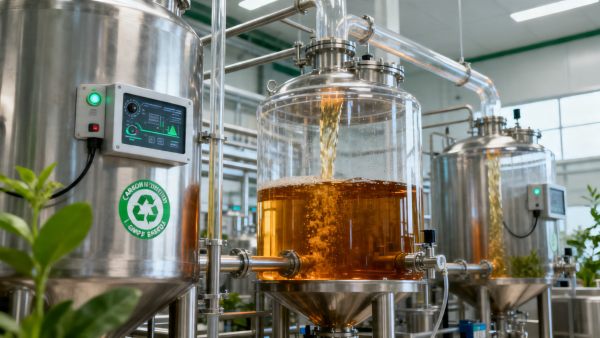
As of 1 January 2026, the European Union’s Carbon Border Adjustment Mechanism (CBAM) has formally entered its enforcement phase — ending the transitional period and requiring verified carbon footprint reporting for natural ingredients exported to the EU, including plant extracts and natural flavors. This development directly affects Chinese suppliers engaged in this trade segment and signals a structural shift in compliance requirements for global exporters.
Event Overview
On 1 January 2026, the EU CBAM transition period concluded, and the mechanism moved into full implementation. From Q2 2026 onward, exporters of natural ingredients — specifically plant extracts and natural flavorings — must submit lifecycle carbon footprint reports verified by EU-recognized bodies. These reports must be linked to the EU Emissions Trading System (EU ETS). Non-compliant shipments face customs delays and additional financial levies at EU borders.
Industries Affected by Sector
Direct Exporters (Trading Companies)
These entities act as the legal importers or declarants for natural ingredients entering the EU. They are responsible for submitting CBAM declarations and associated carbon data. Impact arises because they now bear primary accountability for verification compliance — even if upstream manufacturing occurs elsewhere. Failure to submit valid reports results in clearance suspension and potential duty surcharges.
Processing & Manufacturing Firms
Firms producing plant extracts or natural flavorings — especially those operating under OEM/ODM arrangements — are indirectly but critically affected. Their production processes, energy sources, and input materials determine the carbon intensity reported upstream. Without internal carbon accounting systems or process-level emission tracking, they cannot support their trading partners’ CBAM reporting obligations.
Raw Material Sourcing & Supply Chain Operators
Suppliers of botanical raw materials (e.g., dried herbs, essential oil feedstocks) may be asked to provide upstream emission data — such as agricultural inputs, transport distances, or drying methods — to enable accurate cradle-to-gate footprinting. While not directly liable under CBAM, their data gaps could delay downstream reporting and disrupt order fulfillment.
Logistics & Compliance Service Providers
Third-party verifiers, customs brokers, and sustainability consultants specializing in export compliance now face increased demand for CBAM-specific validation services. However, only EU-accredited verifiers can issue recognized reports — limiting service options and raising costs for exporters reliant on external support.
What Relevant Enterprises Should Monitor and Do Now
Track official guidance on CBAM reporting templates and sectoral methodologies
The European Commission is expected to release updated technical documentation ahead of Q2 2026. Exporters should monitor updates from the EU CBAM Transitional Registry and national customs authorities for clarified rules on boundary definitions (e.g., whether solvent use in extraction counts as Scope 1 or Scope 2), default values, and acceptable verification scopes.
Identify high-risk product lines and prioritize verification readiness
Not all natural ingredients carry equal CBAM exposure. Products with energy-intensive processing (e.g., steam-distilled oils, spray-dried extracts) or long-haul logistics are likely to show higher footprints. Companies should map current exports by HS code and processing method to assess which SKUs require urgent carbon assessment.
Distinguish between regulatory signal and operational requirement
CBAM enforcement began 1 January 2026, but mandatory reporting starts in Q2 2026 — meaning first submissions cover Q2 activity. There is no retroactive requirement for Q1. Companies should avoid premature reporting or over-investment before final methodology confirmation, while ensuring internal data collection systems are active from April 2026 onward.
Initiate internal alignment across procurement, production, and export functions
Carbon reporting requires cross-departmental coordination: procurement must collect supplier emission data; production must log energy consumption per batch; QA/QC may need to adapt documentation workflows. Early alignment helps identify data ownership, system integration needs, and staff training priorities before deadlines approach.
Editorial Perspective / Industry Observation
From an industry perspective, the 2026 CBAM enforcement milestone is best understood not as a sudden disruption, but as the operationalization of a multi-year policy signal. It confirms that carbon accountability is now embedded in trade infrastructure — not just environmental policy frameworks. Analysis来看, this shift elevates carbon data from voluntary ESG disclosure to mandatory trade documentation. Observation来看, early adopters among Chinese natural ingredient exporters are likely to gain competitive advantage in EU market access, while laggards risk marginalization in tender processes or distributor partnerships. Current more appropriate understanding is that CBAM is functioning less as a tariff and more as a compliance gatekeeper — where verification capacity, not just product quality, determines market entry.
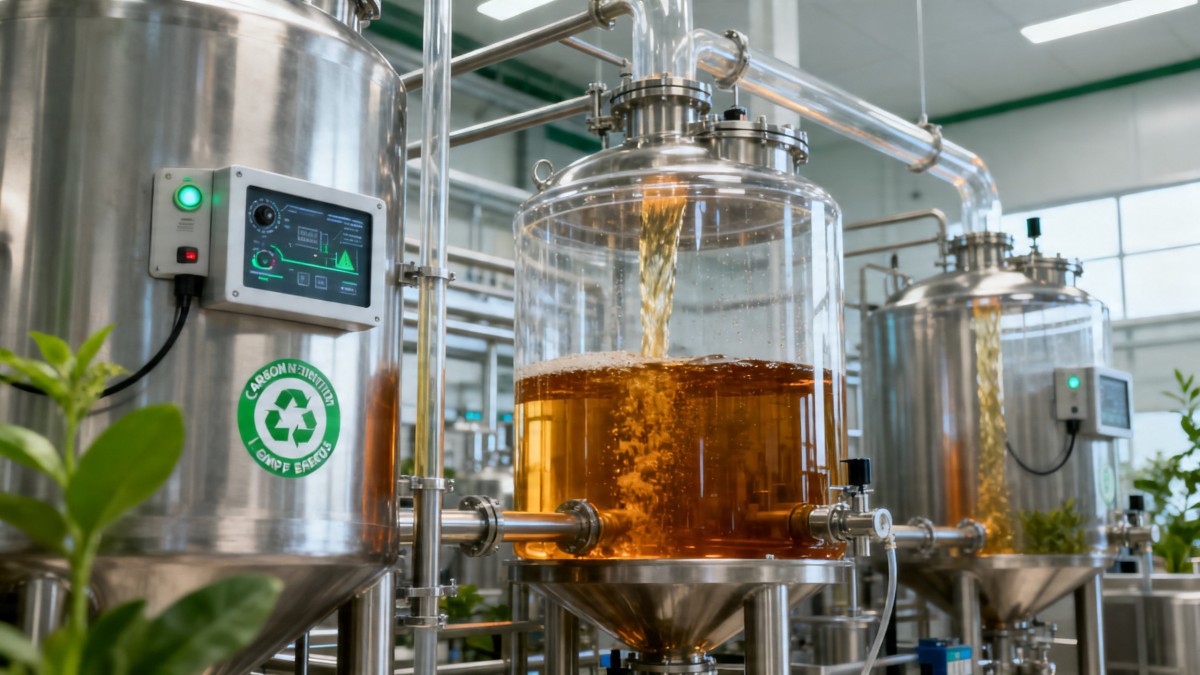
In summary, the CBAM enforcement phase marks a structural recalibration for natural ingredients exporters targeting the EU. Its significance lies not in immediate revenue impact, but in the irreversible linkage between climate performance and trade eligibility. The current stage is best interpreted as a compliance inflection point — one that rewards preparedness, transparency, and cross-functional coordination over reactive adaptation.
Source: Official EU CBAM Regulation (EU) 2023/1761, European Commission CBAM Transitional Registry announcements (as of December 2025); note: sector-specific implementation guidance for natural ingredients remains under review and subject to further clarification in early 2026.
Related Intelligence
- Natural IngredientsEU CBAM Carbon Tariff Enters Enforcement Phase for Natural IngredientsEU CBAM Carbon Tariff enforcement starts Jan 2026 for natural ingredients — plant extracts & flavors must report verified carbon footprints to clear EU customs. Act now!
- Natural IngredientsIndonesia BPOM Tightens Import Rules for 3 Mushroom ExtractsIndonesia BPOM tightens import rules for Ganoderma lucidum, Grifola frondosa & Hericium erinaceus extracts — GMP + AOAC validation now mandatory from June 1, 2026. Act now!
- Natural IngredientsKonjac Glucomannan Powder: What Affects Quality?Konjac glucomannan powder quality explained: compare purity, viscosity, moisture, and supplier consistency with locust bean gum wholesale, guar gum powder bulk, and carrageenan gum wholesale.
The Morning Broadsheet
Daily chemical briefings, market shifts, and peer-reviewed summaries delivered to your terminal.
