
SASO Accelerates RAS Systems Local Certification for Chinese Firms
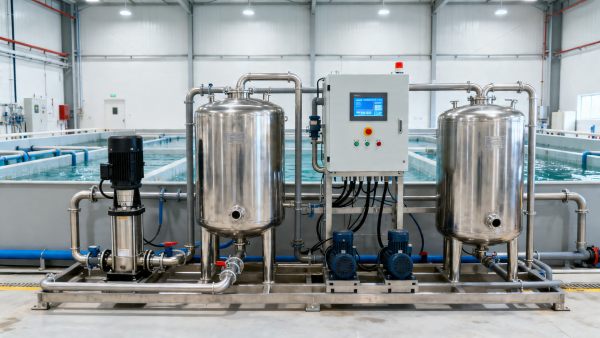
Saudi Standards, Metrology and Quality Organization (SASO) announced on April 21, 2026, a streamlined local certification pathway for Recirculating Aquaculture Systems (RAS Systems). Chinese manufacturers holding CNAS-accredited test reports and ISO 22000 Food Safety Management System certification are now eligible for direct VOC (Verification of Conformity) issuance—bypassing redundant type testing. This change targets exporters in aquaculture equipment, water treatment systems, and integrated food production infrastructure serving the Gulf market.
Event Overview
On April 21, 2026, SASO officially launched an accelerated local certification process for RAS Systems. Under the new arrangement, Chinese manufacturers may obtain VOC certificates without repeating type testing, provided they submit: (1) performance test reports issued by laboratories accredited by China National Accreditation Service for Conformity Assessment (CNAS); and (2) valid ISO 22000 Food Safety Management System certificates. The VOC certificate issuance cycle is now reduced to within seven working days.
Impact on Specific Industry Segments
Direct Exporters of RAS Equipment
These firms supply complete or modular RAS units—including biofilters, oxygenation systems, and control platforms—to Saudi importers or project integrators. They are directly affected because VOC certification is mandatory for customs clearance into Saudi Arabia. The change eliminates a major bottleneck: previously, even with CNAS and ISO 22000, third-party retesting in Saudi-accredited labs was required, adding 4–8 weeks and USD 5,000–12,000 per model. Now, VOC eligibility hinges on documentation readiness—not lab logistics.
Manufacturers of RAS Subsystems & Components
Firms producing critical subsystems (e.g., UV sterilizers, denitrification reactors, sensor-integrated pumps) benefit indirectly but significantly. While VOC applies to full-system conformity, SASO’s acceptance of CNAS/ISO 22000 as evidence signals growing recognition of upstream quality controls. This may influence future technical specifications in tenders or OEM agreements where Saudi partners require traceable compliance from component suppliers.
Food Safety & Certification Service Providers
Consultancies, certification bodies, and lab coordination services supporting Chinese exporters must adapt their service packages. Previously, they prioritized arranging SASO-mandated testing abroad. Now, emphasis shifts to verifying CNAS scope alignment (e.g., whether the lab’s accreditation covers hydraulic efficiency, ammonia removal rate, or pathogen reduction claims), validating ISO 22000 implementation depth (especially for multi-site RAS integrators), and ensuring VOC application documentation meets SASO’s updated digital submission requirements.
What Relevant Enterprises or Practitioners Should Focus On
Monitor official SASO guidance updates on VOC application procedures
The current announcement confirms eligibility criteria but does not yet detail document formatting, digital portal requirements, or validity periods for accepted CNAS reports. Firms should track SASO’s e-VOC platform notices and consult the official SASO Technical Regulation TR-001-RAQ-2026 (RAS-specific conformity assessment) for revisions.
Verify CNAS lab scope and ISO 22000 scope alignment with RAS functional claims
Not all CNAS-accredited labs cover RAS-specific parameters (e.g., total ammonia nitrogen (TAN) conversion efficiency, dissolved oxygen stability under load). Similarly, ISO 22000 certification must explicitly include RAS system operation—not just feed or processing facilities. Exporters should audit existing certificates against SASO’s listed performance requirements before initiating VOC applications.
Distinguish between policy signal and operational readiness
This is a formal procedural change—not a temporary pilot or conditional waiver. However, VOC issuance remains subject to SASO’s verification of submitted documents. Delays may still occur if reports lack required test conditions (e.g., 72-hour continuous load testing at specified salinity/temperature), or if ISO 22000 surveillance audits are overdue. Firms should treat this as a documentation-driven process—not a de facto automatic approval.
Prepare technical dossiers and internal coordination protocols now
Export departments should collaborate with QA and lab management to pre-validate report completeness, ensure ISO 22000 certificates list RAS-related activities in scope, and designate staff trained on SASO’s e-VOC interface. Early preparation avoids bottlenecks during peak shipping windows, especially ahead of Saudi aquaculture development timelines tied to Vision 2030 food security goals.
Editorial Observation / Industry Perspective
From industry perspective, this move is better understood as a targeted regulatory modernization—not a broad market-opening gesture. SASO has selectively aligned its conformity assessment logic with internationally recognized infrastructure standards (CNAS, ISO 22000), acknowledging that RAS systems function as integrated food safety-critical infrastructure, not generic industrial equipment. Analysis来看, it reflects growing Saudi technical capacity to assess complex aquaculture technology through documentation rather than physical revalidation—a shift seen earlier in solar PV and smart grid sectors. Observation来看, the speed of implementation (effective immediately as of April 21, 2026) suggests strong domestic demand pressure from Saudi aquaculture projects, particularly those backed by the National Aquaculture Development Program. It is neither a one-off exception nor a fully matured framework; rather, it is an early-stage, high-signal indicator of how SASO may approach other controlled-environment agriculture technologies in coming years.
Conclusion
This update signifies a concrete reduction in non-tariff barriers for Chinese RAS exporters entering Saudi Arabia—but only for those with rigorously maintained, scope-aligned conformity evidence. It does not eliminate technical due diligence; it relocates it upstream, into documentation integrity and system-level food safety governance. Current interpretation should emphasize procedural efficiency—not regulatory relaxation. For stakeholders, the priority is precision in evidence preparation, not assumption of automatic eligibility.
Information Sources
Primary source: Official SASO announcement dated April 21, 2026, published via SASO e-VOC portal and referenced under Technical Regulation TR-001-RAQ-2026.
Note: Ongoing observation is recommended for SASO’s upcoming clarifications on acceptable test parameters, validity duration of CNAS reports, and integration with the broader SASO SABER platform.
Related Intelligence
- RAS SystemsSASO Accelerates RAS Systems Local Certification for Chinese FirmsSASO accelerates RAS systems local certification for Chinese firms—leverage CNAS & ISO 22000 to skip retesting and get VOC in 7 days!
- RAS SystemsSASO Streamlines RAS Systems VOC for Chinese ExportersSASO Streamlines RAS Systems VOC for Chinese exporters: Get mandatory Saudi VOC in just 12 days with CNAS testing & ISO 22000 — faster clearance, smarter compliance.
- RAS SystemsWhich Aquaculture Hardware Is Worth Buying First?Aquaculture accessories and aquaculture utilities worth buying first: discover aquaculture hardware that boosts water quality, uptime, and compliance for faster, safer farm growth.
The Morning Broadsheet
Daily chemical briefings, market shifts, and peer-reviewed summaries delivered to your terminal.
