
SASO Streamlines RAS Systems VOC for Chinese Exporters

Saudi Arabia’s Standards, Metrology and Quality Organization (SASO) updated its certification process for Recirculating Aquaculture Systems (RAS) on April 20, 2026 — enabling Chinese manufacturers meeting specific technical and management criteria to obtain the mandatory Verification of Conformity (VOC) in as few as 12 working days. This development is especially relevant for exporters of aquaculture equipment, food safety–certified system integrators, and third-party conformity assessment service providers targeting the Gulf Cooperation Council (GCC) market.
Event Overview
On April 20, 2026, SASO revised the import certification requirements for RAS Systems under its Regulatory Assessment Scheme (RAS Systems). Per the update, Chinese manufacturers who have completed device performance and biological safety testing at a laboratory accredited by China’s National Accreditation Service for Conformity Assessment (CNAS), and who hold a valid ISO 22000:2018 Food Safety Management System certificate, are exempt from on-site factory inspections and may proceed directly to VOC issuance.
Which Subsectors Are Affected
Direct Exporters of Aquaculture Equipment
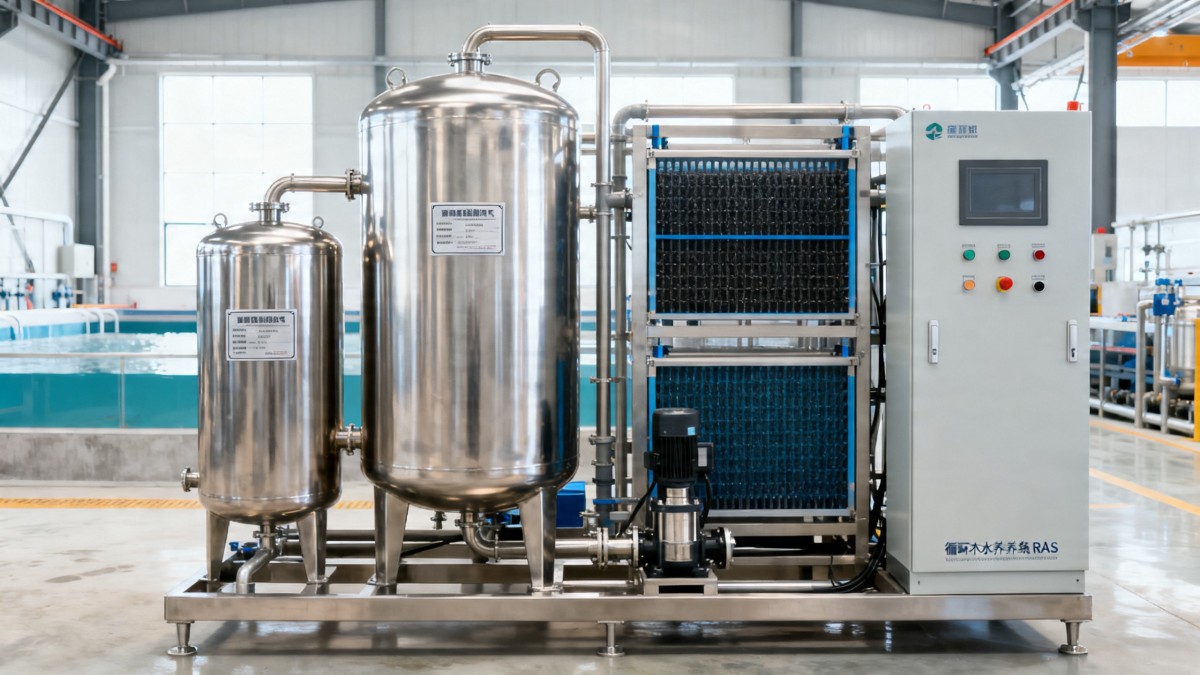
These companies supply complete RAS units or critical subsystems (e.g., biofilters, oxygenation modules, control systems) to Saudi importers. They are directly impacted because the VOC is a mandatory customs clearance document. The exemption from on-site verification reduces lead time significantly — shifting delivery timelines from weeks or months to under two weeks — thereby improving cash flow predictability and contract fulfillment reliability.
System Integrators with ISO 22000 Certification
Firms that assemble RAS solutions using components from multiple suppliers — and maintain ISO 22000 certification for their integrated food production processes — now qualify for the streamlined VOC route. This benefits integrators serving land-based fish farms or hatcheries in Saudi Arabia, where regulatory alignment with food safety outcomes is increasingly prioritized over component-level origin tracing.
Conformity Assessment & Certification Support Providers
Domestic Chinese labs accredited by CNAS, as well as certification bodies issuing ISO 22000 certificates, face rising demand for coordinated documentation packages. Their role shifts from standalone testing/certification to integrated VOC readiness support — requiring tighter coordination between lab reports, management system audits, and SASO submission protocols.
What Relevant Enterprises or Practitioners Should Focus On
Monitor official SASO implementation guidance
The April 20 update is a procedural revision, not yet accompanied by public technical annexes or application templates. Current more suitable action is to track SASO’s official portal and authorized representatives for clarifications on acceptable CNAS scope codes, required test parameters (e.g., pathogen retention efficiency, ammonia conversion rates), and VOC application form revisions.
Verify alignment between ISO 22000 scope and RAS operational context
ISO 22000 certification must explicitly cover activities related to aquaculture system operation, maintenance, or commissioning — not just general food processing. Analysis来看, many existing ISO 22000 certificates issued to equipment vendors do not include such scope language; holders should review audit reports and consider scope extension before VOC application.
Confirm CNAS laboratory accreditation status and test report validity
Not all CNAS-accredited labs are authorized for RAS-specific performance or biological safety testing. From industry角度看, only labs with documented competence in aquatic system hydraulics, microbiological challenge testing, or dissolved oxygen dynamics meet SASO’s implied expectations. Applicants should request formal confirmation of applicable CNAS scope from their lab prior to testing.
Prepare VOC documentation packages proactively
While on-site inspection is waived, SASO still requires full technical documentation, test reports, ISO 22000 certificate copies, and signed declarations of conformity. Current more suitable preparation includes pre-validating file formats (e.g., PDF/A compliance), translation consistency (Arabic-English bilingual labeling), and traceability of serial numbers across test reports and shipped units.
Editorial Perspective / Industry Observation
This update is better understood as a targeted administrative optimization — not a broad regulatory relaxation. Observation来看, it reflects SASO’s growing emphasis on outcome-based verification (e.g., demonstrable biological safety and system stability) rather than prescriptive manufacturing oversight. Analysis来看, the linkage between CNAS testing and ISO 22000 suggests SASO is treating RAS not merely as industrial equipment, but as an embedded food safety control point — aligning with GCC-wide trends toward integrated aquaculture regulation. It remains to be seen whether this model expands to other high-risk agri-tech imports, such as automated feed systems or water quality AI monitoring platforms.
Conclusion
This policy change signals a maturing phase in Saudi regulatory engagement with imported aquaculture infrastructure — one where recognized national accreditation frameworks (like CNAS) and internationally harmonized management standards (like ISO 22000) serve as credible proxies for direct oversight. It does not eliminate technical compliance requirements, but reallocates verification effort upstream — toward standardized testing and systemic food safety governance. For stakeholders, the current interpretation should emphasize preparedness over presumption: eligibility is conditional, documentation rigor remains high, and scalability depends on consistent execution across supply chain tiers.
Information Sources
— Official SASO announcement dated April 20, 2026 (publicly accessible via saso.gov.sa)
— Joint SABIC–SASO White Paper on RAS Systems, released April 19, 2026
Note: SASO’s detailed technical annexes, accepted CNAS scope codes, and VOC application checklist remain pending publication and are subject to ongoing observation.
Related Intelligence
- RAS SystemsSASO Streamlines RAS Systems VOC for Chinese ExportersSASO Streamlines RAS Systems VOC for Chinese exporters: Get mandatory Saudi VOC in just 12 days with CNAS testing & ISO 22000 — faster clearance, smarter compliance.
- RAS SystemsSABIC & SASO Launch RAS Green Tech White Paper for China ExportSABIC & SASO launch RAS Green Tech White Paper for China export — faster 35-day certification for GB/T 39021–2025 & ISO 22447-compliant aquaculture systems.
- RAS SystemsMaersk Launches RAS-Specific Cold Chain Containers on Asia-Europe RoutesRAS-specific cold chain containers launched by Maersk on Asia-Europe routes — enabling precise DO & temperature control for aquaculture exporters, integrators, and logistics providers.
The Morning Broadsheet
Daily chemical briefings, market shifts, and peer-reviewed summaries delivered to your terminal.
