
Konjac Glucomannan Powder: What Affects Quality?
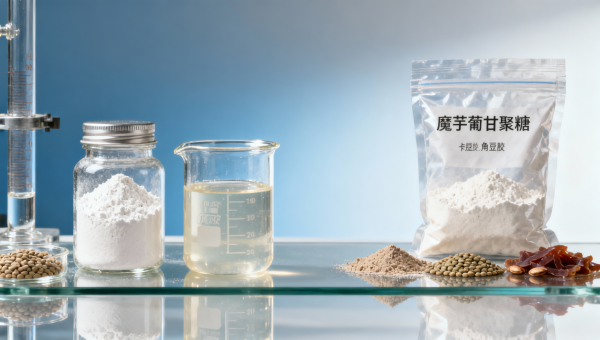
Konjac glucomannan powder quality is shaped by more than label claims—it depends on raw material selection, extraction control, purity, viscosity, moisture, and regulatory consistency. For buyers, operators, and quality teams comparing hydrocolloids such as locust bean gum wholesale, guar gum powder bulk, and carrageenan gum wholesale, understanding these factors is essential to secure reliable performance, traceable sourcing, and commercial value.
What really determines konjac glucomannan powder quality in industrial purchasing?
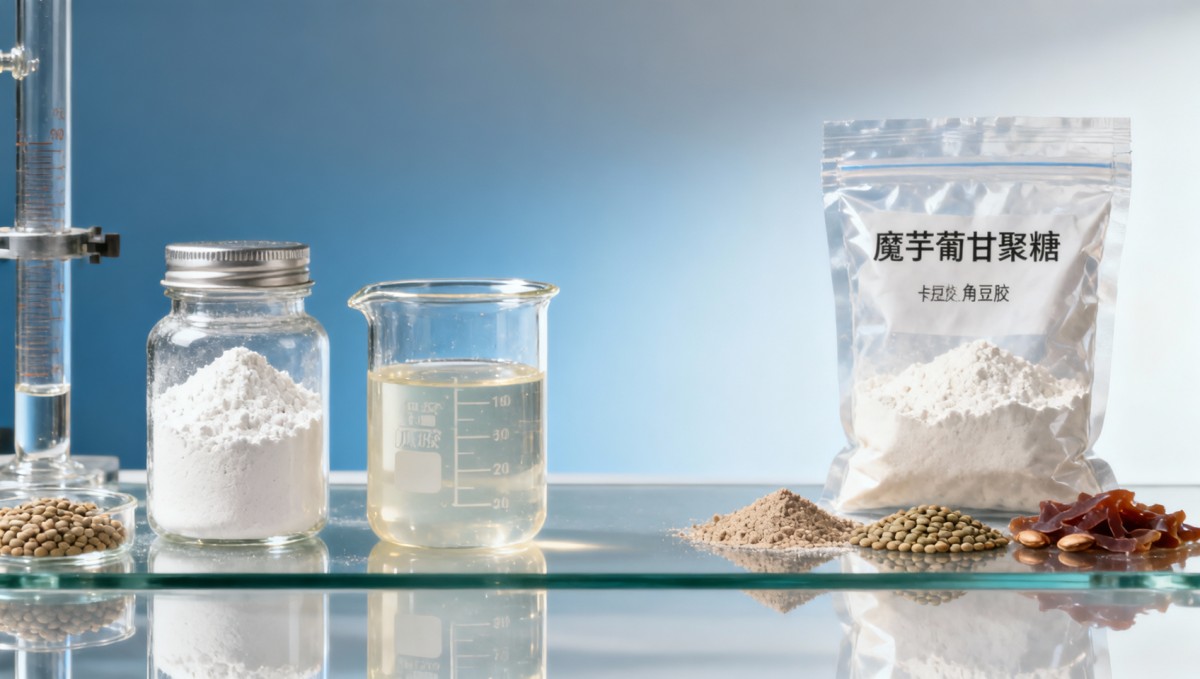
In commercial supply chains, konjac glucomannan powder is not judged by appearance alone. Procurement teams usually assess 5 core dimensions: raw material grade, glucomannan content, viscosity range, moisture level, and batch consistency. For users in food processing, nutraceutical blending, ingredient formulation, and industrial hydrocolloid applications, these factors directly influence hydration behavior, gel strength, throughput stability, and final product cost.
The first quality variable begins at the agricultural stage. Konjac corm maturity, harvest season, storage conditions, and pre-processing time all affect polysaccharide integrity. If the raw material is stored too long under unstable humidity, powder performance can decline before milling even begins. In many supply programs, the difference between controlled and uncontrolled raw material handling becomes visible within 2–4 weeks of warehouse observation.
Extraction and refinement also matter. A supplier may offer competitive pricing, yet incomplete purification can leave higher ash, off-odor, color variation, or inconsistent swelling. For quality control managers and safety officers, that creates risks during incoming inspection, especially when konjac glucomannan powder is used in systems that require repeatable viscosity windows or clean label positioning.
This is why AgriChem Chronicle focuses on technical interpretation rather than surface-level claims. In regulated and specification-driven sectors, decision-makers need a clearer link between material properties and commercial performance. That means understanding how powder quality affects rework rates, blending losses, compliance reviews, and supplier qualification timelines that often extend across 3 stages: sample validation, pilot testing, and contract supply approval.
Five quality drivers procurement teams should review first
- Raw material origin and harvest handling: check whether corm selection, cleaning, slicing, and drying are controlled within a defined process window.
- Purity and glucomannan concentration: higher effective polysaccharide content generally supports more predictable thickening and water binding.
- Viscosity profile: confirm not only a nominal value, but also whether the range remains stable from batch to batch under similar test conditions.
- Moisture and storage stability: excessive moisture can shorten shelf stability and increase caking risk during transport and warehouse storage.
- Traceability and documentation: purchasing, finance, and compliance teams often require lot records, specification sheets, and quality declarations before approval.
Why “high viscosity” alone is not enough
A common mistake is to treat viscosity as the only marker of quality. In reality, two powders can show similar viscosity in a single test yet behave very differently in production. Particle size distribution, hydration time, insoluble residue, and pH response can alter mixing speed, lump formation, and line efficiency. Operators often see this during the first 15–30 minutes of tank dispersion.
For business evaluators and project managers, that difference influences the total cost of ownership. A cheaper material may require slower feeding, extra sieving, or tighter process control. As a result, the apparent unit price advantage can disappear once downtime, labor adjustment, and rejected batches are included in the cost model.
Practical interpretation for cross-functional teams
End users want smooth texture and product stability. Procurement wants dependable supply. Quality teams want specification compliance. Finance wants predictable cost. Konjac glucomannan powder quality sits at the intersection of all four. The strongest sourcing decisions therefore compare technical suitability and operational fit, not only the quoted price per kilogram.
Which technical parameters should buyers compare side by side?
A structured specification review helps buyers avoid weak comparisons between suppliers. For konjac glucomannan powder, 6 recurring checkpoints are usually more useful than marketing descriptions: appearance, odor, moisture, viscosity, purity, and microbiological control where relevant. When procurement teams compare hydrocolloids such as guar gum powder bulk or carrageenan gum wholesale, aligned parameter review is especially important because different gums can appear similar on paper while performing differently in use.
The table below summarizes the most practical quality review items for commercial evaluation. These are not universal legal limits, but common specification dimensions used in industrial sourcing, technical review, and pre-contract discussions. They help operators, QC personnel, and project leads translate laboratory data into real processing expectations.
The key point is test comparability. If one supplier reports viscosity at one concentration and another at a different concentration or temperature, the numbers cannot support a fair decision. Teams should request the method details up front. Even a temperature shift across a narrow range such as 20°C–25°C can materially influence hydrocolloid behavior in evaluation.
For industrial users, it is also worth asking how many batches were used to build the specification. A single excellent sample proves little. A more dependable supplier can explain normal variation across multiple production lots and indicate what tolerance bands are considered acceptable in routine supply over 6–12 months.
How technical review should be organized
- Start with specification matching against the target application, not generic market grade language.
- Verify analytical methods used for viscosity, moisture, and purity before price comparison begins.
- Run a small pilot under plant-like conditions, ideally using the same mixing order, water quality, and shear profile as production.
- Document deviations across at least 3 checkpoints: dispersion, hydration, and final stability.
How does konjac compare with guar gum, locust bean gum, and carrageenan?
Many buyers do not source konjac glucomannan powder in isolation. They compare it with guar gum powder bulk, locust bean gum wholesale, or carrageenan gum wholesale depending on formulation goals, budget pressure, and regional availability. The right choice depends on whether the target is rapid viscosity build, synergistic gel behavior, texture modification, suspension support, or formulation cost balancing.
Konjac is often valued for strong water-binding capacity and high viscosity at relatively low use levels, but it is not automatically the best fit in every system. Guar may be preferred where cold-water hydration speed is a priority. Locust bean gum is commonly reviewed for synergy in certain blends. Carrageenan may be considered when gel structure or specific texture architecture is part of the product objective. This makes side-by-side functional analysis essential.
From a procurement perspective, substitution should never be approved solely from a price spreadsheet. Operators and quality teams need to examine process compatibility, dosage shift, label implications, and storage behavior. A material that looks cheaper per unit may require a higher addition rate or more complex process control, changing the real economics over a 1–3 month purchasing cycle.
The following comparison table gives a practical decision framework for hydrocolloid selection in broader ingredient sourcing programs.
The commercial lesson is simple: compare ingredients by application outcome, not by commodity label. In many plants, a 3-point validation matrix works well: target functionality, process fit, and supply reliability. If one of those three fails, the material may create hidden costs later in production or customer acceptance.
When substitution may be reasonable
Substitution is usually most realistic when the process has flexible texture tolerance, the formulation team can re-balance dosage, and the commercial team accepts a new validation cycle. Where product specifications are narrow or customer contracts are strict, changing from konjac glucomannan powder to another hydrocolloid may require a more formal technical and regulatory review lasting 2–6 weeks.
Questions decision-makers should ask
- Will the alternative change dosage rates or mixing order?
- Does the substitute create new labeling, documentation, or customer approval needs?
- Can the supplier support repeated lots with similar technical behavior over quarterly purchasing cycles?
What should procurement, QA, and finance teams check before approving a supplier?
Supplier approval for konjac glucomannan powder should combine commercial review and technical due diligence. This is especially true in sectors where ingredient traceability, contamination control, and specification stability affect downstream compliance. Buyers should not rely only on a certificate packet; they should also confirm process transparency, packaging suitability, sample reproducibility, and communication speed during deviations.
A practical review often follows 4 steps over 7–21 days: document screening, sample testing, pilot confirmation, and supply negotiation. This staged approach helps project managers and finance approvers avoid rushed commitments. It also reduces the chance of onboarding a supplier whose first sample looks acceptable but whose regular production lots fluctuate beyond operational tolerance.
For quality control personnel, the most useful supplier conversations are specific. Ask how non-conforming batches are handled. Ask what packaging formats are available for dry climate versus humid climate distribution. Ask whether retained samples are kept and for how long. These details often reveal more about supply discipline than broad claims about quality.
Because ACC serves agricultural, biochemical, and primary processing audiences, our perspective is grounded in cross-border procurement reality. Regulatory expectations vary by end use and destination market, but transparent records, stable specifications, and clean communication remain universal requirements. For many institutional buyers, the review process now includes procurement, QA, compliance, and finance in parallel rather than in sequence.
Supplier qualification checklist
- Specification control: Are moisture, viscosity, appearance, and key purity indicators defined with a repeatable method?
- Batch traceability: Can the supplier connect shipment lots to raw material and production records?
- Packaging and storage: Is the powder protected against moisture uptake during 30–60 day logistics cycles?
- Sample-to-bulk consistency: Does pilot material match contract supply material in meaningful tests?
- Documentation responsiveness: Can the supplier support audits, questionnaires, and technical clarifications without delay?
Compliance and documentation considerations
Depending on the destination application, buyers may need to review food safety, ingredient, environmental, or pharmaceutical-adjacent documentation. Where GMP-aligned controls, FDA-facing documentation, or EPA-relevant environmental expectations intersect with the broader supply chain, consistency in paperwork becomes just as important as powder performance. The exact required document set depends on end use, but the review logic remains the same: match the file set to the risk level of the application.
Finance teams should also account for hidden approval costs. A lower-cost supplier may still create a higher project burden if onboarding requires multiple correction rounds, extra sample shipments, or delayed customs paperwork. In practical terms, the approval cost over one quarter may outweigh a small nominal saving on unit price.
Common misconceptions, risk points, and buying FAQs
Even experienced teams can misread konjac glucomannan powder quality. The most common errors come from overemphasizing a single parameter, underestimating storage effects, or assuming all hydrocolloid suppliers test the same way. These misconceptions can slow projects, increase reformulation work, or create avoidable disputes between procurement and operations after the first shipment arrives.
For companies managing multiple ingredient categories, FAQ-style guidance can reduce internal confusion. It also helps align procurement staff, plant operators, and senior decision-makers around the same evaluation logic. That alignment is valuable when sourcing timelines are tight and commercial teams need faster go or no-go decisions.
Is a lower price per kilogram always a better deal?
Not necessarily. If lower-priced konjac glucomannan powder needs a higher dosage, slower mixing, or more manual process correction, the total cost may increase. Buyers should compare delivered cost, use level, process efficiency, and rejection risk together. A 5% price saving can disappear quickly if even one batch needs rework.
How long does supplier validation usually take?
For a straightforward ingredient review, 1–3 weeks is common when documents are ready and samples perform as expected. More sensitive applications may take 2–6 weeks if pilot testing, customer approval, or expanded documentation review is required. The timeline becomes longer when analytical methods are not aligned from the beginning.
What are the most overlooked storage risks?
Moisture exposure, damaged inner liners, and prolonged warehouse residence are frequent issues. Dry powders can change flowability and hydration behavior if packaging is compromised during shipping or storage. Quality teams should verify receiving conditions, especially in humid environments or when transit extends beyond 30 days.
Can konjac glucomannan powder be evaluated with only supplier documents?
Documents are necessary, but not sufficient. Real validation should include application-relevant testing under plant conditions. At minimum, review 3 areas: dispersion, hydration, and final functional performance. This is especially important when comparing konjac with guar gum powder bulk, locust bean gum wholesale, or carrageenan gum wholesale for substitution or blend design.
Why consult AgriChem Chronicle when evaluating konjac and related hydrocolloids?
AgriChem Chronicle supports institutional buyers, technical evaluators, and industrial operators who need more than generic ingredient descriptions. Our editorial framework connects primary industries, fine chemicals, bio-extracts, and regulated procurement logic. That matters when a powder purchase influences not only formulation performance, but also documentation quality, approval speed, and long-term supplier confidence.
If your team is reviewing konjac glucomannan powder quality, we can help clarify specification interpretation, application-side comparison, and sourcing decision criteria. This includes support around 5 practical topics: parameter confirmation, hydrocolloid comparison, supplier screening, documentation expectations, and delivery-risk assessment. For organizations handling multiple ingredients, that broader perspective reduces fragmented decision-making.
For procurement leaders and project owners, ACC is especially useful when the decision involves cross-functional stakeholders. We translate technical details into commercially actionable questions, helping teams compare offers on a like-for-like basis. That can shorten internal review cycles and improve communication between QA, operations, sourcing, and finance.
Contact us if you need a clearer basis for product selection, sample review, documentation checks, expected delivery windows, or alternative hydrocolloid evaluation. We can help your team structure quote discussions, define approval checkpoints, and identify the questions worth asking before you commit to volume supply.
What you can discuss with our team
- How to compare konjac glucomannan powder specifications from different suppliers using the same test logic.
- Whether locust bean gum wholesale, guar gum powder bulk, or carrageenan gum wholesale is a realistic alternative for your target process.
- What sample quantities, pilot steps, and review timelines make sense for your application and approval path.
- Which documentation and compliance questions should be clarified before commercial negotiation begins.
- How to align technical quality, supply reliability, and total purchase value in one decision model.
Related Intelligence
- Natural IngredientsIndonesia BPOM Tightens Import Rules for 3 Mushroom ExtractsIndonesia BPOM tightens import rules for Ganoderma lucidum, Grifola frondosa & Hericium erinaceus extracts — GMP + AOAC validation now mandatory from June 1, 2026. Act now!
- Natural IngredientsKonjac Glucomannan Powder: What Affects Quality?Konjac glucomannan powder quality explained: compare purity, viscosity, moisture, and supplier consistency with locust bean gum wholesale, guar gum powder bulk, and carrageenan gum wholesale.
- Natural IngredientsLocust Bean Gum Wholesale: What Buyers Should CheckLocust bean gum wholesale buyers should check purity, viscosity, traceability, and supply reliability. Compare guar gum powder bulk, carrageenan gum wholesale, and konjac glucomannan powder wisely.
The Morning Broadsheet
Daily chemical briefings, market shifts, and peer-reviewed summaries delivered to your terminal.
