
Indonesia BPOM Tightens Import Rules for 3 Mushroom Extracts
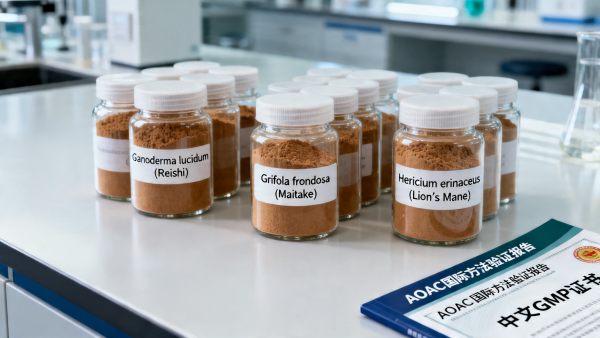
On April 20, 2026, Indonesia’s National Agency of Drug and Food Control (BPOM) issued an urgent regulatory update affecting imports of natural ingredients — specifically Ganoderma lucidum, Grifola frondosa, and Hericium erinaceus extracts. This measure directly impacts exporters, ingredient suppliers, and health product manufacturers serving the Indonesian market — particularly those based in China, the primary source of these materials.
Event Overview
On April 20, 2026, BPOM released Circular No. SE.03.02.2/1876/2026, designating Ganoderma lucidum (Reishi), Grifola frondosa (Maitake), and Hericium erinaceus (Lion’s Mane) extracts as ‘high-risk Natural Ingredients’. Effective June 1, 2026, all shipments of these three extracts entering Indonesia must be accompanied by both a valid Chinese Good Manufacturing Practice (GMP) certificate and an AOAC International method validation report covering quantification of β-glucan, adenosine, and ergosterol. Shipments lacking either document will be rejected in full.
Which Subsectors Are Affected
Direct Exporters & Trading Companies
These entities face immediate operational impact: customs clearance for the three mushroom extracts will now require dual documentation not previously mandated. Delays, rejections, and increased pre-shipment verification costs are expected — especially for exporters unfamiliar with AOAC validation protocols or unable to coordinate testing timelines with GMP certification renewals.
Raw Material Sourcing & Procurement Firms
Firms sourcing these extracts from Chinese manufacturers must now verify upstream compliance before purchase. Contracts may need revision to include clauses on GMP validity periods and AOAC report scope. Reliance on generic ‘natural ingredient’ certifications without substance-specific validation is no longer sufficient.
Health Product Manufacturers (Export-Oriented)
Manufacturers incorporating these extracts into finished products (e.g., capsules, powders, functional beverages) destined for Indonesia must trace back to compliant raw material batches. Batch-level documentation alignment — linking AOAC reports and GMP certificates to specific production lots — becomes essential for regulatory audits and import declarations.
Distribution & Regulatory Support Providers
Local Indonesian importers, BPOM registration agents, and logistics partners handling these goods must update their intake checklists and internal SOPs. They are now responsible for verifying the technical adequacy of AOAC reports — including method applicability, laboratory accreditation status, and analyte coverage — not just document presence.
What Relevant Enterprises or Practitioners Should Focus On — And How to Respond Now
Monitor official BPOM guidance and potential implementation clarifications
BPOM’s circular is labeled ‘urgent’, but details such as acceptable AOAC method versions (e.g., AOAC 2011.05 vs. 2022.01), minimum reporting thresholds, or recognition of equivalent international standards (e.g., ISO/IEC 17025-accredited labs using AOAC-validated methods) remain unspecified. Stakeholders should track BPOM’s official portal and registered notifications for updates prior to June 2026.
Confirm current inventory and upcoming shipment schedules for the three listed extracts
Companies with existing stock or scheduled shipments between June 1 and July 2026 should assess whether pending batches meet the dual-certification requirement. If GMP certificates expire before shipment or AOAC testing hasn’t been commissioned, rework or rescheduling may be unavoidable. Prioritizing shipments with validated documentation ahead of the deadline is advisable.
Distinguish between regulatory signal and enforceable requirement
This measure targets only three specific fungal extracts — not all mushroom-derived ingredients nor broader ‘natural ingredients’. It does not revise BPOM’s general registration framework for finished health products. Stakeholders should avoid overgeneralizing this policy to other botanicals or assuming parallel requirements will follow without further notice.
Engage testing labs and certification bodies early — with precise specifications
Avoid generic ‘AOAC testing’ requests. Labs must perform validation per AOAC Official Methods for each of the three analytes (β-glucan, adenosine, ergosterol), using the extract matrix. Chinese GMP certification must explicitly cover the manufacturing site and process for these extracts — not just general facility certification. Coordination between exporters, labs, and certifiers should begin now to avoid bottlenecks.
Editorial Perspective / Industry Observation
From an industry perspective, this move signals BPOM’s increasing emphasis on analytical traceability for bioactive natural ingredients — shifting from documentary oversight to methodologically anchored quality verification. Analysis来看, it reflects a broader trend among ASEAN regulators to align with internationally recognized validation benchmarks, especially for compounds with established biomarker relevance (e.g., β-glucan for immunomodulation). Current more appropriate understanding is that this is a targeted, high-priority enforcement action — not a broad-based reform — but its execution may serve as a precedent for future expansions to other high-value botanicals. Continued observation is warranted for whether BPOM publishes interpretive FAQs or extends similar requirements to related species (e.g., Cordyceps) in subsequent notices.
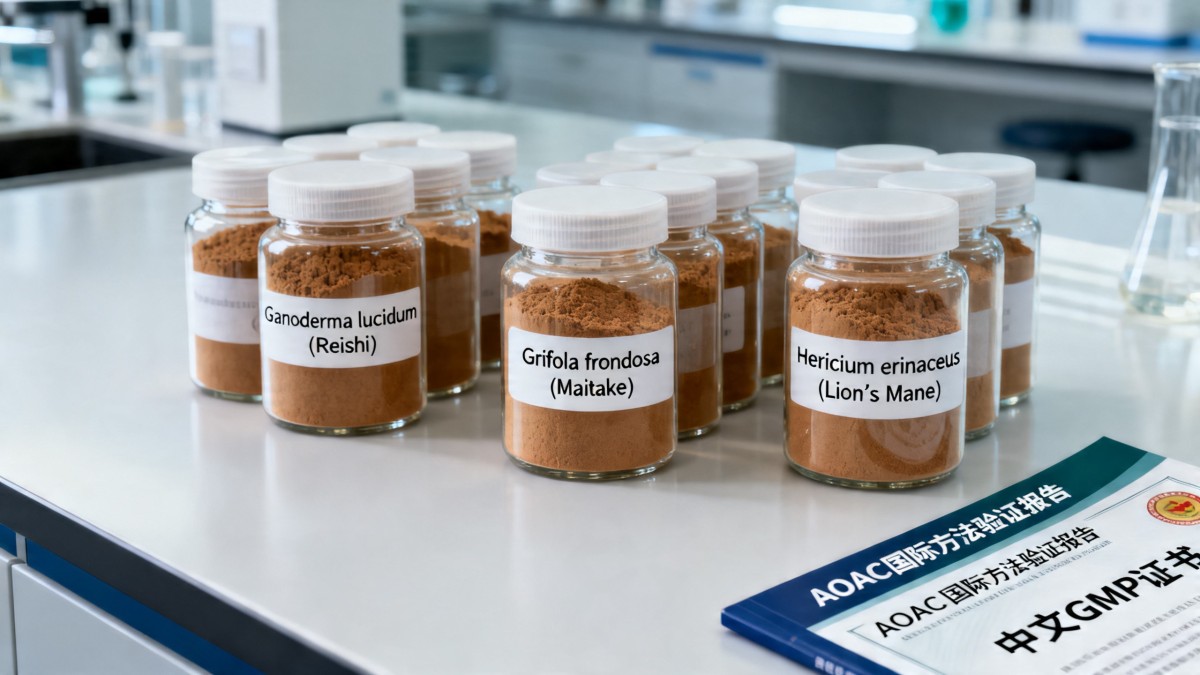
In summary, BPOM’s updated requirement represents a concrete, enforceable shift in import gatekeeping for three specific mushroom extracts — one that elevates evidentiary expectations beyond certification alone to include standardized analytical validation. It underscores the growing importance of method-specific quality data in cross-border natural ingredient trade. Rather than signaling systemic disruption, it is better understood as a calibration toward higher technical rigor for a defined risk category — requiring focused, documentation-aware preparation rather than wholesale strategic recalibration.
Source: Indonesia National Agency of Drug and Food Control (BPOM), Circular No. SE.03.02.2/1876/2026, issued April 20, 2026.
Note: Implementation details — including accepted AOAC method editions, lab accreditation criteria, and possible transitional arrangements — remain subject to official clarification and are under ongoing observation.
Related Intelligence
- Natural IngredientsIndonesia BPOM Tightens Import Rules for 3 Mushroom ExtractsIndonesia BPOM tightens import rules for Ganoderma lucidum, Grifola frondosa & Hericium erinaceus extracts — GMP + AOAC validation now mandatory from June 1, 2026. Act now!
- Natural IngredientsKonjac Glucomannan Powder: What Affects Quality?Konjac glucomannan powder quality explained: compare purity, viscosity, moisture, and supplier consistency with locust bean gum wholesale, guar gum powder bulk, and carrageenan gum wholesale.
- Natural IngredientsLocust Bean Gum Wholesale: What Buyers Should CheckLocust bean gum wholesale buyers should check purity, viscosity, traceability, and supply reliability. Compare guar gum powder bulk, carrageenan gum wholesale, and konjac glucomannan powder wisely.
The Morning Broadsheet
Daily chemical briefings, market shifts, and peer-reviewed summaries delivered to your terminal.
