
Vietnam Enforces Smart Greenhouse Energy Efficiency Rules for Chinese Exports
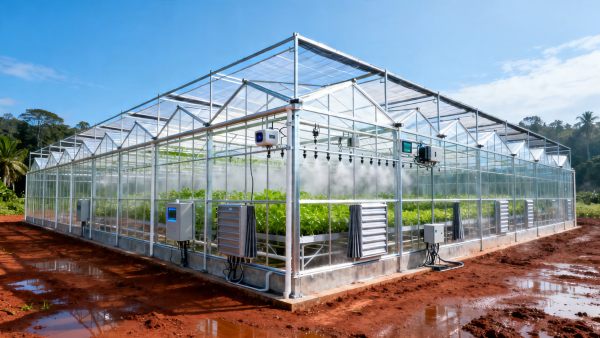
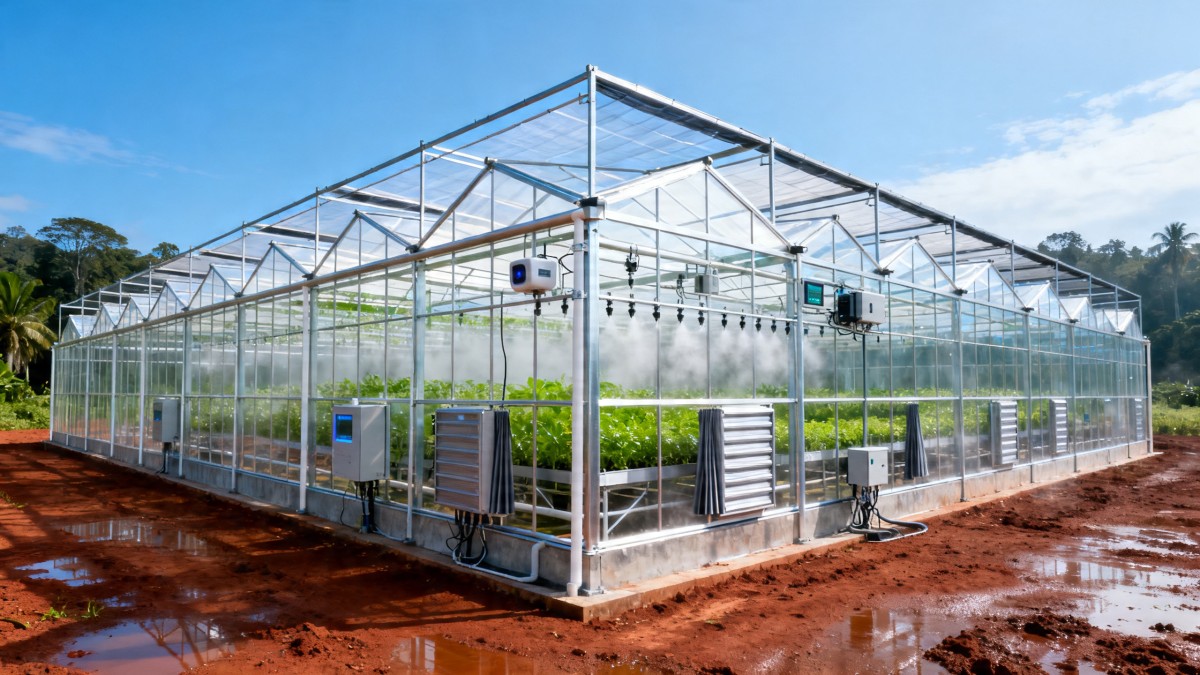
Vietnam’s Vietnam Academy of Science and Technology (VAST) implemented VAST-2026 — a mandatory technical notice on energy efficiency for imported Smart Greenhouse systems — effective 20 April 2026. The regulation requires all such systems entering Vietnam to pass climate-specific testing in VAST’s newly built ‘Tropical Monsoon Climate Simulation Chamber’. This development directly affects manufacturers, exporters, and service providers in the agricultural technology, controlled-environment agriculture, and HVAC-integrated greenhouse equipment sectors.
Event Overview
On 20 April 2026, VAST issued and enforced Technical Notice VAST-2026. It mandates that all imported Smart Greenhouse systems undergo three specific environmental stress tests — 45°C high temperature, 95% relative humidity (RH), and instantaneous heavy-rain impact — conducted exclusively in VAST’s Tropical Monsoon Climate Simulation Chamber. Test reports must be issued by laboratories authorized by VAST. The requirement applies immediately: non-compliant equipment will be denied entry at Vietnamese customs, disrupting delivery schedules and after-sales support for Chinese suppliers.
Industries Affected
Direct Exporters of Smart Greenhouse Systems
Chinese enterprises exporting integrated Smart Greenhouse solutions to Vietnam face immediate compliance risk. Since the rule is effective upon issuance, shipments without valid VAST-authorized test reports may be detained or rejected at port, leading to contractual delays, penalty clauses, and reputational exposure in ongoing tenders or government-supported agricultural projects.
Manufacturers of Climate-Resilient Components
Suppliers of subsystems — including climate control units, sensor arrays, automated irrigation controllers, and enclosure materials — are indirectly affected. Their components may need revalidation within full-system tests under VAST-2026, even if previously certified to international standards (e.g., IEC, ISO). System integrators may now require tighter technical alignment and documentation from upstream component vendors.
After-Sales & Technical Support Providers
Service firms offering commissioning, calibration, or remote monitoring for Smart Greenhouses in Vietnam must verify whether installed equipment has passed VAST-2026 testing. Post-installation modifications or firmware updates could trigger retesting requirements; therefore, technical documentation traceability and version-controlled reporting become operationally critical.
What Enterprises Should Monitor and Do Now
Confirm VAST-Authorized Laboratory Access
Exporters should verify whether their current testing partners are listed in VAST’s official registry of authorized laboratories — or identify alternatives with capacity to conduct all three climate simulations. Lead times for chamber booking and report issuance are not publicly disclosed; early engagement is advised.
Review Product Documentation Against VAST-2026 Test Scope
Systems must be tested as delivered — including software-defined operating modes, default setpoints, and bundled peripherals. Firms should cross-check existing technical files (e.g., user manuals, configuration guides, thermal management schematics) against the notice’s defined test conditions to identify potential gaps before submission.
Assess Impact on Delivery Timelines and Contract Terms
Since testing is mandatory pre-clearance, supply chain teams should adjust lead time buffers and revise Incoterms (e.g., shifting from FOB to DAP where feasible) to clarify responsibility for test coordination, reporting, and customs liaison. Contracts signed prior to 20 April 2026 may lack VAST-2026 compliance clauses — legal review is recommended.
Editorial Observation / Industry Perspective
From industry perspective, VAST-2026 is less a one-off regulatory update and more a structural signal: Vietnam is formalizing climate-resilience as a non-negotiable technical gate for agri-tech imports. Analysis来看, this reflects broader regional trends — similar climate-adapted certification frameworks are under discussion in Thailand and Indonesia — but VAST’s implementation stands out for its immediacy and system-level scope. Current enforcement appears focused on border control rather than retrospective audits; however, observation来看, future phases could extend to domestic installation verification or periodic re-certification. This makes early procedural alignment more valuable than waiting for secondary guidance.
Conclusion
VAST-2026 does not introduce new energy efficiency metrics per se, but it establishes a mandatory, localized climate validation step that reshapes market access conditions for Smart Greenhouse exports to Vietnam. It is best understood not as a temporary hurdle, but as an operational prerequisite now embedded in the import workflow. For stakeholders, proactive test planning, documentation harmonization, and contractual recalibration — rather than policy lobbying or technical reinterpretation — represent the most actionable response paths at this stage.
Source Attribution
Main source: Official technical notice VAST-2026, published by Vietnam Academy of Science and Technology (VAST), effective 20 April 2026.
Areas requiring continued observation: Updates to VAST’s list of authorized laboratories; clarifications on test report validity period; and any announced transitional arrangements for orders placed before 20 April 2026.
Related Intelligence
- Smart GreenhouseVietnam Enforces Smart Greenhouse Energy Efficiency Rules for Chinese ExportsVietnam Enforces Smart Greenhouse Energy Efficiency Rules for Chinese Exports: VAST-2026 mandates tropical climate testing—act now to avoid customs delays and secure market access.
- Smart GreenhouseVietnam VAST Enforces Smart Greenhouse Energy Rules for Chinese ExportsVietnam VAST enforces TCVN 12345:2026 — mandatory energy & climate resilience rules for Chinese smart greenhouse exports. Act now to clear customs by Oct 1, 2026.
- Smart GreenhouseVietnam Enforces Local Climate Data Validation for Smart GreenhousesVietnam enforces local climate data validation for smart greenhouses—mandatory 90-day dual-mode testing, VAST-2026 compliance, and National IoT Platform access. Act now.
The Morning Broadsheet
Daily chemical briefings, market shifts, and peer-reviewed summaries delivered to your terminal.
