
FAO Launches Global Climate Control White List with 12 Chinese Firms
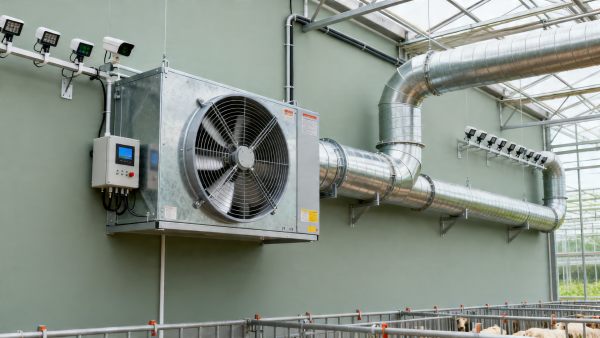
On 20 April 2026, the Food and Agriculture Organization of the United Nations (FAO) launched its official ‘Climate Control & Ventilation for Sustainable Agriculture’ global supplier white list — marking a formal recognition mechanism for energy-efficient and safety-compliant agricultural climate equipment. This development is especially relevant for manufacturers, exporters, and public procurement stakeholders in controlled-environment agriculture, livestock housing, post-harvest infrastructure, and international development-aid implementation.
Event Overview
On 20 April 2026, FAO officially published the first edition of its ‘Climate Control & Ventilation for Sustainable Agriculture’ global supplier white list. Twelve Chinese manufacturers were included as inaugural entries. All have been verified against both ISO 50001 (energy management systems) and IEC 60335-2-80 (safety requirements for fans), per FAO’s joint certification framework. The list has been distributed to agriculture ministries in 23 countries across Africa, the Middle East, and Southeast Asia, and is designated as a priority reference for government-subsidized equipment procurement programs.
Industries Affected by Segment
Direct Exporters & Trade Firms
Export-oriented enterprises supplying ventilation, cooling, or environmental control units to public-sector agricultural projects in FAO-partner countries may see improved bid eligibility. Influence manifests primarily through enhanced credibility in tender evaluations — particularly where compliance with FAO-recommended standards is explicitly weighted in scoring criteria.
Manufacturers of Agricultural Climate Equipment
Domestic producers of fans, tunnel ventilation systems, evaporative coolers, and related hardware face new de facto benchmarking expectations. While not mandatory, inclusion on the white list signals alignment with internationally referenced energy and safety baselines — potentially affecting downstream buyer expectations even outside FAO-linked tenders.
Public Procurement Support Providers
Firms offering technical documentation support, certification coordination, or subsidy application assistance for overseas agricultural infrastructure projects now have a defined reference point: FAO’s dual-standard verification (ISO 50001 + IEC 60335-2-80). Their service scope may need to reflect this specific conformance pathway when advising clients targeting FAO-endorsed markets.
Supply Chain Integrators & System Contractors
Companies integrating climate control components into larger farm infrastructure packages (e.g., poultry house turnkey solutions, greenhouse automation bundles) may encounter increased due diligence from buyers in listed countries — especially where end-user subsidies require traceable compliance of subcomponents. Component-level certification status could become a contractual prerequisite.
What Relevant Enterprises or Practitioners Should Focus On Now
Monitor FAO’s official updates on scope expansion
FAO has not yet published a timeline or criteria for future white list editions. Current participants are limited to the initial 12 firms. Stakeholders should track FAO’s official communications for announcements on application windows, updated technical annexes, or potential inclusion of additional standards (e.g., ISO 14001, product-specific energy performance thresholds).
Verify alignment with ISO 50001 and IEC 60335-2-80 at the product and system level
FAO’s listing rests on dual certification — not just corporate-level ISO 50001 registration, but demonstrable application to relevant products and documented compliance with IEC 60335-2-80. Firms assessing eligibility should confirm whether their certified scope explicitly covers the ventilator/fan models intended for agricultural use, including test reports and factory inspection records.
Distinguish between policy signal and procurement reality
While the white list is formally shared with 23 national agriculture ministries, its operational adoption — such as integration into national tender regulations or subsidy claim workflows — remains subject to domestic administrative implementation. Companies should verify whether recipient countries have issued implementing guidance, rather than assuming automatic preferential treatment in all bids.
Prepare documentation for third-party verification requests
Buyers in listed countries may request evidence beyond the FAO list itself — including copies of valid certificates, scope statements, and recent audit reports. Firms should ensure these documents are up to date, publicly accessible (where appropriate), and available in English or French to align with FAO’s working languages.
Editorial Observation / Industry Perspective
From an industry perspective, this initiative is better understood as a procedural signal than an immediate market shift. FAO does not procure equipment directly nor enforce binding procurement rules on member states; instead, it provides normative frameworks that national agencies may adopt voluntarily. Its value lies in standardizing evaluation criteria across fragmented public-agriculture programs — reducing compliance fragmentation for suppliers targeting multiple developing markets. That said, the selection of 12 Chinese firms — all meeting a harmonized dual standard — suggests growing institutional recognition of China’s capacity to meet internationally referenced technical benchmarks in this niche. Continued attention is warranted because subsequent editions may broaden geographic coverage or add performance-based metrics beyond baseline certification.
Conclusion
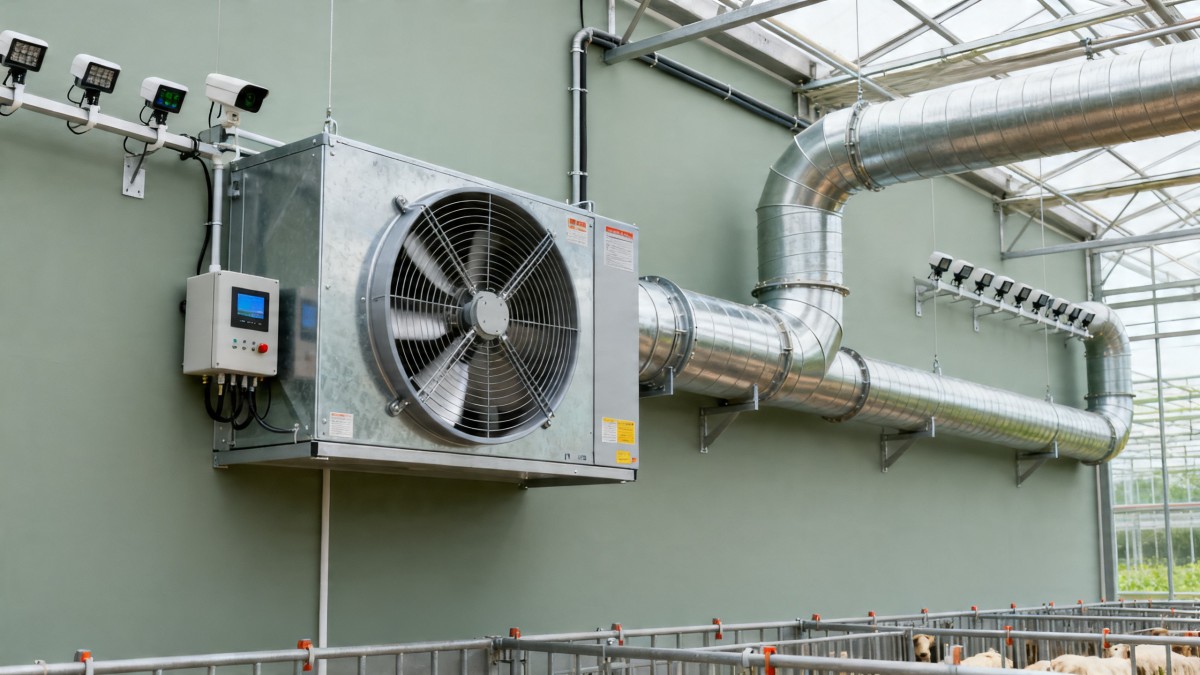
FAO’s white list introduces a new, internationally coordinated reference point for evaluating climate control equipment in public-agricultural investment contexts. It does not replace national certification requirements, nor does it guarantee contract awards — but it does elevate the visibility and perceived reliability of suppliers meeting a defined energy and safety threshold. For industry actors, the current significance lies less in immediate commercial advantage and more in early alignment with an emerging interoperability framework for sustainable agricultural infrastructure procurement.
Information Sources
Main source: Official FAO announcement dated 20 April 2026, titled ‘Climate Control & Ventilation for Sustainable Agriculture – Global Supplier White List (Inaugural Edition)’. Status of national-level implementation in the 23 recipient countries remains under observation and is not yet publicly documented by FAO or national authorities.
Related Intelligence
- Climate Control & VentilationFAO Launches Global Climate Control White List with 12 Chinese FirmsFAO's new Climate Control White List features 12 Chinese firms — discover how ISO 50001 & IEC 60335-2-80 compliance boosts global agri-export opportunities.
- Climate Control & VentilationFAO Launches Global Ventilation Supplier RegistryFAO Launches Global Ventilation Supplier Registry — Get listed now to access FAO-funded climate-smart agri-ventilation projects in Africa & Latin America.
- Climate Control & VentilationFAO Adopts China's GB/T 39021-2025 as Asia-Pacific BenchmarkGB/T 39021-2025 adopted by FAO as Asia-Pacific benchmark—key for climate control manufacturers, exporters & integrators seeking competitive edge in green agri-infrastructure projects.
The Morning Broadsheet
Daily chemical briefings, market shifts, and peer-reviewed summaries delivered to your terminal.
