
Bulk Erythritol Powder: What Purity Specs Really Affect Use?

For buyers comparing erythritol powder bulk options, purity is more than a lab number—it directly affects taste, flowability, compliance, and formulation performance. This ACC briefing explains which purity specifications truly matter in real-world use, helping technical evaluators, QA teams, and procurement leaders benchmark suppliers alongside adjacent ingredient markets such as stevia extract wholesale and vanilla bean extract bulk.
In industrial purchasing, “99%+ purity” is often treated as a shortcut for quality. In practice, however, bulk erythritol powder selection depends on a wider specification package: assay method, residual moisture, particle size distribution, ash, reducing sugars, microbiological limits, heavy metals, and lot-to-lot consistency. A material that looks acceptable on a certificate of analysis may still create problems in blending, tableting, sachet filling, beverage dissolution, or export compliance.
That gap matters across food, nutraceutical, personal care, and fine chemical supply chains. Technical teams need usable material. Quality teams need verifiable control points. Procurement teams need a commercial specification that reduces rework, delayed release, and hidden cost. The sections below focus on which purity-related specs actually affect use, where buyers often overpay for the wrong parameters, and how to compare suppliers on a realistic B2B basis.
Why Purity in Bulk Erythritol Means More Than Assay Percentage
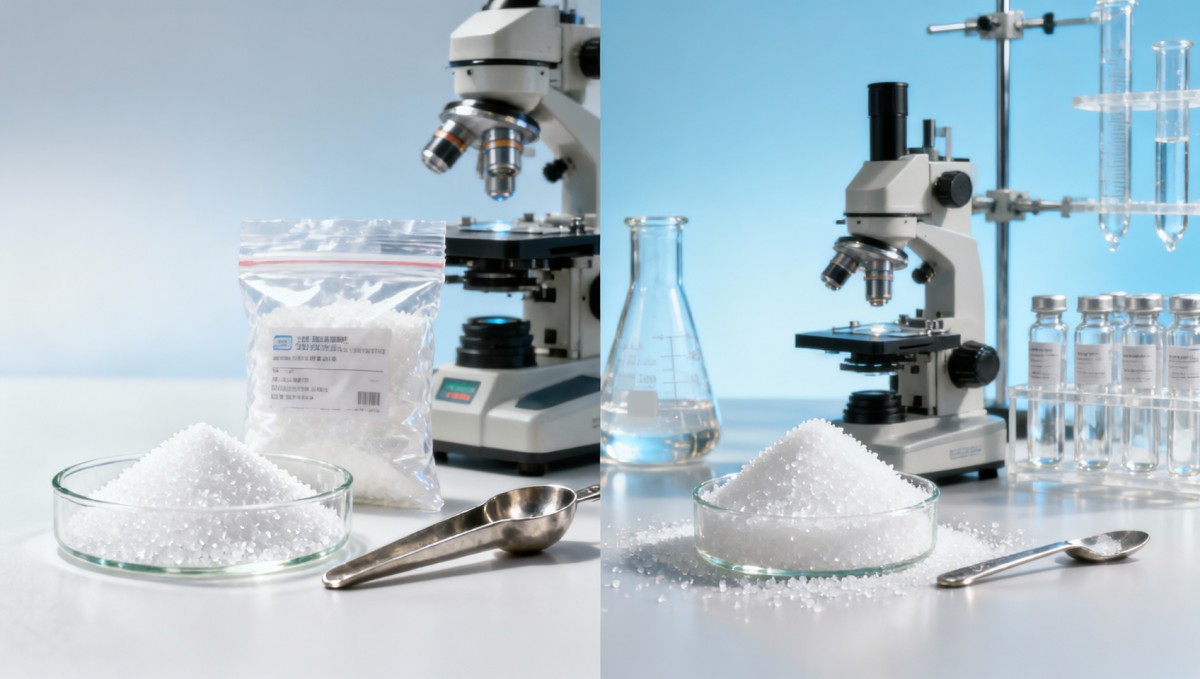
Assay is the starting point, not the whole story. For erythritol powder bulk transactions, typical commercial grades may be listed at 99.0%, 99.5%, or 99.7% on a dry basis, but the real-use difference depends on what makes up the remaining 0.3% to 1.0%. If the balance is mainly water within an acceptable range, the impact may be manageable. If it includes residual sugars, insoluble matter, or inconsistent particle fractions, downstream performance can change quickly.
From a sensory perspective, high-purity erythritol is valued for clean sweetness and lower off-notes compared with some alternative sweeteners. Yet buyers should remember that taste is influenced not only by assay but also by trace by-products from fermentation and purification. Even when the sweetness profile is acceptable in a lab bench test, those minor residues may become noticeable in large beverage batches, chewable tablets, or flavored powder blends used at 2% to 15% inclusion levels.
Operationally, powder handling is where overlooked specifications become expensive. A moisture increase of even 0.2% to 0.5% above target can shift flowability in humid environments, especially when product is repacked, stored in partially opened bags, or used in facilities without tight humidity control. That can lead to bridging in hoppers, slower line speed, or inaccurate dosing during premix production.
The four purity dimensions buyers should separate
Many specifications are grouped under the word “purity,” but they belong to different control categories. Separating them helps teams compare suppliers more effectively:
- Chemical purity: erythritol assay, reducing sugars, ash, sulfated ash, and related compounds.
- Physical purity: particle size distribution, bulk density, caking tendency, and foreign matter control.
- Microbiological purity: total plate count, yeast and mold, coliform expectations, and hygiene status.
- Regulatory purity: heavy metals, allergens, residual solvents where relevant, and specification alignment with target market standards.
A supplier that promotes only one purity figure may still leave risk in the other three categories. For procurement teams handling annual contracts of 5 metric tons, 50 metric tons, or more, these hidden variables usually matter more than a narrow price gap per kilogram.
Which Specifications Actually Affect Taste, Flow, and Formulation Performance
In practical use, a handful of specifications have outsized impact. Assay remains essential, but moisture, mesh profile, and reducing sugars often determine whether erythritol performs smoothly in production. For example, beverage applications may prioritize fast dissolution and clean flavor, while powdered drink mixes or seasoning blends may care more about anti-caking behavior and blend uniformity over a 30-day to 90-day warehouse cycle.
Particle size is particularly important. A finer powder can improve mouthfeel and dissolution, but it may also increase dusting, electrostatic behavior, and packing density variability. A coarser crystalline grade may flow better and reduce airborne loss, yet dissolve more slowly in cold systems. That is why buyers should request not just “powder” but a defined particle distribution, such as D50 and screen retention ranges, matched to the intended process.
Reducing sugars are another underappreciated factor. Even low levels can influence color stability and flavor interactions in heat-processed products. In dry blends, they may be less visible; in syrups, bakery fillings, tablets, or flavored nutritional systems, they can create consistency issues over longer storage periods. For technical review, it is better to ask for a numeric limit than a vague statement of compliance.
Key specification ranges and their operational meaning
The table below shows common specification areas buyers should assess when comparing erythritol powder bulk suppliers for routine industrial use.
The main takeaway is simple: a bulk erythritol specification sheet should be read as a performance document, not just a compliance document. A slightly lower assay grade with tighter moisture and particle control may outperform a nominally higher purity grade in actual production.
When each parameter becomes critical
For dry premixes, moisture and flow are often the top two priorities. For beverages, dissolution and sensory neutrality move higher. For tablets or compressed forms, particle shape, compaction behavior, and batch consistency deserve close review over at least 3 pilot runs before full qualification.
How QA and Procurement Teams Should Read a Supplier Specification Package
A certificate of analysis is useful, but it should not be the only decision tool. Buyers evaluating erythritol powder bulk for repeated use should compare at least 6 checkpoints: specification sheet, test method references, lot consistency history, packaging format, storage recommendation, and non-conformance handling process. Without these, even a compliant material can become a supply risk when production scales from trial quantity to pallet or container volume.
Method alignment is especially important. One supplier may report assay on a dry basis, another on an as-is basis. Moisture may be tested by loss on drying or another validated method. Heavy metals may be presented as total metals or by element. If methods are not harmonized, side-by-side comparison becomes misleading and commercial discussions drift toward price before technical equivalence is established.
Packaging also influences delivered purity. Material packed in 20 kg or 25 kg moisture-barrier bags with proper inner liners generally performs more consistently than product in weaker packaging exposed to long transit cycles. For exporters and distributors, this matters during 4-week to 8-week ocean freight conditions, where temperature and humidity swings can affect clumping even before the goods reach the customer’s warehouse.
A practical supplier review framework
The following framework helps cross-functional teams align technical and commercial review before approving a supplier.
For most B2B buyers, the strongest commercial position comes from linking specification acceptance to a defined release process. That usually means sample approval, one pilot lot, and then a supply agreement with clear deviation thresholds rather than buying solely from a brochure claim.
Minimum questions before PO issuance
- Are assay and moisture reported on the same basis across all suppliers?
- Is particle size specified numerically, not just described as fine powder?
- Can the supplier provide at least 3 recent batch COAs for consistency review?
- What is the standard lead time: 7–15 days ex-works or 3–6 weeks for export lots?
- What corrective action process applies if one lot fails flow or moisture criteria?
Matching Purity Specifications to Different Industrial Use Cases
Not every application needs the same erythritol profile. One of the most common buying mistakes is over-specifying chemical purity while under-specifying physical behavior. This raises cost without improving fitness for use. The right approach is to map specification priorities to the product format, process conditions, and storage environment.
In beverage systems, clean taste and dissolution speed usually come first. If the product is intended for cold-fill applications, coarse crystals may leave visible residue or require longer mixing times. In contrast, dry nutritional blends and tabletop sweeteners often need stronger flow and anti-caking performance over repeated opening and repacking events. In compressed products, compactability and consistency across tooling cycles can be more important than reaching the top end of assay.
Buyers also need to consider adjacent ingredient systems. When erythritol is paired with stevia extract wholesale inputs, sweetness perception and bitterness masking become formulation issues, not just raw material issues. When blended with vanilla bean extract bulk or other flavor ingredients, trace impurities that seem minor alone may interact with the flavor system and become more noticeable. This is why application testing should reflect the final formula rather than testing erythritol in isolation.
Use-case priority matrix
A simple application matrix can prevent teams from buying the wrong grade for the right price.
The strongest specification is the one aligned with the actual use case. That often means documenting 3 priority specs, 2 secondary specs, and 1 exclusion threshold rather than demanding every parameter at the tightest possible limit.
Common over-specification mistakes
- Paying a premium for ultra-high assay while ignoring moisture sensitivity in humid storage.
- Approving a fine mesh product for a line that actually needs lower dust generation.
- Comparing sample performance without considering full-batch packaging and freight conditions.
- Using one global specification for all plants despite different climates, mixers, and fill speeds.
Procurement Risk Control, Qualification Steps, and Final Selection Criteria
For enterprise buyers, the goal is not only to buy compliant erythritol powder bulk but to lower total acquisition risk. That includes rejected lots, delayed customer release, formulation drift, extra sieving, and downtime caused by poor flow. A disciplined qualification path usually costs less than reactive troubleshooting after the first large shipment arrives.
A practical qualification process can be completed in 3 stages. Stage 1 is desktop screening: review specification package, intended origin, standard pack size, lead time, and traceability framework. Stage 2 is application validation: run bench and pilot trials using realistic inclusion rates and storage conditions. Stage 3 is commercial approval: define accepted test methods, shipment documents, deviation rules, and reorder planning. Depending on geography and internal QA workflows, this may take 2 to 6 weeks.
Finance and business reviewers should also look beyond unit price. A lower-cost grade that increases line loss by 1% to 2%, or creates one rejected batch per quarter, can erase any savings. For distributors and resellers, consistency matters even more because complaint resolution, relabeling, and reverse logistics often consume time far beyond the original material discount.
Recommended qualification checklist
- Define application-specific acceptance criteria before requesting quotation.
- Review at least 2 to 3 recent batch records or COAs for consistency.
- Test dissolution, flow, and sensory fit under actual plant conditions.
- Confirm packaging barrier performance for warehouse and transit climate.
- Align contract language to measurable thresholds, not marketing descriptions.
For organizations managing multiple ingredients, including stevia extract wholesale or vanilla bean extract bulk, harmonizing supplier review templates can reduce approval time and improve comparability across sweeteners, flavor systems, and specialty powders. The same discipline used for one ingredient often strengthens the whole procurement program.
FAQ for technical and sourcing teams
Is 99.7% erythritol always better than 99.0%?
Not necessarily. If the 99.0% grade has tighter moisture control, better particle consistency, and stronger packaging, it may perform better in powder handling and storage. The better grade is the one that fits your process limits and quality risk profile.
What should buyers test first when qualifying a new bulk supplier?
Start with 3 practical checks: COA method alignment, particle behavior in your process, and moisture stability after opening and short-term storage. These usually reveal more real-world risk than assay alone.
How much sample volume is usually enough for evaluation?
For many applications, 1 kg to 5 kg is enough for bench screening, but pilot validation often requires 20 kg to 50 kg to reflect true filling, blending, or compression behavior. The right amount depends on the process and the number of tests planned.
Purity specs only create value when they are connected to use conditions, quality control, and supply reliability. Buyers comparing erythritol powder bulk options should look beyond a single assay figure and build a specification around moisture, particle profile, impurities, packaging, and lot consistency. That approach supports better formulation performance, cleaner audits, and more stable commercial outcomes across food, nutraceutical, and ingredient distribution channels.
If your team is benchmarking bulk sweetener inputs or reviewing adjacent categories such as stevia extract wholesale and vanilla bean extract bulk, ACC can help frame the technical questions that matter before sourcing decisions are locked in. Contact us to discuss application-focused specification review, supplier comparison criteria, or broader raw material intelligence for your next procurement cycle.
Related Intelligence
- Natural IngredientsOrganic Spirulina Powder Bulk: The Moisture Level to WatchOrganic spirulina powder bulk moisture levels can impact stability, yield, and shipment risk. Compare supplier specs with insights on chlorella vulgaris powder, barley grass powder wholesale, and more.
- Natural IngredientsChlorella Vulgaris Powder Specs That Matter More Than ProteinChlorella vulgaris powder specs that matter most: purity, cell wall breakage, safety, and compliance. Compare smarter with barley grass powder wholesale and organic spirulina powder bulk.
- Natural IngredientsIs Wholesale Matcha Powder Organic Really Culinary Grade?Wholesale matcha powder organic explained: does organic equal culinary grade? Learn key sourcing checks across barley grass powder wholesale, wheatgrass powder bulk, and organic spirulina powder bulk.
The Morning Broadsheet
Daily chemical briefings, market shifts, and peer-reviewed summaries delivered to your terminal.
