
Aquaculture Probiotics Bulk Supply and Shelf Life Problems
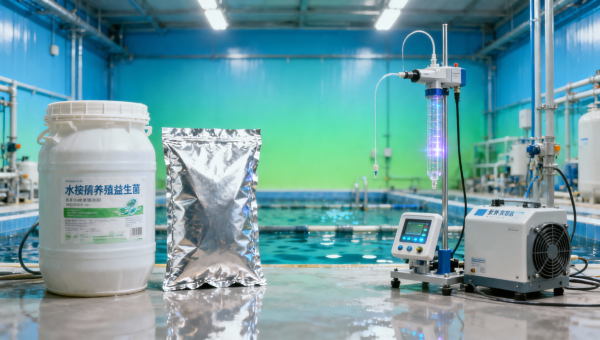
For buyers evaluating aquaculture probiotics bulk supply, shelf life is more than a storage issue—it directly affects treatment consistency, compliance, and farm profitability. This article examines how probiotic stability compares with fish disease treatment chemicals and works alongside smart buoys for aquaculture, water quality online monitor aquaculture systems, uv sterilizers for fish farms, ozone generators for aquaculture, and aquatic oxygen generators in modern production planning.
Why Shelf Life Is a Commercial and Technical Decision, Not Just a Packaging Detail
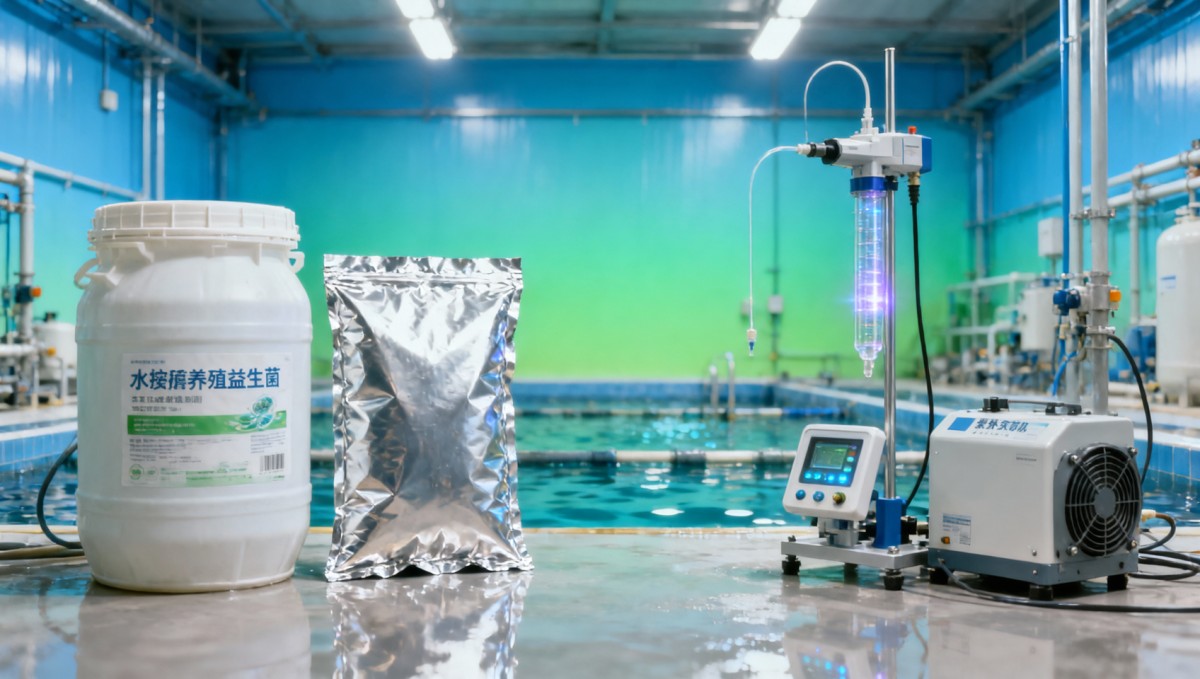
When professionals search for information on aquaculture probiotics bulk supply and shelf life problems, they usually are not looking for a basic definition of probiotics. They want to know a more practical answer: will the product still perform reliably by the time it reaches the farm, enters storage, and is finally applied at scale?
That question matters to multiple stakeholders at once:
- Procurement teams need confidence that large-volume purchases will not lose value before use.
- Technical evaluators want to know whether viability claims remain realistic under field conditions.
- Quality and safety managers need traceability, batch consistency, and handling controls.
- Farm operators care about whether the probiotic still stabilizes water quality or gut health when needed.
- Financial approvers want to reduce waste, emergency reordering, and production losses linked to unstable inputs.
In short, shelf life is tied directly to efficacy, inventory planning, transport risk, and return on investment. A probiotic with an attractive unit price can become expensive if viability declines before deployment. For bulk buyers, the real issue is not headline shelf life alone, but usable shelf life under actual distribution and farm conditions.
What Buyers Really Need to Verify Before Choosing an Aquaculture Probiotics Bulk Supplier
In bulk procurement, labels and marketing claims are not enough. Buyers should evaluate suppliers through a practical stability framework.
1. Confirm the shelf life basis.
Ask whether the stated shelf life is based on real-time stability testing, accelerated testing, or a theoretical estimate. Real-time data under defined temperature and humidity conditions is far more useful for operational decisions.
2. Check viability at release, not only at expiry.
A product may claim a viable count at the end of shelf life, but you also need to know the release specification, expected decline curve, and acceptable performance threshold. This is especially important for spore-forming Bacillus blends versus more sensitive lactic acid bacteria.
3. Review packaging barrier performance.
Moisture, oxygen, heat, and light are major drivers of probiotic degradation. Multi-layer moisture-resistant packaging, vacuum or nitrogen-assisted packing, and robust sealing quality can materially affect delivered stability.
4. Ask about transport resilience.
Bulk aquaculture probiotics often move through ports, warehouses, and regional distributors before reaching ponds or RAS facilities. The supplier should explain how the product tolerates shipping delays, container heat exposure, and storage interruptions.
5. Match form to use case.
Powders, granules, liquid formulations, and coated feed additives have different shelf life profiles. A technically “better” strain may still be the wrong commercial choice if the formulation is too fragile for the destination market.
6. Verify documentation.
For professional buyers, useful documentation includes certificate of analysis, batch number traceability, microbiological specification, recommended storage conditions, manufacturing date, and test methodology for viable count confirmation.
Why Shelf Life Problems Happen in Bulk Supply Chains
Most shelf life failures are not caused by one issue alone. They result from multiple weak points across manufacturing, logistics, storage, and farm handling.
Temperature exposure is one of the most common risks. Even relatively stable microbial strains can suffer viability loss if exposed to repeated heat spikes during inland transport or warehouse storage.
Humidity ingress is another frequent problem, especially in tropical aquaculture markets. Once packaging integrity is compromised, moisture can accelerate microbial degradation or clumping, reducing uniform application.
Long distribution cycles also matter. A product with a nominal 24-month shelf life may reach the end user with only 8 to 10 months remaining after production, export processing, customs clearance, and distributor storage.
Improper repacking or partial use can shorten actual on-farm usability. Once bulk packaging is opened, oxygen and humidity exposure rise sharply unless resealing protocols are strong.
Mismatch between product design and field reality is another hidden factor. Some probiotic products perform well in laboratory storage studies but are less suitable for farms with high ambient temperatures, intermittent power, or decentralized inventory control.
How Probiotics Compare with Fish Disease Treatment Chemicals in Storage Planning
Many buyers assess aquaculture probiotics alongside fish disease treatment chemicals, but the storage logic is different.
Traditional fish disease treatment chemicals are often evaluated mainly for chemical stability, concentration retention, legal use limits, and residue compliance. By contrast, probiotics are living or viability-dependent products. Their effectiveness depends not just on presence in a package, but on whether enough active microorganisms remain alive and functional at the time of use.
This leads to several practical differences:
- Chemicals may tolerate storage abuse better in some cases, while probiotics can lose efficacy gradually and less visibly.
- Expired chemicals are easier to identify by date alone, but probiotics may become commercially weak before official expiry if handling is poor.
- Application timing matters differently: probiotics are often used preventively or as system-balancing tools, so reduced viability can undermine long-term health management rather than immediate treatment only.
For buyers transitioning from chemical-heavy disease control to more biologically integrated management, this means procurement standards must change. A probiotic program needs stronger attention to cold chain or controlled storage, stock rotation discipline, and validated supplier stability data.
How Shelf Life Affects Performance in Modern Aquaculture Systems
In modern farms, probiotics are rarely used in isolation. They interact operationally with water treatment, monitoring, and aeration systems. That is why shelf life should be evaluated in the context of the whole production environment.
Smart buoys for aquaculture and water quality online monitor aquaculture systems help farms detect shifts in dissolved oxygen, pH, ammonia, ORP, and temperature. These data points can reveal whether a probiotic program is producing the intended biological effect or whether product degradation may be limiting results.
UV sterilizers for fish farms and ozone generators for aquaculture improve pathogen control and water clarity, but they can also influence how and where probiotics should be applied. If oxidation or sterilization intensity is high, timing and dosing strategy become critical so beneficial microbes are not neutralized immediately after application.
Aquatic oxygen generators support better microbial and animal performance by maintaining aerobic conditions, especially in intensive systems. However, oxygenation equipment cannot compensate for a probiotic product that has already lost viability in storage.
For decision-makers, the takeaway is clear: shelf-stable probiotics support system predictability. Unstable products create noise in performance analysis and make it harder to determine whether poor outcomes are due to water conditions, dosing strategy, or degraded microbial inputs.
What a Good Bulk Supply Program Looks Like in Practice
A reliable aquaculture probiotics bulk supply arrangement usually includes more than product availability. It should function as a controlled supply program.
- Production scheduling aligned to usage forecasts, so farms are not holding excessive stock.
- Defined storage specifications for distributor warehouses and farm inventory rooms.
- First-expiry-first-out inventory management rather than simple first-in-first-out.
- Batch-level traceability linking manufacturing date, shipment date, and receiving records.
- Technical guidance for opened-pack handling, dilution, and application windows.
- Periodic verification testing for high-value or mission-critical programs.
For distributors and regional agents, this is especially important. A product that is stable in the manufacturer’s warehouse may still underperform if downstream storage discipline is weak. Strong suppliers support channel partners with shelf life management tools, not just sales sheets.
Questions Procurement and QA Teams Should Ask Suppliers Before Signing a Contract
To reduce commercial and technical risk, buyers should ask direct questions such as:
- What is the guaranteed viable count at manufacture and at expiry?
- What test method is used to confirm viability and stability?
- Under what temperature and humidity conditions was shelf life validated?
- How much remaining shelf life is guaranteed at delivery?
- What packaging format is recommended for tropical or export markets?
- Does the product require cold chain, cool storage, or only dry storage?
- What happens to claims if product is exposed to short-term heat events during transit?
- Can the supplier provide retained sample policy, complaint handling workflow, and batch traceability records?
These questions help distinguish serious industrial suppliers from traders relying on generic claims.
How to Make a Better Buying Decision
The best buying decision is rarely the lowest-price option. For aquaculture probiotics bulk supply, a better decision balances four variables: stability, logistics fit, biological relevance, and total cost of use.
If a farm or distributor operates in hot, humid regions with long replenishment cycles, a slightly more expensive but more stable formulation may deliver lower overall cost and better treatment consistency. If stock turnover is fast and storage is well controlled, buyers may have more flexibility.
Decision-makers should compare suppliers using practical criteria:
- Remaining shelf life at arrival
- Documented stability evidence
- Packaging robustness
- Fit with farm water management system
- Support for QA and compliance documentation
- Risk of efficacy loss during local distribution
That approach produces a more realistic procurement outcome than comparing price per kilogram alone.
Conclusion
Aquaculture probiotics shelf life problems are not minor storage inconveniences; they are central to efficacy, supply reliability, compliance confidence, and farm economics. Buyers searching this topic usually need one practical conclusion: bulk probiotic purchasing only works well when shelf life is validated, protected, and matched to real operating conditions.
For professional procurement, QA, technical, and management teams, the smartest approach is to evaluate probiotics as part of the full production system—alongside fish disease treatment chemicals, smart buoys for aquaculture, water quality online monitor aquaculture tools, uv sterilizers for fish farms, ozone generators for aquaculture, and aquatic oxygen generators. In that context, stable probiotic supply becomes not just a product choice, but a controllable part of modern aquaculture performance.
Related Intelligence
- Natural IngredientsIndonesia BPOM Updates Natural Ingredients Labeling RulesIndonesia BPOM Updates Natural Ingredients Labeling Rules: New 'Microbial Tolerance Statement' required for natural pigments, plant powders & fermented extracts by Aug 1, 2026.
- Natural IngredientsIndonesia BPOM Updates Natural Ingredients Labeling RulesIndonesia BPOM updates natural ingredients labeling rules: New 'Microbial Tolerance Statement' required for plant powders, fermented extracts & peptides—act now to avoid customs delays.
- Natural IngredientsIndonesia BPOM Updates Label Rules for Natural Ingredients ImportsIndonesia BPOM updates label rules for natural ingredients imports: New pH ≤4.6 & 60°C/30min tolerance statement required by Aug 1, 2026 — act now to avoid customs rejection.
The Morning Broadsheet
Daily chemical briefings, market shifts, and peer-reviewed summaries delivered to your terminal.
