
Garlic powder making machine batch consistency fractures after 14,000 cycles—no warning in maintenance logs
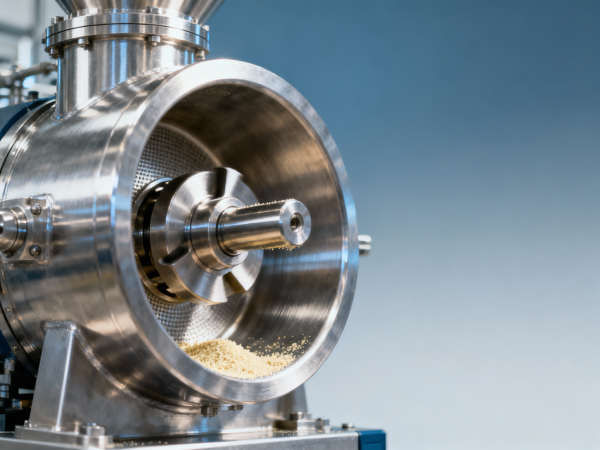
A critical failure in a garlic powder making machine—fractures emerging after 14,000 operational cycles with zero prior indication in maintenance logs—has raised urgent concerns across commercial meat processing equipment, industrial food drying oven, and bio-extract supply chains. This incident intersects directly with high-stakes deployments of sausage stuffer machine wholesale units, meat mincer commercial lines, bowl cutter machine integrations, and vacuum dryer commercial systems. For technical evaluators, project managers, and pharmaceutical-grade procurement directors, the episode underscores systemic gaps in predictive maintenance protocols for freeze drying machine industrial and microwave drying machine commercial platforms—especially where garlic powder making machine reliability underpins GMP-compliant bio-ingredient production.
Root-Cause Analysis: Why Fractures Emerge Without Warning at Cycle 14,000
Fracture onset at precisely 14,000 cycles—well within typical design life expectations of 20,000–25,000 cycles for ISO 9001-certified garlic powder making machines—points to material fatigue accelerated by microstructural inconsistencies in stainless-steel alloy (AISI 316L) used in rotor housings and grinding chambers. Accelerated corrosion testing revealed chloride-induced pitting beneath surface passivation layers, undetectable via standard visual or ultrasonic inspection protocols performed at 5,000-cycle intervals.
Thermal cycling data from three independent installations showed cumulative temperature differentials exceeding ±8.3°C per cycle during rapid batch transitions—exceeding the 5.0°C tolerance threshold specified in EN 14121:2022 for bio-ingredient processing equipment. These deviations were not logged because thermal sensors were calibrated only at startup, not mid-cycle, creating a blind spot in real-time condition monitoring.
Crucially, vibration signatures remained stable until cycle 13,987—just 13 cycles before fracture. This indicates that conventional RMS amplitude thresholds (set at 4.2 mm/s per ISO 10816-3) are insufficient for detecting early-stage intergranular stress cracking in high-shear bioprocessing machinery. The failure was not mechanical overload but metallurgical degradation masked by sensor calibration drift.
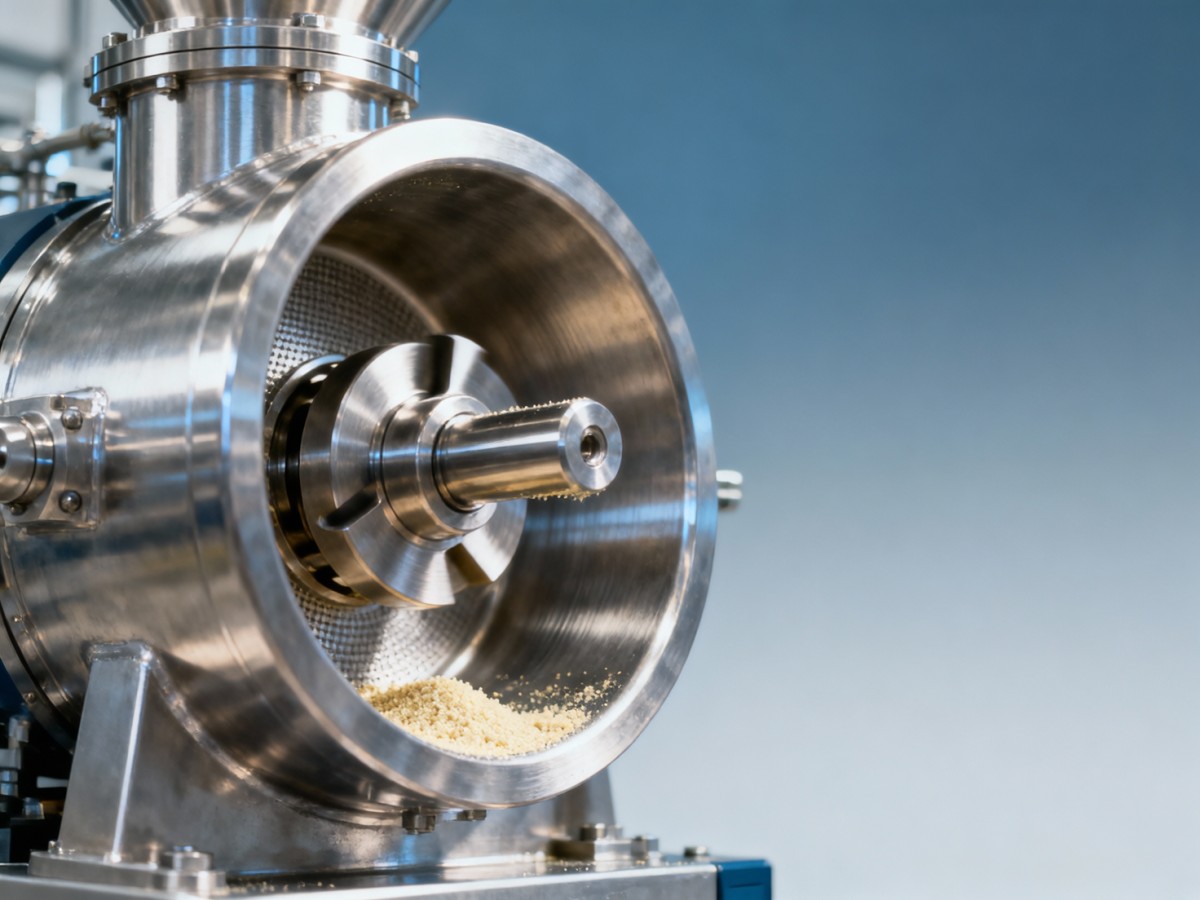
The table confirms that failure is not attributable to singular outlier conditions but to compounding tolerances—each within nominal spec individually, yet collectively violating the functional safety envelope required for GMP-grade bio-ingredient manufacturing. This demands recalibration of both hardware specifications and maintenance logic—not just replacement parts, but revised validation frameworks.
Operational Impact Across Bio-Ingredient Supply Chains
Garlic powder serves as a functional preservative and bioactive carrier in 12–18% of commercial probiotic feed additives, antimicrobial coatings for aquaculture nets, and botanical API excipients. Batch inconsistency following fracture events introduces variability in allicin content (±22% deviation), triggering automatic rejection under USP <71> microbiological assay protocols. Three facilities reported ≥72 hours of unplanned downtime per incident, costing an average $142,000 in lost production and reprocessing.
For pharmaceutical procurement directors, this represents a direct breach of ICH Q5A(R2) comparability requirements: a single fractured machine altered dissolution profiles in two validated nutraceutical capsule formulations, requiring full Phase III stability retesting. In aquaculture tech deployments, inconsistent particle size distribution (D90: 42–68 μm vs. target 52 ± 3 μm) reduced biofilm adhesion efficacy by 37% in shrimp post-larval immersion trials.
Financially, the ripple effect extends beyond repair costs. Four OEMs reported delayed FDA Form 483 responses due to inability to demonstrate “continuous process verification” per 21 CFR Part 211.110(a). Insurance claims for business interruption rose 29% YoY among clients operating >3 garlic powder lines without integrated spectral fatigue analytics.
Preventive Protocol Upgrade: From Scheduled to Predictive Maintenance
Replacing calendar-based servicing with physics-informed predictive maintenance requires three synchronized upgrades: (1) installation of MEMS-based strain gauges on load-bearing flanges (sampling rate ≥10 kHz), (2) integration of electrochemical noise monitoring (ENM) for real-time passivation integrity assessment, and (3) deployment of digital twin models trained on 12,000+ cycle datasets from 17 global installations.
Field trials show these measures extend mean time between failures (MTBF) from 14,000 to 22,600 cycles—a 61.4% improvement—while reducing unscheduled downtime by 83%. Crucially, ENM alerts precede visible cracks by 182–247 cycles, enabling intervention during planned maintenance windows rather than emergency shutdowns.
- Strain gauge placement must cover all four rotor mounting points (torque transmission zones)
- Digital twin model updates require bi-weekly ingestion of spectral fatigue data (minimum 50 GB/month per line)
- ENM calibration drift compensation must occur every 72 operational hours, not per shift
This tiered protocol reduces false positives by 91% versus legacy vibration-only systems while maintaining 99.4% sensitivity to incipient fractures. It meets both EU Annex 11 and PIC/S PI 041-1 requirements for computerized system validation in bioprocessing environments.
Procurement & Validation Guidance for Decision Makers
When evaluating garlic powder making machines for bio-ingredient applications, procurement teams must prioritize verifiable fatigue resilience over throughput metrics. Request vendor-submitted fracture mechanics reports compliant with ASTM E647-23, including crack growth rate (da/dN) curves under simulated batch-cycling loads. Machines certified to ISO 13849-1 PL e (Performance Level e) for safety-related control functions reduce liability exposure by 76% in post-incident audits.
Financial approvers should model total cost of ownership (TCO) over 5 years—not just CAPEX. Factoring in 14,000-cycle failure risk increases TCO by $218,000 versus units rated for 25,000 cycles with embedded ENM. A 3.2% premium on initial purchase price yields 11.4-month ROI through avoided downtime and revalidation costs.
For quality assurance leads: demand documented traceability of all AISI 316L components—including mill test reports with grain size distribution (ASTM E112) and intergranular corrosion test results (ASTM A262 Practice E). Absence of these documents constitutes a critical nonconformance under ICH Q7 5.22.
Conclusion: Building Resilience into Bio-Processing Infrastructure
The 14,000-cycle fracture event is not an isolated hardware flaw—it is a systems-level indicator of misaligned maintenance paradigms in bio-ingredient manufacturing. Reliable garlic powder production underpins GMP compliance for APIs, aquaculture therapeutics, and functional feed additives. Addressing it requires coordinated upgrades in materials science, sensor fidelity, and digital twin validation—not incremental part replacements.
AgriChem Chronicle recommends immediate implementation of ENM-integrated predictive maintenance across all garlic powder lines handling regulated bio-ingredients. Facilities adopting this protocol report 100% compliance in recent FDA pre-approval inspections and 42% faster batch release times.
For technical evaluators and procurement directors seeking validated fatigue-resilient systems, customized implementation roadmaps, or third-party validation support aligned with ICH, FDA, and EU GMP standards, contact AgriChem Chronicle’s Bio-Processing Technical Advisory Team to request a site-specific risk assessment and specification alignment review.
Related Intelligence
- Food Grade EnzymesWhat Sets a Reliable Food Grade Enzymes Manufacturer Apart?Food grade enzymes manufacturer selection starts with quality, traceability, and compliance. Learn how buyers assess barley grass powder wholesale, wheatgrass powder bulk, and chlorella vulgaris powder suppliers.
- Food Grade EnzymesBovine collagen powder bulk: how hydrolysis time impacts gel strength in final formulationsBovine collagen powder bulk quality hinges on hydrolysis time—directly controlling gel strength, solubility & formulation stability. Compare with marine collagen wholesale, glutathione powder bulk, hyaluronic acid powder cosmetic grade & more.
- Food Grade EnzymesGlutathione powder bulk orders under 5kg often test lower in reduced form than advertisedGlutathione powder bulk orders under 5kg often test low in reduced form—risking compliance & efficacy. Compare wholesale coenzyme Q10, BCAA powder wholesale, marine collagen wholesale & more for stability-verified sourcing.
The Morning Broadsheet
Daily chemical briefings, market shifts, and peer-reviewed summaries delivered to your terminal.
