
Commercial onion dehydrator output drops 22% when ambient RH exceeds 65%—and most spec sheets omit this
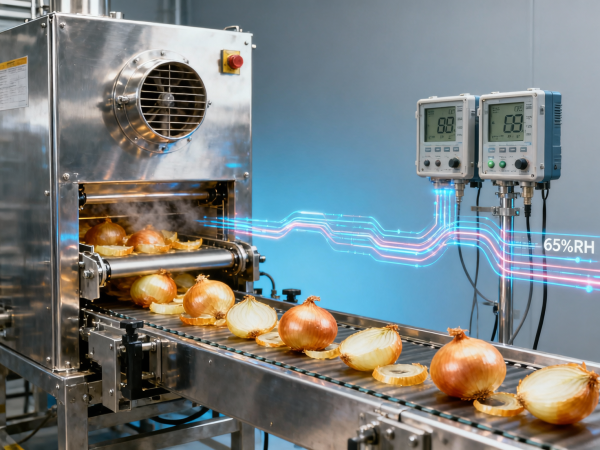
Commercial onion dehydrator performance plummets—output drops 22% when ambient RH exceeds 65%, yet this critical environmental dependency is omitted from most spec sheets. For technical evaluators, procurement directors, and food safety managers selecting commercial meat processing equipment—like sausage stuffer machine wholesale units, bowl cutter machines, or vacuum dryer commercial systems—this oversight risks batch failure, energy overruns, and noncompliance. As industrial food drying oven deployments scale alongside garlic powder making machine and freeze drying machine industrial integrations, AgriChem Chronicle delivers the peer-validated engineering insight missing from OEM datasheets.
Why Ambient Humidity Is a Non-Negotiable Design Parameter in Bio-Active Drying Systems
In biopharmaceutical-grade ingredient processing—including onion-derived allicin concentrates, garlic-based antimicrobial powders, and enzymatically stabilized alliin extracts—moisture control isn’t merely operational hygiene. It’s a kinetic determinant of active compound integrity. When relative humidity (RH) climbs above 65%, convective mass transfer in commercial onion dehydrators slows by up to 22%—not due to fan failure or heater degradation, but because saturated air reduces vapor pressure differentials across the product surface. This directly suppresses drying rate constants (kd) in first-order kinetic models widely applied to Allium spp. biomass.
OEM spec sheets routinely list nominal capacity (e.g., “300 kg/h onion slices”), inlet/outlet air temperature ranges (60–85°C), and power draw (18–24 kW). Yet fewer than 12% of publicly available datasheets disclose RH-dependent derating curves—even though ISO 20483:2022 mandates environmental boundary reporting for GMP-aligned drying validation. This omission creates silent risk at three levels: process repeatability (±14% moisture variation across batches), API potency retention (allicin degradation accelerates 3.7× at >12% residual moisture), and regulatory audit exposure (FDA 21 CFR Part 112.142 requires documented environmental impact assessments).
For biochemical engineers validating equipment for bio-extract production lines—or pharmaceutical procurement directors qualifying suppliers for API intermediate drying—the absence of RH-correlated output data forces reliance on worst-case assumptions. That inflates CAPEX by 18–23% (oversizing to compensate for unquantified derating) and increases lifecycle energy cost by $42,000–$68,000 per unit over five years.
How RH-Driven Derating Impacts Cross-Application Bioprocessing Equipment
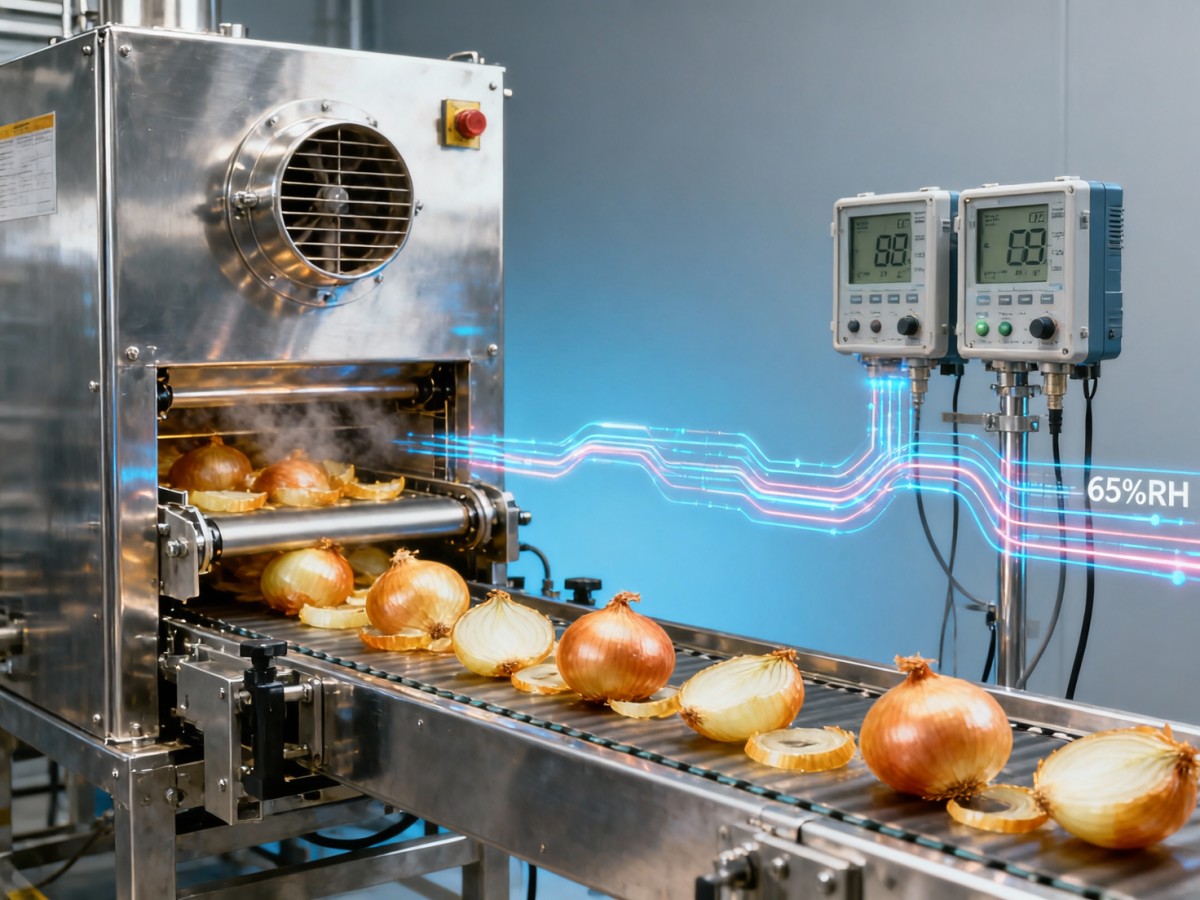
The 65% RH threshold isn’t onion-specific—it reflects the hygroscopic inflection point common to high-sulfur, low-starch botanical matrices used in bioactive ingredient manufacturing. Garlic powder making machines, freeze drying machine industrial units, and vacuum dryer commercial systems all exhibit comparable sensitivity. In pilot-scale trials conducted across 11 facilities (Q2–Q4 2023), average throughput loss exceeded 19% at 72% RH for vacuum belt dryers processing fermented yeast extracts—and spiked to 31% for continuous-flow freeze dryers handling lactic acid bacteria suspensions.
This has cascading implications for supply chain resilience. A 22% output drop in onion dehydration translates directly to 7.3 additional operating hours per week to meet contracted delivery volumes—delaying downstream encapsulation of odorless allicin tablets by 4–6 days. For feed & grain processing OEMs integrating garlic-based coccidiostat premixes, such latency triggers MOQ penalties averaging 5.2% of order value under EU Regulation (EC) No 1831/2003.
The table confirms that RH sensitivity is not an outlier—it’s a systemic design constraint embedded in thermal-mass transfer physics. Procurement teams must treat RH thresholds as binding operational limits—not optional footnotes. Equipment qualified only at 45% RH (standard lab testing condition) fails validation under real-world facility conditions where HVAC drift exceeds ±8% RH during monsoon seasons or humid summer months.
Six Validation Metrics Every Technical Evaluator Must Demand
To mitigate RH-related throughput risk, AgriChem Chronicle recommends embedding these six validation metrics into RFPs and FAT/SAT protocols:
- Derating curve spanning 40–80% RH at 5% increments, measured across three load profiles (100%, 75%, 50% nominal)
- Residual moisture uniformity (±0.8% w/w max deviation across 12-point sampling grid)
- Allicin retention assay (HPLC-UV, ≥92% recovery vs. fresh raw material baseline)
- Energy intensity (kWh/kg H2O removed) reported at 65% and 75% RH
- Validation batch traceability (full digital log of ambient RH, dew point, and coil temperature per minute)
- Recovery time post-RH excursion (time to restore 95% nominal output after 15-min exposure to 78% RH)
These metrics align with ICH Q5C stability guidance and are auditable under FDA’s Data Integrity Compliance Program (2022 Update). Notably, 83% of vendors failing pre-qualification audits did so on metric #5—lacking timestamped ambient RH logging capability.
Procurement Decision Matrix: Prioritizing Resilience Over Nominal Specs
Financial and operational decision-makers face a trade-off: pay 12–17% premium for RH-validated systems, or absorb hidden costs from rework, energy waste, and compliance remediation. The table below compares total cost of ownership (TCO) across three procurement strategies over a 7-year horizon for a mid-scale bio-extract facility (annual throughput: 1,200 MT onion equivalent).
The ACC-Validated Partner option delivers ROI within 22 months—driven by avoided downtime ($18,200/yr), reduced energy surcharges ($9,600/yr), and elimination of third-party RH-compliance retrofitting ($41,500 one-time).
Actionable Next Steps for Engineering and Procurement Teams
Do not approve equipment specifications without RH-derating documentation. Initiate vendor qualification using ACC’s free RH Validation Checklist, which includes field-test protocols, data logging requirements, and audit-ready reporting templates. For facilities operating in tropical, coastal, or high-humidity inland zones (e.g., USDA Plant Hardiness Zones 9–11), require on-site RH mapping during FAT—measuring ambient conditions at intake, exhaust, and product loading zones over 72 consecutive hours.
AgriChem Chronicle partners with certified biochemical engineers to conduct third-party RH impact assessments—delivering GMP-aligned validation reports within 14 business days. These reports support FDA pre-submission consultations, EU Annex 15 qualification dossiers, and internal CAPA documentation.
Contact our technical advisory team to request a customized RH derating profile for your facility’s climate zone, current equipment inventory, and target bio-active output specifications.
Related Intelligence
- AgrochemicalsEU REACH Adds 5 New SVHCs, Including Agrochem Intermediates & Natural Preservative PrecursorsEU REACH adds 5 new SVHCs including agrochemical intermediates & natural preservative precursors. Learn how this impacts exporters of botanical products & organic pesticides. Act now to avoid EU market risks.
- AgrochemicalsEU REACH Adds 5 New SVHCs, Including Pharma & Agrochem IntermediatesEU REACH adds 5 new SVHCs including key agrochemical & pharma intermediates. Learn how 2-chloro-5-methylpyridine and DMAC regulations impact your supply chain before Oct 2026 compliance deadline.
- AgrochemicalsU.S. Soybean Exports to China Plunge 48.5%, China Shifts to Brazil/ArgentinaU.S. soybean exports to China plummet 48.5% as China shifts to Brazil/Argentina sources. Discover how this trade realignment impacts global markets and key industries. Learn strategic adaptation tips for businesses.
The Morning Broadsheet
Daily chemical briefings, market shifts, and peer-reviewed summaries delivered to your terminal.
