
U.S. Soybean Exports to China Plunge 48.5%, China Shifts to Brazil/Argentina
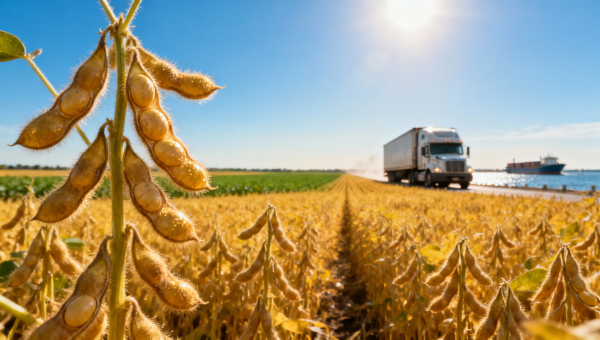
Recent USDA data reveals a 48.5% year-on-year drop in U.S. soybean exports to China, with shipments totaling only 11.38 million metric tons for the 2025/26 season. This shift is driving China to accelerate alternative sourcing from Brazil and Argentina, reshaping global soybean trade flows and impacting downstream industries.
Event Overview
The U.S. Department of Agriculture confirmed that China's soybean imports from the U.S. fell sharply by 48.5% during the current marketing year. Concurrently, China increased purchases from Brazil and Argentina, altering traditional supply chain patterns. This structural change is already affecting global soybean meal and oil export dynamics.
Impacted Industries
1. Agricultural Commodity Traders
The reallocation of Chinese demand requires traders to recalibrate procurement strategies across multiple origins. Contract pricing and logistics planning now demand greater flexibility to accommodate shifting trade routes.
2. Oilseed Processing Facilities
Chinese crushers face operational adjustments as Brazilian/Argentine beans require different processing parameters than U.S. varieties. This may temporarily affect soybean meal protein content and oil yield ratios.
3. Animal Feed Manufacturers
Downstream buyers of soybean meal should anticipate tighter supply conditions and potential price volatility, particularly for high-protein feed ingredients.
Key Considerations for Businesses
Monitor Origin-Specific Quality Parameters
Differences in moisture content, protein levels, and oil composition between South American and U.S. beans may require reformulation of processing protocols.
Diversify Supplier Networks
Importers should establish relationships with crushers capable of handling multiple soybean varieties to mitigate supply disruptions.
Review Contract Terms
Consider incorporating flexible origin clauses and price adjustment mechanisms to account for market volatility.
Industry Perspective
Analysis suggests this represents more than temporary trade friction—it signals China's strategic diversification of agricultural sourcing. The transition period may create short-term inefficiencies but could stabilize long-term supply security. Market participants should view this as an inflection point requiring supply chain restructuring rather than a transient fluctuation.
Conclusion
This export shift reflects fundamental changes in global agricultural trade patterns. While immediate challenges exist for specific sectors, the broader industry must adapt to a new equilibrium in soybean flows. Businesses that proactively adjust procurement and processing strategies will be better positioned to navigate the evolving landscape.
Sources
• U.S. Department of Agriculture (USDA) official data
• Ongoing market monitoring by trade analysts
Related Intelligence
- AgrochemicalsEU REACH Adds 5 New SVHCs, Including Agrochem Intermediates & Natural Preservative PrecursorsEU REACH adds 5 new SVHCs including agrochemical intermediates & natural preservative precursors. Learn how this impacts exporters of botanical products & organic pesticides. Act now to avoid EU market risks.
- AgrochemicalsEU REACH Adds 5 New SVHCs, Including Pharma & Agrochem IntermediatesEU REACH adds 5 new SVHCs including key agrochemical & pharma intermediates. Learn how 2-chloro-5-methylpyridine and DMAC regulations impact your supply chain before Oct 2026 compliance deadline.
- AgrochemicalsU.S. Soybean Exports to China Plunge 48.5%, China Shifts to Brazil/ArgentinaU.S. soybean exports to China plummet 48.5% as China shifts to Brazil/Argentina sources. Discover how this trade realignment impacts global markets and key industries. Learn strategic adaptation tips for businesses.
The Morning Broadsheet
Daily chemical briefings, market shifts, and peer-reviewed summaries delivered to your terminal.
