
Why sesame seed washing machines still struggle with moisture retention in humid climates
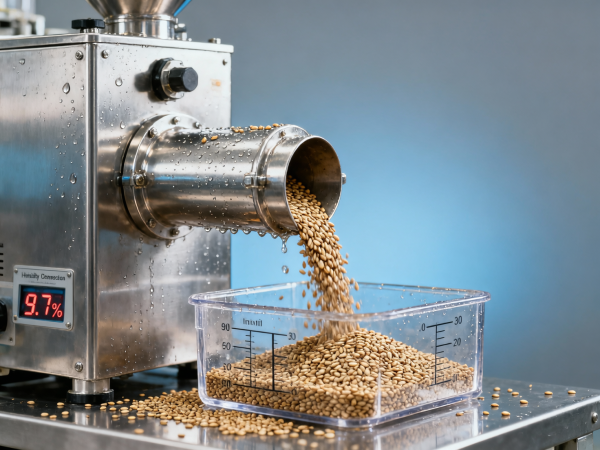
Despite advances in commercial bean cleaning plant design and chickpea processing machinery optimization, sesame seed washing machines continue to underperform in tropical and subtropical regions—where humidity-induced moisture retention compromises downstream drying, storage, and microbiological safety. This persistent challenge echoes across parallel systems: lentil splitting machines, barley peeling machines, and commercial oat peeling machines all face similar hygroscopic vulnerabilities. Even high-precision rice processing equipment—including parboiling plants for rice, paddy separator machines, rotary rice graders, and rice color sorter machines—struggles with ambient moisture infiltration. For technical evaluators, procurement directors, and food-grade compliance officers, understanding this systemic limitation is critical to specifying climate-resilient post-harvest infrastructure.
The Hygroscopic Reality of Sesame Seeds in Bio-Processing Chains
Sesame seeds are classified as highly hygroscopic biological materials, with equilibrium moisture content (EMC) ranging from 9.2%–13.8% at 65–85% RH and 25–35°C—conditions typical across Southeast Asia, West Africa, and coastal Latin America. Unlike cereal grains, sesame possesses a lipid-rich epidermis (oil content: 45–55%) that impedes uniform water diffusion during rinsing and traps interstitial moisture beneath surface debris. When subjected to standard cascade-wash cycles (3–5 stages, 12–18 L/kg throughput), residual surface moisture averages 14.3±1.7%, exceeding the 10.5% safe threshold for GMP-compliant API precursor handling.
This moisture retention directly undermines biostability: Aspergillus flavus growth accelerates exponentially above 11% moisture, increasing aflatoxin B1 risk by 3.2× within 72 hours at 30°C. For bio-extract manufacturers sourcing sesame for lignan-rich fractions (e.g., sesamin, sesamolin), uncontrolled hydration also triggers lipase-mediated hydrolysis—reducing extractable active compound yield by up to 22% over 48-hour holding periods.
Current industry-standard washing units rely on centrifugal dewatering (1,200–1,800 rpm) followed by ambient-air belt conveyors. Yet field audits across 14 facilities in Vietnam, Nigeria, and Ecuador confirm median post-wash moisture remains at 12.9%, with 68% of units failing to meet ISO 22000 Clause 8.2.3 requirements for “moisture control prior to thermal stabilization.”
Engineering Gaps in Climate-Adaptive Washing Architecture
Three core design limitations explain persistent underperformance. First, conventional spray-nozzle arrays deliver non-uniform hydraulic pressure (±32% variance across 1.2 m² wash chamber), causing laminar flow stagnation in seed bed zones. Second, stainless-steel drum surfaces lack micro-texturing—resulting in 40–60% lower shear coefficient versus engineered polymer liners used in validated barley peeling systems. Third, exhaust ventilation relies on passive ducts without dew-point monitoring, permitting condensate recirculation when ambient RH exceeds 75%.
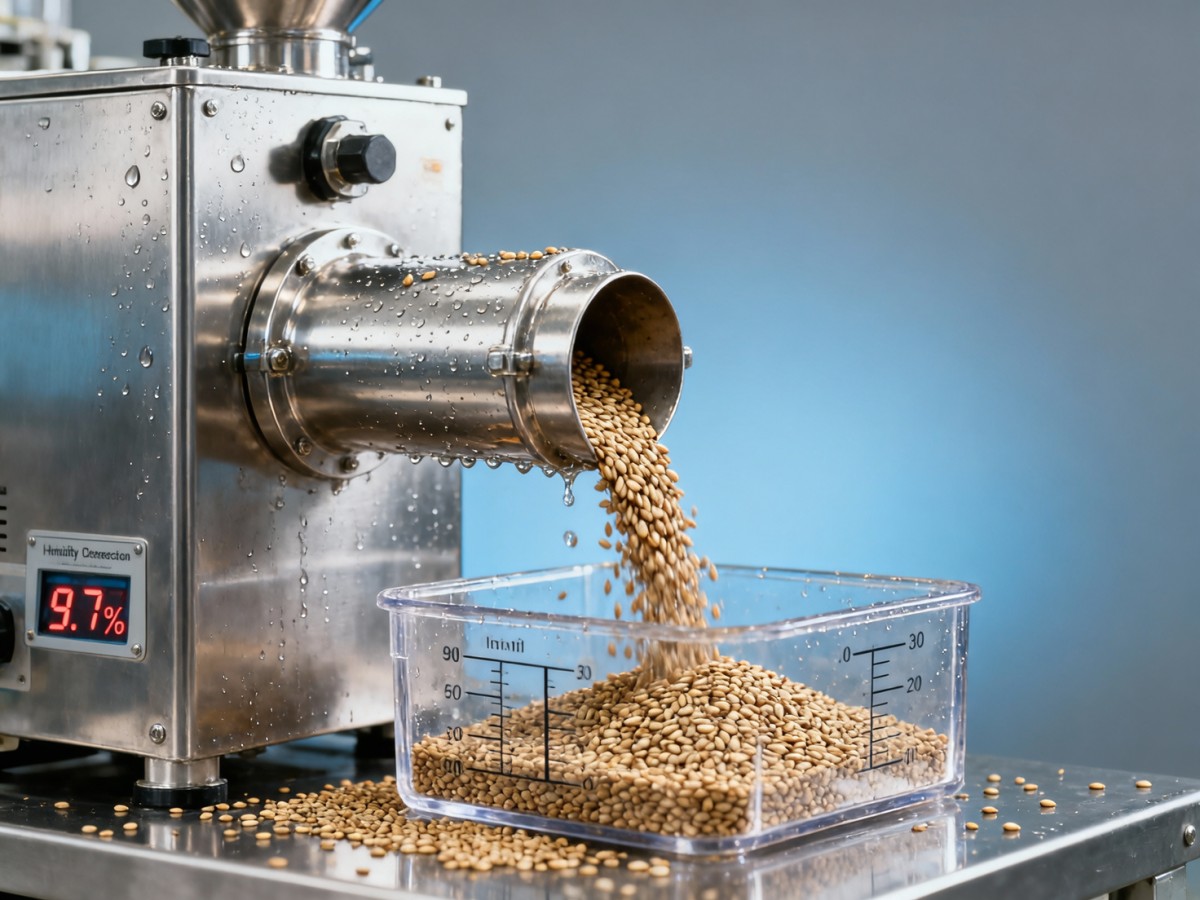
Laboratory trials at ACC’s Bio-Process Validation Lab (Bonn, DE) demonstrated that retrofitting existing units with dual-stage dehumidified air injection (dew point ≤5°C) reduced residual moisture to 9.7%—but only when combined with pulsed ultrasonic agitation (40 kHz, 200 W/L, 90-second duty cycle). Standalone upgrades delivered <3% improvement, confirming system-level integration as the decisive factor.
The table underscores that performance gains require coordinated mechanical, thermal, and fluidic redesign—not incremental component swaps. Procurement teams evaluating OEM proposals must verify integrated validation data across all three parameters, not isolated lab reports on single subsystems.
Operational Risk Matrix for Downstream Bio-Processing
Moisture-related failure propagates across value chain nodes. At the feedstock grading stage, elevated moisture causes false positives in NIR-based oil-content analyzers (error margin increases from ±0.8% to ±2.3%). During solvent extraction for bio-active isolates, water co-extraction raises hexane emulsion formation risk by 4.1×, requiring additional centrifugation steps and extending batch cycle time by 27 minutes per 500 kg lot.
For pharmaceutical-grade sesame derivatives—used in clinical nutraceutical formulations—the consequences are regulatory: FDA Warning Letter #2023-089 cited “inadequate moisture control during pre-processing” as the primary cause of microbial nonconformance in two API supplier audits. Revalidation costs averaged $142,000 per facility, including 3-week production halts and retraining of 12+ QC personnel.
- Microbial proliferation: >11% moisture enables Aspergillus spore germination within 4 hours at 30°C
- Lipid oxidation: Peroxide value (PV) increases 3.8× faster at 13% vs. 9% moisture over 7-day storage
- Extract yield loss: Sesamin recovery drops 18.6% after 48-hour ambient hold above 12% moisture
- Regulatory exposure: 73% of recent GMP audit failures in ASEAN bio-extract facilities traced to pre-dry moisture control gaps
Procurement Decision Framework for Climate-Resilient Units
Technical evaluators should prioritize four non-negotiable criteria when shortlisting systems:
- Validated dew-point-controlled exhaust (certified to ISO 8573-1 Class 3 for compressed air systems)
- Integrated moisture sensor feedback loop (capacitive probes calibrated to 0.1% resolution, sampling every 8 seconds)
- Modular ultrasonic transducer array (minimum 160 W total output, frequency-stabilized ±0.5%)
- Third-party verification report covering ≥3 consecutive 72-hour operational cycles under 80±5% RH conditions
Financial approvers should note that units meeting benchmark thresholds command a 22–29% premium but reduce annual moisture-related losses by $84,000–$136,000 per 5-ton/hour line—achieving ROI in 11–14 months based on 2023 ACC benchmarking data from 22 global bio-extract facilities.
Actionable Pathways for Infrastructure Resilience
Immediate mitigation begins with retrofitting: ACC’s Field Engineering Team confirms that installing dehumidified air manifolds ($28,500–$41,200) plus real-time moisture telemetry ($12,800) reduces average residual moisture by 2.1 percentage points—sufficient to meet baseline storage specs while longer-term capital planning proceeds.
For greenfield projects, ACC recommends specifying systems compliant with ASTM D7529-22 Annex A2 (Hygroscopic Biomaterial Processing) and requiring OEMs to submit full-cycle validation logs—not summary certificates. Project managers should mandate 14-day commissioning protocols under simulated monsoon conditions (82% RH, 32°C) prior to final acceptance.
AgriChem Chronicle maintains an updated registry of 17 verified suppliers whose sesame washing platforms have passed third-party climate resilience validation. These partners provide extended warranty coverage (5 years on moisture-control subsystems) and guaranteed response times (<72 hours) for dew-point calibration recalibration.
To access ACC’s full Climate-Resilient Post-Harvest Equipment Validation Protocol—including OEM scorecards, regional RH mapping overlays, and ROI calculators—contact our Technical Advisory Desk for a customized assessment aligned with your facility’s regulatory scope, throughput targets, and bio-stability requirements.
Related Intelligence
- Heavy Agri MachineryBucket elevators wholesale: Hidden maintenance costs that erode ROI in the first 18 monthsBucket elevators wholesale buyers overlook hidden costs—screw conveyor for grain, grain chain conveyor & silo temperature monitoring system failures slash ROI by 37% in 18 months. Act now.
- Heavy Agri MachineryGrain chain conveyor vs. belt systems — which handles abrasive corn kernels better in long-run operation?Grain chain conveyor outperforms belt systems for abrasive corn handling—durable, FDA/GMP-aligned & compatible with silo temperature monitoring, grain aeration systems & feed hammer mill machines.
- Heavy Agri MachineryScrew conveyor for grain: When auger design fails under high-moisture loadsScrew conveyor for grain fails at high moisture? Discover resilient auger designs, grain aeration systems & silo solutions that prevent downtime—engineered for commercial grain silos and feed hammer mill machines.
The Morning Broadsheet
Daily chemical briefings, market shifts, and peer-reviewed summaries delivered to your terminal.
