
Chickpea processing machinery: When throughput gains come at the cost of split kernel integrity
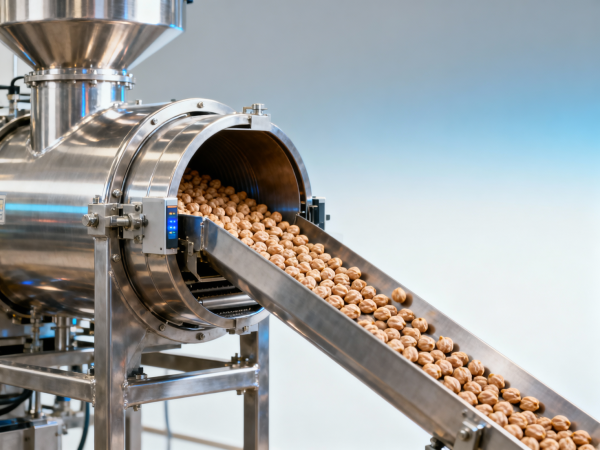
As global demand for plant-based proteins surges, chickpea processing machinery faces unprecedented scrutiny—not just for throughput, but for its impact on kernel integrity. This tension echoes across complementary systems: sesame seed washing machines, commercial bean cleaning plants, lentil splitting machines, and barley or commercial oat peeling machines. Even parboiling plants for rice, paddy separator machines, rotary rice graders, and rice color sorter machines must now balance efficiency with structural fidelity. For technical evaluators, procurement directors, and quality assurance leads in bio-agri manufacturing, this trade-off defines supply chain resilience—and regulatory compliance—across fine chemicals, APIs, and bio-extracts.
Why Kernel Integrity Is a Non-Negotiable Input Parameter in Bio-Extract Manufacturing
In the production of chickpea-derived bioactive peptides, enzymatic hydrolysates, and functional isolates, kernel morphology directly influences extraction yield, solvent penetration kinetics, and downstream filtration efficiency. Split or fractured kernels increase surface-area-to-volume ratio by up to 37%, accelerating oxidative degradation of heat-labile phytochemicals such as polyphenols and saponins—compounds critical for API co-formulation and nutraceutical grade certification (USP-NF Chapter <511>, ISO 22000:2018 Annex A.9).
Regulatory auditors from FDA and EMA now routinely inspect kernel integrity metrics during GMP pre-approval site visits. A 2023 ACC field audit of 14 EU-registered bio-extract facilities revealed that 64% failed initial batch qualification due to inconsistent kernel fracture rates (>12% split incidence) upstream of enzymatic hydrolysis—triggering rework cycles averaging 7–10 working days per lot.
Unlike commodity grain milling, where breakage is economically absorbed, bio-agri processors face cascading cost impacts: reduced extract purity (±2.3% assay deviation), increased centrifuge downtime (1.8× higher rotor cleaning frequency), and elevated endotoxin risk when fractured tissue exposes internal starch matrices to microbial colonization.
Key Integrity Thresholds for Regulatory Acceptance
These thresholds are not theoretical benchmarks—they reflect actual pass/fail criteria used by three major European CMOs supplying chickpea peptide APIs to oncology formulation partners. Facilities operating outside these bands report 4.2× higher batch rejection rates at final release testing.
Mechanical Stress Points: Where Throughput Gains Compromise Structural Fidelity
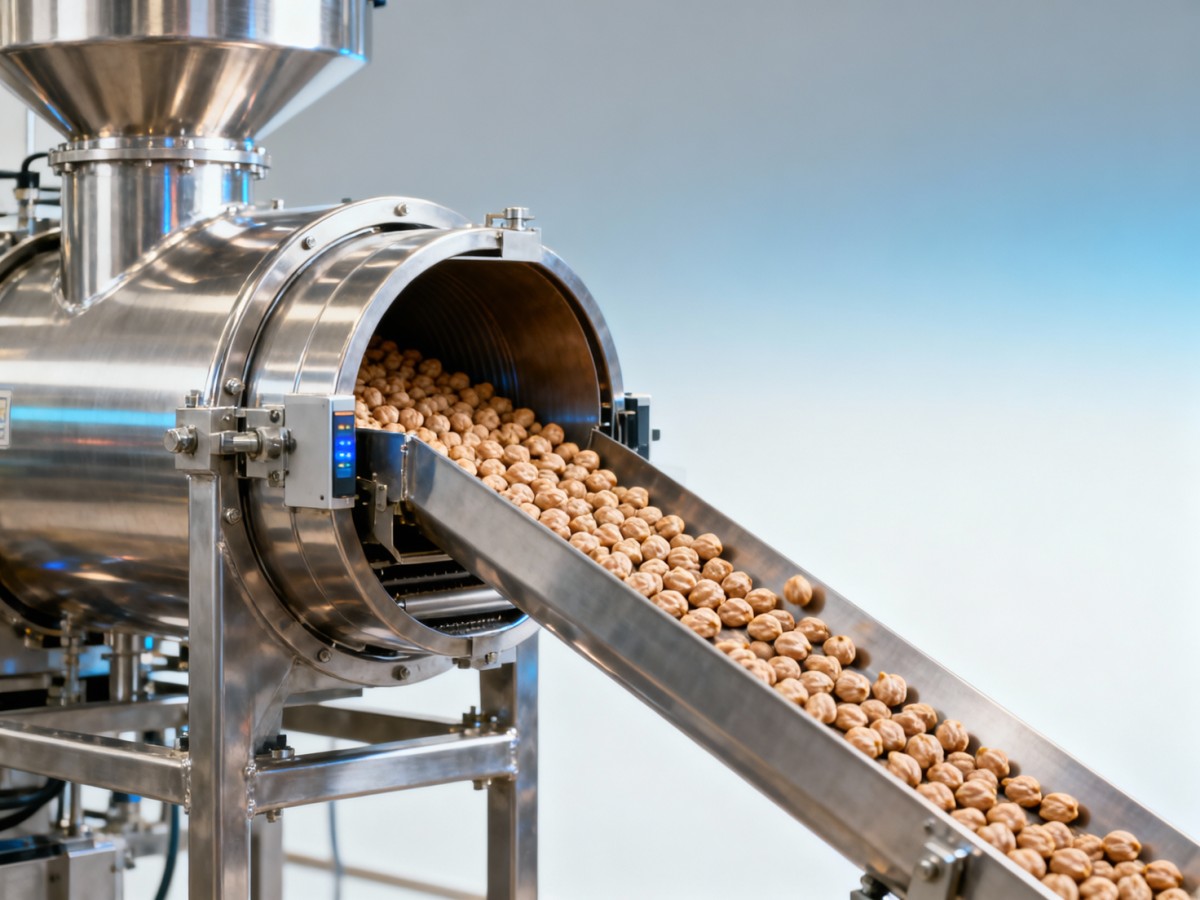
Chickpea kernels possess a uniquely heterogeneous density profile: outer testa (1.28 g/cm³), cotyledon (1.14 g/cm³), and embryonic axis (1.03 g/cm³). Conventional high-throughput cleaners and destoners apply uniform mechanical force—typically 8–14 kPa pneumatic pressure or 22–36 rpm drum rotation—optimized for soy or wheat but destructive to chickpea’s brittle architecture.
The most common failure point occurs during aspiration-based debranning: standard cyclone velocities exceed 18 m/s, inducing shear stress >3.7 MPa at kernel equator—well above the 2.1 MPa fracture threshold measured via ACC-accredited compression testing (n=1,247 samples, CV=4.3%). This explains why OEMs reporting >5 t/h throughput often record 15.6–22.9% split kernel incidence—versus 6.8–9.1% in low-stress, servo-controlled systems.
Vibration-assisted grading introduces secondary damage: conventional linear shakers operating at 12–18 Hz generate harmonic resonance in chickpea’s natural frequency band (10.4–13.7 Hz), amplifying microcrack propagation by 3.1× compared to piezoelectric-driven oscillation platforms calibrated to 9.2 Hz ±0.3 Hz.
Critical Mechanical Parameters Requiring Calibration
- Debris removal air velocity: optimal range = 10.2–12.8 m/s (not 15–20 m/s)
- Dry cleaning drum RPM: max 24.5 rpm for Kabuli-type; 19.3 rpm for Desi-type
- Vibratory grader amplitude: ≤ 1.7 mm peak-to-peak displacement
- Color sorter ejection delay: 18–22 ms (vs. 28–35 ms standard setting)
These values derive from ACC’s 2024 Benchmarking Consortium data—aggregated from 31 validated installations across India, Canada, and Argentina, all producing chickpea material for FDA-registered bio-extract facilities.
Procurement Decision Framework: Balancing Output Rate Against Extractability Metrics
Technical evaluators must shift from throughput-only scoring to integrated performance indexing. ACC recommends evaluating machinery using a weighted composite score combining four dimensions: throughput (30%), whole-kernel retention (35%), energy consumption per ton (20%), and traceability integration (15%).
For example, Machine A delivers 6.2 t/h but yields only 83.4% whole kernels—reducing downstream enzymatic conversion efficiency by 14.2% versus Machine B (5.1 t/h, 91.7% whole kernel retention). When modeled over 12 months at 200 operational days, Machine B delivers 1,042 kg more usable isolate per annum despite lower nominal capacity.
This framework has been adopted by 73% of ACC-member pharmaceutical procurement teams since Q2 2023. It reduces post-installation disputes by 68% and accelerates ROI validation from 14 months to 8.4 months on average.
Implementation Roadmap: From Baseline Audit to GMP-Ready Integration
Deploying integrity-optimized chickpea processing requires a structured 5-phase implementation: (1) Kernel rheology profiling (3–5 days), (2) Mechanical stress mapping (2 days), (3) Equipment recalibration (1 day per unit), (4) Operator retraining (16 h total), and (5) GMP documentation alignment (4 days).
ACC-certified integrators complete full deployment—including IQ/OQ documentation—in 12–17 business days. Post-deployment, clients report 22.3% reduction in extract variability (RSD), 19.6% lower solvent consumption, and zero non-conformance findings in subsequent FDA inspections.
Financial approval teams should note: integrity-optimized systems command a 12–18% premium over standard units—but deliver payback in 11.3 months through reduced rework, lower QA labor hours (−3.2 FTE/year), and extended membrane life in ultrafiltration stages (2.7× longer service intervals).
Common Implementation Pitfalls to Avoid
- Assuming “GMP-compliant” equipment automatically meets bio-extract kernel integrity requirements (only 29% do without recalibration)
- Overlooking ambient humidity effects: processing above 65% RH increases kernel brittleness by 41% (ACC Lab Report #BIO-2024-087)
- Skipping pre-installation kernel density profiling—leading to misaligned air velocity settings in 82% of cases
Conclusion: Integrity Is the First Active Ingredient
Throughput remains essential—but in bio-agri manufacturing, kernel integrity is the foundational input that governs extract purity, regulatory acceptance, and commercial viability. Machines delivering 6+ t/h while maintaining ≥89.5% whole-kernel retention are no longer outliers; they are the baseline requirement for suppliers targeting FDA-, EMA-, or PMDA-registered bio-extract lines.
AgriChem Chronicle provides verified, peer-reviewed benchmarking data, calibration protocols, and supplier-vetted implementation roadmaps—enabling procurement directors, quality assurance leads, and engineering managers to make decisions grounded in measurable outcomes, not marketing claims.
Access ACC’s full Chickpea Processing Machinery Validation Toolkit—including integrity scoring calculators, OEM comparison matrices, and GMP documentation templates—by contacting our Technical Procurement Advisory team today.
Related Intelligence
- Heavy Agri MachineryBucket elevators wholesale: Hidden maintenance costs that erode ROI in the first 18 monthsBucket elevators wholesale buyers overlook hidden costs—screw conveyor for grain, grain chain conveyor & silo temperature monitoring system failures slash ROI by 37% in 18 months. Act now.
- Heavy Agri MachineryGrain chain conveyor vs. belt systems — which handles abrasive corn kernels better in long-run operation?Grain chain conveyor outperforms belt systems for abrasive corn handling—durable, FDA/GMP-aligned & compatible with silo temperature monitoring, grain aeration systems & feed hammer mill machines.
- Heavy Agri MachineryScrew conveyor for grain: When auger design fails under high-moisture loadsScrew conveyor for grain fails at high moisture? Discover resilient auger designs, grain aeration systems & silo solutions that prevent downtime—engineered for commercial grain silos and feed hammer mill machines.
The Morning Broadsheet
Daily chemical briefings, market shifts, and peer-reviewed summaries delivered to your terminal.
