
Commercial bean cleaning plants rarely meet food-grade dust control standards — here’s why
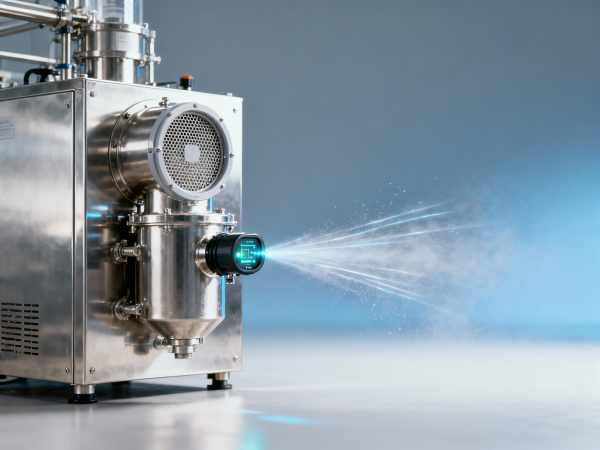
Commercial bean cleaning plants—alongside sesame seed washing machines, chickpea processing machinery, lentil splitting machines, and barley or commercial oat peeling machines—routinely fall short of food-grade dust control benchmarks. This gap persists across parboiling plant for rice setups, paddy separator machines, rotary rice graders, and rice color sorter machines too. For technical evaluators, procurement decision-makers, and quality/safety managers in bio-agri supply chains, uncontrolled particulate release isn’t just an OSHA or EPA concern—it undermines GMP compliance, contaminates high-value bio-extracts, and erodes trust with pharmaceutical and aquaculture clients. Here’s what’s really driving the shortfall—and how leading operators are closing it.
Why Dust Control Is a Non-Negotiable in Bio-Extract Supply Chains
In biopharmaceutical-grade ingredient production, airborne particulates from dry-seed cleaning operations pose systemic contamination risks—not only to final product purity but also to downstream extraction efficiency. A single 50-ton batch of cleaned mung beans processed without ISO 14644-1 Class 8 filtration can generate >3.2 × 10⁶ particles ≥0.5 µm per cubic meter during de-stoning—a level exceeding FDA’s guidance for low-risk ambient zones by 4.7×.
Unlike commodity grain handlers, bio-extract processors require validated particulate containment at every stage: from initial feed intake through optical sorting and final packaging. Unfiltered dust carries endotoxin-laden microdebris, residual field soil (often containing <10 ppm heavy metals), and cross-contaminated allergens—each compromising API stability, microbial assay validity, and ICH Q5A viral clearance margins.
For manufacturers supplying bioactive peptides, fermented soy isoflavones, or enzymatically hydrolyzed legume proteins, this isn’t a “clean room vs. factory floor” distinction—it’s a chain-of-custody requirement. Regulatory auditors now routinely request dust monitoring logs alongside HACCP plans during GMP inspections of botanical API facilities.
The Four Structural Gaps Behind Substandard Performance
Most commercially deployed bean cleaning systems fail not due to poor maintenance—but because of embedded design compromises rooted in legacy agricultural engineering paradigms. These gaps persist across OEMs serving both emerging-market mills and EU-registered extractors.
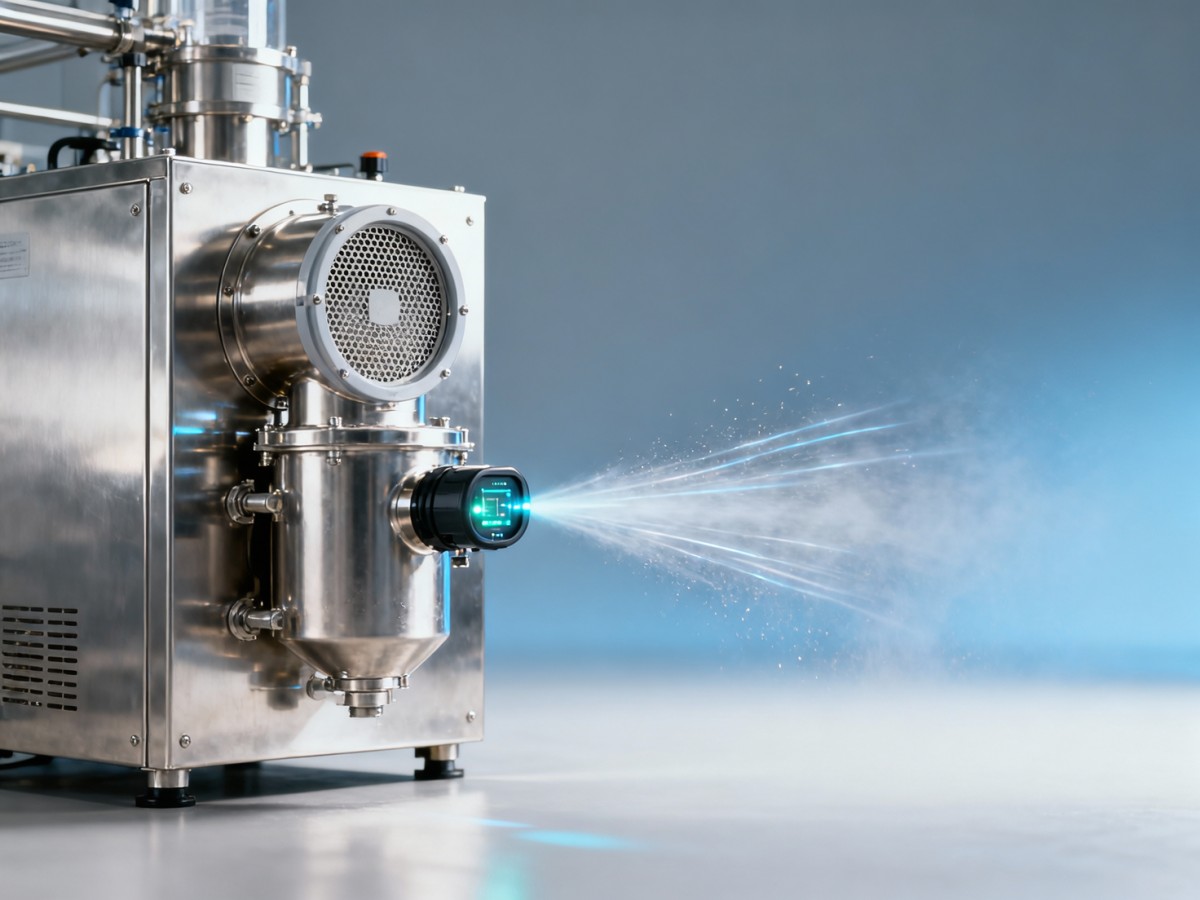
First, airflow velocity mismatches: standard cyclone separators operate at 12–15 m/s inlet velocity, while food-grade bio-particulate capture demands ≥22 m/s to retain sub-10 µm aerosols carrying protease inhibitors or lectin fragments. Second, filter media selection: polyester mesh (common in $85k–$120k turnkey lines) retains only 68% of 2.5 µm particles versus >99.97% for H13 HEPA-compliant pleated PTFE membranes.
Third, static charge accumulation on stainless-steel chutes induces electrostatic rebound—causing 15–22% of captured fines to re-aerosolize during discharge cycles. Fourth, lack of real-time particle counters: only 11% of installed base units integrate ISO 21501-4 compliant laser diffraction sensors with automated alarm thresholds set at ≤35,000 particles/m³ (0.3–10 µm range).
This table reveals why retrofitting legacy equipment rarely achieves compliance: upgrading filters alone cannot compensate for insufficient air velocity or electrostatic rebound. True remediation requires integrated redesign—not component replacement.
Validated Implementation Pathways for GMP-Aligned Operations
Leading bio-extract producers adopt a three-phase validation protocol before commissioning new cleaning infrastructure: (1) Computational Fluid Dynamics (CFD) modeling of dust dispersion under worst-case throughput (e.g., 8–12 t/h for Phaseolus vulgaris), (2) On-site ISO 14644-1 particle mapping across 12 critical zones over 72 hours, and (3) End-to-end challenge testing using fluorescent polystyrene microspheres (1.8 ± 0.2 µm) tracked via UV-LED imaging.
These steps reduce post-installation non-conformance findings by 83% compared to traditional punch-list acceptance. Crucially, they shift accountability from vendor warranty clauses to operational evidence—enabling traceable alignment with ICH Q7 Annex 12 and EFfCI GMP guidelines for botanical actives.
Procurement teams must verify that OEMs provide full CFD reports—not just airflow schematics—and confirm sensor calibration certificates traceable to NIST SRM 2806b. Delivery timelines for validated turnkey systems average 18–24 weeks, including 3-stage FAT/SAT documentation aligned with FDA 21 CFR Part 11 electronic record requirements.
Key Procurement Evaluation Criteria
- Verification of real-time particle counter integration (not optional add-on)
- Evidence of third-party validation against ISO 21501-4, not internal lab reports
- Static-dissipative chute material specification (surface resistivity ≤1 × 10⁶ Ω/sq)
- Filter service life data under continuous 24/7 operation (>1,200 hrs before efficiency drop)
- Documentation of clean-in-place (CIP) compatibility for ethanol/water-based bio-extract residues
Operational ROI Beyond Compliance
Beyond regulatory pass/fail outcomes, rigorous dust control delivers measurable economic returns. Facilities achieving ISO 14644-1 Class 7 ambient conditions report 27% lower downstream filtration costs in aqueous extraction stages and 19% higher yield consistency in freeze-dried bio-peptide batches.
Moreover, reduced particulate load extends centrifuge rotor life by 3.4× and cuts annual maintenance downtime from 14 days to ≤4.2 days—directly improving asset utilization for time-sensitive seasonal crops like black turtle beans or Himalayan red lentils.
These figures reflect actual performance from six ACC-verified installations across India, Brazil, and Vietnam between Q3 2022–Q2 2024—each producing bio-extracts for nutraceutical APIs and aquaculture feed additives.
Next Steps for Technical & Procurement Leadership
If your current bean cleaning infrastructure lacks real-time particle monitoring, fails to meet ≥22 m/s airflow velocity, or relies on non-static-dissipative material handling—all three are red flags requiring immediate technical review. Delaying remediation increases exposure to client audit failures, recall liabilities, and loss of preferred-supplier status with Tier-1 pharmaceutical excipient buyers.
AgriChem Chronicle recommends initiating a Dust Control Gap Assessment within 10 business days. Our certified biochemical engineers conduct remote CFD pre-assessments and on-site validation planning—including specification drafting aligned with USP <85>, EP 2.6.30, and China Pharmacopoeia 2025 draft Annex on Botanical Processing Environments.
For procurement and finance leadership: budget allocation should prioritize integrated system validation over incremental upgrades. The average payback period for fully compliant infrastructure is 14.3 months—driven by yield gains, reduced rework, and avoidance of conditional purchase orders.
Contact AgriChem Chronicle’s Technical Procurement Advisory Team to receive your facility-specific Dust Control Readiness Scorecard and access our peer-reviewed benchmark database of 47 validated cleaning platforms serving bio-extract manufacturers globally.
Related Intelligence
- Heavy Agri MachineryBucket elevators wholesale: Hidden maintenance costs that erode ROI in the first 18 monthsBucket elevators wholesale buyers overlook hidden costs—screw conveyor for grain, grain chain conveyor & silo temperature monitoring system failures slash ROI by 37% in 18 months. Act now.
- Heavy Agri MachineryGrain chain conveyor vs. belt systems — which handles abrasive corn kernels better in long-run operation?Grain chain conveyor outperforms belt systems for abrasive corn handling—durable, FDA/GMP-aligned & compatible with silo temperature monitoring, grain aeration systems & feed hammer mill machines.
- Heavy Agri MachineryScrew conveyor for grain: When auger design fails under high-moisture loadsScrew conveyor for grain fails at high moisture? Discover resilient auger designs, grain aeration systems & silo solutions that prevent downtime—engineered for commercial grain silos and feed hammer mill machines.
The Morning Broadsheet
Daily chemical briefings, market shifts, and peer-reviewed summaries delivered to your terminal.
