
APVMA Launches Food-Grade Enzymes Fast Track 2.0 for China-Australia Data Sharing
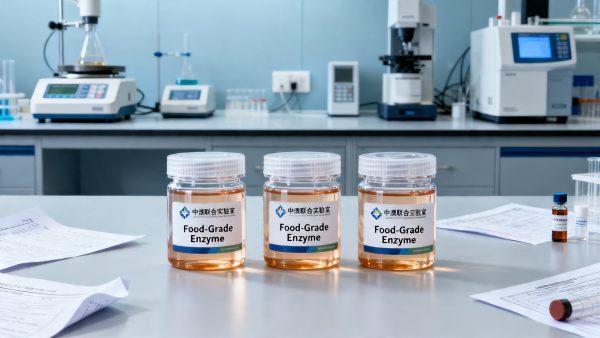
Australia’s Australian Pesticides and Veterinary Medicines Authority (APVMA) upgraded its food-grade enzyme registration pathway on 18 April 2026, enabling Chinese export enterprises to submit test reports from APVMA-registered Sino-Australian joint laboratories — such as the Shanghai Jiao Tong University–CSIRO Biocatalysis Centre — in lieu of traditional third-party overseas testing. This change reduces average registration timelines from 180 days to within 65 days. The update is particularly relevant for enzyme manufacturers, food ingredient suppliers, feed additive producers, and exporters engaged in Australia-bound food-grade enzyme trade.
Event Overview
On 18 April 2026, the APVMA announced Version 2.0 of its fast-track registration process for food-grade enzymes. Under this update, enzyme dossiers submitted by Chinese applicants may include analytical reports on enzyme activity, thermal stability, and residue metabolism generated by APVMA-recognized Sino-Australian joint laboratories. These reports are accepted as valid substitutes for conventional offshore contract testing. No further policy documents or implementation guidelines beyond this announcement have been publicly released as of the event date.
Industries Affected by This Update
Enzyme Exporters & Formulators (Direct Trade Enterprises)
These companies directly supply food-grade enzymes to Australian importers or end-users. They are affected because the new pathway alters evidence requirements for regulatory approval. Impact includes reduced time-to-market for new enzyme products in Australia and lower reliance on overseas GLP-compliant labs — potentially lowering compliance costs and logistical complexity.
Food & Feed Ingredient Suppliers (Raw Material Procurement Enterprises)
Suppliers sourcing enzyme-active components or co-factors for downstream formulations may face revised quality documentation expectations from their export-facing customers. Impact centers on traceability alignment: increased demand for batch-level stability and activity data compatible with joint lab reporting formats.
Contract Manufacturers & Blenders (Processing & Manufacturing Enterprises)
Firms producing finished enzyme blends (e.g., multi-enzyme feed additives or bakery enzyme premixes) must ensure that incoming enzyme raw materials meet APVMA’s updated evidentiary standards. Impact lies in verification workflows — manufacturers may need to confirm whether supplier-provided dossiers reference APVMA-recognized joint labs before initiating Australian registrations.
Distribution & Regulatory Support Providers (Supply Chain Service Enterprises)
Consultancies, regulatory affairs agencies, and freight-forwarding partners supporting enzyme exports into Australia now encounter a narrower but more technically specific evidence pathway. Impact involves service scope adjustment: less emphasis on arranging overseas testing, more focus on dossier coordination with accredited joint labs and APVMA submission readiness checks.
What Enterprises and Practitioners Should Monitor and Do Now
Track official APVMA guidance updates and lab accreditation lists
Current information confirms only that certain Sino-Australian joint labs — e.g., the Shanghai Jiao Tong University–CSIRO Biocatalysis Centre — are referenced. APVMA has not yet published a formal list of approved laboratories or technical criteria for recognition. Enterprises should monitor APVMA’s official notices for updates on eligibility, report formatting, and validity periods.
Verify alignment between product portfolios and fast-track eligible categories
The announcement specifies ‘food-grade enzymes’ but does not define scope exclusions (e.g., whether feed-use-only enzymes or dual-purpose enzymes qualify). Companies should assess whether their target enzyme types — including carbohydrases, proteases, and phytases — fall within APVMA’s current working definition of food-grade use prior to initiating submissions.
Distinguish between policy signal and operational readiness
This update represents a procedural enhancement, not a full deregulation. All other APVMA requirements — including toxicological assessment, environmental fate data, and label compliance — remain unchanged. Enterprises should avoid assuming accelerated review applies across all dossier modules; only the analytical data substitution component is streamlined.
Prepare for lab engagement logistics and documentation handover
Joint lab testing requires coordinated sample dispatch, method validation alignment, and bilingual reporting protocols. Exporters should initiate internal readiness assessments — including chain-of-custody procedures, data ownership clauses in lab agreements, and translation verification processes — ahead of formal dossier preparation.
Editorial Perspective / Industry Observation
From an industry perspective, this update is best understood as a targeted infrastructure improvement rather than a broad regulatory shift. It reflects growing bilateral technical alignment in biocatalyst evaluation, but remains narrowly scoped to analytical data acceptance. Analysis来看, its primary value lies in reducing administrative latency — not lowering scientific thresholds. Observation来看, it signals APVMA’s increasing openness to internationally collaborative science frameworks, though adoption will depend on consistent lab performance and transparent audit mechanisms. Current more appropriate interpretation is that this is a procedural signal — one requiring follow-up verification — rather than an immediately executable operational shortcut.
This development marks a concrete step toward harmonized technical evaluation for food-grade enzymes between China and Australia. However, its practical impact remains contingent on implementation clarity, laboratory capacity scaling, and sustained cross-border data governance alignment. At present, it is more accurately interpreted as an enabler for faster submissions — not a simplification of regulatory science requirements.
Source: Official announcement by the Australian Pesticides and Veterinary Medicines Authority (APVMA), dated 18 April 2026.
Note: APVMA’s detailed technical specifications, laboratory accreditation criteria, and application workflow documentation remain pending public release and are subject to ongoing observation.
Related Intelligence
- Food Grade EnzymesAPVMA Launches Food-Grade Enzymes Fast Track 2.0 for China-Australia Data SharingAPVMA Launches Food-Grade Enzymes Fast Track 2.0 — Chinese exporters can now use Sino-Australian joint lab data to slash registration time to 65 days. Act now!
- Food Grade EnzymesAPVMA Launches Food Grade Enzymes Fast Track 2.0 for China-Australia Lab ReportsAPVMA Launches Food Grade Enzymes Fast Track 2.0—accepts China-Australia lab reports for enzyme activity, thermal stability & allergen residue. Faster 14-day registration for 12 key enzymes.
- Food Grade EnzymesAPVMA Launches Enzyme Fast Track 2.0 for Food-Grade EnzymesAPVMA Enzyme Fast Track 2.0 now accepts GAEL food-grade enzyme test reports—cutting registration to 14 days for papain, bromelain & more.
The Morning Broadsheet
Daily chemical briefings, market shifts, and peer-reviewed summaries delivered to your terminal.
