
FAO Adds 12 Chinese Climate Control Firms to Global List
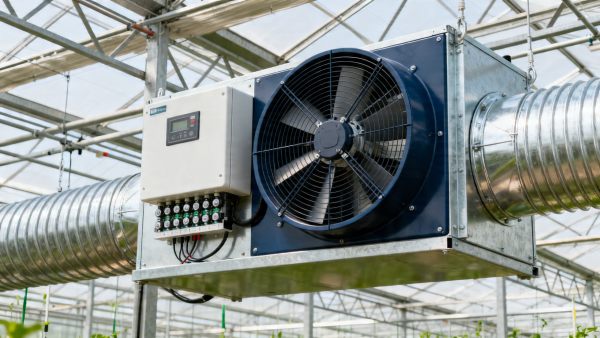
On April 17, 2026, the Food and Agriculture Organization of the United Nations (FAO) updated its Global Qualified Supplier List for Agricultural Climate Control & Ventilation Equipment, adding 12 Chinese manufacturers. This update directly affects stakeholders in agricultural infrastructure, climate-smart farming equipment trade, and international development procurement—particularly those engaged with FAO’s South-South Cooperation procurement platform serving 37 developing countries.
Event Overview
On April 17, 2026, the FAO published the latest edition of its Global Qualified Supplier List for Agricultural Climate Control & Ventilation Equipment. Twelve Chinese manufacturers of climate control and ventilation equipment were newly included. All 12 have achieved dual certification against FAO-ISO 50001 (energy management) and IEC 60335-2-80 (safety). The updated list is now embedded in the FAO South-South Cooperation procurement platform, enabling direct sourcing by agricultural projects in 37 developing countries.
Industries Affected
Direct Exporters & Trade Enterprises
These firms supply equipment to international agricultural development projects funded or coordinated by multilateral agencies. With inclusion in the FAO list, they gain formal eligibility for tenders under FAO-managed programs—especially those aligned with South-South Cooperation. Impact manifests as expanded access to pre-vetted procurement channels, reduced bid qualification time, and heightened credibility in public-sector bidding processes.
Component & Raw Material Suppliers
Suppliers providing motors, sensors, controllers, or energy-efficient housings to the 12 newly listed manufacturers may see increased order volume or revised technical specifications. FAO’s dual certification requirements (ISO 50001 + IEC 60335-2-80) imply stricter upstream traceability and documentation—particularly around energy performance data and electrical safety compliance. This may trigger re-evaluation of sub-tier supplier agreements.
Agricultural Equipment Manufacturers (Non-Listed)
Manufacturers not yet on the list face intensified benchmarking pressure. FAO’s public listing establishes a de facto technical and procedural standard for climate control equipment in development-funded agriculture. Competitors may need to align internal quality systems—not only to pursue future FAO listing but also to meet downstream buyer expectations influenced by this benchmark.
Distribution & Channel Partners in Developing Countries
Local distributors, system integrators, and after-sales service providers in the 37 eligible countries may experience shifts in product availability and support requirements. FAO’s platform integration means procurement decisions are increasingly centralized and standards-driven. Channel partners may need to verify alignment with FAO-listed models’ technical documentation, warranty terms, and spare parts logistics—especially where national agricultural extension programs adopt FAO-recommended equipment.
What Stakeholders Should Monitor and Do Now
Track official FAO guidance on list usage and updates
The FAO South-South Cooperation procurement platform does not automatically award contracts—it enables eligibility. Stakeholders should monitor FAO’s official announcements for implementation timelines, country-specific rollout phases, and any forthcoming clarification on how the list interacts with local public procurement rules (e.g., whether it serves as mandatory prequalification or advisory reference).
Verify alignment of current product lines with ISO 50001 and IEC 60335-2-80 requirements
FAO’s listing is tied explicitly to dual certification—not general product quality. Firms considering application—or already supplying to listed manufacturers—should audit existing test reports, energy performance declarations, and safety documentation against the exact scopes covered by these standards. Gaps in scope coverage (e.g., missing motor efficiency testing or incomplete risk assessment per IEC 60335-2-80 Annex B) may invalidate eligibility.
Distinguish between policy signal and operational readiness
Inclusion in the list signals FAO’s recognition of technical capability—but does not guarantee immediate demand. Procurement under South-South Cooperation remains project-based and budget-constrained. Stakeholders should avoid assuming automatic market entry; instead, assess which of the 37 countries have active greenhouse, poultry, or post-harvest climate control initiatives currently seeking equipment—and whether those initiatives reference FAO’s list in tender documents.
Prepare technical documentation and localized support materials
FAO’s platform requires suppliers to provide standardized technical dossiers, including multilingual installation manuals and maintenance guides. Firms targeting this channel should begin translating key documentation into English and French (FAO’s working languages), and ensure spare parts catalogs reflect regional logistics constraints (e.g., air vs. sea freight lead times, customs classification codes).
Editor Perspective / Industry Observation
From an industry perspective, this update is best understood as a formalization of existing technical benchmarks—not a new regulatory threshold. FAO has long referenced ISO and IEC standards in technical guidelines; embedding certified suppliers directly into a procurement platform elevates their operational weight. Analysis来看, this reflects a broader shift toward ‘certification-enabled procurement’ in multilateral agricultural development—where compliance becomes a gatekeeper for market access, not just a competitive differentiator. It is currently more of a procedural signal than a commercial outcome: the list creates eligibility, but actual orders depend on national project cycles, donor funding flows, and local implementation capacity. Continued observation is warranted on whether FAO expands the list to include service providers (e.g., commissioning or energy auditing firms) or extends dual-certification requirements to adjacent categories like irrigation automation.
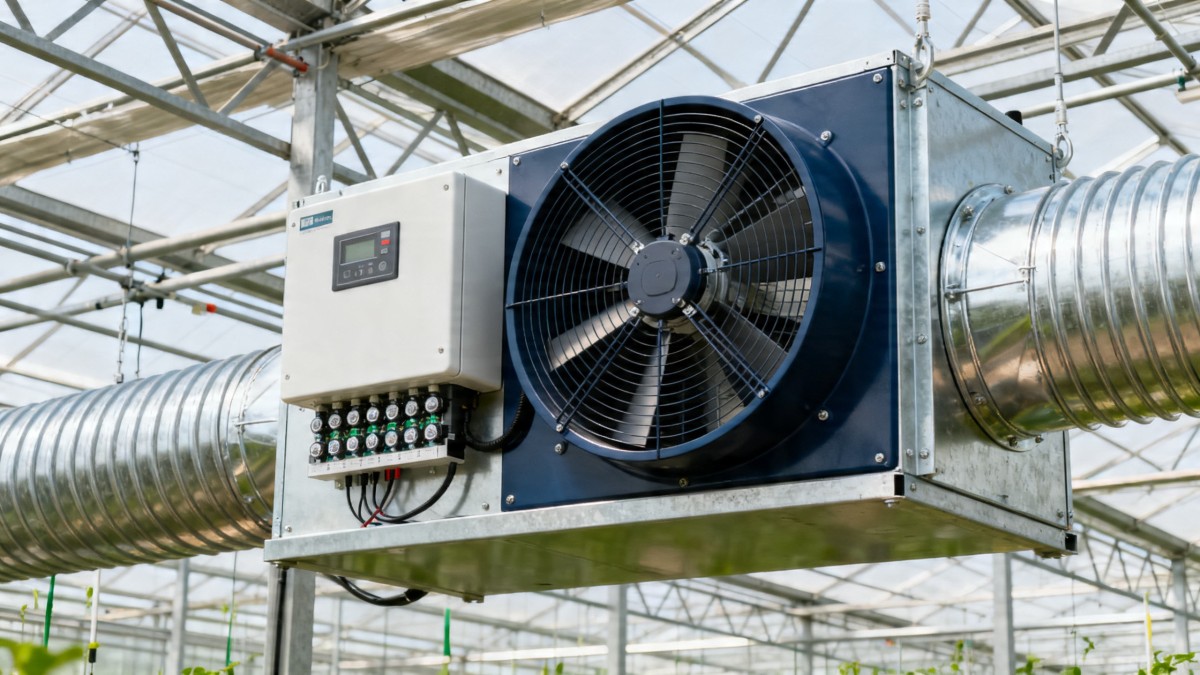
In summary, FAO’s April 2026 update institutionalizes a specific set of energy and safety standards for climate control equipment in development-agriculture contexts. Its significance lies not in creating new markets overnight, but in reinforcing a compliance pathway that increasingly shapes procurement behavior across 37 countries. For industry participants, it is more accurately interpreted as a structural calibration—highlighting which technical and documentation capabilities will be prioritized in future multilateral agricultural infrastructure investments.
Source: Food and Agriculture Organization of the United Nations (FAO), Global Qualified Supplier List for Agricultural Climate Control & Ventilation Equipment, published April 17, 2026; FAO South-South Cooperation Procurement Platform documentation (publicly accessible as of April 2026).
Note: Ongoing monitoring is recommended for FAO’s implementation guidance, country-level adoption status, and potential expansion of certification scope beyond the current 12 firms.
Related Intelligence
- Climate Control & VentilationFAO Adds 12 Chinese Climate Control Firms to Global ListFAO adds 12 Chinese climate control firms to its Global Qualified Supplier List—unlocking FAO South-South Cooperation procurement access for certified agricultural ventilation equipment.
- Climate Control & VentilationFAO Launches Global Climate Control White List with 12 Chinese FirmsFAO's new Climate Control White List features 12 Chinese firms — discover how ISO 50001 & IEC 60335-2-80 compliance boosts global agri-export opportunities.
- Climate Control & VentilationWhat Causes Uneven Results in an Industrial Food Drying Oven?Industrial food drying oven uneven results? Learn root causes, fixes, and how to choose a commercial onion dehydrator, garlic powder making machine, or spice processing line.
The Morning Broadsheet
Daily chemical briefings, market shifts, and peer-reviewed summaries delivered to your terminal.
