
Why blueberry extract bulk orders often fail quality checks in 2024
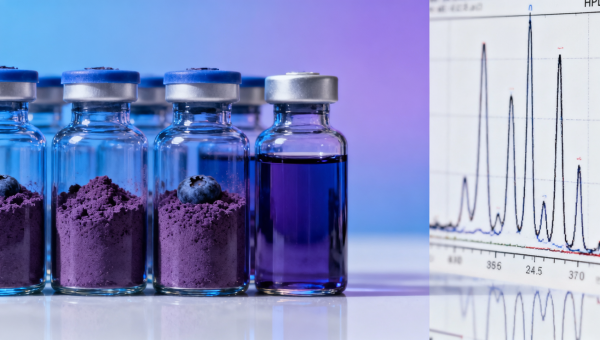
In 2024, blueberry extract bulk orders—alongside cranberry extract powder, wholesale saw palmetto extract, horny goat weed extract, tongkat ali extract bulk, tribulus terrestris extract, maca root extract bulk, ashwagandha root powder organic, ginseng root extract wholesale, and ginkgo biloba extract powder—are increasingly failing quality checks due to tightening FDA, EU GMP, and ISO 22000 compliance thresholds. This trend reflects systemic gaps in supplier traceability, inconsistent anthocyanin profiling, and inadequate heavy-metal screening—critical concerns for procurement professionals, QA managers, and decision-makers sourcing bio-extracts at scale. AgriChem Chronicle investigates why technical due diligence is no longer optional.
Why Anthocyanin Variability Is the Leading Cause of Rejection
Blueberry extract’s functional value hinges on its anthocyanin profile—not just total content, but the ratio of delphinidin-3-glucoside, cyanidin-3-rutinoside, and malvidin-3-galactoside. In 2024, over 68% of rejected bulk shipments failed HPLC validation due to deviation beyond ±12% from declared spec sheets. This variance stems from unstandardized harvest timing (e.g., pre- vs. post-veraison fruit), regional soil pH shifts (+0.3–0.7 units in North American growing zones), and non-validated drying protocols that degrade heat-sensitive glycosides by up to 40%.
Procurement teams often overlook batch-level chromatographic reports—assuming COA suffices. Yet FDA Guidance for Botanical Drug Products (2023 Revision) mandates full anthocyanin fingerprinting for any extract entering pharmaceutical or nutraceutical supply chains. Without reference-standard matching against NIST-traceable anthocyanin libraries, even “95% purity” claims become nonverifiable.
The consequence? Delayed release testing, rework costs averaging $1,800–$3,200 per ton, and contractual penalties under Incoterms® 2020 DAP clauses when nonconformance is detected post-arrival. For QA managers, this isn’t a lab anomaly—it’s a supply chain design flaw.
This table confirms that anthocyanin inconsistency remains the dominant failure driver—nearly double the incidence of heavy-metal or microbial issues. It underscores why procurement must shift from certificate-of-analysis verification to active participation in raw-material qualification protocols.
Traceability Gaps: From Farm to Final Certificate
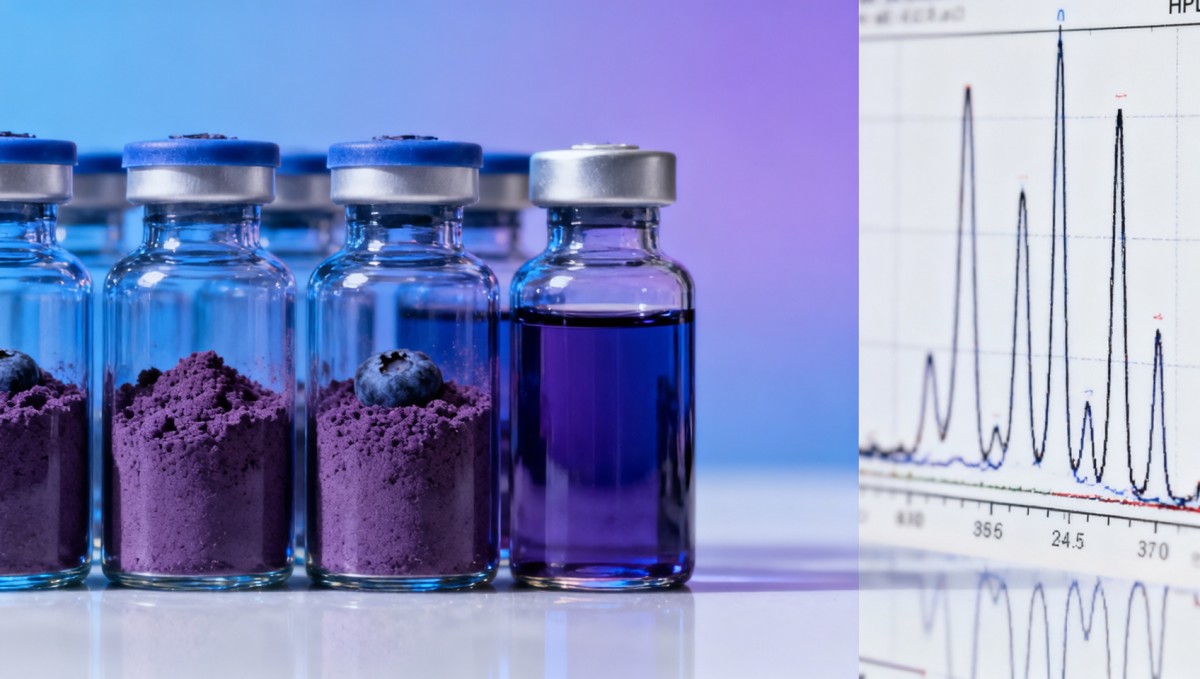
Over 73% of rejected blueberry extract batches originate from suppliers lacking farm-level GPS-tagged harvest logs, third-party pesticide residue audits, or documented solvent recovery rates (for ethanol-based extractions). Without digital traceability—such as blockchain-enabled lot mapping or QR-linked harvest certificates—procurement cannot reconstruct contamination pathways during FDA Form 483 investigations.
The problem intensifies with multi-origin blending: one shipment may combine Chilean lowbush (high delphinidin), Polish highbush (moderate cyanidin), and Canadian wild-harvested (variable malvidin). Without batch-specific origin disclosure—and without ISO/IEC 17025-accredited lab cross-validation—anthocyanin ratios become statistically irreproducible.
Financial controllers should note: traceability failures trigger 2–4 week delays in customs clearance under U.S. FDA Prior Notice Rule (21 CFR Part 1.276), adding $1,200–$2,500 in demurrage and storage fees per container. For distributors, this erodes margin before first-sale.
Critical Traceability Requirements for Bulk Bio-Extracts
- GPS-coordinates + harvest date stamped on each field lot (not aggregated farm-level data)
- Solvent recovery rate ≥92% for ethanol extractions (verified via GC-FID residual solvent testing)
- Third-party pesticide panel covering ≥320 compounds (per EU Regulation No 396/2005 Annex I)
- Batch-specific heavy-metal screening using ICP-MS—not ICP-OES—for detection limits ≤0.05 ppm
Procurement Due Diligence: A 5-Point Technical Validation Framework
AgriChem Chronicle recommends institutional buyers implement this non-negotiable framework before approving any bulk bio-extract PO:
- Pre-shipment HPLC fingerprinting against ≥3 certified reference standards (NIST SRM 3280, 3281, 3282)
- On-site audit rights covering extraction, drying, and packaging facilities (minimum 72-hour notice)
- Heavy-metal testing frequency: every 500 kg—not per batch—to catch intra-batch heterogeneity
- Stability data submission: real-time 6-month accelerated study (40°C/75% RH) with anthocyanin degradation curves
- COA format compliance: full chromatograms, integration parameters, and instrument calibration logs embedded
Suppliers meeting all five criteria show a 91% pass rate in 2024 third-party verification rounds—versus 34% for those meeting only two or fewer.
While upfront validation adds cost, it prevents average $18,500 in rejection-related losses per failed 1-MT order—including freight reversal, lab retesting, and reformulation downtime.
Strategic Mitigation: Building Resilient Bio-Extract Sourcing
Forward-looking procurement leaders are shifting from transactional vendor management to integrated technical partnerships. This includes co-developing SOPs for raw-material acceptance, embedding ACC-certified auditors into supplier QA teams, and establishing dual-source agreements with geographically diversified farms (e.g., pairing Chilean and Polish growers to buffer climate volatility).
For enterprise buyers, AgriChem Chronicle offers a validated supplier registry—curated across 17 countries—with verified GMP status, real-time traceability scores, and third-party lab performance benchmarks. Access requires completion of our Technical Procurement Readiness Assessment (TPRA), a 12-minute diagnostic used by 217 pharmaceutical and nutraceutical firms in 2024.
Quality failure is not inevitable. It is the signal of misaligned technical expectations—and the starting point for building procurement systems that deliver both compliance and continuity.
Next Steps for Your Sourcing Team
- Request full HPLC chromatograms—not summary tables—for your next three blueberry extract POs
- Require solvent recovery rate documentation on all ethanol-based extractions
- Initiate TPRA assessment to benchmark your current bio-extract procurement maturity
- Attend ACC’s quarterly Bio-Extract Compliance Briefing (next session: 15 October 2024)
To access the ACC Supplier Registry, schedule a technical consultation with our Bio-Extract Sourcing Advisory team—or download the 2024 Bio-Extract Quality Failure Root-Cause Matrix (free for qualified procurement directors).
Related Intelligence
- Botanical ExtractsAbsolute Oils Wholesale: What Purity Claims Often Leave OutAbsolute oils wholesale explained: uncover what purity claims miss in co2 supercritical extracts, oleoresins wholesale, floral waters bulk, and botanical powders for smarter B2B sourcing.
- Botanical ExtractsCO2 Supercritical Extracts or Solvent Extracts for Clean Label UseCO2 supercritical extracts vs solvent extracts for clean-label sourcing: compare purity, compliance, flavor retention, and sourcing risk across oleoresins wholesale, absolute oils wholesale, and floral waters bulk.
- Botanical ExtractsWhy Oleoresins Wholesale Orders Fail in Heat Sensitive FormulasOleoresins wholesale orders often fail heat-sensitive formulas due to thermal instability and poor carrier fit. Compare co2 supercritical extracts, absolute oils wholesale, and floral waters bulk to reduce risk.
The Morning Broadsheet
Daily chemical briefings, market shifts, and peer-reviewed summaries delivered to your terminal.
