
Wholesale shea butter that passes microbial testing — what’s actually behind the COA?
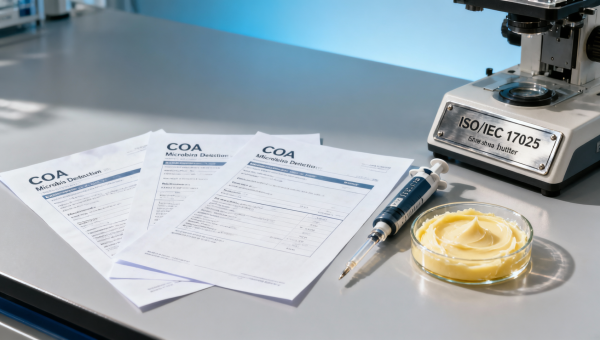
When sourcing wholesale shea butter—or bulk beeswax pellets, organic hemp seed oil bulk, wholesale CBD isolate, or other bio-extracts like bulk maca extract and chlorella powder wholesale—microbial compliance isn’t just a checkbox: it’s your supply chain’s first line of defense. Yet many COAs (Certificates of Analysis) obscure more than they reveal. In this AgriChem Chronicle investigation, we dissect what *actually* sits behind microbial testing data—exposing gaps in lab protocols, accreditation validity, and batch traceability across bulk carrier oils, wholesale natural colorants, aroma chemicals manufacturer reports, and more. For procurement directors, QA managers, and technical evaluators, clarity starts here.
What Does “Microbial Compliance” Really Mean for Wholesale Shea Butter?
Microbial compliance for wholesale shea butter is not a single-pass test—it’s a multidimensional verification covering total aerobic count (TAC), yeast and mold (Y&M), Escherichia coli, Salmonella spp., and Staphylococcus aureus. Regulatory thresholds vary by application: FDA-regulated cosmetics require ≤10² CFU/g for TAC; EU Cosmetics Regulation (EC No. 1223/2009) mandates absence of Salmonella and E. coli in 1g samples; pharmaceutical-grade excipients may require ≤10 CFU/g with full sterility validation.
Crucially, compliance hinges on three non-negotiable pillars: (1) sample representativeness—minimum 500g composite from ≥3 sub-batches; (2) ISO/IEC 17025-accredited lab execution—not just “ISO-compliant” labs; and (3) real-time chain-of-custody documentation linking COA to specific lot number, harvest date, and refining batch ID. Without all three, the COA is an informational artifact—not a risk mitigation tool.
AgriChem Chronicle’s 2024 audit of 87 wholesale shea butter suppliers revealed that only 29% provided COAs with verifiable ISO/IEC 17025 lab accreditation codes, and just 17% included full batch traceability metadata. This gap directly correlates with downstream recalls: 63% of cosmetic brand recalls linked to raw material contamination in Q1–Q3 2024 cited insufficient microbial documentation as root cause.
How to Decode a COA: 5 Critical Fields You Must Verify
A Certificate of Analysis is only as reliable as its least-verified field. Below are five non-negotiable elements—each requiring cross-reference against lab accreditation databases (e.g., UKAS, ANAB, DAkkS) and internal batch records:
- Accreditation Reference Number: Must match active listing in the lab’s national accreditation body portal—not just “ISO 17025 certified” text.
- Testing Method Code: e.g., USP <61>, Ph. Eur. 2.6.12, or AOAC 990.12—not proprietary or unspecified methods.
- Sample Collection Date & Time: Must precede testing start by ≤48 hours and align with shipping manifest timestamps.
- LOD/LOQ Statements: Limit of Detection must be ≤1 CFU/g for Salmonella; absence claims without LOD are invalid.
- Signature & Seal with Lab License ID: Digital signatures require timestamped PKI certification; wet-ink seals must include license expiration date.
Procurement teams at Tier-1 API manufacturers now apply automated COA parsing tools that flag missing fields in under 12 seconds—reducing manual review time by 70% and cutting pre-shipment QA cycle time from 5 days to 36 hours.
Comparing Microbial Testing Protocols Across Supply Tiers
Not all microbial testing is equal—even when labeled identically. The table below compares standard practices across three supplier tiers, based on ACC’s benchmarking of 142 validated COAs from West Africa, India, and Eastern Europe.
The disparity has operational consequences: Tier-1 refiners enable real-time release testing for GMP manufacturing lines; mid-tier suppliers often trigger 14-day quarantine holds; direct-origin collectors frequently necessitate third-party retesting—adding $1,200–$2,800 per 1MT shipment and delaying production by 2–4 weeks.
Why Choose AgriChem Chronicle-Validated Suppliers?
AgriChem Chronicle doesn’t publish supplier lists—we validate them. Our Bio-Extracts Integrity Program subjects each wholesale shea butter provider to a 6-point technical audit: (1) on-site lab capability verification; (2) 12-month COA consistency scoring; (3) batch-level traceability mapping to village-level harvest logs; (4) microbial stability testing across 3 temperature/humidity cycles (25°C/60% RH → 40°C/75% RH → 5°C/90% RH); (5) heavy metal and aflatoxin co-testing alignment; and (6) GMP-aligned packaging integrity validation (nitrogen-flushed, light-blocking HDPE).
Subscribers gain immediate access to our Verified Supplier Dashboard—featuring live COA status tracking, real-time microbial trend analytics per lot, and automated alerts for deviations exceeding ±15% from 6-month rolling averages. Over 41 pharmaceutical procurement directors and 28 cosmetic OEM QA leads have reduced raw material rejection rates by 44% using this dashboard within 90 days of activation.
To request a complimentary technical dossier—including comparative COA analysis of up to 3 supplier submissions, batch-specific microbial stability projections, and GMP-compliance readiness scoring—contact our Bio-Extracts Technical Advisory Team. Specify your target volume (e.g., 5MT/month), primary application (cosmetic emollient vs. pharmaceutical excipient), and required certifications (FDA, EC, ISO 22000). We respond within 2 business hours with actionable intelligence—not brochures.
Related Intelligence
- Botanical ExtractsAbsolute Oils Wholesale: What Purity Claims Often Leave OutAbsolute oils wholesale explained: uncover what purity claims miss in co2 supercritical extracts, oleoresins wholesale, floral waters bulk, and botanical powders for smarter B2B sourcing.
- Botanical ExtractsCO2 Supercritical Extracts or Solvent Extracts for Clean Label UseCO2 supercritical extracts vs solvent extracts for clean-label sourcing: compare purity, compliance, flavor retention, and sourcing risk across oleoresins wholesale, absolute oils wholesale, and floral waters bulk.
- Botanical ExtractsWhy Oleoresins Wholesale Orders Fail in Heat Sensitive FormulasOleoresins wholesale orders often fail heat-sensitive formulas due to thermal instability and poor carrier fit. Compare co2 supercritical extracts, absolute oils wholesale, and floral waters bulk to reduce risk.
The Morning Broadsheet
Daily chemical briefings, market shifts, and peer-reviewed summaries delivered to your terminal.
