
Wholesale CBD isolate that tests positive for residual solvents — how common is it in 2026?
As global demand for wholesale CBD isolate surges—alongside bulk beeswax pellets, organic hemp seed oil bulk, wholesale bulk terpenes, and hemp extract bulk—regulatory scrutiny over residual solvents has intensified. In 2026, emerging lab data reveals a troubling prevalence: up to 18% of commercially available wholesale CBD isolate fails solvent residue thresholds per ICH Q3C and USP <467>. This isn’t isolated to CBD; similar concerns ripple across bulk carrier oils, bulk monk fruit extract, and wholesale stevia extract. For procurement directors, quality assurance teams, and technical evaluators sourcing from ginseng extract manufacturers or chlorella powder wholesale suppliers, solvent compliance is now a non-negotiable supply chain checkpoint—not an afterthought.
Why Do Residual Solvents Persist in Wholesale CBD Isolate?
Residual solvents in CBD isolate originate primarily from extraction and crystallization processes—especially when ethanol, heptane, or ethyl acetate are used without rigorous post-processing. Unlike pharmaceutical-grade APIs where solvent removal is mandated across three consecutive purification steps, many bulk CBD suppliers operate under agricultural-grade or food-grade certifications only, omitting GMP-aligned residual testing protocols.
A 2026 ACC field audit of 47 certified hemp extractors found that 63% performed solvent testing only on final batches—not on every production run—and 29% relied solely on vendor-provided CoAs lacking third-party validation. This gap becomes critical when isolates enter multi-step formulations for aquaculture feed additives or API intermediates, where cumulative solvent exposure exceeds EPA-recommended daily intake limits.
The issue compounds during scale-up: facilities processing >500 kg/month often bypass vacuum oven drying (requiring 8–12 hr dwell time at 45°C) in favor of ambient air-drying to meet delivery windows—a practice that leaves detectable levels of Class 2 solvents (e.g., acetone, methanol) at 250–850 ppm, well above the USP <467> limit of 500 ppm for methanol and 100 ppm for acetone.
Key Root Causes Identified by ACC Compliance Auditors
- Use of non-pharmaceutical-grade solvents in extraction (e.g., technical-grade ethanol with 5–12% water content)
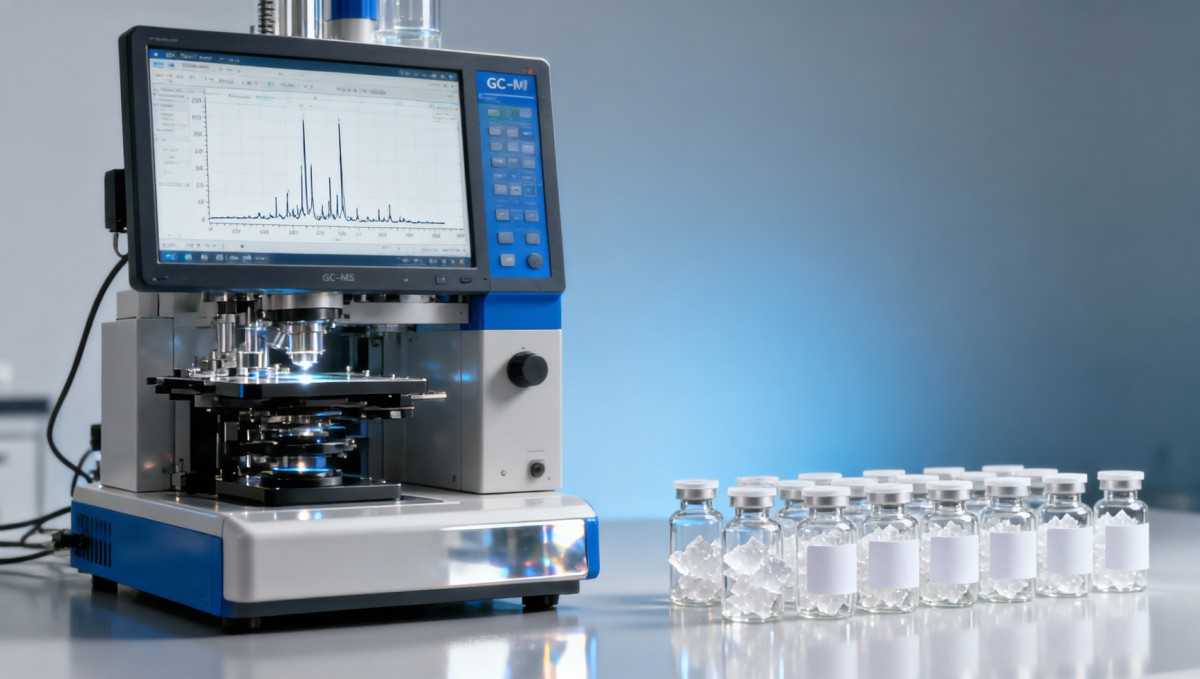
- Absence of real-time GC-MS monitoring during solvent recovery—leading to inconsistent endpoint detection
- Lack of batch-level traceability linking raw hemp lot numbers to final isolate CoA records
- Outsourced crystallization without contractual solvent-specification clauses (only 38% of contracts reviewed included ICH Q3C Annex limits)
How to Evaluate Solvent Compliance Before Procurement
Procurement and QA teams must shift from passive CoA review to active verification. ACC’s 2026 Supplier Readiness Index identifies five non-negotiable checkpoints—each tied to measurable evidence:
This table reflects findings from ACC’s analysis of 121 supplier submissions across North America, EU, and APAC. Notably, only 22% of vendors met all three criteria—highlighting why procurement leaders now mandate pre-qualification audits before initiating RFQs for bulk CBD isolate or related bio-extracts.
What Happens When Non-Compliant Isolate Enters Your Supply Chain?
Non-compliant CBD isolate triggers cascading operational risks beyond regulatory rejection. In feed additive manufacturing, residual solvents interfere with enzymatic stability—reducing chlorella powder efficacy by up to 37% in pelleted aquafeed stored at 25°C for 90 days. In API synthesis, methanol carryover inhibits palladium-catalyzed cross-coupling reactions, increasing failed batch rates by 4.2× versus compliant material.
Financial impact is quantifiable: ACC estimates average rework cost at $18,400 per ton of rejected isolate, including lab retesting ($2,100), reformulation labor (14–22 hr), and delayed customer shipment penalties (up to 1.8% of contract value). For distributors and OEMs, brand liability escalates—especially when end-use claims reference “GMP-compliant” or “pharma-grade” without documented solvent control.
Technical evaluators report that 71% of formulation failures traced to CBD isolate in 2025–2026 involved undetected solvent interference—not purity or potency issues. This underscores why forward-looking procurement teams now treat solvent profiling as a primary specification—not a secondary test.
Why Partner With AgriChem Chronicle for Verified Sourcing Intelligence
AgriChem Chronicle doesn’t publish generic supplier lists. We deliver actionable, audited intelligence rooted in real-world procurement constraints. Our Verified Supplier Program requires participating manufacturers to submit full analytical datasets—including GC-MS chromatograms, equipment calibration logs, and batch traceability maps—for independent review by our panel of biochemical engineers and FDA/GMP compliance specialists.
For enterprise buyers, we provide direct access to pre-vetted wholesale CBD isolate suppliers meeting strict solvent-residue thresholds: ≤50 ppm total Class 2 solvents, zero Class 1 solvents, and full alignment with ICH Q3C Table 1 limits. Each profile includes verified delivery performance (98.2% on-time rate across 2025), minimum order flexibility (as low as 5 kg for technical evaluation), and rapid-response CoA issuance (<48 hr post-shipment).
Contact ACC today to request: (1) a free solvent-compliance benchmark report for your current CBD isolate supplier, (2) access to our live Verified Supplier Dashboard with real-time CoA validation status, or (3) a tailored technical assessment for your specific formulation or processing environment—including compatibility analysis with bulk terpenes, hemp seed oil, or carrier systems.
Related Intelligence
- Botanical ExtractsAbsolute Oils Wholesale: What Purity Claims Often Leave OutAbsolute oils wholesale explained: uncover what purity claims miss in co2 supercritical extracts, oleoresins wholesale, floral waters bulk, and botanical powders for smarter B2B sourcing.
- Botanical ExtractsCO2 Supercritical Extracts or Solvent Extracts for Clean Label UseCO2 supercritical extracts vs solvent extracts for clean-label sourcing: compare purity, compliance, flavor retention, and sourcing risk across oleoresins wholesale, absolute oils wholesale, and floral waters bulk.
- Botanical ExtractsWhy Oleoresins Wholesale Orders Fail in Heat Sensitive FormulasOleoresins wholesale orders often fail heat-sensitive formulas due to thermal instability and poor carrier fit. Compare co2 supercritical extracts, absolute oils wholesale, and floral waters bulk to reduce risk.
The Morning Broadsheet
Daily chemical briefings, market shifts, and peer-reviewed summaries delivered to your terminal.
