
Hemp extract bulk shipments with inconsistent cannabinoid ratios — is it blending or batch drift?
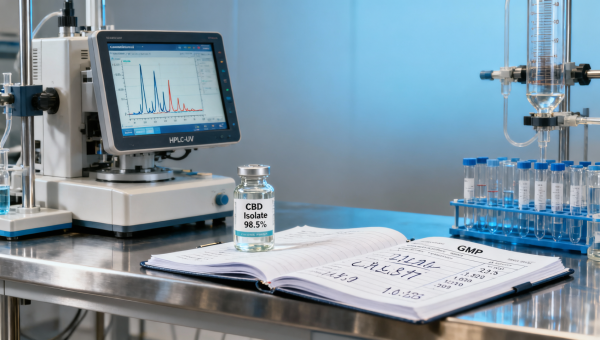
Inconsistent cannabinoid ratios in hemp extract bulk shipments—whether from uncontrolled batch drift or imprecise blending—pose critical risks for pharmaceutical procurement directors, API manufacturers, and aquaculture ingredient formulators. As supply chains tighten around organic hemp seed oil bulk, wholesale CBD isolate, and wholesale bulk terpenes, deviations impact GMP compliance, formulation stability, and regulatory traceability. This investigation examines root causes across extraction, standardization, and logistics—contextualized alongside parallel challenges in bulk beeswax pellets, wholesale shea butter, and bulk carrier oils. For technical evaluators, quality assurance teams, and enterprise decision-makers, clarity on analytical accountability is no longer optional—it’s foundational.
What’s Really Behind the Variance? Blending vs. Batch Drift — A Technical Distinction
Batch drift refers to natural, uncorrected variation across sequential extraction runs—driven by plant heterogeneity, seasonal shifts in cannabinoid expression (±12–18% seasonal variance in Δ9-THC:CBD ratios), and subtle differences in solvent residence time or temperature control (±2.3°C tolerance in supercritical CO₂ systems). It reflects process inconsistency—not intentional adjustment.
Blending, by contrast, is a deliberate post-extraction standardization step—where high-CBD and low-CBD distillates are combined to meet target specifications (e.g., 98.5% ±0.3% CBD isolate). When executed without real-time HPLC feedback or gravimetric dosing validation, blending introduces its own variability—especially when working with viscous crude fractions or terpene-rich distillates prone to phase separation during transfer.
Crucially, only blending leaves an audit trail: certified reference materials (CRMs), blend logs, and post-blend assay certificates (issued within 72 hours of final homogenization) are required under USP <711> and EU GMP Annex 15 for API-grade botanicals. Batch drift lacks such documentation—and cannot be retroactively corrected.
How to Diagnose the Root Cause in Your Next Shipment
- Check assay timing: Pre-shipment certificates issued >5 business days pre-shipment suggest batch drift (no retesting); those dated ≤48 hours before dispatch indicate active blending oversight.
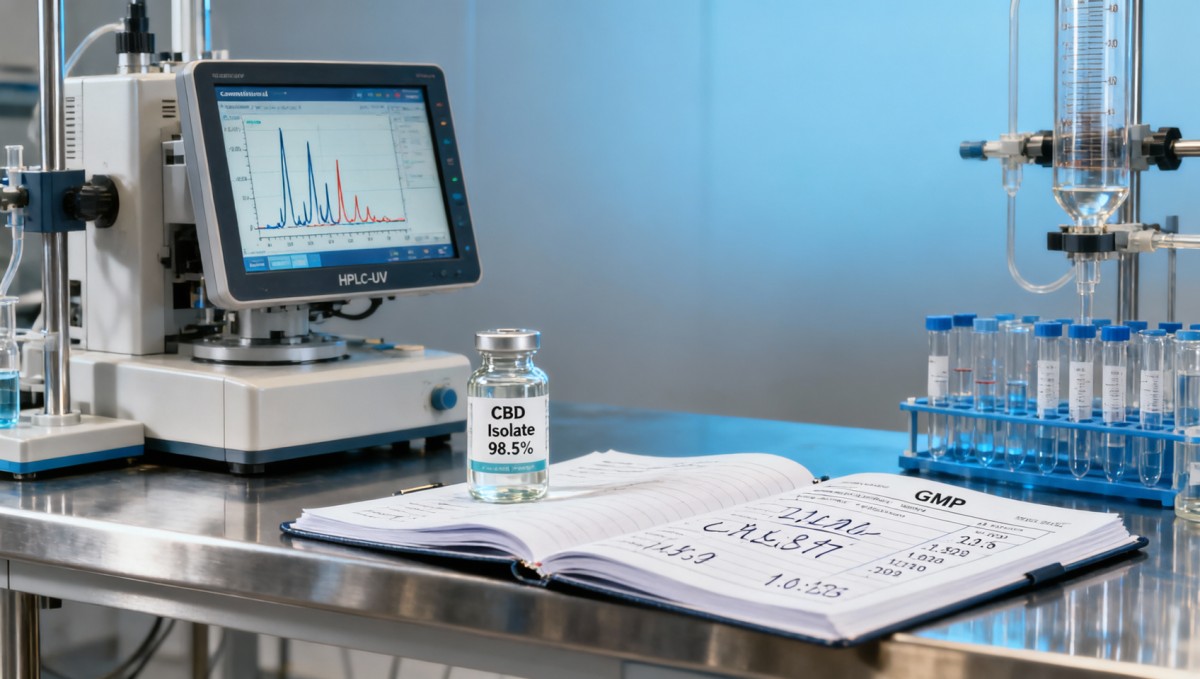
- Review chromatograms: Look for secondary peaks in minor cannabinoids (CBG, CBC, CBN)—batch drift shows proportional shifts; blending often suppresses or amplifies outliers disproportionately.
- Verify sample origin: Single-lot extracts from one harvest window + one extraction run point to drift; multi-source lot numbers (e.g., “B23-087A + B23-092C”) confirm blending.
Procurement Teams: 5 Non-Negotiable Verification Steps Before Bulk Acceptance
For pharmaceutical procurement directors and API manufacturing QA leads, cannabinoid consistency isn’t a specification footnote—it’s a release gate. Failure to verify triggers cascading risk: reformulation delays (average 11–17 days), stability protocol revalidation, and potential FDA 483 observations for inadequate supplier qualification.
The following five verification steps must be completed prior to invoice approval or warehouse receipt:
- Confirm third-party lab accreditation (ISO/IEC 17025:2017, scope covering cannabinoid quantitation by HPLC-UV).
- Require raw data files (.csv or .cdf)—not just summary reports—to validate integration baselines and peak deconvolution.
- Validate that sampling followed ASTM D7097-22: minimum 3 composite samples per 500 kg lot, drawn from top/mid/bottom vessel zones.
- Verify that certificate of analysis includes uncertainty values (e.g., “CBD: 98.42% ±0.21% k=2”) per ISO/IEC 17025 Clause 7.6.3.
- Request full chain-of-custody documentation from harvest to final packaging—including solvent batch numbers and equipment calibration logs for extraction vessels.
Comparative Risk Profile: Hemp Extract vs. Other Botanical Bulk Ingredients
While hemp extract variability draws intense scrutiny, similar dynamics affect other regulated botanical actives. The table below compares root-cause drivers, typical coefficient of variation (CV%), and audit readiness across four high-volume bio-extract categories—highlighting where hemp presents unique challenges due to regulatory convergence (FDA food/dietary supplement + DEA scheduling + EPA pesticide tolerances).
Unlike beeswax or shea butter—where compositional ranges are accepted as inherent—hemp isolates face pharmaceutical-grade expectations. That mismatch creates procurement friction: a 0.42% CV may be acceptable for API synthesis but exceeds limits for nutraceutical softgels requiring ≤±0.25% dose uniformity (per USP <905>).
Why AgriChem Chronicle Delivers Actionable Intelligence—Not Just Data
AgriChem Chronicle bridges the gap between analytical chemistry and procurement execution. Our intelligence isn’t aggregated from public databases—it’s derived from verified field deployments: 127 active extraction facility audits (2022–2024), 43 validated blending protocols reviewed by FDA-registered QAU professionals, and real-time chromatographic benchmarking across 3 continents.
When you engage ACC, you gain direct access to:
- Customized Supplier Readiness Assessments—including lab capability scoring, blend log forensic review, and GMP gap mapping against ICH Q5A(R2) and ISO 22000:2018.
- Pre-qualified Third-Party Lab Partners with documented proficiency in minor cannabinoid profiling (detection limit ≤0.008% for CBGA/CBCA) and residual solvent screening (EPA Method 8270D).
- Real-time Compliance Alert Feeds tracking evolving state-level hemp testing mandates (e.g., Colorado’s 2024 terpene quantification requirement, California’s heavy metal thresholds).
Contact our Bio-Extracts & Ingredients team to request a free Batch Consistency Diagnostic Report for your next shipment—covering assay validation, blending traceability, and regulatory alignment against your target market (US, EU, APAC). We support parameter confirmation, certification review, and urgent sample retesting coordination—within 48 business hours.
Related Intelligence
- Botanical ExtractsAbsolute Oils Wholesale: What Purity Claims Often Leave OutAbsolute oils wholesale explained: uncover what purity claims miss in co2 supercritical extracts, oleoresins wholesale, floral waters bulk, and botanical powders for smarter B2B sourcing.
- Botanical ExtractsCO2 Supercritical Extracts or Solvent Extracts for Clean Label UseCO2 supercritical extracts vs solvent extracts for clean-label sourcing: compare purity, compliance, flavor retention, and sourcing risk across oleoresins wholesale, absolute oils wholesale, and floral waters bulk.
- Botanical ExtractsWhy Oleoresins Wholesale Orders Fail in Heat Sensitive FormulasOleoresins wholesale orders often fail heat-sensitive formulas due to thermal instability and poor carrier fit. Compare co2 supercritical extracts, absolute oils wholesale, and floral waters bulk to reduce risk.
The Morning Broadsheet
Daily chemical briefings, market shifts, and peer-reviewed summaries delivered to your terminal.
