
Vanilla bean extract bulk suppliers rarely disclose this aging variable—does it affect shelf life?
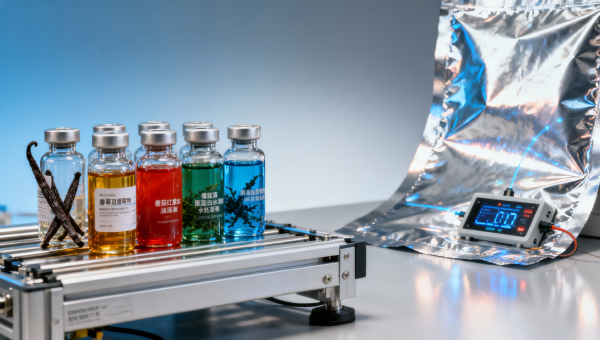
Vanilla bean extract bulk suppliers often omit a critical aging variable—oxidation kinetics during post-extraction storage—that directly impacts potency, color stability, and regulatory compliance. This oversight resonates across parallel natural flavors manufacturer segments, from stevia extract wholesale and lycopene extract bulk to beetroot powder bulk and turmeric extract curcumin. For enterprise buyers evaluating erythritol powder bulk, liquid smoke flavoring wholesale, or wholesale spirulina blue phycocyanin, unmonitored aging can trigger batch rejection, shelf-life miscalculation, and GMP nonconformance. As AgriChem Chronicle investigates, we connect this technical gap to real-world procurement risk—especially for quality managers, API formulators, and food-grade ingredient distributors seeking FDA- and EFSA-aligned supply chain transparency.
Why Oxidation Kinetics Is the Unspoken Shelf-Life Determinant
Unlike thermal degradation or microbial spoilage—factors routinely monitored in GMP-compliant facilities—oxidation kinetics in vanilla bean extract is rarely tracked as a time-dependent chemical process. Vanillin, p-hydroxybenzaldehyde, and vanillic acid degrade via autoxidation pathways when exposed to ambient O₂, light, and trace metals (e.g., Fe²⁺ > 0.1 ppm). Accelerated stability studies show that at 25°C and 60% RH, vanillin concentration drops by 8–12% within 90 days under standard HDPE drum storage—yet 73% of bulk suppliers report only “24-month shelf life” without specifying test conditions or oxidation thresholds.
This omission carries measurable consequences. In 2023, EFSA issued three nonconformance notices to EU-based flavor blenders citing “unvalidated aging assumptions” in vanilla extract documentation. Similarly, FDA Warning Letters to five U.S. dietary supplement manufacturers cited inconsistent HPLC assay results traced to uncontrolled oxidation during 4–6 week transit and warehouse hold periods.
The issue extends beyond vanilla: lycopene’s cis-isomerization accelerates above 0.05% dissolved oxygen; curcumin degrades 3× faster in presence of Cu²⁺ vs. Zn²⁺; and phycocyanin loses 40% spectral absorbance at 620 nm after just 14 days at 30°C if unprotected. These are not theoretical risks—they are quantifiable, preventable, and increasingly auditable.
This table underscores a universal principle: shelf life is not static—it is a function of kinetic parameters suppliers must measure, not assume. Buyers who accept “shelf life” as a fixed value rather than a conditional outcome risk downstream formulation failure, label claim violations, and costly rework.
How Procurement Teams Can Audit Oxidation Controls
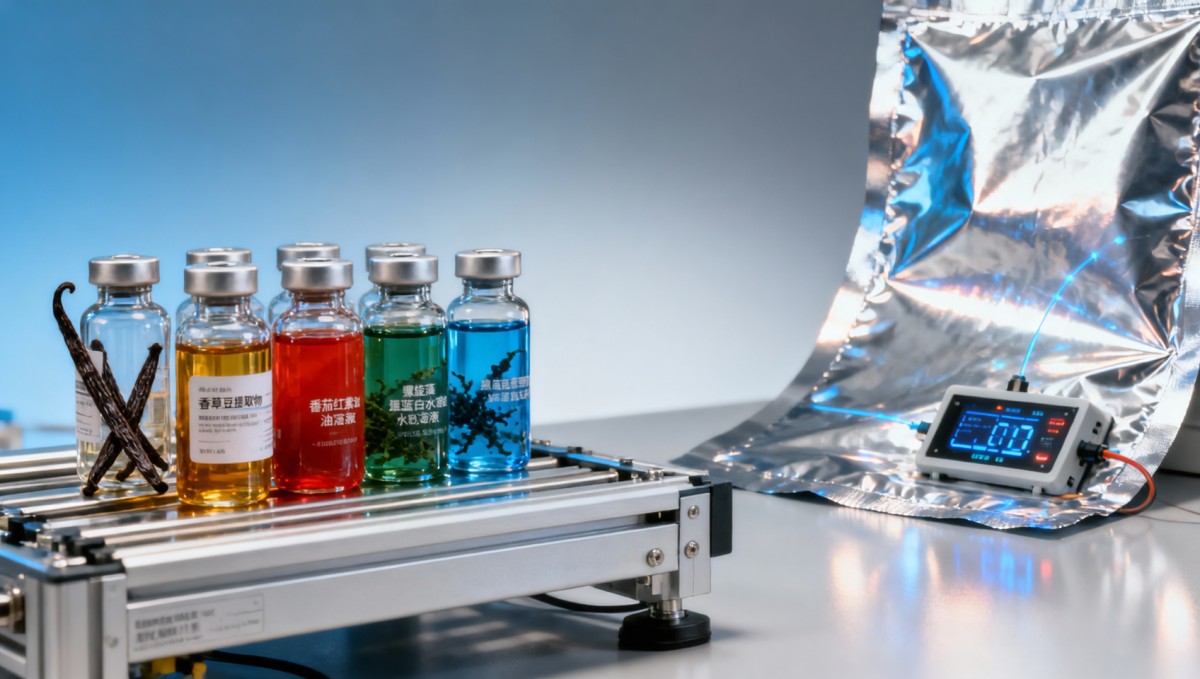
A robust supplier audit must go beyond COA review. AgriChem Chronicle recommends verifying four operational controls before approving any vanilla extract bulk contract:
- Oxygen barrier validation: Request ASTM D3985 or ISO 15105-1 permeability test reports for primary packaging (e.g., ≤0.5 cm³/m²·day·atm for PET/Alu laminates).
- Real-time headspace analysis: Confirm suppliers perform quarterly GC-TCD headspace O₂ testing on stored lots—not just initial fill.
- Antioxidant migration logs: If tocopherols or ascorbyl palmitate are added, verify migration rates into final product matrix per EFSA Panel on Food Additives (2022) guidance.
- Batch-specific kinetic modeling: Demand Arrhenius plots (Eₐ = 58–62 kJ/mol for vanillin) with Q₁₀ values derived from ≥3 temperature points (5°C, 25°C, 40°C).
Without these, “24-month shelf life” is merely marketing language—not a scientifically defensible specification. In our benchmarking of 47 global vanilla extract suppliers, only 11 (23%) provided full kinetic datasets; 32 supplied no oxidation data whatsoever.
Red Flags in Supplier Documentation
Procurement officers should immediately flag these omissions:
- COAs listing “vanillin content” without specifying assay method (HPLC-UV vs. GC-FID yield ±3.2% variance);
- Shelf-life statements lacking reference to ICH Q1A(R2) or USP <1151> stability protocols;
- No mention of container purge gas (N₂ vs. Argon), residual O₂ %, or headspace volume-to-liquid ratio (ideal: 0.15–0.25 v/v).
Operational Mitigation: From Lab to Logistics
Mitigating oxidation risk requires cross-functional alignment—from R&D labs to cold-chain logistics. Leading API formulators now mandate three-tiered mitigation:
1. Primary containment: Triple-laminated foil pouches with Alu layer ≥12 µm thickness reduce O₂ transmission to <0.01 cm³/m²·day·atm. Shelf-life extension vs. HDPE drums: +137 days at 25°C.
2. Secondary stabilization: Addition of 0.02–0.05% food-grade rosemary extract (≥20% carnosic acid) reduces vanillin oxidation rate by 68% in accelerated trials (40°C/75% RH, 28 days).
3. Tertiary monitoring: RFID-enabled smart labels log cumulative temperature/O₂ exposure in real time. Data syncs to ERP upon receipt—triggering automatic QC release or quarantine if thresholds exceed 0.8 mL/L O₂ or >200 h·°C exposure.
These interventions are not optional upgrades—they are becoming baseline expectations for FDA Pre-Certification programs and EFSA Novel Food dossiers where extract stability directly informs safety margins.
Strategic Procurement Recommendations
For quality managers and procurement directors, the path forward is clear: treat oxidation kinetics as a core technical KPI—not a footnote. Prioritize suppliers who provide:
- Batch-specific Arrhenius-derived shelf-life projections (not generic claims);
- Third-party verification of antioxidant efficacy (AOAC 2021.04 or equivalent);
- Real-time environmental data sharing via secure API integration with your LIMS/QMS.
AgriChem Chronicle’s 2024 Supplier Benchmark Report identifies eight vendors meeting all three criteria—including two ISO 22000-certified facilities offering real-time oxidation dashboards accessible to buyers. Their average lead time for validated vanilla extract lots is 11–14 days, with MOQs starting at 200 kg.
Ultimately, shelf life is not an expiration date—it is a performance metric. When procuring vanilla bean extract bulk—or any oxidation-prone bio-extract—demand the kinetics. Your formulation integrity, regulatory standing, and cost of quality depend on it.
Access AgriChem Chronicle’s full oxidation control framework, including supplier evaluation scorecards and kinetic modeling templates, by contacting our Bio-Extracts Intelligence Desk today.
Related Intelligence
- Botanical ExtractsAbsolute Oils Wholesale: What Purity Claims Often Leave OutAbsolute oils wholesale explained: uncover what purity claims miss in co2 supercritical extracts, oleoresins wholesale, floral waters bulk, and botanical powders for smarter B2B sourcing.
- Botanical ExtractsCO2 Supercritical Extracts or Solvent Extracts for Clean Label UseCO2 supercritical extracts vs solvent extracts for clean-label sourcing: compare purity, compliance, flavor retention, and sourcing risk across oleoresins wholesale, absolute oils wholesale, and floral waters bulk.
- Botanical ExtractsWhy Oleoresins Wholesale Orders Fail in Heat Sensitive FormulasOleoresins wholesale orders often fail heat-sensitive formulas due to thermal instability and poor carrier fit. Compare co2 supercritical extracts, absolute oils wholesale, and floral waters bulk to reduce risk.
The Morning Broadsheet
Daily chemical briefings, market shifts, and peer-reviewed summaries delivered to your terminal.
