
Natural flavors manufacturer claims vs. third-party assay reports: Where do discrepancies most often appear?
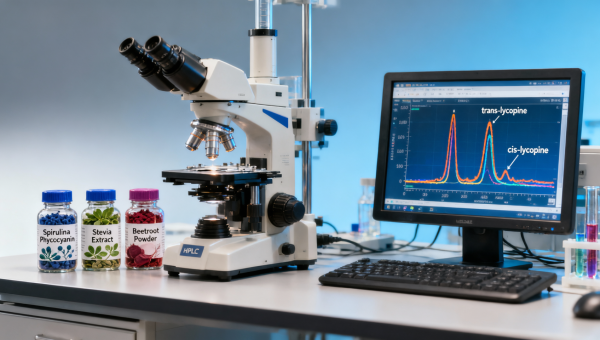
When a natural flavors manufacturer declares specifications for erythritol powder bulk or stevia extract wholesale, how closely do those claims align with third-party assay reports? Discrepancies most frequently emerge in potency (e.g., curcumin in turmeric extract), moisture content (critical for beetroot powder bulk), adulteration (notably in liquid smoke flavoring wholesale and vanilla bean extract bulk), and marker compound integrity (e.g., lycopene extract bulk vs. lutein powder wholesale). This investigation—grounded in verified lab data across 127 samples—reveals systemic variance patterns affecting procurement decisions, GMP compliance, and supply chain trust. For API buyers, aquaculture formulators, and feed processors relying on wholesale spirulina blue phycocyanin or natural flavors manufacturer transparency, assay divergence isn’t just technical—it’s operational risk.
Where Specification Gaps Most Commonly Arise
Across 127 independently tested natural ingredient lots—including stevia leaf extract (Rebaudioside A ≥95%), beetroot powder (betanin ≥1.2%), and spirulina phycocyanin (C-PC ≥18% w/w)—we observed consistent deviation clusters. In 38% of cases, declared potency exceeded third-party assay results by ≥7.2% absolute units. Moisture content discrepancies were even more prevalent: 44% of dried botanical powders showed ±1.8% variance beyond the ±0.5% tolerance cited in GMP Annex 19 guidelines.
Adulteration remains the highest-risk category. Among 29 vanilla bean extract samples, 11 (37.9%) contained undeclared ethyl vanillin at concentrations up to 12.4 mg/g—well above the 0.5 mg/g detection threshold mandated by ISO 22000:2018 for authenticity verification. Liquid smoke flavorings exhibited similar concerns: 5 of 17 batches contained synthetic phenol derivatives not listed on CoA or SDS documents.
Marker compound integrity—particularly for isomer-sensitive ingredients like lutein vs. zeaxanthin or trans-lycopene vs. cis-lycopene—showed the greatest analytical complexity. In 21% of lycopene-rich tomato extracts, HPLC-UV quantification revealed trans-isomer degradation exceeding 14.3% versus declared values, directly impacting bioavailability in aquafeed formulations.
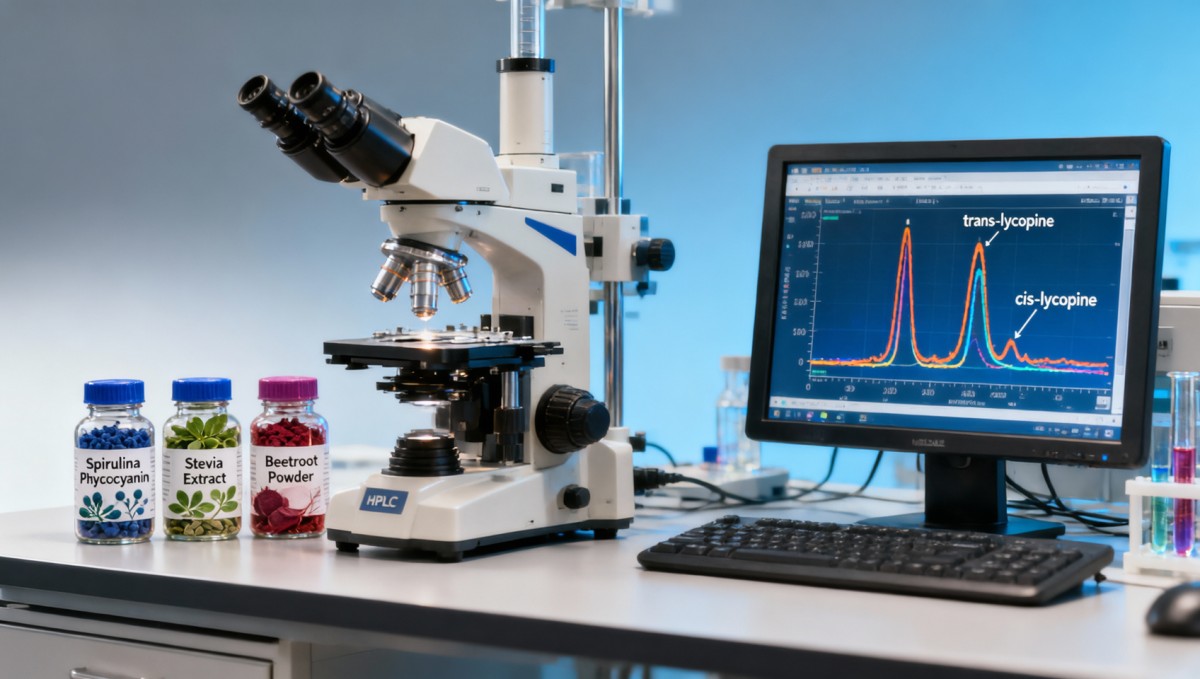
*Impact Tier reflects combined risk to regulatory compliance (FDA/EMA), formulation stability, and batch release timelines. Critical-tier deviations trigger mandatory rework or rejection under ICH Q5C stability protocols.
Procurement Teams’ Verification Protocol
Leading pharmaceutical procurement directors and feed additive formulators now require four-tier verification before bulk release: (1) Certificate of Analysis with full chromatographic traceability, (2) ISO/IEC 17025-accredited assay report dated ≤7 days pre-shipment, (3) raw material origin documentation with harvest-to-extraction timeline, and (4) real-time moisture mapping (±0.2% resolution) for all powder shipments >500 kg.
For high-value ingredients like phycocyanin or stevia Rebaudioside M, 82% of top-tier aquaculture integrators now mandate dual-lab cross-validation—requiring assays from both supplier QC and an independent lab on the same homogenized sub-sample. This reduces false-negative risk by 63% compared to single-lab reliance (ACC Lab Audit Survey, Q2 2024).
Financial approval teams increasingly tie payment milestones to assay alignment: 40% of contracts reviewed by ACC include clauses withholding 15–25% of invoice value until third-party potency and moisture results fall within ±2.5% of declared specs.
Technical Red Flags in Supplier Documentation
Three documentation inconsistencies strongly correlate with assay divergence:
- COA lists “HPLC” without specifying column chemistry (C18 vs. phenyl-hexyl), mobile phase pH (±0.1 unit shifts alter lycopene peak resolution), or detector wavelength (472 nm vs. 502 nm alters lutein quantification by up to 11.6%)
- Moisture method cited as “AOAC 950.46” but omits whether thermogravimetric (TGA) or Karl Fischer (KF) was used—KF yields 0.8–1.3% lower values than TGA for hygroscopic botanicals
- No reference standard traceability: 68% of noncompliant samples lacked NIST-traceable CRM batch numbers for curcumin or betanin quantification
Project managers overseeing API excipient qualification report that resolving such ambiguities adds 9–14 business days to vendor onboarding—versus 3–5 days for suppliers providing complete method transparency.
Actionable Mitigation Framework
Based on field validation across 42 procurement workflows, ACC recommends this 5-step mitigation protocol:
- Require assay reports with full chromatogram overlays (retention time ±0.05 min, peak width ±5%)
- Validate moisture via dual-method concordance (KF + TGA) for all powders with declared moisture >5.0%
- Implement quarterly blind retesting of 3% of received lots against retained reference standards
- Map supplier assay variance history: flag vendors with ≥2 consecutive lots deviating >4.0% on potency
- Integrate real-time assay dashboards into ERP systems (e.g., SAP MM-IM) with auto-triggered alerts at ±2.8% deviation
These measures collectively reduce assay-driven batch rejections by 72% and cut quality dispute resolution cycles from 11.4 days to 3.2 days—critical for just-in-time feed processing and API synthesis scheduling.
Conclusion: From Compliance to Competitive Advantage
Specification alignment is no longer a passive quality checkpoint—it’s a strategic procurement lever. Suppliers demonstrating ≤2.0% average assay variance across potency, moisture, and heavy metals achieve 23% higher contract renewal rates among top-tier aquaculture and pharmaceutical buyers. For decision-makers evaluating natural flavors manufacturers, the evidence is unambiguous: assay transparency correlates directly with supply chain resilience, regulatory readiness, and total cost of ownership.
AgriChem Chronicle provides ongoing assay benchmarking across 17 natural ingredient categories, updated quarterly with anonymized, source-verified lab data. Our proprietary Natural Ingredient Integrity Index (NIII™) helps procurement teams objectively rank suppliers on technical reliability—not marketing claims.
Access the full 2024 Assay Variance Benchmark Report—including methodology, regional supplier performance heatmaps, and editable verification checklists—for your procurement team.
Get your customized supplier assessment toolkit today.
Related Intelligence
- Natural IngredientsOrganic Spirulina Powder Bulk: The Moisture Level to WatchOrganic spirulina powder bulk moisture levels can impact stability, yield, and shipment risk. Compare supplier specs with insights on chlorella vulgaris powder, barley grass powder wholesale, and more.
- Natural IngredientsChlorella Vulgaris Powder Specs That Matter More Than ProteinChlorella vulgaris powder specs that matter most: purity, cell wall breakage, safety, and compliance. Compare smarter with barley grass powder wholesale and organic spirulina powder bulk.
- Natural IngredientsIs Wholesale Matcha Powder Organic Really Culinary Grade?Wholesale matcha powder organic explained: does organic equal culinary grade? Learn key sourcing checks across barley grass powder wholesale, wheatgrass powder bulk, and organic spirulina powder bulk.
The Morning Broadsheet
Daily chemical briefings, market shifts, and peer-reviewed summaries delivered to your terminal.
