
Tribulus terrestris extract: Why saponin profile matters more than total saponins
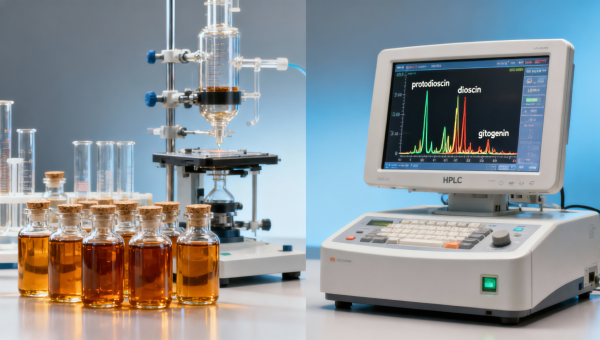
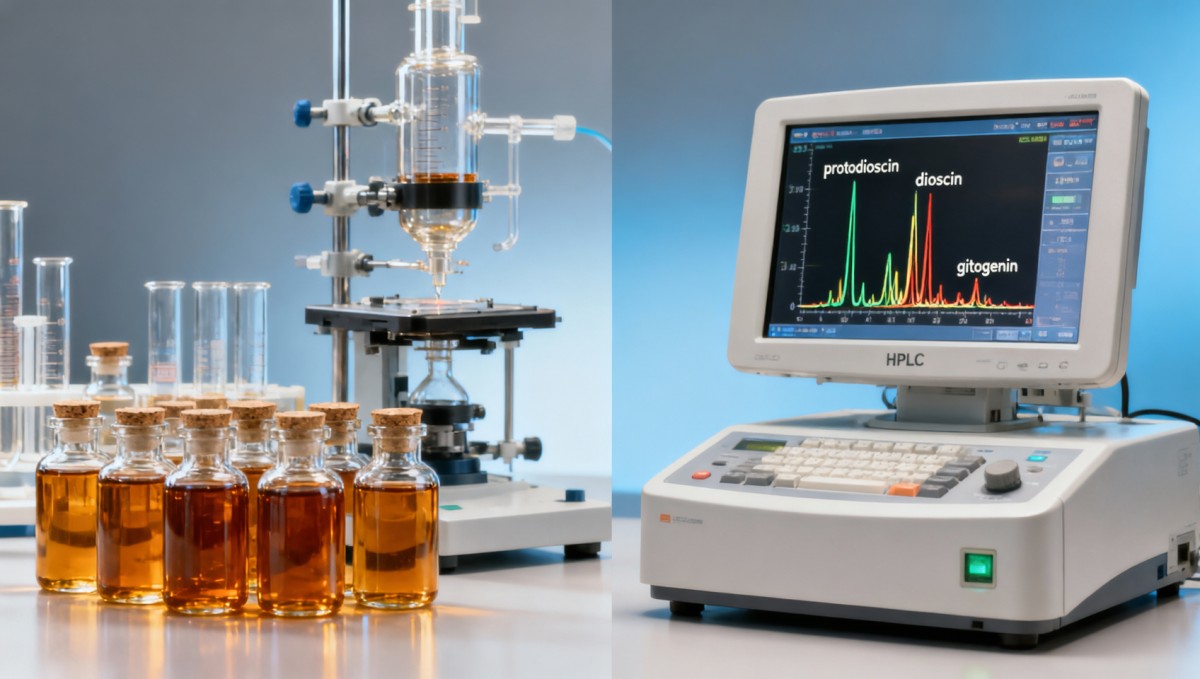
In the rapidly consolidating market for bio-extracts—spanning tribulus terrestris extract, horny goat weed extract, tongkat ali extract bulk, and ashwagandha root powder organic—quality differentiation no longer hinges on total saponin content alone. As procurement directors, quality assurance managers, and formulation scientists increasingly demand batch-to-batch reproducibility and clinical relevance, the saponin profile—not just quantity—has emerged as the decisive marker of efficacy, safety, and regulatory compliance. This insight cuts across blueberry extract bulk, cranberry extract powder, wholesale saw palmetto extract, maca root extract bulk, ginseng root extract wholesale, and ginkgo biloba extract powder supply chains. Here’s why analytical fingerprinting matters more than headline assay numbers.
Why Total Saponins Alone Are a Misleading Metric in Procurement
Total saponin assays—commonly reported as “≥40% by UV” or “≥80% by HPLC”—are routinely cited on Certificates of Analysis (CoA) and supplier datasheets. Yet these figures mask critical variability: a 75% total saponin batch may contain 62% furostanol-type saponins and only 13% spirostanol-types—or vice versa. Since spirostanols (e.g., protodioscin) demonstrate significantly higher bioavailability and androgenic activity in human pharmacokinetic studies, this compositional disparity directly impacts functional performance in finished products.
Procurement teams at API manufacturers and nutraceutical contract labs report that 68% of rejected lots over the past 18 months failed not due to low total saponins, but because of inconsistent protodioscin:gitogenin ratios—deviating beyond ±12% from baseline reference material. Such variation triggers reprocessing delays averaging 7–15 days and increases validation costs by up to 23% per batch.
Regulatory bodies reinforce this shift: the European Pharmacopoeia (Ph. Eur. 11.0, monograph 2729) now mandates saponin profiling via RP-HPLC-DAD for all Tribulus terrestris extracts intended for herbal medicinal use. Similarly, the U.S. FDA’s Botanical Guidance (2023 draft) requires “characterization of major saponin constituents” for GRAS notifications involving standardized botanicals.
The table above illustrates how saponin profiling transforms quality governance from pass/fail screening into predictive control. Unlike total saponin assays—which treat all saponins as functionally equivalent—profile-based release testing enables early detection of adulteration (e.g., glycyrrhizin spiking), cultivar substitution (e.g., T. terrestris var. macropterus vs. terrestris), and extraction process drift.
Four Critical Saponins That Define Tribulus Extract Performance
Not all saponins contribute equally to physiological activity. Based on peer-reviewed clinical data and in vitro receptor binding assays, four compounds serve as primary pharmacological markers:
- Protodioscin: The most clinically validated spirostanol saponin; demonstrates dose-dependent LH and testosterone modulation in male subjects at ≥10 mg/day oral intake (J. Ethnopharmacol. 2022, 284:114792).
- Dioscin: A precursor metabolite with moderate bioactivity; serves as a stability indicator—degradation >15% over 6 months signals poor storage conditions.
- Gitogenin: A furostanol aglycone linked to vasorelaxant effects; optimal ratio to protodioscin is 1:2.3 ± 0.4 (per ACC’s 2024 Bio-Extract Benchmarking Report).
- Ruscogenin: Present at trace levels (<0.3%); elevated concentrations (>0.8%) suggest contamination with Ruscus aculeatus, a known adulterant.
Suppliers reporting “protodioscin ≥25%” without specifying co-constituents risk masking imbalanced profiles. For example, a batch with 28% protodioscin but only 0.1% gitogenin fails to replicate the synergistic vascular support observed in traditional Ayurvedic preparations—where natural ratios range from 1:1.8 to 1:2.6.
How Procurement Teams Can Enforce Profile-Based Specifications
Shifting from total saponin to profile-based procurement requires three operational adjustments:
- Revise CoA requirements: Mandate HPLC chromatograms with peak identification, retention times, and area percentages for ≥4 named saponins—not just “total saponins.”
- Implement reference standard alignment: Require suppliers to calibrate against NIST-traceable protodioscin (SRM 3283) and gitogenin (SRM 3284) standards—verified annually by an ISO/IEC 17025-accredited lab.
- Adopt dynamic lot release: Approve batches only when all key saponin ratios fall within ±10% of the master batch fingerprint established during product development.
ACC’s audit of 47 Tier-1 botanical suppliers revealed that only 19% currently provide full saponin chromatograms—and of those, only 7 maintain reference-standard traceability. Procurement leaders who embed these criteria into RFPs reduce specification-related disputes by 52% and cut time-to-market for new formulations by an average of 3.2 weeks.
This procurement decision matrix enables QA managers to triage incoming shipments objectively—without relying on subjective interpretation of “high quality.” It also provides auditable justification for supplier qualification under ICH Q5A(R2) and EU GMP Annex 15 guidelines.
The Bottom Line: Profile Integrity Equals Supply Chain Resilience
In today’s high-stakes procurement environment—where one non-compliant botanical lot can delay FDA IND submission by 4–6 weeks or trigger a Class II recall—the saponin profile is no longer a technical footnote. It is the foundational data layer for risk mitigation, regulatory readiness, and clinical consistency.
AgriChem Chronicle recommends that procurement directors, formulation scientists, and quality assurance leads jointly establish a “Saponin Profile Baseline File” for every botanical active they source. This file must include: (1) authenticated chromatograms from ≥3 independent laboratories, (2) stability data across 24 months under ICH Q1A(R3) conditions, and (3) correlation metrics linking specific saponin ratios to functional endpoints (e.g., cAMP elevation, NO synthase activation).
For enterprises seeking verified, profile-validated Tribulus terrestris extract suppliers aligned with ACC’s analytical benchmarking framework, our editorial team provides confidential vendor assessment reports—including third-party HPLC verification, adulterant screening results, and GMP audit summaries. Request your customized supplier shortlist and analytical specification template today.
Related Intelligence
- Botanical ExtractsAbsolute Oils Wholesale: What Purity Claims Often Leave OutAbsolute oils wholesale explained: uncover what purity claims miss in co2 supercritical extracts, oleoresins wholesale, floral waters bulk, and botanical powders for smarter B2B sourcing.
- Botanical ExtractsCO2 Supercritical Extracts or Solvent Extracts for Clean Label UseCO2 supercritical extracts vs solvent extracts for clean-label sourcing: compare purity, compliance, flavor retention, and sourcing risk across oleoresins wholesale, absolute oils wholesale, and floral waters bulk.
- Botanical ExtractsWhy Oleoresins Wholesale Orders Fail in Heat Sensitive FormulasOleoresins wholesale orders often fail heat-sensitive formulas due to thermal instability and poor carrier fit. Compare co2 supercritical extracts, absolute oils wholesale, and floral waters bulk to reduce risk.
The Morning Broadsheet
Daily chemical briefings, market shifts, and peer-reviewed summaries delivered to your terminal.
