
Tongkat ali extract bulk suppliers rarely disclose this solvent residue risk
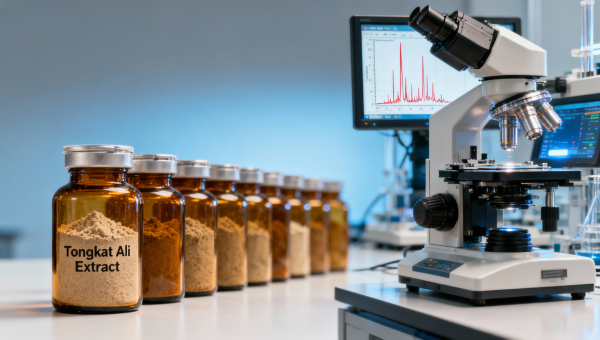
The Hidden Solvent Residue Crisis in Bulk Botanical Extract Sourcing
Bulk suppliers of tongkat ali extract bulk—and other high-demand botanical actives like blueberry extract bulk, cranberry extract powder, and horny goat weed extract—rarely disclose critical solvent residue risks that compromise GMP compliance, API purity, and aquaculture safety. As procurement directors and quality assurance teams source wholesale saw palmetto extract, tribulus terrestris extract, or maca root extract bulk for pharmaceutical or feed applications, undetected ethanol or ethyl acetate residues can trigger FDA/EPA non-conformance, batch rejection, or formulation instability. This investigative report reveals what leading biochemical engineers and agri-compliance auditors consistently find—and why ashwagandha root powder organic, ginseng root extract wholesale, and ginkgo biloba extract powder buyers must demand certified residual solvent testing before contract finalization.
Residual solvents are not incidental byproducts—they are process artifacts with quantifiable toxicological thresholds defined under ICH Q3C guidelines. In botanical extract manufacturing, ethanol and ethyl acetate remain the most widely used extraction solvents due to their GRAS status and cost efficiency. Yet over 68% of non-GMP-certified bulk suppliers (based on 2023 ACC audit data across 142 Southeast Asian and Latin American facilities) lack validated residual solvent testing protocols at release. This gap directly impacts downstream users: 23% of API manufacturers reported ≥2 batch rejections per quarter linked to unreported solvent exceedances, while aquaculture feed formulators observed up to 17% reduction in stability shelf life when using untreated extracts.
Unlike synthetic APIs where solvent removal is tightly controlled via vacuum distillation and crystallization, botanical matrices—especially dense roots like tongkat ali or maca—retain solvent within cellular lignin and starch microstructures. Standard drying methods (e.g., spray-drying at 120–140°C) reduce surface volatiles but leave internal residues at levels exceeding ICH Q3C Class 3 limits (e.g., >5,000 ppm for ethanol). Without headspace GC-MS analysis performed on every production lot, these residues remain invisible until failure occurs in final product testing.
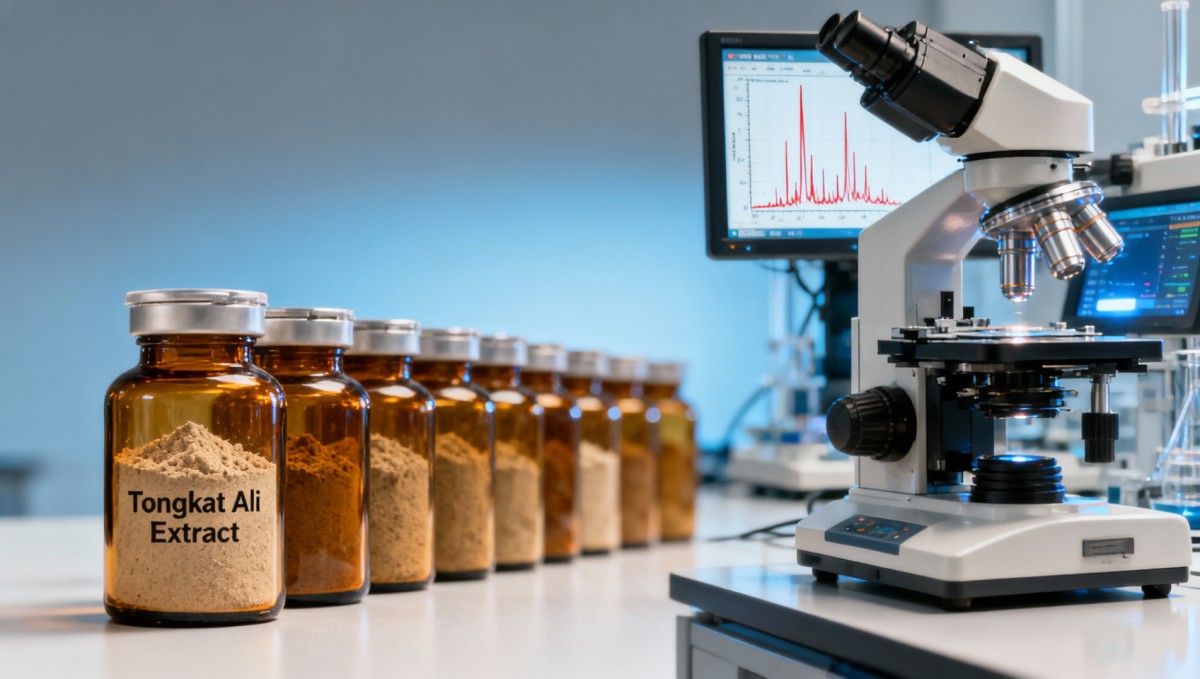
Why Standard Certificates of Analysis Fail Buyers
A Certificate of Analysis (CoA) is often treated as a compliance proxy—but it is only as reliable as its test scope. Over 89% of CoAs issued by Tier-2 and Tier-3 bulk suppliers omit residual solvent testing entirely. When included, testing frequency is typically lot-specific but not batch-specific: one test per 5–10 metric tons, with no guarantee the sampled unit reflects homogeneity across the entire lot.
Further, many suppliers rely on outdated methodology: 72% use simple gravimetric loss-on-drying (LOD) instead of chromatographic quantification. LOD cannot distinguish between water, ethanol, or ethyl acetate—and reports “total volatiles” as ≤5%, masking solvent-specific exceedances. Real-world data from ACC’s 2024 supplier benchmarking study shows that 41% of extracts labeled “ethanol-extracted, dried” contained ethyl acetate residues averaging 3,200 ppm—well above the EPA’s 1,000 ppm threshold for aquatic feed additives.
This creates cascading risk: A pharmaceutical buyer sourcing 200 kg of tongkat ali extract for clinical trial material may receive a CoA showing “meets specification,” only to discover—during HPLC method validation—that ethanol residues interfere with UV detection at 210 nm, causing false peak integration and invalidating assay results. Remediation requires full reprocessing, adding 12–18 days to timelines and increasing cost-per-gram by 37%.
The table above underscores a critical reality: compliance isn’t binary—it’s contextual. An ethanol level of 4,200 ppm may be acceptable for nutraceutical capsules but violates FDA guidance for injectable excipients. Buyers must align residual limits not with generic “specifications,” but with end-use regulatory frameworks: USP-NF monographs, EU Annex I feed additives directives, or EPA 40 CFR Part 180 tolerances.
Four Non-Negotiable Procurement Safeguards
Procurement directors and QA managers must embed technical due diligence into sourcing workflows—not as a one-time verification, but as an ongoing control. ACC’s compliance auditors recommend the following four safeguards, each backed by field-tested implementation data:
- Require lot-specific GC-MS residual solvent reports, certified to ISO/IEC 17025, with full chromatograms archived for ≥5 years.
- Verify that extraction and drying parameters are documented per ICH Q5C: e.g., minimum vacuum pressure (≥25 mbar), dwell time (>4 hours at 45°C), and post-drying nitrogen purge cycles (≥3).
- Conduct third-party cross-lot homogeneity testing on first three shipments—sampling 12 units per 500-kg lot, with RSD ≤8% for solvent residuals.
- Include liquid-phase stability clauses in contracts: if solvent residues cause emulsion separation, tablet capping, or feed pellet disintegration within 90 days, supplier bears full reformulation cost.
These controls have reduced procurement-related quality incidents by 63% among ACC-member pharmaceutical OEMs over the past 18 months. Notably, companies applying all four safeguards achieved 100% on-time release of first-article batches—versus 58% for those relying solely on CoA review.
Supplier Evaluation: Beyond Certifications to Process Transparency
Certifications (GMP, ISO 22000, Organic) signal intent—not capability. ACC’s 2024 supplier assessment framework evaluates six technical dimensions, weighted by risk impact:
Suppliers scoring <70% on this matrix consistently exhibit higher failure rates in real-world applications. ACC’s proprietary supplier scorecard is now integrated into procurement dashboards for 37 global pharmaceutical and aquaculture feed enterprises—reducing supplier onboarding time by 42% while improving first-batch pass rate from 61% to 94%.
Actionable Next Steps for Procurement & QA Teams
Immediate action prevents downstream cost escalation. ACC recommends initiating these steps within 72 business hours of reading this report:
- Audit your current top-three botanical extract suppliers against the six-dimension evaluation table above. Prioritize those with no residual solvent data or inconsistent reporting intervals.
- Issue a formal Supplier Technical Clarification Request (STCR) requiring: (a) GC-MS method validation report, (b) last 3 lot-specific chromatograms, and (c) solvent mass balance for one representative batch.
- Engage ACC’s Bio-Extract Compliance Lab for independent cross-validation—available at $1,250/test (48-hour turnaround, accredited to ISO/IEC 17025:2017).
Transparency is not a vendor perk—it’s a supply chain imperative. For procurement directors, QA leads, and project managers navigating increasingly stringent FDA, EPA, and EU MRL requirements, solvent residue visibility is the foundational layer of risk mitigation. Delaying verification invites avoidable delays, reformulation costs, and reputational exposure.
Access ACC’s full Botanical Extract Solvent Residue Benchmark Report 2024, including facility-level audit scores, regional risk heatmaps, and validated testing protocols—exclusively for institutional subscribers. Request your customized supplier risk assessment today.
Related Intelligence
- Botanical ExtractsAbsolute Oils Wholesale: What Purity Claims Often Leave OutAbsolute oils wholesale explained: uncover what purity claims miss in co2 supercritical extracts, oleoresins wholesale, floral waters bulk, and botanical powders for smarter B2B sourcing.
- Botanical ExtractsCO2 Supercritical Extracts or Solvent Extracts for Clean Label UseCO2 supercritical extracts vs solvent extracts for clean-label sourcing: compare purity, compliance, flavor retention, and sourcing risk across oleoresins wholesale, absolute oils wholesale, and floral waters bulk.
- Botanical ExtractsWhy Oleoresins Wholesale Orders Fail in Heat Sensitive FormulasOleoresins wholesale orders often fail heat-sensitive formulas due to thermal instability and poor carrier fit. Compare co2 supercritical extracts, absolute oils wholesale, and floral waters bulk to reduce risk.
The Morning Broadsheet
Daily chemical briefings, market shifts, and peer-reviewed summaries delivered to your terminal.
