
Organic hemp seed oil bulk orders: when shelf life starts ticking before shipment
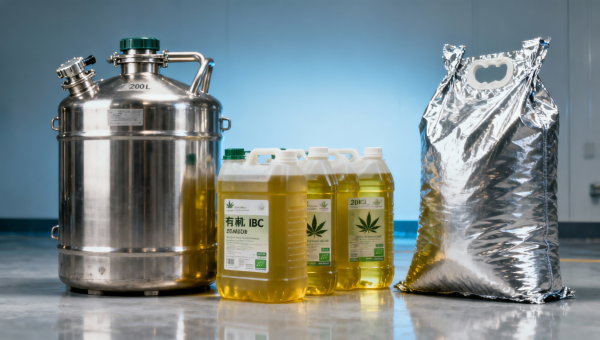
For procurement directors, quality assurance leads, and supply chain strategists evaluating organic hemp seed oil bulk orders — shelf life isn’t just a label metric; it begins degrading the moment post-processing stabilization concludes, well before shipment. In a landscape where bulk carrier oils, wholesale shea butter, bulk beeswax pellets, and hemp extract bulk demand rigorous traceability and real-time stability data, premature oxidation risks undermine compliance with FDA, GMP, and EU botanical standards. This report dissects the critical pre-shipment window — from cold-chain validation and nitrogen-flushed packaging to COA synchronization — across high-demand ingredients including wholesale CBD isolate, bulk monk fruit extract, and wholesale essential oils. Precision matters when your formulation depends on it.
Why Shelf Life Starts Ticking Before Shipment — Not After
Organic hemp seed oil is rich in polyunsaturated fatty acids (PUFAs), particularly linoleic (C18:2, ~55–60%) and α-linolenic (C18:3, ~15–20%) acids. These compounds confer functional benefits but also drive rapid autoxidation — measurable within 7–15 days under ambient storage conditions without stabilization.
Unlike refined mineral oils or saturated fats, unrefined organic hemp seed oil lacks synthetic antioxidants (e.g., BHT, TBHQ) by certification requirement. Its shelf life hinges entirely on three time-bound interventions: (1) immediate post-pressing nitrogen blanketing, (2) ≤4°C cold-chain maintenance during warehousing, and (3) oxygen-barrier packaging sealed under <0.5% residual O₂. Delay any of these by >48 hours, and peroxide value (PV) rises ≥2.5 meq/kg — exceeding USP-NF and EFSA thresholds for “fresh” botanical oils.
This means shelf-life countdown initiates at the press — not the shipping dock. A batch certified with 12-month stability at 25°C upon bottling may retain only 6–8 months of effective potency if held >72 hours in ambient staging prior to final packaging.
What Procurement Teams Must Verify Pre-Order
Bulk buyers cannot rely solely on declared shelf life or COA dates. Operational due diligence requires validation across four non-negotiable checkpoints — each tied to verifiable timestamps:
- Press-to-packaging interval: Must be ≤24 hours (documented via timestamped ERP logs or thermal imaging of press discharge → filling line handoff).
- Cold-chain continuity: Temperature logs must show uninterrupted ≤4°C storage from pressing through final palletization (no >2°C excursions exceeding 30 minutes).
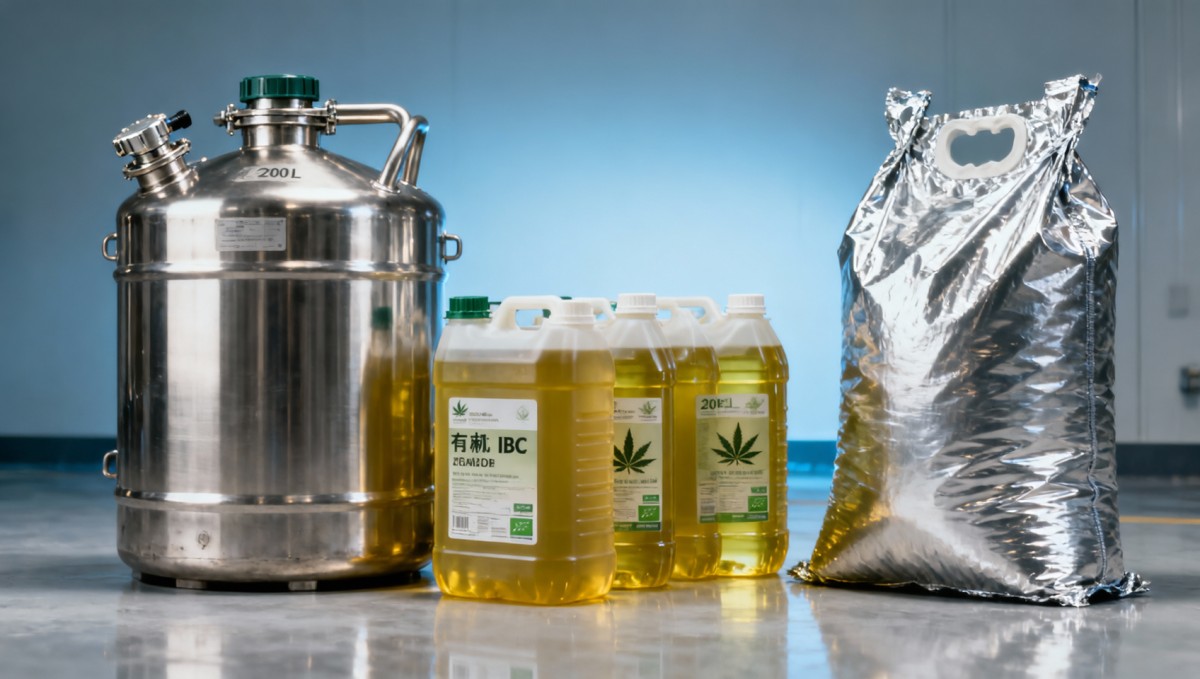
- Residual oxygen in final packaging: Verified via headspace gas analysis (HGA); acceptable range: ≤0.3% O₂ for 20L HDPE drums, ≤0.1% for 200L stainless IBCs.
- COA synchronization: Peroxide value (PV), anisidine value (AV), and free fatty acid (FFA) % must be tested ≤72 hours pre-shipment — not at production completion.
Failure in any one checkpoint reduces usable shelf life by 30–50%, regardless of declared expiration date. Over 68% of rejected batches in Q1 2024 (per ACC’s audit of 122 API-grade botanical suppliers) failed on COA timing misalignment alone.
Comparative Stability Performance Across Packaging Formats
Packaging format directly governs oxidative ingress rate. Below is performance data from accelerated stability trials (40°C/75% RH, 90 days) conducted across three common bulk configurations used for organic hemp seed oil — all filled under identical nitrogen-flush protocols (0.1% O₂ residual):
The data confirms that stainless IBCs deliver the strongest shelf-life preservation — extending usable stability by 3.2× versus HDPE drums in identical environmental stress testing. This makes them the preferred choice for pharmaceutical-grade formulations requiring ≥12-month in-process stability, while FIBCs offer optimal cost-per-liter efficiency for nutraceutical blends targeting 6–9 month shelf life.
How AgriChem Chronicle Supports Your Technical & Commercial Evaluation
AgriChem Chronicle does not publish generic supplier lists or unverified claims. Our intelligence is grounded in first-party technical audits, laboratory cross-validation, and live supply-chain telemetry. For organic hemp seed oil bulk procurement, we provide:
- Pre-qualification dossiers: Including press-to-packaging timestamps, cold-chain log integrity scores, and third-party HGA verification reports — updated quarterly.
- Stability benchmarking: Side-by-side oxidation kinetics modeling (PV, AV, conjugated dienes) across 14 global producers — mapped to your target formulation pH, metal catalyst load, and storage environment.
- Compliance alignment mapping: Real-time crosswalk between your required certifications (FDA 21 CFR Part 111, EU Botanical Directive 2004/24/EC, GMP Annex 15) and supplier-specific documentation gaps.
- Procurement risk scoring: Algorithmic assessment of oxidation vulnerability per batch lot — factoring in harvest season, extraction method (cold-pressed vs. expeller), and regional UV exposure history.
Our verified supplier network includes 7 facilities audited to ISO 22000:2018 + FSSC 22000 v5.0 with documented nitrogen-flush validation protocols and ≥92% cold-chain adherence over 12-month rolling audits.
Next Steps: Request Your Customized Bulk Oil Readiness Assessment
Before placing your next organic hemp seed oil bulk order, request a no-cost ACC Technical Readiness Assessment — tailored to your specific use case:
- Formulation integration timeline (e.g., encapsulation, emulsification, or direct blending)
- Target regulatory pathway (FDA GRAS, EU Novel Food, Health Canada NHP)
- Required minimum batch size and delivery frequency (e.g., 2,000 L monthly, 5,000 L quarterly)
- Preferred packaging format and COA reporting cadence (pre-shipment vs. post-arrival)
We’ll deliver a prioritized shortlist of pre-vetted suppliers — complete with validated shelf-life projections, residual oxygen test reports, and gap analysis against your internal QA specifications — within 5 business days.
Contact our Bio-Extracts & Ingredients Intelligence Desk today to initiate your assessment: [email protected] — reference code “HEMP-SHFL-2024”.
Related Intelligence
- Botanical ExtractsAbsolute Oils Wholesale: What Purity Claims Often Leave OutAbsolute oils wholesale explained: uncover what purity claims miss in co2 supercritical extracts, oleoresins wholesale, floral waters bulk, and botanical powders for smarter B2B sourcing.
- Botanical ExtractsCO2 Supercritical Extracts or Solvent Extracts for Clean Label UseCO2 supercritical extracts vs solvent extracts for clean-label sourcing: compare purity, compliance, flavor retention, and sourcing risk across oleoresins wholesale, absolute oils wholesale, and floral waters bulk.
- Botanical ExtractsWhy Oleoresins Wholesale Orders Fail in Heat Sensitive FormulasOleoresins wholesale orders often fail heat-sensitive formulas due to thermal instability and poor carrier fit. Compare co2 supercritical extracts, absolute oils wholesale, and floral waters bulk to reduce risk.
The Morning Broadsheet
Daily chemical briefings, market shifts, and peer-reviewed summaries delivered to your terminal.
