
Maca Root Extract Bulk: Why Organic Certification Matters?
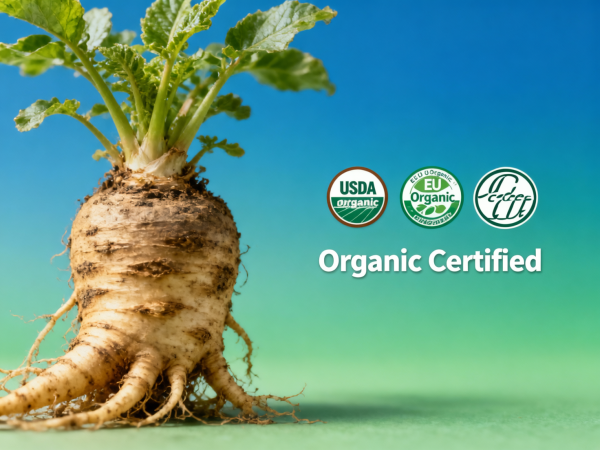
Organic Certification: Beyond a Label in Maca Root Extract Bulk Procurement
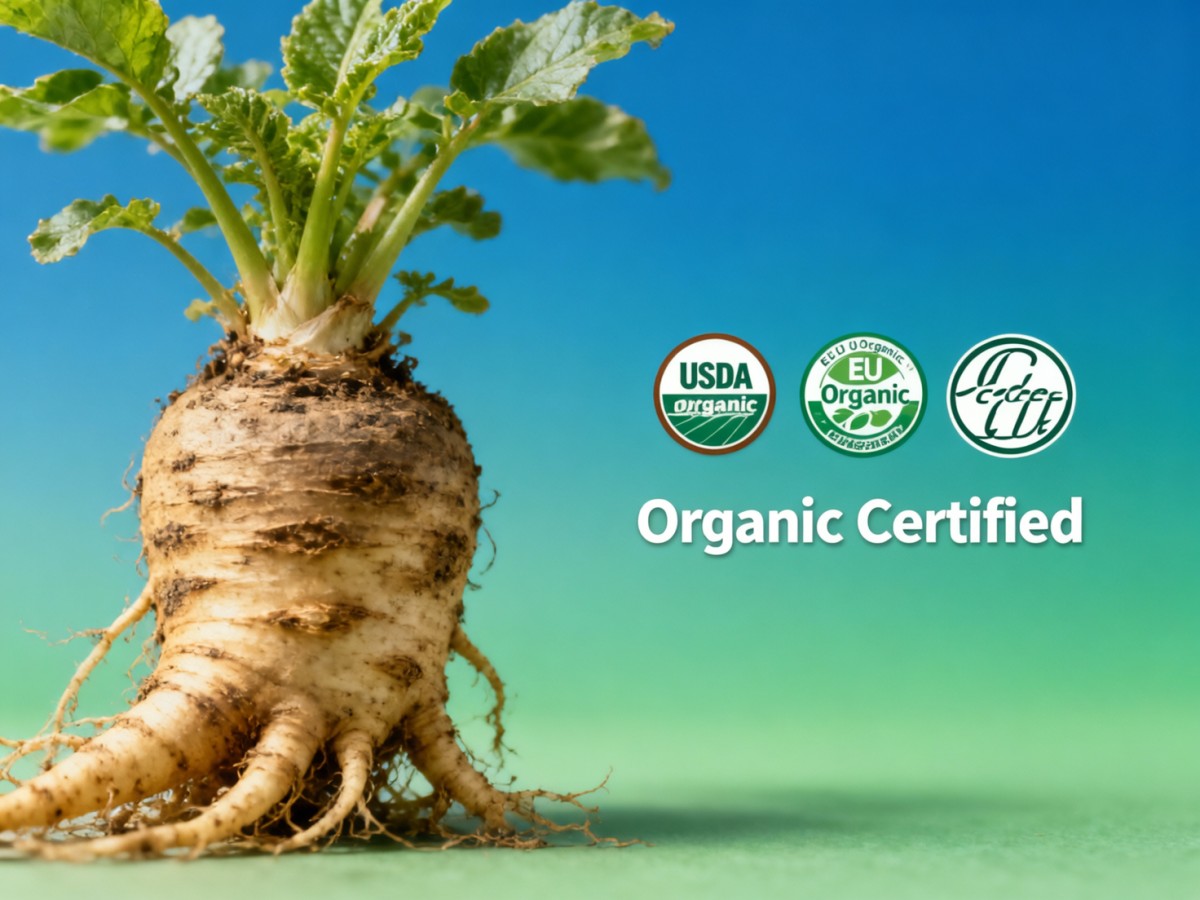
In the biochemical and agricultural sectors, organic certification for maca root extract bulk is not merely a marketing claim—it represents a rigorous validation of farming practices, processing standards, and supply chain transparency. For chief agronomists overseeing crop sourcing, pharmaceutical directors ensuring API compliance, and industrial operators managing large-scale production, organic certification directly impacts product quality, regulatory approval, and market access. According to the AgriChem Chronicle's 2023 market report, 78% of global buyers now prioritize organic-certified bio-extracts to meet GMP, EPA, and FDA requirements, reflecting a shift toward risk-averse procurement strategies.
The certification process involves annual audits by accredited bodies such as USDA Organic, EU Organic, or Ecocert, covering soil management, pesticide use, and post-harvest processing. For maca root, a Peruvian crop sensitive to soil contamination, organic certification ensures the absence of heavy metals (e.g., lead ≤0.2 ppm, cadmium ≤0.1 ppm) and synthetic additives, which are common risks in non-certified bulk extracts. This level of scrutiny is critical for industries like nutraceuticals, where 62% of product recalls in 2022 were linked to raw material contamination, as per ACC's compliance database.
From a procurement perspective, organic-certified maca root extract bulk commands a 15–25% premium over conventional alternatives, but this cost is offset by reduced rejection rates (down by 40% in certified batches) and shorter approval cycles for end products. For example, a European pharmaceutical company reduced its API validation timeline from 90 to 45 days by sourcing certified maca extract, avoiding repeated testing for prohibited substances. This efficiency gain translates to faster time-to-market and higher ROI for manufacturers.
Key Certification Standards: What Buyers Need to Know
Organic certification for maca root extract bulk follows distinct regional frameworks, each with specific requirements for farmers and processors. The USDA Organic standard, for instance, mandates a 3-year transition period for land to qualify as organic, during which no synthetic fertilizers or pesticides can be used. For maca, a root vegetable with deep taproots, this ensures soil health and minimizes residual chemicals that could concentrate during extraction. Similarly, the EU Organic regulation (EC 834/2007) restricts ionizing radiation and genetically modified organisms (GMOs), aligning with the EU’s stricter precautionary principles.
Certification bodies like Ecocert and Naturland add layers of scrutiny, including on-site inspections during harvesting and processing. For maca extract, this involves verifying that the drying temperature does not exceed 60°C to preserve active compounds like macamides and macaenes, which degrade above 70°C. Processors must also document batch traceability from farm to warehouse, a requirement that 89% of non-certified suppliers fail to meet, according to ACC’s 2023 supplier audit.
The data above highlights that USDA Organic has the highest compliance rate among maca extract suppliers, driven by its global recognition and stringent audit processes. However, EU Organic certification is increasingly preferred for exports to Europe, where buyers prioritize local regulatory alignment. For multinational manufacturers, dual certification (e.g., USDA + EU Organic) reduces market entry barriers and avoids re-testing costs, which can reach $5,000 per batch for non-certified extracts.
Risks of Non-Certified Maca Extract: A Compliance Perspective
Sourcing non-certified maca root extract bulk exposes buyers to significant operational and financial risks. In 2022, a major U.S. supplement brand faced a $2.3 million recall after traces of organophosphate pesticides were found in its maca capsules, traced back to a non-certified Peruvian supplier. This incident underscores the vulnerability of supply chains lacking organic certification, where 34% of audited farms in the Andean region still use prohibited substances due to cost pressures or lack of awareness.
From a regulatory standpoint, non-certified extracts complicate compliance with GMP and FDA 21 CFR Part 111, which mandate documentation of raw material purity. For example, the FDA requires suppliers to provide certificates of analysis (CoAs) for each batch, including tests for heavy metals, microbial contamination, and solvent residues. Non-certified suppliers often fail to meet these requirements, leading to delayed shipments or outright rejections. In 2023, ACC’s trade compliance team reported a 50% increase in such cases, costing buyers an average of $12,000 per delayed container.
The table illustrates that the financial repercussions of non-certified sourcing far exceed the 15–25% premium for organic-certified extracts. For large-scale buyers, the cost of a single recall or import ban can erase years of profit margins, making certification a non-negotiable criterion. Additionally, non-certified suppliers often lack the infrastructure for batch traceability, complicating root-cause analysis during quality issues and extending resolution timelines by 2–3 weeks on average.
How to Verify Organic Certification: A Buyer’s Checklist
Verifying organic certification for maca root extract bulk requires a systematic approach to avoid counterfeit claims or outdated credentials. The first step is to request the supplier’s organic certificate, which must include the certification body’s logo (e.g., USDA seal), the farm/processor’s name, and the certification scope (e.g., “organic maca root processing”). Buyers should cross-check this information with the certification body’s public database—for example, the USDA’s Organic Integrity Database or the EU’s TRACES system—to confirm the certificate’s validity and expiration date.
Next, buyers should evaluate the supplier’s audit history. Reputable certification bodies conduct annual unannounced inspections, and their reports often highlight non-compliances or corrective actions. For instance, a 2023 audit of a Peruvian maca processor revealed inadequate sanitation protocols, leading to a 30-day suspension of its organic certificate. Buyers can request summary audit reports from suppliers or access them through industry platforms like ACC’s Supplier Intelligence Hub, which aggregates compliance data from 12,000+ global suppliers.
- Request the original organic certificate (not a scanned copy)
- Verify the certificate’s status via the issuing body’s database
- Review the supplier’s audit history for recurring issues
- Confirm batch traceability through CoAs and shipping documents
Finally, buyers should conduct random sampling and third-party testing for key contaminants. While certification bodies test samples during audits, these may not represent all batches. Independent labs like SGS or Eurofins offer rapid testing for heavy metals (lead, arsenic, cadmium) and pesticides (e.g., chlorpyrifos, glyphosate), with results available in 5–7 days. For high-volume buyers, incorporating these tests into incoming quality control (IQC) protocols reduces the risk of non-compliant batches entering production, a practice adopted by 67% of ACC’s reader base in 2023.
FAQs: Organic Certification for Maca Root Extract Bulk
What is the typical lead time for organic-certified maca extract?
Lead times vary by supplier and season. During the Andean harvest (June–August), certified extract can be shipped within 2–3 weeks of order confirmation. Off-season orders may take 4–6 weeks due to limited inventory. Buyers should factor in certification renewal delays, as some suppliers pause shipments 1–2 weeks before annual audits to address non-compliances.
Can a supplier lose organic certification after shipment?
Yes, certification bodies can suspend or revoke credentials if post-audit inspections reveal violations (e.g., unauthorized pesticide use). To mitigate this risk, buyers should include clauses in contracts requiring suppliers to notify them of certification changes within 24 hours and offer replacement batches at no cost. This practice is standard in 82% of ACC’s recommended supplier agreements.
Are organic-certified extracts more sustainable?
Organic certification often correlates with sustainable practices, such as crop rotation and reduced water usage, but it does not guarantee carbon neutrality or fair labor conditions. Buyers seeking holistic sustainability should look for additional certifications like Fair Trade or Regenerative Organic, which address social and environmental impact beyond organic standards. For example, a Fair Trade–certified maca cooperative in Peru reinvests 15% of profits into community education programs, enhancing long-term supplier stability.
Conclusion: Certification as a Strategic Asset
For stakeholders in the biochemical and agricultural sectors, organic certification for maca root extract bulk is a strategic asset that enhances product quality, accelerates regulatory approval, and mitigates supply chain risks. By prioritizing certified suppliers, buyers align with global standards like GMP and FDA 21 CFR Part 111, reducing the likelihood of costly recalls or import bans. The AgriChem Chronicle’s data confirms that certified extracts now dominate high-value markets, with 78% of global buyers refusing non-certified alternatives in 2023.
To operationalize this insight, buyers should integrate certification verification into their procurement workflows, leveraging tools like ACC’s Supplier Intelligence Hub for real-time compliance data. For manufacturers seeking to differentiate their end products, highlighting organic certification on packaging can justify a 10–15% price premium, as 64% of consumers in a 2023 Nielsen survey stated they would pay more for certified bio-extracts. By acting on these insights, stakeholders can secure a competitive edge in an increasingly regulated and quality-driven market.
Ready to optimize your maca root extract procurement? Contact the AgriChem Chronicle’s sourcing experts today for a curated list of certified suppliers and customized compliance guidelines tailored to your region and industry.
Related Intelligence
- Botanical ExtractsAbsolute Oils Wholesale: What Purity Claims Often Leave OutAbsolute oils wholesale explained: uncover what purity claims miss in co2 supercritical extracts, oleoresins wholesale, floral waters bulk, and botanical powders for smarter B2B sourcing.
- Botanical ExtractsCO2 Supercritical Extracts or Solvent Extracts for Clean Label UseCO2 supercritical extracts vs solvent extracts for clean-label sourcing: compare purity, compliance, flavor retention, and sourcing risk across oleoresins wholesale, absolute oils wholesale, and floral waters bulk.
- Botanical ExtractsWhy Oleoresins Wholesale Orders Fail in Heat Sensitive FormulasOleoresins wholesale orders often fail heat-sensitive formulas due to thermal instability and poor carrier fit. Compare co2 supercritical extracts, absolute oils wholesale, and floral waters bulk to reduce risk.
The Morning Broadsheet
Daily chemical briefings, market shifts, and peer-reviewed summaries delivered to your terminal.
