
Grape seed extract OPC: what grade fits best?
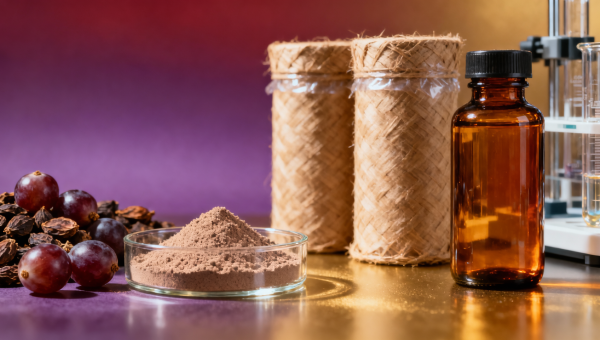
Selecting the right grape seed extract OPC grade is not simply a labeling issue—it affects efficacy, compliance, formulation stability, and procurement value. For buyers comparing grape seed extract OPC with adjacent bioactives such as milk thistle extract silymarin, pine bark extract bulk, and green tea extract EGCG, understanding purity, oligomer profile, and application fit is essential before approval, sourcing, or quality validation.
In B2B sourcing, the question is rarely whether OPC matters. The more practical issue is which grade of grape seed extract OPC aligns with the intended dosage form, specification target, documentation burden, and cost ceiling. A formulation team may seek tighter oligomer consistency for capsules, while a procurement manager may focus on supplier traceability, batch reproducibility, and lead times of 2–6 weeks.
For research teams, operators, quality personnel, project managers, and finance approvers, grade selection needs a framework that goes beyond headline purity. It should include extract ratio, proanthocyanidin test method, solvent control, heavy metal limits, microbiology, and packaging stability. This article breaks down how to evaluate grape seed extract OPC grades in a way that supports technical fit and commercial decision-making.
Understanding what “grade” means in grape seed extract OPC
In the market, grape seed extract OPC grade usually refers to a combination of specification strength, manufacturing control, and end-use suitability. It is not a single universal standard. Two materials may both be sold as grape seed extract OPC, yet one is optimized for dietary supplements with 95% proanthocyanidins, while another is designed for food or cosmetic use at 60%–80% with different excipient or solvent profiles.
A second source of confusion is terminology. Some suppliers use “OPC” broadly, while others distinguish between total polyphenols and oligomeric proanthocyanidins. For technical buyers, that difference matters because total polyphenols can read higher on paper, but the oligomer distribution may not support the same formulation objective. When reviewing a certificate of analysis, the analytical method is as important as the percentage itself.
In practical sourcing, grade also includes compliance readiness. A material intended for a nutraceutical capsule sold across multiple regions may require tighter microbial thresholds, more complete allergen statements, residual solvent disclosure, and full traceability to raw grape seed origin. A bulk ingredient for an industrial blend may tolerate a broader specification range if the downstream process includes further standardization.
Decision-makers should therefore read “grade” across 4 layers: active content, compositional profile, compliance package, and application suitability. Ignoring any one of these can create downstream costs in reformulation, additional testing, or lot rejection.
Common commercial grade categories
Although naming conventions vary, the market usually clusters into three broad commercial bands. Lower-strength grades are often used where antioxidant positioning is general and cost sensitivity is high. Mid-strength grades fit mainstream supplements and functional blends. High-strength grades are typically reserved for premium formulations, tighter label claims, or lower-dose designs.
The key takeaway is that the “best” grade depends on the finished product target. A 95% material is not automatically the most economical choice if a 75%–80% specification already meets efficacy positioning, process tolerance, and label strategy.
Why adjacent bioactives are often used as comparison benchmarks
Buyers frequently compare grape seed extract OPC with milk thistle extract silymarin, pine bark extract bulk, and green tea extract EGCG because all four sit in the broader polyphenol and botanical antioxidant purchasing category. However, each has a different active marker, stability profile, and regulatory narrative. Using one as a price benchmark for another can be misleading unless the assay basis, extraction method, and end-use documentation are normalized first.
How application fit determines the right OPC specification
Application fit should lead grade selection. In a hard capsule, a powder with good flowability, moisture control below about 5%, and stable active content across 24 months may be more valuable than chasing the highest assay. In beverages or stick packs, solubility, color impact, and taste contribution become more important. For topical or cosmetic systems, odor profile and compatibility with emulsions can override dosage density concerns.
Formulation teams should also assess how much grape seed extract OPC is required per serving. If the target serving size is 100–150 mg of active-rich material, a higher-grade extract can reduce fill weight and simplify capsule sizing. If the formula already includes multiple actives and the capsule shell size is constrained, premium grade may save reformulation work. By contrast, in powders with larger serving sizes, a mid-grade extract may be sufficient.
Operators and production managers need to consider process behavior. Hygroscopicity, particle size, and blending uniformity can influence line efficiency. A material that bridges in feeders or generates excessive fines may create more production loss than its unit price suggests. In real manufacturing, a 3%–5% yield loss can erase the apparent savings of a cheaper grade.
Quality and safety personnel should connect grade choice with risk exposure. If the intended market requires tighter pesticide, heavy metal, or residual solvent limits, selecting a supplier grade that already meets those thresholds reduces retesting and document follow-up. This is especially relevant when cross-border shipments involve multiple customs or food-safety reviews.
Application-based selection logic
Before approving a grade, many buyers use a 5-point screening model covering active target, dosage form, regulatory region, process compatibility, and cost per effective dose. This prevents decisions based only on price per kilogram.
- For capsules and tablets: prioritize standardized assay, low moisture, lot consistency, and particle uniformity.
- For functional foods or beverage systems: review dispersibility, sensory impact, and color contribution within pilot runs of 3–5 batches.
- For cosmetic or topical systems: assess odor, residual solvents, and interaction with emulsifiers, pH range, and preservatives.
- For export-sensitive projects: verify document set, origin traceability, and whether the supplier can support audits within 7–10 business days.
The strongest sourcing programs compare cost per delivered active, not just raw price. For example, if one lot costs 18% more but delivers tighter assay variance and lower production loss, the total manufacturing economics may still be favorable.
Technical and quality indicators buyers should review before approval
A robust review of grape seed extract OPC begins with the specification sheet but should never end there. Procurement and QC teams should request at least 6 core document types: specification, certificate of analysis, manufacturing process summary, residual solvent statement, microbiological profile, and contaminant control statement. For higher-risk or higher-value projects, stability data and packaging validation are also advisable.
Assay method matters because colorimetric approaches, HPLC-based methods, and supplier-specific internal methods may produce different readings. If two quotations appear comparable but use different test methods, direct price comparison becomes unreliable. Buyers should align the analytical basis before negotiation, especially when evaluating 70%, 85%, and 95% grades side by side.
Contaminant thresholds are equally important. Depending on the application and region, teams may review lead, cadmium, arsenic, mercury, total plate count, yeast and mold, Salmonella, and E. coli. Packaging format also affects quality outcomes. Typical commercial packs range from 20 kg to 25 kg per fiber drum with double inner liners, but sensitive grades may require stronger moisture barriers.
Another overlooked point is organoleptic consistency. Color can vary from reddish-brown to dark brown, and odor intensity may differ by extraction process. If the finished product is lightly flavored or visually transparent, these differences can become commercially relevant.
Core specification checkpoints
The table below summarizes practical checkpoints that quality teams can use during supplier comparison and incoming lot approval.
A disciplined review process often shortens approval cycles by 1–3 weeks because technical and commercial teams work from the same checklist. It also reduces the chance of selecting a low-cost grade that later requires expensive corrective actions.
Minimum internal review list for cross-functional teams
- Confirm the exact assay basis and whether it reflects OPC specifically or a broader polyphenol metric.
- Match the grade to the intended dosage form and serving-size constraints.
- Review contaminant and microbiology limits against destination market requirements.
- Request 2–3 recent batch examples to assess lot-to-lot consistency.
- Verify standard lead time, MOQ, and packaging configuration before final cost approval.
Procurement economics: balancing purity, risk, and total landed value
Finance approvers and sourcing managers usually ask a direct question: does a higher grape seed extract OPC grade justify its cost? The answer depends on total landed value rather than invoice price alone. Total landed value includes freight, import handling, testing burden, production efficiency, rejection risk, and effective dose economics. A high-purity grade can be commercially rational if it reduces usage rate by 15%–30% in the final formula.
MOQ and supply continuity should also be factored in. Some suppliers can offer competitive prices on paper but require large minimums or variable shipment windows. For project managers running launch timelines, a stable 3–4 week replenishment cycle may be more valuable than a nominal discount paired with 8-week uncertainty. This is especially true when grape seed extract OPC is one of several critical actives in a coordinated production plan.
Another hidden cost is specification mismatch. If a lower-grade extract forces a larger capsule, changes sensory performance, or increases blending time, downstream costs rise. Conversely, if a premium grade exceeds market need and offers documentation that is not required for the project, the buyer may be overpaying for unused compliance value.
The best procurement models combine 4 decision lenses: cost per effective dose, approval complexity, manufacturing fit, and resupply reliability. This supports transparent communication between technical and financial stakeholders.
A practical decision table for B2B buyers
The matrix below can help teams decide when to use a mid-grade versus a premium-grade grape seed extract OPC.
This table shows that the right grade is usually a portfolio decision, not a laboratory-only decision. In many organizations, the fastest approvals happen when procurement presents technical equivalence and total-use economics together, rather than as separate conversations.
Typical commercial checks before PO release
- Confirm MOQ, often expressed in the first 25 kg, 100 kg, or 500 kg commercial tiers.
- Verify lead time for fresh production versus stock supply, commonly 2–6 weeks.
- Clarify whether pricing is based on assay range, moisture cap, or a fixed active minimum.
- Review packaging integrity for sea freight, especially in humid transit conditions of 20–35 days.
Common mistakes, implementation tips, and buyer FAQ
One common mistake is assuming that the highest stated percentage always represents the most effective or most compliant purchase. Without knowing the assay method and the intended use, a 95% claim may not translate into better finished-product performance. Another mistake is benchmarking grape seed extract OPC solely against pine bark extract bulk or green tea extract EGCG on a cost-per-kilogram basis, even though their active markers and formulation behaviors differ.
A second mistake is approving a material before pilot validation. Even a technically sound grade can create handling issues in blending, compression, or sensory acceptance. Running 1–3 pilot batches often reveals whether a cheaper grade is truly viable. For quality managers, this is also the best stage to verify how the material behaves under normal storage at controlled room temperature and elevated humidity stress.
Implementation is smoother when teams define acceptance criteria before supplier comparison. That means setting a target assay range, moisture limit, microbial standard, packaging expectation, and required document list in advance. This avoids rework and prevents commercial teams from comparing offers that are not technically equivalent.
For organizations managing multiple botanical extracts, building a standard evaluation template across grape seed extract OPC, milk thistle extract silymarin, and related polyphenol ingredients can reduce approval friction and improve supply transparency over the next 12 months.
FAQ: How do buyers choose the most suitable grade?
How do I compare 80% OPC and 95% OPC fairly?
Compare them on the same assay basis, then calculate cost per effective active delivered in the final formula. Add process factors such as fill weight, blending behavior, and likely QC burden. A higher assay can be justified if it reduces usage rate or simplifies manufacturing.
What grade is usually enough for mainstream supplements?
For many mainstream nutraceutical applications, a standardized mid-to-high grade in the 70%–90% range is often sufficient, provided the supplier offers reliable batch consistency and complete contaminant control documents. Final suitability still depends on serving size, market claims, and formulation format.
What should QA and safety teams focus on first?
Start with identity, assay method, heavy metals, microbiology, residual solvents, and packaging suitability. If the material is imported, origin traceability and transport protection should also be reviewed early to avoid customs or warehouse quality issues.
How long does supplier approval usually take?
For a repeat botanical category with clear criteria, approval may take 1–3 weeks. For new suppliers, export markets, or projects requiring pilot trials and expanded documentation, 4–8 weeks is a more realistic planning range.
Choosing the right grape seed extract OPC grade is ultimately about matching specification strength to business purpose. The most effective buyers evaluate not only purity, but also oligomer profile, processing fit, quality documentation, and total-use economics. When those factors are aligned, the selected grade supports cleaner approvals, more stable production, and better procurement value.
If your team is comparing grape seed extract OPC grades for supplements, functional formulations, or broader botanical sourcing programs, now is the time to standardize your review criteria. Contact us to discuss specification matching, obtain a tailored sourcing framework, or explore more solutions for bio-extract procurement and quality evaluation.
Related Intelligence
- Botanical ExtractsANVISA Extends Traceability for Botanical Extract Imports to Tier-2 SuppliersANVISA extends botanical extract traceability to tier-2 suppliers—key for Chinese exporters of herbal ingredients, supplements & cosmetics. Act now for July 2026 compliance.
- Botanical ExtractsANVISA Extends Traceability for Botanical Extracts to Tier-2 SuppliersANVISA extends botanical extract traceability to tier-2 suppliers—solvents, filter aids, adsorption media—effective Sept 1, 2026. Essential for exporters & supplement brands.
- Botanical ExtractsEU CBAM Carbon Tariff First Applies to Botanical ExtractsEU CBAM Carbon Tariff now covers Botanical Extracts—key for exporters, importers & LCA providers. Act now to ensure compliance by 24 April 2026.
The Morning Broadsheet
Daily chemical briefings, market shifts, and peer-reviewed summaries delivered to your terminal.
