
How to avoid low-purity grape seed extract OPC
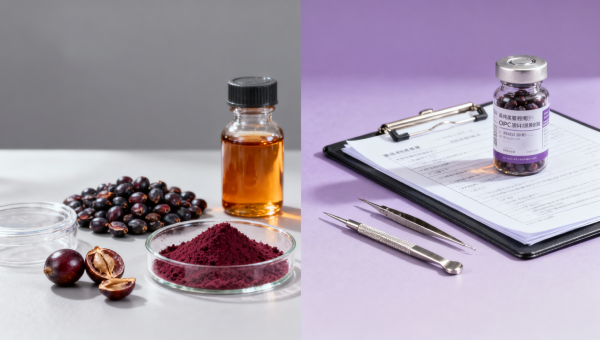
Sourcing reliable grape seed extract opc starts with one critical question: how do you avoid low-purity material that fails quality, safety, and value expectations? For buyers, operators, and compliance teams comparing botanical ingredients such as milk thistle extract silymarin, pine bark extract bulk, and green tea extract egcg, understanding purity markers, documentation, and supplier credibility is essential before making any procurement decision.
In the botanical extracts market, low-purity grape seed extract OPC is not just a formulation issue. It can affect label claims, batch consistency, production yield, audit readiness, and total landed cost. For procurement analysts, plant operators, quality managers, and project owners, the practical task is to distinguish commercially attractive offers from materials that create hidden downstream risk.
This article explains how to evaluate grape seed extract OPC from a technical and purchasing perspective, with clear checkpoints on assay, adulteration risk, solvent controls, documentation, and supplier qualification. The goal is to help decision-makers reduce quality failures before samples move to pilot production or long-term supply agreements.
Why Low-Purity Grape Seed Extract OPC Creates Commercial and Compliance Risk
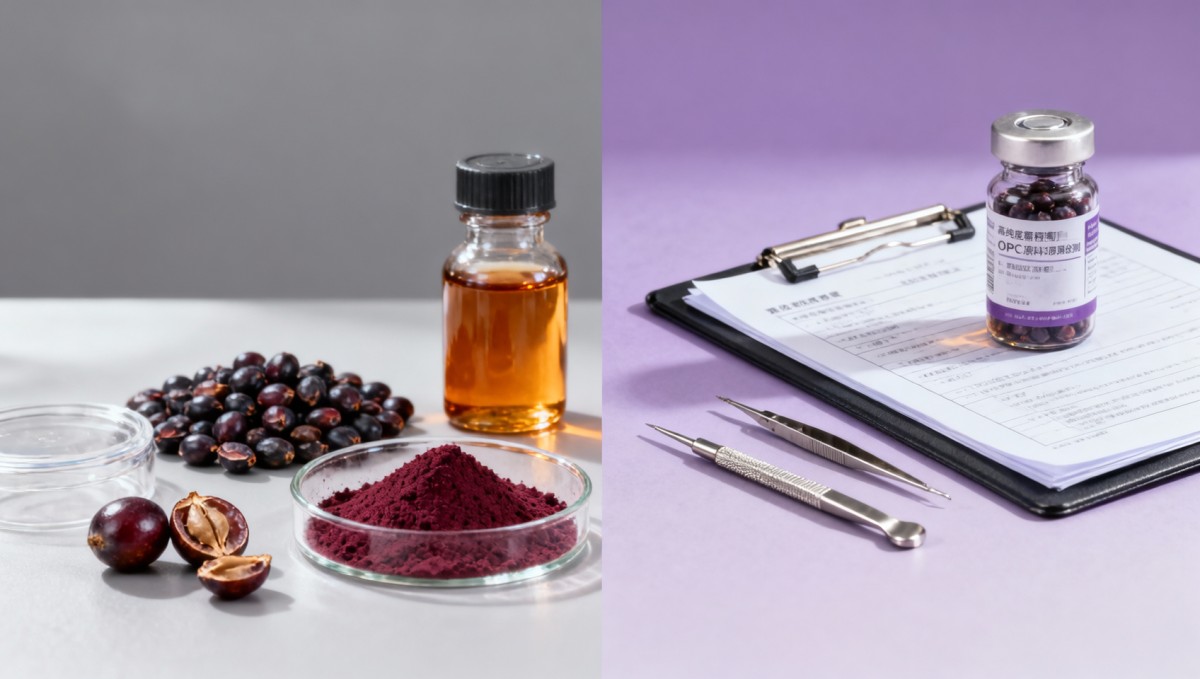
Grape seed extract OPC is usually purchased for its oligomeric proanthocyanidin content, but many buyers rely too heavily on headline marketing claims rather than full specification review. A product labeled as 95% grape seed extract may not mean 95% OPC. In many cases, that figure refers to total polyphenols, not the active oligomeric fraction that matters in functional performance and formulation value.
For quality control teams, this distinction matters because a low OPC fraction can result in weaker antioxidant performance, inconsistent color, poor dissolution behavior, and higher dosage requirements. If a formulation was designed around a 90% to 95% OPC material and the incoming lot performs closer to 50% to 65% active content, production economics shift immediately.
For finance approvers, low-purity material often looks attractive only at the quotation stage. A lower unit price can translate into 20% to 40% more usage per batch, extra release testing, rejected inventory, or delayed customer shipments. Total cost of ownership becomes much higher than the initial purchase order suggested.
For regulatory and safety managers, undocumented processing aids, residual solvents, or weak traceability can trigger audit findings. This is especially relevant when grape seed extract OPC is intended for nutraceuticals, foods, personal care inputs, or applications exposed to FDA, GMP, or customer-specific supplier qualification protocols.
The Most Common Sources of Purity Confusion
Three issues appear repeatedly in extract sourcing. First, suppliers may report total polyphenols instead of OPC. Second, test methods may not match the intended specification, leading to non-comparable COAs. Third, the raw material itself may vary by seed source, harvest condition, and extraction process, which creates lot-to-lot variation if process controls are weak.
Key risk signals to flag during early screening
- A very high assay claim with no declared test method or chromatographic reference.
- Pricing that is 15% to 30% below the normal market range without a process explanation.
- Incomplete COA fields for heavy metals, microbiology, or residual solvents.
- No batch coding logic, no retention sample policy, and no stated shelf life such as 24 or 36 months.
A disciplined sourcing process starts by treating grape seed extract OPC as a technical ingredient, not a commodity powder. Once that mindset is in place, purity evaluation becomes much more objective and much easier to defend internally.
How to Read Purity Claims, Specifications, and Test Methods Correctly
The first practical step is to separate marketing language from measurable quality data. Buyers should request a full specification sheet, a recent certificate of analysis, test method references, and ideally 2 to 3 commercial batch COAs from different production dates. Looking at a single best-case sample is rarely enough for long-term supplier approval.
When evaluating grape seed extract OPC, ask whether the specification refers to oligomeric proanthocyanidins, proanthocyanidins, polyphenols, or a broader antioxidant index. These are not interchangeable terms. If the intended use is performance-driven, the assay must align with the exact component that determines efficacy in the application.
Method alignment is equally important. UV-based methods can be useful for routine control, but they may overstate active content compared with more selective techniques. Depending on the market and intended use, buyers often ask for method details, calibration logic, and whether the lab is internal, third-party, or accredited to recognized quality systems.
The table below summarizes how procurement and QC teams can interpret common specification items when screening grape seed extract OPC suppliers.
A strong specification package gives more than pass or fail results. It shows whether the supplier understands industrial buyers’ needs for repeatability, comparability, and release control across multiple lots over 6 to 12 months of supply.
Questions that uncover weak purity claims
- What exact analytical method supports the OPC claim, and can the supplier provide the method summary?
- Are the reported values based on as-is material or dry basis calculation?
- Can the supplier share at least 3 consecutive batch COAs to show process consistency?
- Is there a defined specification for mesh size, bulk density, and solubility if the powder is used in production equipment?
These questions are useful not only for grape seed extract OPC. They also help teams comparing milk thistle extract silymarin, pine bark extract bulk, and green tea extract egcg, where similar assay confusion can affect formulation performance and commercial claims.
Supplier Qualification: Documents, Audits, and Traceability Controls That Matter
Avoiding low-purity grape seed extract OPC depends as much on supplier systems as on the extract itself. A credible supplier should be able to provide document control, traceable batch numbering, change notification procedures, and responsive technical support. Without these basics, even an acceptable lab sample may not translate into stable commercial supply.
For project managers and procurement teams, supplier qualification is often most efficient when divided into three layers: paper review, sample evaluation, and commercial verification. Paper review can usually be completed in 5 to 10 working days if the supplier already maintains standard quality files. Sample evaluation may take another 2 to 4 weeks depending on internal lab queue and pilot testing needs.
Traceability should extend from grape seed origin to finished extract batch. This does not always require a fully public farm map, but it should include source region, processing date, extraction batch ID, packaging date, and retained sample policy. If a deviation appears after shipment, the supplier must be able to isolate affected lots within 24 to 48 hours.
Audit readiness is another differentiator. Even when an on-site audit is not immediately planned, buyers should assess whether the supplier can support remote documentation review, quality questionnaires, and corrective action responses. Delayed or vague answers during qualification often predict larger problems after a purchase contract is signed.
Core documents to request before approval
- Current specification sheet and 2 to 3 recent COAs for grape seed extract OPC.
- Microbiological, heavy metal, and residual solvent testing scope with method references.
- Allergen, GMO, irradiation, and solvent statements where commercially relevant.
- Shelf life statement, recommended storage conditions such as cool and dry storage below 25°C, and packaging description.
- Quality questionnaire responses covering deviation control, complaint handling, and recall procedures.
The following table can be used as a simple qualification scorecard for teams balancing technical, compliance, and financial review criteria.
A supplier that meets these baseline controls is not automatically the best option, but it is far less likely to expose buyers to avoidable quality and compliance disruptions. This is especially valuable for institutions managing multiple extract categories in parallel.
Practical Incoming Inspection and Production Checks for Operators and QC Teams
Even after supplier approval, incoming inspection remains essential. Low-purity grape seed extract OPC can still enter through batch drift, warehouse handling errors, or undocumented process changes. A receiving protocol should combine identity checks, visual review, documentation match, and risk-based lab testing before the lot is released to production.
Operators can often detect warning signs before full analysis is complete. Unexpected color variation, caking, abnormal odor, unusually high dusting, or poor flow through feeders may indicate moisture issues, carrier changes, or broader composition shifts. These are not definitive proof of low purity, but they justify hold status and further review.
For QC teams, a tiered release model is often practical. Level 1 may include packaging integrity, batch label match, and review of the COA against approved specifications. Level 2 can include confirmatory identity or assay testing for every lot or every defined interval, such as 1 in 3 lots, depending on supplier history and product criticality. Level 3 may include expanded testing whenever there is a deviation, complaint, or process change.
Production teams should also watch material behavior during mixing and dissolution. If a batch needs 10% to 20% more blending time, shows sediment differences, or changes finished product color, the problem may not be visible from assay alone. Cross-functional communication between QC, operations, and procurement is often the fastest way to catch supplier drift early.
A 5-step incoming control routine
- Confirm lot number, packaging condition, net weight, and storage temperature on arrival.
- Match COA values to the approved specification, including assay, moisture, microbial limits, and metals.
- Take a representative sample under controlled conditions and verify appearance, odor, and powder behavior.
- Run identity or assay confirmation based on risk ranking and previous supplier performance.
- Release, quarantine, or escalate within a defined review window such as 24 to 72 hours.
Typical release thresholds to define internally
A useful internal control file should specify acceptable assay range, moisture limit, microbiological criteria, and response actions for deviations. For example, some teams classify assay drift within 3% of target as minor review, while larger variance triggers hold and supplier investigation. The exact limit depends on the application, but predefined thresholds reduce subjective release decisions.
This control discipline protects not only product quality but also project schedules. A rejected lot discovered after production planning can disrupt 1 to 2 weeks of manufacturing capacity, especially when replacement material requires international transit or customs clearance.
Procurement Strategy, Cost Control, and Questions Buyers Should Ask Before Contracting
The best way to avoid low-purity grape seed extract OPC is to build quality into the sourcing model before negotiation starts. Too many contracts begin with price comparison and only later add technical conditions. In practice, buyers should define non-negotiable quality gates first, then evaluate price within that approved technical envelope.
A strong bid package usually includes target assay basis, documentation requirements, sample volume, packaging format, annual demand estimate, and expected lead time. For example, if annual demand is 3 to 5 metric tons, buyers may negotiate better consistency commitments by asking suppliers to reserve production windows or lock raw material sourcing plans rather than only discussing spot price.
Commercial terms should also address change notification, deviation reporting, and replacement procedures. If a supplier changes extraction solvent, carrier, drying conditions, or raw seed origin, procurement must receive written notice before shipment. A 30-day notice period is common, though critical projects may require 60 or 90 days.
For finance teams, the most useful comparison model is cost per effective active unit rather than cost per kilogram. If one supplier offers lower price but lower verified OPC content, the “cheaper” material may actually cost more once dosage, testing, and yield losses are calculated.
Questions to include in RFQ or supplier discussion
- What is the guaranteed assay range for grape seed extract OPC, and what method supports it?
- What is the normal lead time for sample supply and for commercial orders, such as 7 to 14 days for samples and 3 to 6 weeks for production lots?
- What is the standard MOQ, packaging size, and pallet stability during export shipment?
- How does the supplier manage out-of-spec lots, customer complaints, and root cause investigations?
- Can the supplier support ongoing categories beyond grape seed extract OPC, including milk thistle extract silymarin, pine bark extract bulk, or green tea extract egcg?
A broader extract portfolio can be commercially useful because it reduces qualification workload and may simplify vendor management. However, portfolio breadth should never replace product-specific evidence. Each extract category should still be assessed by its own assay logic, impurity profile, and application behavior.
FAQ for buyers and quality managers
How many batches should be reviewed before approving a new grape seed extract OPC supplier?
A practical starting point is 2 to 3 recent commercial batches plus one qualification sample for internal testing. For higher-risk uses or larger annual volumes, some buyers review 3 to 5 batch records to establish a clearer consistency trend before final approval.
What lead time should be planned for qualification?
If documents are complete, paper review may take 1 week, sample shipment another 1 week, and internal lab plus pilot review 2 to 4 weeks. A realistic qualification cycle is often 3 to 6 weeks, though regulated applications may take longer.
Is a low price always a sign of low purity?
Not always. Price can vary because of origin, process efficiency, contract timing, or inventory position. But when a quote is significantly below normal market range and documentation is weak, the risk of low-purity or poorly controlled material rises sharply. Price should trigger investigation, not automatic rejection.
Which teams should sign off on supplier approval?
At minimum, procurement, quality, and the technical or operations team should participate. For larger accounts, finance and regulatory stakeholders may also review the decision, especially when annual spend, export exposure, or customer audit risk is material.
Avoiding low-purity grape seed extract OPC requires more than comparing assay claims on a quotation sheet. Buyers need aligned test methods, consistent batch data, traceable documentation, practical incoming inspection, and contracts that protect against undocumented change. That approach lowers quality risk, protects formulation performance, and gives procurement teams a stronger basis for cost control.
For organizations sourcing botanical extracts across food, nutraceutical, biochemical, and industrial ingredient applications, a disciplined qualification model also improves decisions on related products such as milk thistle extract silymarin, pine bark extract bulk, and green tea extract egcg. If you need support comparing specifications, building a supplier checklist, or evaluating commercial options, contact us to discuss your sourcing criteria and get a more tailored procurement framework.
Related Intelligence
- Botanical ExtractsANVISA Extends Traceability for Botanical Extract Imports to Tier-2 SuppliersANVISA extends botanical extract traceability to tier-2 suppliers—key for Chinese exporters of herbal ingredients, supplements & cosmetics. Act now for July 2026 compliance.
- Botanical ExtractsANVISA Extends Traceability for Botanical Extracts to Tier-2 SuppliersANVISA extends botanical extract traceability to tier-2 suppliers—solvents, filter aids, adsorption media—effective Sept 1, 2026. Essential for exporters & supplement brands.
- Botanical ExtractsEU CBAM Carbon Tariff First Applies to Botanical ExtractsEU CBAM Carbon Tariff now covers Botanical Extracts—key for exporters, importers & LCA providers. Act now to ensure compliance by 24 April 2026.
The Morning Broadsheet
Daily chemical briefings, market shifts, and peer-reviewed summaries delivered to your terminal.
