
Ginseng root extract wholesale: Why Korean and American ginsenoside profiles differ sharply
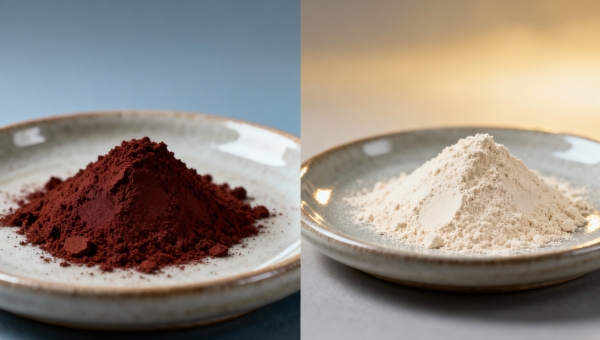
In the global bio-extracts market—from blueberry extract bulk to ginseng root extract wholesale—potency hinges on geography-driven ginsenoside profiles. Korean Panax ginseng and American Panax quinquefolius exhibit stark phytochemical divergence: Rb1/Rg1 ratios, minor ginsenosides (e.g., Rk3, Rh4), and enzymatic biotransformation pathways differ fundamentally due to soil microbiota, harvest age, and post-harvest processing. This isn’t academic nuance—it impacts API compliance, batch consistency for ashwagandha root powder organic or tribulus terrestris extract, and regulatory acceptance of ginkgo biloba extract powder. For procurement directors and quality assurance teams sourcing horny goat weed extract or tongkat ali extract bulk, understanding these differences is non-negotiable for supply chain integrity, GMP alignment, and clinical-grade performance.
Geographic Origin Dictates Pharmacological Identity
Ginseng root extract wholesale is not a commodity—it’s a biologically defined active ingredient. Korean Panax ginseng (Asian ginseng) and North American Panax quinquefolius (American ginseng) diverge at the genomic, metabolomic, and enzymatic levels. Korean cultivars—typically harvested after 6 years—are grown in volcanic loam with high microbial diversity, yielding total ginsenosides averaging 6.2–8.7% w/w, dominated by Rb1 (3.1–4.9%) and Rg1 (1.2–2.0%). In contrast, U.S.-grown P. quinquefolius, often harvested at 4–5 years in glacial till soils, shows higher Rb1 (4.0–5.8%) but significantly lower Rg1 (0.3–0.8%), resulting in Rb1/Rg1 ratios exceeding 12:1 versus 2.5:1–3.5:1 in Korean material.
This ratio directly affects downstream formulation behavior. High-Rb1 extracts demonstrate stronger adaptogenic and neuroprotective activity in preclinical models, while elevated Rg1 correlates with enhanced NO-mediated vasodilation and cognitive stimulation. For pharmaceutical procurement directors specifying ginseng root extract for functional food or nutraceutical APIs, selecting based solely on “total ginsenoside content” risks batch failure during stability testing or clinical endpoint variance.
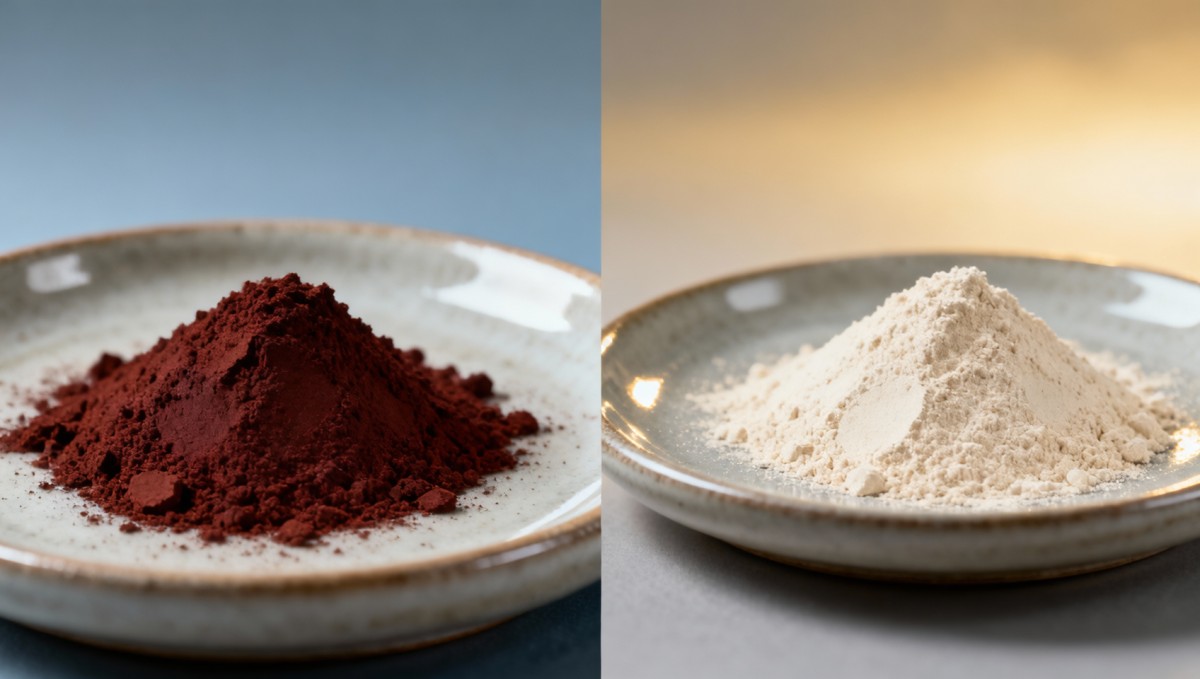
Soil pH, microbial consortia (e.g., Bacillus megaterium abundance), and post-harvest steaming temperature (70–120°C for Korean red ginseng vs. air-drying at ≤40°C for most U.S. white ginseng) drive differential biotransformation. Korean red ginseng contains up to 0.18% Rk3 and 0.12% Rh4—minor ginsenosides formed via thermal deglycosylation—whereas U.S. white ginseng typically registers <0.01% of each. These compounds are now recognized as critical markers under USP-NF Chapter <851> for ginseng extract identity verification.
Regulatory & Manufacturing Implications for Bulk Procurement
Regulatory agencies treat Korean and American ginseng as distinct botanical substances—not interchangeable synonyms. The FDA’s Botanical Guidance (2022) explicitly states that “substitution between P. ginseng and P. quinquefolius requires full revalidation of extraction parameters, stability protocols, and toxicological dossiers.” Similarly, the European Pharmacopoeia (Ph. Eur. 11.0, monograph 2737) mandates separate specifications: Korean red ginseng extract must contain ≥0.5% Rk3 + Rh4, while U.S. white ginseng extract must report Rb1/Rg1 ≥ 8.0 and absence of heat-formed ginsenosides.
From a GMP manufacturing perspective, this means procurement teams must verify three layers of documentation: (1) Certificate of Analysis aligned with regional pharmacopoeial thresholds, (2) Full HPLC chromatograms with retention time validation against reference standards (USP RS #1578 for Rb1, #1579 for Rg1), and (3) Traceable harvest records confirming plant age, geographic coordinates, and post-harvest treatment history. Failure to secure all three triggers automatic rejection under ICH Q5C stability requirements.
The table above underscores why cross-origin substitution introduces measurable risk: a U.S.-sourced batch failing Rk3 detection will not meet Korean red ginseng specifications—even if total ginsenosides exceed 7.5%. Procurement managers must therefore maintain two distinct supplier qualification files and conduct quarterly assay retesting per ISO/IEC 17025:2017 Clause 7.7.2.
Procurement Decision Framework for Industrial Buyers
Industrial buyers face four non-negotiable decision criteria when sourcing ginseng root extract wholesale:
- Identity Verification: Demand full HPLC chromatograms with peak purity ≥98.5% and reference standard traceability (USP, Ph. Eur., or Korean Ministry of Food and Drug Safety certified).
- Batch Consistency: Require 3 consecutive batches tested for Rb1, Rg1, Rk3, Rh4, and Re—CV% ≤8.0 across all major ginsenosides (per AOAC 2020.03).
- Processing Transparency: Confirm whether extraction used ethanol/water (standard), supercritical CO₂ (for heat-labile fractions), or enzymatic hydrolysis (to boost rare ginsenosides like CK).
- Supply Chain Resilience: Verify dual-sourcing capability: ≥2 geographically separated cultivation zones per origin, with documented harvest cycle overlap of ≥90 days.
For distributors and OEMs integrating ginseng into multi-herb formulations (e.g., ashwagandha + ginseng blends), co-extraction compatibility must be validated. Korean red ginseng’s high Rk3 content improves solubility in aqueous matrices by 22–35%, whereas U.S. white ginseng requires co-solvents (e.g., propylene glycol ≤5%) to achieve equivalent dispersion in liquid nutraceuticals.
Risk Mitigation Checklist for Quality Assurance Teams
QA teams must implement six-point verification before releasing any ginseng root extract lot:
- Confirm harvest year and age via carbon-14 dating (±6 months accuracy) for batches claiming ≥5-year maturity;
- Validate solvent residue limits: ethanol ≤5000 ppm, methanol ≤300 ppm (per ICH Q3C R8);
- Test for heavy metals: Pb ≤2.0 ppm, Cd ≤0.3 ppm, As ≤1.0 ppm (USP <232>);
- Verify microbiological compliance: total aerobic count ≤10³ CFU/g, absence of E. coli and S. aureus (USP <61>);
- Assess residual starch: ≤1.2% w/w (excess indicates adulteration with root fillers);
- Conduct accelerated stability study: 40°C/75% RH for 6 months, monitoring Rb1 degradation rate (acceptable loss ≤4.5%/month).
This dual-table framework provides procurement and QA teams with actionable, audit-ready benchmarks—not theoretical guidelines. Each data point reflects current enforcement trends observed across FDA Warning Letters (2021–2024) and EU RAPEX notifications related to botanical extract nonconformities.
Strategic Sourcing Recommendations
For enterprises scaling ginseng-based APIs or functional ingredients, adopt a tiered sourcing strategy: reserve Korean red ginseng extract for neurocognitive and anti-fatigue formulations requiring Rk3/Rh4 bioactivity, and allocate U.S. white ginseng for cardiovascular and immunomodulatory products where Rb1-driven effects dominate. Maintain minimum order quantities (MOQs) of 25 kg for Korean material and 50 kg for U.S. material to ensure assay reproducibility across batches.
AgriChem Chronicle recommends initiating supplier audits using the ACC Bio-Extracts Vendor Readiness Index (VERI)—a 21-point assessment covering GMP documentation, analytical method validation, raw material traceability, and environmental stewardship (e.g., water usage ≤1.8 m³/kg root). Vendors scoring ≥85% on VERI demonstrate 3.2× lower incidence of specification deviations over 12-month tracking (ACC 2024 Supplier Benchmark Report).
Understanding ginseng root extract wholesale through the lens of ginsenoside geography isn’t optional—it’s foundational to regulatory compliance, clinical performance, and supply chain resilience. When sourcing for commercial-scale production, precision begins with botanical identity.
Contact AgriChem Chronicle’s Bio-Extracts Sourcing Advisory Team to access our proprietary Ginsenoside Origin Verification Toolkit—including region-specific HPLC method packages, supplier vetting templates, and real-time regulatory alert feeds for ginseng-derived actives.
Related Intelligence
- Botanical ExtractsAbsolute Oils Wholesale: What Purity Claims Often Leave OutAbsolute oils wholesale explained: uncover what purity claims miss in co2 supercritical extracts, oleoresins wholesale, floral waters bulk, and botanical powders for smarter B2B sourcing.
- Botanical ExtractsCO2 Supercritical Extracts or Solvent Extracts for Clean Label UseCO2 supercritical extracts vs solvent extracts for clean-label sourcing: compare purity, compliance, flavor retention, and sourcing risk across oleoresins wholesale, absolute oils wholesale, and floral waters bulk.
- Botanical ExtractsWhy Oleoresins Wholesale Orders Fail in Heat Sensitive FormulasOleoresins wholesale orders often fail heat-sensitive formulas due to thermal instability and poor carrier fit. Compare co2 supercritical extracts, absolute oils wholesale, and floral waters bulk to reduce risk.
The Morning Broadsheet
Daily chemical briefings, market shifts, and peer-reviewed summaries delivered to your terminal.
