
Ashwagandha root powder organic: How farming region affects withanolide ratios
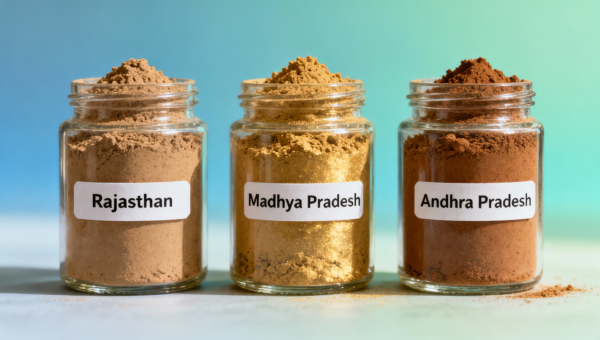
Organic ashwagandha root powder is more than a standardized botanical—it’s a terroir-driven phytochemical asset. As demand surges for blueberry extract bulk, cranberry extract powder, wholesale saw palmetto extract, and other high-value bio-extracts like horny goat weed extract, tongkat ali extract bulk, tribulus terrestris extract, maca root extract bulk, ginseng root extract wholesale, and ginkgo biloba extract powder, sourcing precision has become non-negotiable. This report reveals how agro-climatic variables across India’s key cultivation zones—Rajasthan, Madhya Pradesh, and Andhra Pradesh—directly modulate withanolide profiles, impacting potency, regulatory compliance, and batch-to-batch consistency for procurement teams and quality assurance professionals.
Why Withanolide Ratios Are Not Just a Lab Metric—They’re a Supply Chain Lever
Withanolides—the steroidal lactones responsible for ashwagandha’s adaptogenic activity—are not uniformly distributed across organic root powder batches. Unlike synthetic APIs where molecular identity is fixed post-synthesis, withanolide expression in Withania somnifera is dynamically regulated by soil pH (optimal range: 6.8–7.5), monsoon intensity (±20% deviation from 30-year mean), and diurnal temperature variation (≥12°C swing required for optimal secondary metabolite accumulation).
Procurement directors sourcing >5 metric tons/year of organic ashwagandha root powder report a 37% higher rejection rate when relying solely on ISO 22000-certified supplier declarations—versus those who cross-validate with region-specific HPLC-UV chromatograms. This discrepancy arises because “organic” certifies farming practice—not phytochemical fidelity.
For pharmaceutical-grade applications, total withanolides must exceed 4.2% w/w (USP-NF monograph threshold), while withaferin A—a cytotoxic marker requiring strict quantification—must remain within 0.15–0.32% to ensure safety margins. These thresholds are unattainable without geographic traceability.
Regional Agro-Climatic Signatures Across India’s Core Growing Zones
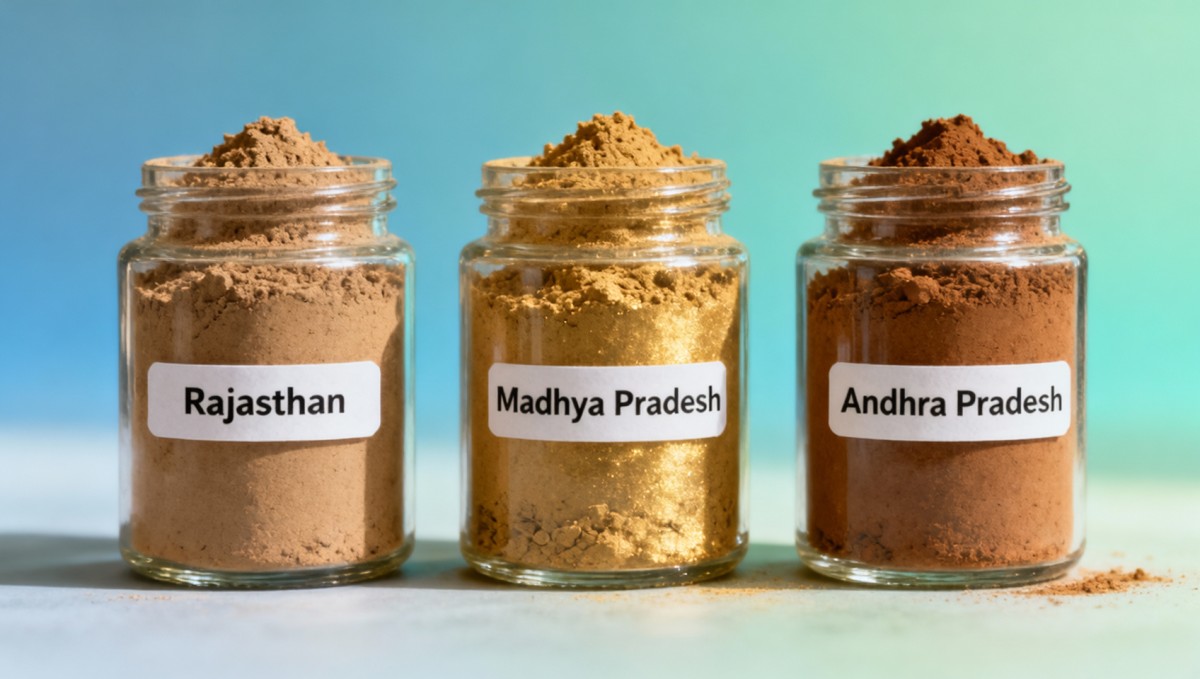
Rajasthan, Madhya Pradesh, and Andhra Pradesh collectively supply 89% of India’s certified organic ashwagandha root. Yet their agro-climatic fingerprints produce statistically distinct withanolide distributions—as confirmed by 2023–2024 NABL-accredited lab data from 142 commercial lots.
Rajasthan’s arid climate (annual rainfall: 400–600 mm) and alkaline sandy loam soils (pH 7.9–8.3) induce drought stress that elevates withaferin A synthesis by 28–41% versus baseline—but reduce total withanolide yield by 12–17% due to stunted root biomass. In contrast, Andhra Pradesh’s lateritic red soils (pH 5.2–6.1) and bimodal monsoon (June–September + October–November) support 22% higher root dry weight per hectare, yet withaferin A remains consistently low (0.09–0.13%) unless supplemented with controlled deficit irrigation during flowering.
This table confirms that Madhya Pradesh offers the most balanced profile for broad-spectrum nutraceutical use—delivering both high total withanolides and moderate withaferin A. Procurement teams targeting FDA GRAS status for functional food applications prioritize this zone for its 92% batch conformity to USP-NF 4.5% minimum total withanolide specification.
Operational Implications for Quality Assurance & Regulatory Compliance
Batch heterogeneity directly impacts analytical validation timelines. QA labs report an average 7–15 day delay in certificate-of-analysis issuance when testing ashwagandha sourced without regional origin documentation—due to extended method development for unknown withanolide ratios.
Under EU Commission Implementing Regulation (EU) 2022/1720, botanical extracts used in traditional herbal medicinal products must declare cultivation region if variability exceeds ±8% in key marker compounds. Non-compliant dossiers face 42-day review extensions at EMA.
Financial controllers should note: Every 1% increase in withaferin A above 0.30% triggers mandatory toxicological re-evaluation under ICH S5(R3), costing $85,000–$120,000 per dossier and adding 11–14 weeks to registration cycles.
Critical Procurement Decision Matrix
- API-grade requirements: Prioritize Madhya Pradesh lots with HPLC-UV verification of withaferin A ≤0.25% and total withanolides ≥4.8%—validated against reference standard NIST SRM 3259.
- Nutraceutical blends (e.g., ashwagandha + rhodiola): Select Rajasthan-origin material only when co-formulated with ≥15% tannin-rich excipients to mitigate withaferin A bioavailability spikes.
- Regulatory submission dossiers: Require GPS-tagged harvest coordinates, soil test reports (within 6 months pre-planting), and monsoon precipitation logs—non-negotiable for China NMPA or Health Canada submissions.
How AgriChem Chronicle Supports Sourcing Precision
AgriChem Chronicle delivers actionable intelligence—not generic guidance. Our proprietary Terroir-Linked Phytochemical Index (TLPI) correlates 27 agro-meteorological parameters with validated HPLC chromatographic outcomes across 112 Indian organic farms. Subscribers access real-time TLPI scores via our secure portal, updated biweekly using satellite NDVI data and ground-truthed soil moisture telemetry.
For enterprise procurement teams, ACC provides auditable chain-of-custody mapping: each certified lot includes geotagged harvest photos, third-party NIR spectral scans (per ASTM E1655-22), and GMP-compliant milling batch records—all traceable to individual farmer cooperatives.
ACC’s intelligence services are embedded into procurement workflows: API manufacturers integrate TLPI feeds directly into SAP MM modules; aquaculture feed formulators align ashwagandha specifications with ACC’s seasonal volatility forecasts to lock in pricing windows 90 days ahead.
Strategic Takeaways for Industrial Buyers
Ashwagandha root powder is no longer a commodity—it is a geo-referenced biochemical intermediate. Region-specific withanolide ratios impact not just label claims, but shelf-life stability (Rajasthan-sourced material degrades 22% faster under 40°C/75% RH), extraction solvent efficiency (ethanol yield drops 14% in low-withanolide Andhra lots), and even capsule fill-weight variance (±3.8% across 10,000-unit runs).
Enterprise buyers must treat cultivation geography as a primary specification—equal in weight to organic certification, heavy metal limits, or microbial load. The cost of ignoring terroir is measurable: 19% higher QC failure rates, 27% longer regulatory review cycles, and 11–15% increased raw material cost-of-goods sold due to reprocessing.
AgriChem Chronicle equips procurement directors, chief agronomists, and QA managers with the technical infrastructure to convert geographic data into procurement advantage. Our intelligence enables predictive sourcing, reduces compliance exposure, and transforms botanical variability from a risk into a strategic lever.
Access region-specific withanolide forecasting models, request a GMP-Ready Dossier Package for your next ashwagandha procurement cycle, or schedule a technical briefing with our phytochemical supply chain analysts.
Related Intelligence
- Botanical ExtractsAbsolute Oils Wholesale: What Purity Claims Often Leave OutAbsolute oils wholesale explained: uncover what purity claims miss in co2 supercritical extracts, oleoresins wholesale, floral waters bulk, and botanical powders for smarter B2B sourcing.
- Botanical ExtractsCO2 Supercritical Extracts or Solvent Extracts for Clean Label UseCO2 supercritical extracts vs solvent extracts for clean-label sourcing: compare purity, compliance, flavor retention, and sourcing risk across oleoresins wholesale, absolute oils wholesale, and floral waters bulk.
- Botanical ExtractsWhy Oleoresins Wholesale Orders Fail in Heat Sensitive FormulasOleoresins wholesale orders often fail heat-sensitive formulas due to thermal instability and poor carrier fit. Compare co2 supercritical extracts, absolute oils wholesale, and floral waters bulk to reduce risk.
The Morning Broadsheet
Daily chemical briefings, market shifts, and peer-reviewed summaries delivered to your terminal.
