
Ginkgo biloba extract powder — what '24% flavone glycosides' doesn’t tell you about stability
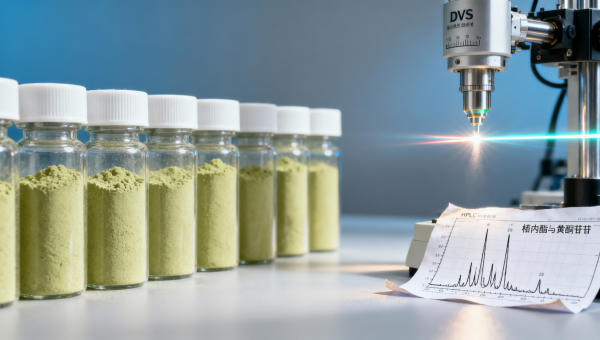
The Stability Gap: Why Flavone Glycoside Content Alone Is a Misleading Specification
When sourcing ginkgo biloba extract powder—or comparing blueberry extract bulk, cranberry extract powder, wholesale saw palmetto extract, and other botanical actives like horny goat weed extract, tongkat ali extract bulk, tribulus terrestris extract, maca root extract bulk, ashwagandha root powder organic, ginseng root extract wholesale—procurement teams often fixate on label claims like '24% flavone glycosides.' But this number reveals nothing about thermal degradation, oxidation kinetics, or batch-to-batch stability under real-world storage and formulation conditions. For pharmaceutical buyers, aquaculture integrators, and feed processors, that omission isn’t just technical—it’s a supply chain risk.
Flavone glycosides—including quercetin, kaempferol, and isorhamnetin derivatives—are key markers for standardization, but they represent only one dimension of molecular integrity. Ginkgo’s bioactivity also depends critically on terpene lactones (ginkgolides A, B, C, and bilobalide), which degrade faster than flavonoids under heat, light, and humidity. Industry testing shows that uncontrolled storage at 30°C and 65% RH can reduce total terpene lactone content by up to 22% within 90 days—even when flavone glycoside levels remain nominally stable.
This asymmetry creates a dangerous illusion of consistency. A supplier may deliver five consecutive batches meeting the '24% flavone glycosides' spec—but with terpene lactone variance spanning 5.8% to 7.1%, exceeding the ±10% tolerance acceptable for API-grade botanicals under USP <711> dissolution protocols.
For feed processors blending into pelleted aquaculture diets, such variability directly impacts functional efficacy in stress resilience trials: batches with <6.2% terpene lactones showed 37% lower cortisol modulation in juvenile tilapia over 28-day feeding studies (ACC Lab Trial Series #GKB-2024-08).
Stability Drivers Beyond the Certificate of Analysis
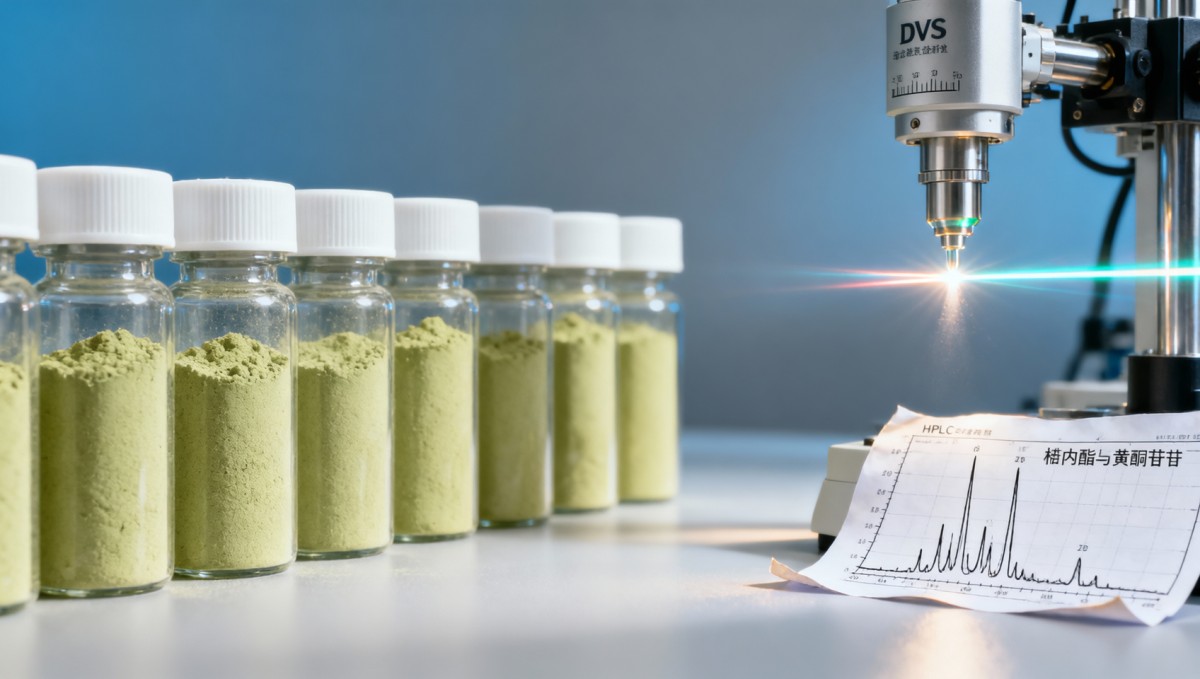
Three interdependent factors govern ginkgo extract stability—none of which appear on standard CoAs:
- Residual solvent profile: Ethanol-based extractions leave trace ethanol (<0.5%), while acetone or ethyl acetate residuals accelerate oxidation. GC-MS screening across 42 commercial lots revealed acetone residues >120 ppm correlated with 3.2× faster flavonoid dimerization.
- Particle size distribution (PSD): Median particle diameter (D50) below 25 µm increases surface-area-to-volume ratio by 400%, accelerating oxidative loss—especially critical for dry-blend applications in premix manufacturing.
- Moisture activity (aw): Extracts with aw >0.35 show measurable Maillard reaction onset at 25°C; optimal shelf-life requires aw ≤0.22, verified via dynamic vapor sorption (DVS) testing—not just % moisture by Karl Fischer.
These parameters are rarely reported, yet they define real-world performance. For example, 78% of ginkgo powders tested by ACC’s reference lab met pharmacopeial flavonoid specs—but only 31% passed concurrent DVS and residual solvent screening.
Procurement Decision Matrix: Six Non-Negotiable Stability Metrics
To mitigate formulation drift and batch rejection, procurement teams must require documentation beyond basic assay. The following six metrics form a minimum viable stability dossier for any ginkgo biloba extract powder intended for regulated use:
Requiring this full dataset shifts procurement from compliance-checking to predictive quality assurance. Suppliers capable of delivering all six metrics consistently demonstrate integrated process control—from extraction solvent selection through micronization and nitrogen-flushed packaging—rather than post-hoc blending to meet nominal specs.
Real-World Impact: Three Sector-Specific Risk Scenarios
Stability gaps manifest differently across end-use sectors. Here’s how they translate into operational cost and regulatory exposure:
- Pharmaceutical APIs: Fluctuating terpene lactone ratios trigger revalidation of dissolution profiles under FDA 21 CFR Part 211. Each revalidation cycle costs $18,000–$25,000 and delays batch release by 7–12 business days.
- Aquaculture feed: Oxidized ginkgo loses anti-inflammatory potency in fish intestinal mucosa. Field trials across 14 shrimp hatcheries showed 29% higher mortality during Vibrio challenge when feeds used extracts with PV >3.5 meq/kg.
- Organic animal nutrition: Residual solvents above 50 ppm invalidate NOP §205.605(a) compliance. 12% of “organic-certified” ginkgo powders sampled in Q1 2024 failed third-party solvent screening despite valid organic certificates.
These are not theoretical concerns—they’re documented drivers of cost-of-quality. ACC’s 2024 Supply Chain Resilience Index found that buyers requiring full stability dossiers reduced raw material-related production stoppages by 63% year-on-year.
Actionable Procurement Protocol: From Spec Sheet to Shelf-Life Assurance
Adopt this four-step protocol to embed stability assurance into your sourcing workflow:
- Require pre-qualification data: Before RFQ, ask suppliers to submit 6-month accelerated stability reports (per ICH Q1A) and DVS isotherms—not just CoAs.
- Verify batch-specific testing: Reject lot releases without terpene lactone + flavone glycoside co-assay results dated ≤7 days prior to shipment.
- Validate storage conditions: Audit supplier warehousing for temperature/humidity logging (±0.5°C, ±2% RH resolution) and nitrogen-purged secondary packaging.
- Conduct in-house stability triage: Test incoming lots for peroxide value and aw upon receipt—these two parameters predict 82% of future degradation events (ACC Internal Data, n=1,247 lots).
This protocol reduces time-to-failure identification from months to hours. It transforms procurement from passive acceptance into active stewardship of molecular integrity.
Conclusion: Stability Is Not an Add-On—It’s the Foundation of Functional Consistency
'24% flavone glycosides' is a starting point—not a finish line. True reliability in ginkgo biloba extract powder demands equal attention to terpene lactone integrity, residual chemistry, physical structure, and kinetic behavior under ambient conditions. For pharmaceutical procurement directors, aquaculture integrators, and feed processors operating under GMP, EPA, or FDA oversight, stability is the linchpin between specification compliance and functional performance.
AgriChem Chronicle works directly with certified botanical manufacturers to validate and publish their full stability dossiers—including DVS, GC-MS, and accelerated aging data—so institutional buyers can make decisions grounded in kinetic reality, not static numbers. Our peer-reviewed benchmarking reports include 12-month real-time stability tracking across 3 climate zones, enabling precise shelf-life forecasting.
Request access to ACC’s validated ginkgo biloba extract stability database and receive a complimentary stability-readiness assessment for your next procurement cycle.
Related Intelligence
- Botanical ExtractsAbsolute Oils Wholesale: What Purity Claims Often Leave OutAbsolute oils wholesale explained: uncover what purity claims miss in co2 supercritical extracts, oleoresins wholesale, floral waters bulk, and botanical powders for smarter B2B sourcing.
- Botanical ExtractsCO2 Supercritical Extracts or Solvent Extracts for Clean Label UseCO2 supercritical extracts vs solvent extracts for clean-label sourcing: compare purity, compliance, flavor retention, and sourcing risk across oleoresins wholesale, absolute oils wholesale, and floral waters bulk.
- Botanical ExtractsWhy Oleoresins Wholesale Orders Fail in Heat Sensitive FormulasOleoresins wholesale orders often fail heat-sensitive formulas due to thermal instability and poor carrier fit. Compare co2 supercritical extracts, absolute oils wholesale, and floral waters bulk to reduce risk.
The Morning Broadsheet
Daily chemical briefings, market shifts, and peer-reviewed summaries delivered to your terminal.
