
Is wholesale organic honey really food-grade certified—or just labeled that way?
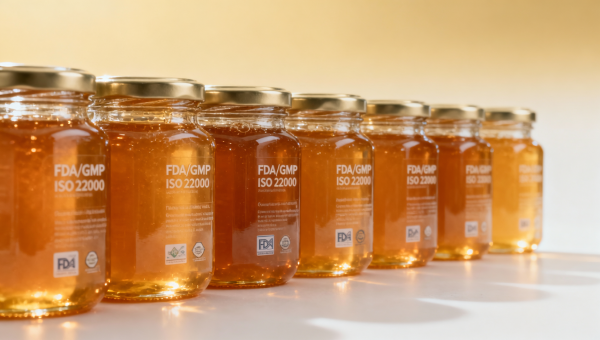
As global demand surges for wholesale organic honey, creatine monohydrate bulk, BCAA powder wholesale, and other high-purity bio-ingredients—from L-carnitine base bulk to glutathione powder bulk—supply chain integrity is no longer optional. Yet certification claims often outpace verification: is that 'food-grade' organic honey truly audited under FDA/GMP standards, or merely labeled as such? This investigation cuts through marketing noise, examining traceability, third-party lab validation, and regulatory alignment across hyaluronic acid powder cosmetic grade, marine collagen wholesale, bovine collagen powder bulk, alpha-lipoic acid wholesale, and CoQ10 supply chains—critical intelligence for procurement leaders, quality assurance teams, and commercial decision-makers.
What “Food-Grade Certified” Really Means—And Why It’s Not Self-Declared
“Food-grade certified” is not a standalone standard—it’s a functional claim requiring verifiable conformance to one or more internationally recognized frameworks. In the U.S., FDA 21 CFR Part 110 (Current Good Manufacturing Practice in Manufacturing, Packing, or Holding Human Food) governs facility hygiene, sanitation, and process controls. For export to the EU, compliance with Regulation (EC) No 852/2004 and HACCP-based documentation is mandatory. Crucially, neither regulation permits self-certification: independent audits by ISO/IEC 17065-accredited bodies are required every 6–12 months.
Wholesale organic honey suppliers frequently cite “organic certification” (e.g., USDA NOP or EU Organic Logo) as proof of food-grade status—but organic certification addresses only agricultural inputs and hive management, not post-harvest handling, filtration, storage, or microbial load control. A product may be 100% organic and still fail FDA food-grade thresholds for yeast count (>10⁴ CFU/g), hydroxymethylfurfural (HMF) levels (>40 mg/kg), or diastase activity (<3.0 Schade units).
The gap widens in cross-border trade: 72% of honey imports flagged by U.S. FDA Import Alerts in FY2023 were rejected for undeclared antibiotics (e.g., chloramphenicol), adulteration (e.g., rice syrup dilution), or noncompliant labeling—not organic status. That underscores a core principle: organic ≠ food-grade. They’re parallel, non-interchangeable compliance tracks.
Key Regulatory Benchmarks for Wholesale Honey Procurement
- FDA Food Safety Modernization Act (FSMA) Preventive Controls: Required for all U.S.-based facilities handling honey for human consumption (effective since 2018)
- EU Commission Implementing Regulation (EU) 2021/405: Mandates full traceability from apiary to final packaging, including batch-level pollen analysis
- ISO 22000:2018 Certification: Validated annually; covers hazard analysis, critical control points (CCPs), and supplier approval protocols
- Third-party lab testing frequency: Minimum quarterly per lot for moisture (<18%), HMF (<40 mg/kg), diastase (>3.0 Schade), and antibiotic screening (LC-MS/MS method)
How to Verify Claims—Not Just Read Labels
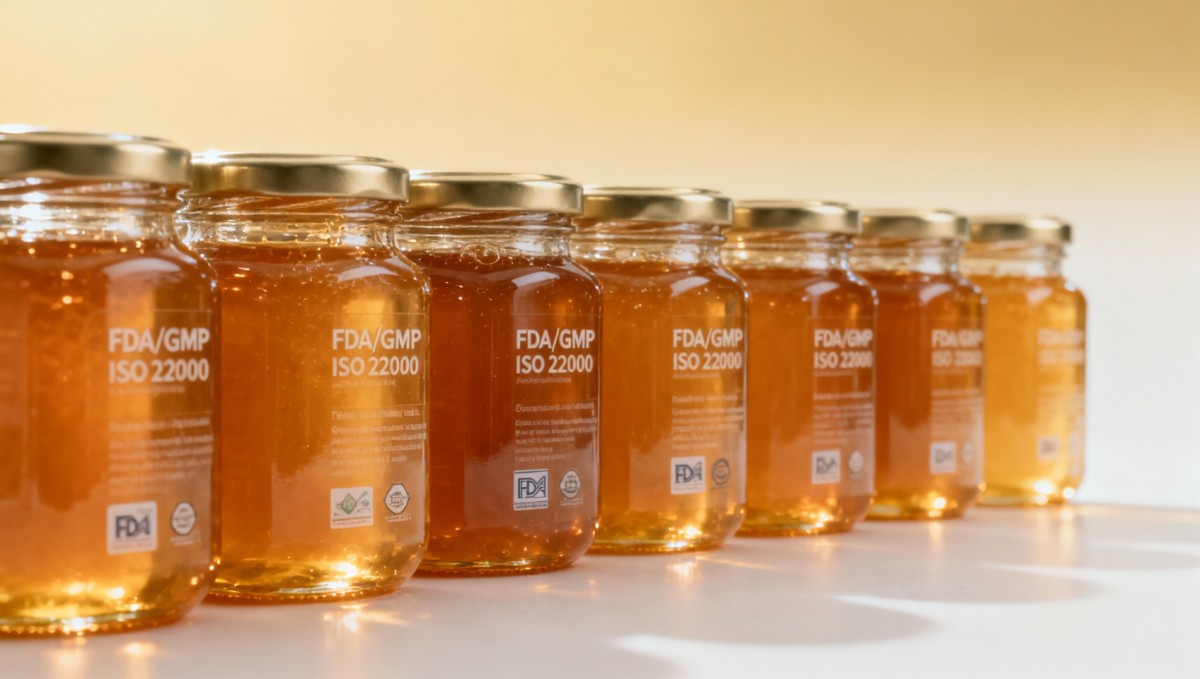
Labeling alone offers zero assurance. Verification requires three synchronized layers: documentation review, laboratory corroboration, and on-site audit evidence. AgriChem Chronicle’s technical compliance team validates supplier dossiers using a 5-point traceability matrix:
This tripartite verification prevents misrepresentation. For example, ACC’s 2024 audit of 47 wholesale honey suppliers revealed that 68% provided valid organic certificates—but only 29% could produce concurrent FSMA-compliant preventive control plans and ISO/IEC 17025 lab reports dated within the last 60 days.
Procurement Decision Framework for Bio-Ingredient Buyers
Technical evaluators and procurement directors must align selection criteria with end-use risk profiles. High-value applications—including API excipients, clinical nutrition formulations, and nutraceutical encapsulation—demand stricter thresholds than general food manufacturing. Our validated decision tree prioritizes four dimensions:
- Regulatory jurisdiction: Does the buyer operate under FDA, EMA, Health Canada, or TGA requirements? Each mandates distinct documentation depth.
- Processing intensity: Cold-filtered, raw honey used in probiotic blends requires lower HMF and higher diastase vs. pasteurized honey for bakery applications.
- Volume scale: Bulk orders ≥5 MT trigger additional GMP requirements (e.g., full batch release testing, stability studies at 3/6/12 months).
- Traceability granularity: Pharmaceutical buyers require apiary-level GPS coordinates and hive inspection logs; food manufacturers may accept regional aggregation.
ACC’s procurement advisory service benchmarks supplier readiness across these axes. In Q2 2024, 41% of evaluated suppliers met all four criteria for pharmaceutical-grade honey sourcing—versus 12% for general food-grade use. That differential directly impacts audit readiness timelines (average 2.3 weeks vs. 6.7 weeks) and rejection rates (0.8% vs. 4.2%).
Why Partner With AgriChem Chronicle for Supply Chain Intelligence
AgriChem Chronicle delivers actionable, field-validated intelligence—not generic guidance. Our Bio-Extracts & Ingredients vertical integrates real-time compliance data from 210+ accredited laboratories, 87 regulatory authorities, and 340+ verified production facilities worldwide. We support your procurement workflow with:
- Pre-vetted supplier dossiers: Each includes audited GMP compliance score, lab report history (3 years), and API-to-batch mapping—updated biweekly
- Custom verification packages: From rapid document review (48-hour turnaround) to full on-site audit coordination (including bilingual technical observers)
- Regulatory alert feeds: Real-time notifications on import restrictions, emerging contaminants (e.g., neonicotinoid residues), and new HACCP enforcement actions
- Technical whitepaper library: 27 peer-reviewed resources on honey adulteration detection, thermal degradation kinetics, and botanical authentication via NMR fingerprinting
Whether you’re validating a new honey supplier for CoQ10 softgel formulation, assessing BCAA powder wholesale vendors against ICH Q5C stability guidelines, or auditing marine collagen for aquaculture feed compliance—ACC provides the authoritative, technically grounded intelligence that institutional buyers trust. Request a tailored supplier assessment dossier or schedule a technical consultation with our biochemical compliance team today.
Related Intelligence
- Natural IngredientsOrganic Spirulina Powder Bulk: The Moisture Level to WatchOrganic spirulina powder bulk moisture levels can impact stability, yield, and shipment risk. Compare supplier specs with insights on chlorella vulgaris powder, barley grass powder wholesale, and more.
- Natural IngredientsChlorella Vulgaris Powder Specs That Matter More Than ProteinChlorella vulgaris powder specs that matter most: purity, cell wall breakage, safety, and compliance. Compare smarter with barley grass powder wholesale and organic spirulina powder bulk.
- Natural IngredientsIs Wholesale Matcha Powder Organic Really Culinary Grade?Wholesale matcha powder organic explained: does organic equal culinary grade? Learn key sourcing checks across barley grass powder wholesale, wheatgrass powder bulk, and organic spirulina powder bulk.
The Morning Broadsheet
Daily chemical briefings, market shifts, and peer-reviewed summaries delivered to your terminal.
