
The Authority in Global Agricultural Chemistry & Bio-Resources
Astragalus root extract: how to judge quality beyond the COA
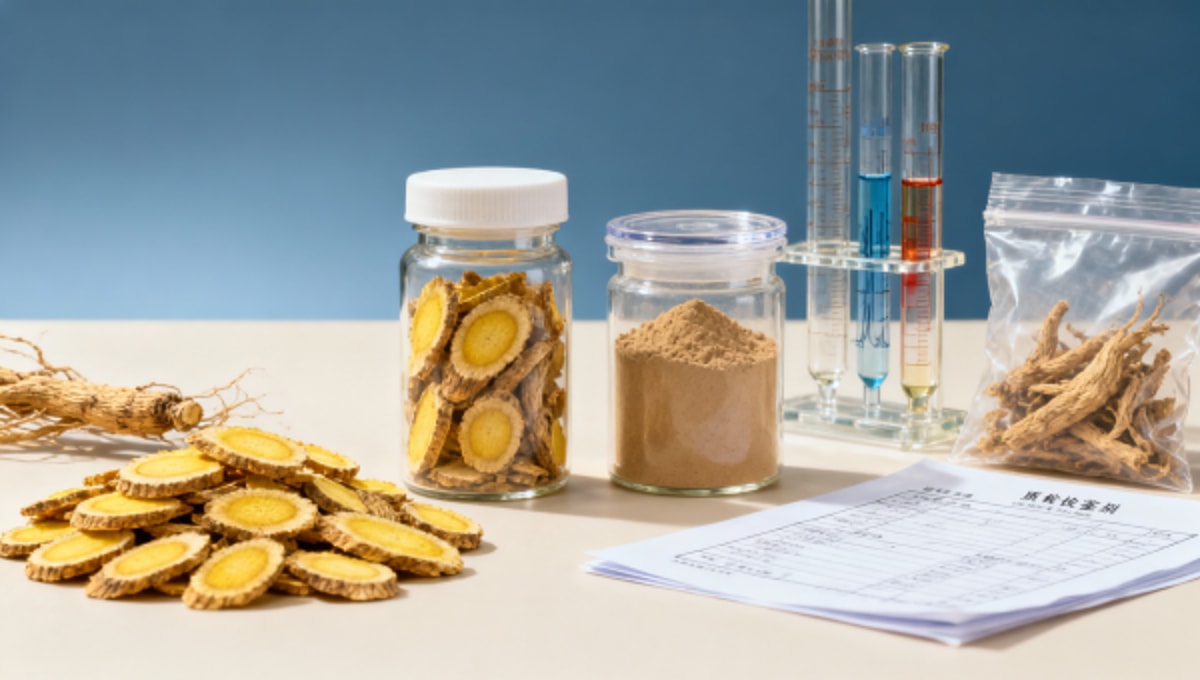
For buyers and technical teams sourcing astragalus root extract, a COA is only the starting point. True quality judgment requires deeper review of botanical identity, extraction ratios, active-marker relevance, contaminant controls, traceability, and process consistency. In a market also crowded with maitake mushroom extract, shiitake mushroom powder, chaga mushroom extract, and cordyceps extract wholesale, knowing what the COA does not reveal is essential for confident qualification.
That gap between what a certificate shows and what a procurement team must actually verify is where many sourcing failures begin. A COA may confirm appearance, assay, moisture, and microbiology for one batch, yet still leave unanswered questions about species authenticity, process stability, solvent history, agricultural inputs, and batch-to-batch variability over 6 to 12 months.
For industrial buyers, contract manufacturers, nutraceutical formulators, and quality teams, the practical goal is not just to buy compliant material once. It is to qualify an astragalus root extract supplier that can repeatedly deliver fit-for-purpose extract across multiple lots, with acceptable risk, documented traceability, and realistic commercial terms.
Why a COA alone is not enough for astragalus root extract qualification
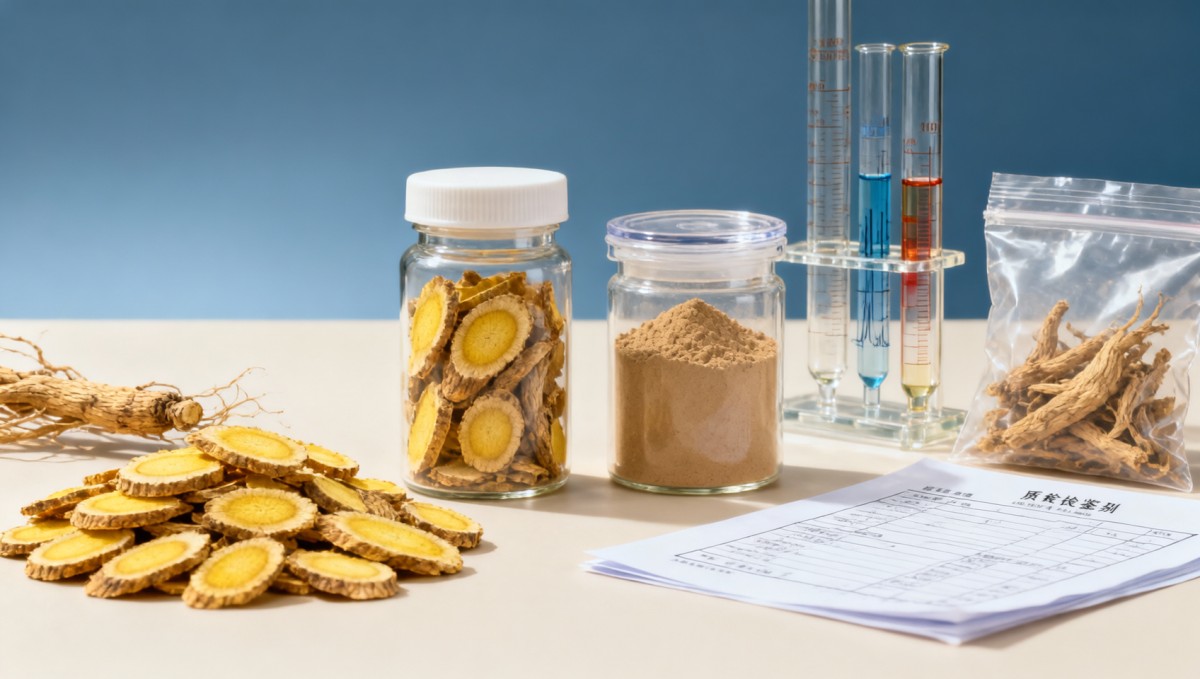
A standard COA is a batch document, not a full technical dossier. It usually reports a limited panel: identification, active marker level, loss on drying, ash, heavy metals, and microbiological counts. For many purchasing teams, that creates a false sense of completeness. In reality, a COA may cover only 8 to 15 parameters, while the real risk profile of a botanical extract can involve more than 20 qualification points.
Astragalus root extract adds another layer of complexity because quality is shaped by species, plant age, harvest timing, root grade, extraction medium, concentration ratio, and drying method. Two suppliers may both present a “10:1 extract” with similar color and odor, yet one may be made from properly identified Astragalus membranaceus root and the other from mixed or lower-grade raw material.
This matters in commercial settings where extract performance must support formulation stability, sensory targets, and regulatory positioning. If a purchasing team is sourcing for capsules, tablets, liquid blends, or functional food systems, even a 5% to 10% shift in polysaccharide profile, bulk density, or hygroscopicity can affect processing yield and finished-product consistency.
The strongest procurement practice is therefore layered review. Buyers should treat the COA as a screening tool, then ask for specification sheets, method references, chromatographic fingerprints, contaminant control plans, and evidence of lot consistency across at least 3 recent production batches.
The most common blind spots behind a compliant-looking COA
Several issues are frequently missed during supplier onboarding, especially when teams are comparing multiple bio-extract categories under tight deadlines. The following checklist helps separate basic documentation from meaningful technical qualification.
- Botanical identity may be reported generically without full species verification or voucher reference.
- Extraction ratio such as 4:1, 10:1, or 20:1 may be declared without clarifying native raw material quality or marker recovery.
- Marker compounds may be listed even when they do not fully represent the intended functional profile.
- Residue testing may cover only a basic panel, not the pesticides or solvents relevant to the source region.
- Microbiology may be compliant at release but unsupported by packaging, storage, and moisture control data.
For multi-ingredient buyers evaluating mushroom extracts alongside astragalus root extract, these blind spots are especially costly. Teams may assume all plant and fungal extracts follow comparable quality logic, but raw material variability, marker suitability, and contamination patterns differ sharply by category.
Botanical identity, extraction ratio, and marker relevance: the technical core of quality
The first question should always be simple: what exactly is the raw material? A reliable astragalus root extract should be tied to confirmed botanical identity, commonly Astragalus membranaceus or an accepted pharmacopeial equivalent where applicable. The supplier should be able to explain whether identification uses macroscopic review, microscopic verification, TLC, HPTLC, or another recognized method.
Next comes extraction ratio. Ratios such as 5:1, 10:1, or 20:1 are often misunderstood in procurement. A higher number does not automatically mean higher quality. If the incoming root has low native solids or if process recovery is inconsistent, a “20:1” claim may have limited practical meaning. Ratio claims must be read together with DER context, solvent system, and final marker specification.
Marker relevance is equally important. Some astragalus products are standardized to polysaccharides, others to astragalosides, and some are sold as non-standardized whole-profile extracts. The right marker depends on application. A technical buyer should ask whether the selected marker is being used for identity, standardization, or marketing convenience, because those are not the same thing.
In many qualification projects, the best approach is to combine 3 layers: species confirmation, chromatographic fingerprint comparison, and one or two quantitative markers. That reduces the risk of accepting material that passes a single assay but does not represent the intended phytochemical profile.
What to ask the supplier before approving the specification
Before releasing a purchase order, technical and sourcing teams should align on a structured question set. This is especially useful when 2 to 4 stakeholders are involved, such as procurement, QA, regulatory, and product development.
The key lesson is that specification language must be technically interpretable. If a supplier cannot explain how a marker relates to the raw material and extraction process within 1 or 2 review calls, the buying team should treat that as a commercial risk as well as a quality risk.
A practical benchmark for first-pass review
- Confirm the plant part is root, not unspecified whole herb material.
- Ask for at least 3 consecutive batch COAs to assess variance.
- Check whether carrier content exceeds 5% to 15% if spray drying is used.
- Review whether assay tolerance is tight enough for your formulation, for example ±10% or narrower.
Contaminant control and what a robust safety package should include
For quality control teams, contaminant review is often where the real qualification work begins. A botanical extract may pass a general heavy metal and microbiological panel while still carrying unresolved risk from pesticides, residual solvents, PAHs, adulterants, or poor post-processing hygiene. The required safety package should reflect source geography, cultivation practice, and intended market.
At minimum, buyers should compare test scope against the commercial destination. Material intended for food supplement use, beverage inclusion, or further processing into health products may face different documentation expectations depending on whether the target market is North America, the EU, or Asia-Pacific. Even when no single harmonized standard applies, internal approval criteria should still be defined before supplier screening starts.
Residual solvent interpretation also requires care. If the extract is water-based, the solvent risk profile differs from hydroalcoholic or other extraction systems. Teams should not simply request “solvent test passed.” They should confirm what solvents are used, whether they are recovered, what limits are applied, and whether those limits are suitable for the final application.
Microbiology is another area where documentation can be misleading. Passing total plate count at release is useful, but not sufficient if moisture is high, packaging is weak, or storage conditions fluctuate from 15°C to 30°C in transit. Shelf-life and transport controls must support the test result.
Minimum contaminant review framework for procurement and QA teams
The table below gives a practical structure for cross-functional review. It is not a substitute for market-specific regulation, but it helps teams avoid accepting incomplete safety documentation during early-stage qualification.
A buyer who evaluates contaminant control in this way can reduce downstream surprises during incoming inspection. In practical terms, that may mean fewer urgent deviation reviews, fewer re-tests, and shorter disposition cycles, often by 2 to 5 working days per incoming lot.
Red flags that deserve escalation
- Only one-page COA provided, with no method references or specification history.
- Broad “passes” language used instead of numerical results and limits.
- No explanation of source-region residue risks or cultivation controls.
- Microbiology data provided without confirming packaging type or storage recommendation.
Traceability, process consistency, and supplier maturity beyond the sample stage
A laboratory sample can look excellent and still fail as a commercial supply option. The difference is supplier maturity. For astragalus root extract, traceability should connect raw root sourcing, incoming inspection, extraction records, batch coding, retained samples, and shipment records. Without that chain, even a technically acceptable sample may not support repeat ordering at industrial scale.
Process consistency is just as important. Buyers should ask how often key process variables are reviewed, such as extraction temperature, solid-to-liquid ratio, concentration end point, drying conditions, and in-process moisture control. A supplier with a documented process window is usually more dependable than one relying on operator experience alone.
Commercial teams should also evaluate continuity factors: minimum order quantity, normal lead time, safety stock approach, packaging options, and the time required for replacement lots if a deviation occurs. Typical lead times may range from 2 to 6 weeks depending on season, stock position, and testing release. These are not secondary details; they are part of the quality equation.
For decision-makers comparing multiple botanical and mushroom ingredient vendors, traceability is often the clearest differentiator. A supplier who can produce lot genealogy, change-control practices, and retention policies within 24 to 72 hours of request generally offers lower operational risk than one who answers only at the document level.
Supplier maturity signals worth checking during qualification
The following indicators help procurement and QA teams move beyond a one-time document review and toward more reliable supplier approval.
- Three-batch consistency review for assay, moisture, microbiology, and organoleptic profile.
- Lot traceability from farm or raw material trader to finished batch release.
- Written change-control process covering raw material origin, solvent system, and analytical method updates.
- Retention sample period of at least 12 to 24 months, aligned with shelf-life expectations.
- Packaging options suitable for export humidity exposure, such as double PE liners and sealed fiber drums.
A simple 5-step commercial qualification workflow
Organizations handling 10 or more plant extract SKUs often benefit from a fixed workflow. It reduces subjective decisions and improves cross-functional alignment.
- Document screening: review specification, COA, allergen, solvent, and contaminant files.
- Technical review: verify species identity, marker logic, and process fit for intended application.
- Sample testing: conduct identity confirmation, key assay check, and formulation trial if needed.
- Commercial review: confirm MOQ, lead time, packaging, Incoterms, and replacement policy.
- Conditional approval: start with one to three monitored lots before full qualification.
How different buyer groups should assess astragalus root extract quality
Not every stakeholder uses the same criteria. R&D may prioritize solubility, flavor, and marker range. QA may focus on methods, limits, and deviation handling. Procurement may look at price stability and lead time. Finance may ask whether a lower-priced extract creates hidden costs through rework, higher testing frequency, or delayed product release.
This is why astragalus root extract qualification works best when reviewed through use-case rather than price alone. A material suitable for dry capsules may not be ideal for stick packs, liquid systems, or blends with heat-sensitive actives. Fit-for-purpose review should therefore happen before cost negotiation, not after.
The buyer group also changes what “good quality” means. For a technical evaluator, batch variance within a narrow assay band may be worth paying for. For an operator, good quality may mean stable flowability and less dust during dispensing. For a project manager, it may mean on-time delivery across 4 consecutive shipments.
Procurement teams sourcing across botanicals, mushroom ingredients, and fine chemical inputs should therefore create a weighted scorecard. This avoids overvaluing any single metric, especially a low unit price that later triggers expensive non-conformance handling.
Example buyer scorecard for astragalus root extract
A weighted decision table gives structure to supplier comparison and makes internal approvals easier. The percentages below are only examples, but they reflect common B2B review logic.
In practice, this model often reveals why the cheapest offer is not the lowest-cost option. A supplier with a 6% lower price may become more expensive once additional testing, slower release, and one rejected shipment are factored into total cost of ownership.
FAQ for technical and procurement teams
How many batches should be reviewed before approval?
For most B2B ingredient programs, 3 batches is a practical minimum for first-pass consistency review. Higher-risk applications, new suppliers, or products intended for regulated channels may justify review of 5 batches or a staged approval process over 3 to 6 months.
Is a higher extract ratio always better?
No. A 20:1 label is not inherently superior to 10:1 or 5:1. Quality depends on source material, process control, marker retention, and use-case. An extract with a lower ratio but stronger batch control can perform better in manufacturing and compliance review.
What is the most overlooked risk during astragalus root extract sourcing?
The most overlooked risk is treating identity, standardization, and contaminant control as separate topics. In reality, these 3 areas interact. If botanical identity is weak, marker data can be misleading. If the process is poorly controlled, even a clean initial COA may not predict future lots.
When should a site audit or deeper supplier review be considered?
A deeper review is justified when annual volume is increasing, when the extract is used in a critical formulation, when there are repeated documentation gaps, or when lead times exceed 4 to 6 weeks and continuity planning becomes important.
Judging astragalus root extract quality beyond the COA requires a broader, more commercial-minded lens. The strongest decisions come from combining botanical verification, marker relevance, contaminant review, traceability, process consistency, and supplier maturity into one qualification framework rather than checking documents in isolation.
For buyers, QA teams, formulators, and business decision-makers, that approach reduces risk at every stage: supplier approval, incoming inspection, formulation performance, and long-term supply continuity. It also creates a more defensible basis for comparing astragalus root extract with other bio-extract categories in a crowded sourcing environment.
If your team is evaluating botanical extracts for industrial procurement, product development, or cross-border supply planning, now is the right time to build a more rigorous qualification model. Contact us to discuss technical review priorities, supplier screening criteria, or tailored sourcing intelligence for bio-extract and fine chemical procurement.
Related Intelligence
- Botanical ExtractsFDA Updates Import Alert for Botanical Extracts from ChinaFDA updates Import Alert 54-12: Botanical extracts from China now face DWPE over heavy metals & pesticide residues—act now to ensure GAP compliance and 12-analyte testing.
- Botanical ExtractsANVISA New Rule: Botanical Extracts Importers Must Trace to Tier-2 SuppliersANVISA new rule requires botanical extracts importers to trace supply chains to tier-2 suppliers—act now to ensure compliance, avoid delays & secure market access in Brazil.
- Botanical ExtractsZhiAnHua GNA Launches LingMou Global Compliance Monitoring System for Botanical ExtractsLingMou Global Compliance Monitoring System by ZhiAnHua GNA tracks real-time regulatory & AI-platform terminology risk for botanical extracts—empowering smarter, proactive compliance.
The Morning Broadsheet
Daily chemical briefings, market shifts, and peer-reviewed summaries delivered to your terminal.
