

The Authority in Global Agricultural Chemistry & Bio-Resources
When a surge wave aerator works better than continuous aeration
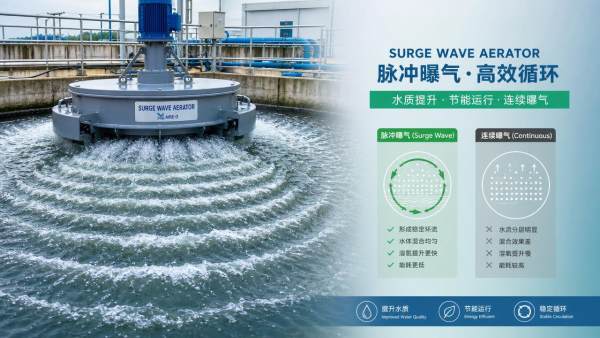
A surge wave aerator can outperform continuous aeration when oxygen demand fluctuates, solids loading is uneven, or operators need better mixing with lower energy waste. In ponds, lagoons, and treatment basins, pulsed aeration often improves circulation, reduces dead zones, and supports more responsive process control. Understanding when this approach works best helps operators balance efficiency, water quality, and system reliability.
When does a surge wave aerator make more sense than continuous aeration?
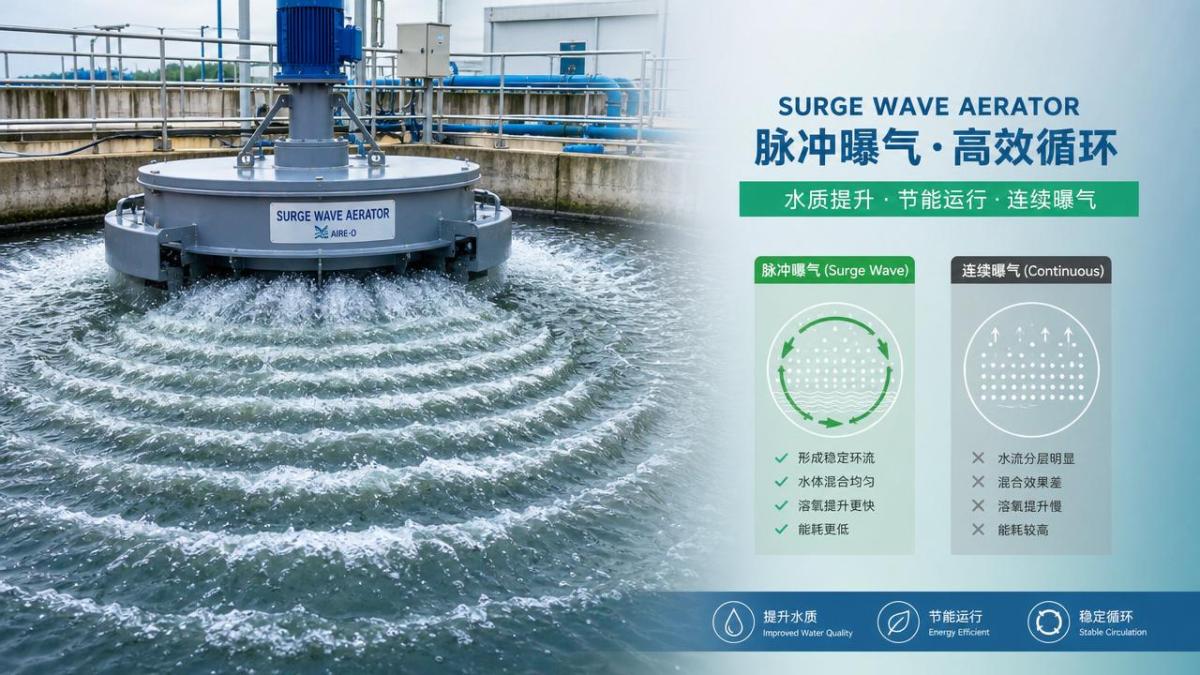
For operators in aquaculture, agricultural wastewater, bio-processing ponds, and feed or grain effluent systems, the real question is not whether aeration is necessary. It is whether the aeration pattern matches the process. A surge wave aerator works by delivering oxygen and hydraulic movement in controlled pulses rather than a constant stream. That difference matters when the basin does not behave in a steady, uniform way.
Continuous aeration is often chosen for simplicity. It can be effective in stable basins with predictable loading and consistent biological demand. However, many real operating environments are far less stable. In fish ponds, dissolved oxygen can drop sharply before dawn. In lagoons, solids can accumulate in pockets. In primary processing facilities, wastewater strength can change from one shift to the next. Under those conditions, a surge wave aerator may deliver better mixing efficiency and more targeted oxygen transfer.
This operating logic is especially relevant across the sectors covered by AgriChem Chronicle, where technical decision-making increasingly depends on process evidence, not assumptions. Operators and procurement teams need to know how a system behaves under variable loading, how it affects compliance margins, and how it performs over time when energy, maintenance, and water quality all matter at once.
- Use a surge wave aerator when oxygen demand rises and falls significantly during the day or production cycle.
- Consider it when sludge, biomass, or suspended solids tend to settle unevenly and create stagnant zones.
- It is also useful when operators need process flexibility without running high power continuously.
What changes in the basin make pulsed aeration more effective?
A surge wave aerator is not simply an on-off blower schedule. Its value comes from the interaction between aeration bursts, hydraulic wave motion, and basin geometry. In many ponds and treatment cells, oxygen shortage is only part of the problem. Poor circulation can be equally damaging because it allows solids deposition, temperature stratification, nutrient concentration gradients, and inconsistent microbial contact.
When air is introduced in pulses, the water body often responds with stronger directional movement than it would under a weaker, continuous feed. That can improve top-to-bottom turnover and lateral circulation. Operators may observe fewer quiescent corners, more uniform solids suspension, and better response to transient load spikes. In systems where odor control, ammonia reduction, or sludge mobility are practical concerns, that hydraulic effect is often as important as oxygen transfer itself.
Typical signs that continuous aeration is underperforming
- Dissolved oxygen readings look acceptable near the aerator but poor at remote sampling points.
- Solids or biofloc collect along berms, corners, or shallow transitions.
- Nighttime oxygen deficits occur even though the aeration system runs for long hours.
- Energy consumption remains high, but mixing quality and treatment stability do not improve proportionally.
These symptoms do not automatically mean continuous aeration is wrong. They do suggest that the aeration pattern, not just the total installed horsepower, deserves review.
Application scenarios: where a surge wave aerator usually performs better
The following comparison helps operators judge whether a surge wave aerator is likely to outperform continuous aeration in day-to-day operation. The deciding factor is usually the combined effect of oxygen demand variability, solids behavior, and the need for basin-wide circulation.
The table shows a recurring pattern: a surge wave aerator tends to offer the greatest advantage where the system is dynamic rather than steady. For operators, that means process observation is more valuable than nameplate output alone.
Surge wave aerator vs continuous aeration: what should operators compare?
Procurement decisions often fail because teams compare only capital cost or motor size. A better comparison includes mixing reach, oxygen timing, control flexibility, maintenance access, and compatibility with the basin’s loading profile. The right choice depends on the problem being solved.
In practice, many facilities do not need a full replacement mindset. Some use a hybrid strategy, keeping baseline aeration available while applying surge cycles during peak load, sludge disturbance, or nighttime oxygen stress.
How should operators size and evaluate a surge wave aerator?
A surge wave aerator should be evaluated as part of a process system, not as a standalone machine. For aquaculture and industrial water handling alike, poor selection usually comes from missing field variables: pond depth, liner condition, sludge depth, stocking density, influent variability, or actual dissolved oxygen patterns across the basin.
Key evaluation points before purchase
- Map the demand pattern. Record when oxygen depletion or odor events occur, not just daily averages.
- Check circulation limits. Use multiple sampling points to identify dead zones, sludge pockets, and low-turnover edges.
- Review solids behavior. A basin with uneven deposition may benefit more from wave-driven movement than from constant fine aeration alone.
- Assess control capability. If the site cannot support timed cycles, sensor feedback, or routine observation, the operational advantage may be reduced.
- Plan maintenance access. Intermittent systems still need predictable inspection of motors, floats, bearings, air delivery components, or drive elements depending on design.
AgriChem Chronicle often highlights this procurement gap across primary industries: equipment selection is strongest when engineering, compliance, and operator input are reviewed together. That is particularly true when water quality outcomes affect downstream production, biological stability, discharge performance, or livestock and fish health.
What cost factors matter beyond equipment price?
A lower purchase price does not always mean a lower operating cost. For a surge wave aerator, the financial case usually depends on whether pulsed operation reduces wasted runtime, avoids emergency water quality interventions, or improves solids distribution enough to lower cleanup and sludge management effort.
Cost areas operators should review
- Power demand during peak versus average daily energy use.
- Wear patterns caused by frequent cycling, if controls are poorly configured.
- Potential savings from improved mixing, reduced sludge concentration zones, or fewer low-oxygen losses.
- Instrumentation needs such as timers, dissolved oxygen sensors, or simple supervisory control links.
- Downtime risk if the aeration strategy depends on a narrow operating window without backup.
Where budgets are tight, operators may compare a surge wave aerator with alternatives such as paddle wheels, diffused air grids, aspirators, or mixers plus intermittent oxygenation. The best alternative depends on whether the primary problem is oxygen transfer, circulation, solids suspension, or all three together.
Standards, compliance, and reliability considerations
In regulated primary industries, aeration equipment is not chosen in isolation from environmental and operational obligations. A surge wave aerator used in aquaculture, process water treatment, or agricultural effluent management should support the broader goals of stable water quality, recordable performance, and safe operation. Depending on location and application, operators may need to align with environmental permits, discharge expectations, electrical safety practices, or food and pharmaceutical-adjacent hygiene controls.
For facilities influenced by EPA, FDA, or GMP-related oversight in connected production environments, documentation matters. Even when the aerator itself is not directly certified under those schemes, the procurement file should still clarify material suitability, maintenance requirements, supplier traceability, and operating limits. That is where technically curated editorial resources such as ACC add value: they help buyers frame equipment selection in the language of compliance, lifecycle risk, and supply chain transparency rather than simple vendor claims.
Minimum documentation to request
- Performance data under stated basin conditions, not generic marketing output.
- Motor and electrical specifications suited to site power and environmental exposure.
- Recommended maintenance intervals and wearable parts list.
- Guidance on control logic, surge frequency, and startup commissioning checks.
Common mistakes when using a surge wave aerator
The most common mistake is assuming that pulsed aeration automatically saves energy. It can, but only if the cycle pattern matches real oxygen demand and mixing needs. If surge intervals are too short, equipment may cycle inefficiently. If they are too long, solids settle, oxygen drops, and process stability suffers.
Another frequent error is focusing on one sampling point. A surge wave aerator is often selected to improve whole-basin behavior, so validation should include multiple locations and time windows. Operators should also avoid treating the system as maintenance-free simply because it does not run continuously. Intermittent duty can still create mechanical stress, especially when start-stop frequency is excessive or site debris affects moving parts.
- Do not size the system only for average load if your pond or basin experiences sharp daily peaks.
- Do not ignore geometry. The same aerator behaves differently in circular ponds, long lagoons, and baffled basins.
- Do not separate aeration from solids management, because the hydraulic effect often determines the real outcome.
FAQ: operator questions about surge wave aerator selection and use
Is a surge wave aerator only useful in aquaculture ponds?
No. While aquaculture is a common application, the same operating principle can be valuable in wastewater lagoons, equalization basins, bio-extract processing water systems, and feed or grain effluent handling. The main requirement is a process where circulation and oxygen demand are variable enough that pulsed energy has an advantage over constant low-intensity aeration.
How do I know if continuous aeration is already enough?
Check whether the entire basin maintains acceptable dissolved oxygen, not just the area near the machine. Review sludge accumulation patterns, odor points, and time-of-day performance. If the system runs constantly but still shows dead zones or low-oxygen events during predictable peaks, a surge wave aerator or hybrid approach may be worth evaluating.
Does pulsed aeration increase maintenance?
It can if the control logic creates excessive cycling or if the equipment is not designed for the operating pattern. However, good selection and proper commissioning can manage that risk. Ask for realistic maintenance guidance, startup frequency limits, and spare parts expectations before purchase.
What should procurement teams request from suppliers?
Request application-specific sizing assumptions, expected operating cycle recommendations, power data, maintenance intervals, and material details suitable for the water chemistry. If your site works under environmental or production compliance pressure, also request traceable technical documents that support internal review and approval.
Why work with AgriChem Chronicle when evaluating aeration options?
When a surge wave aerator is part of a larger operational or procurement decision, the challenge is rarely limited to equipment description. Operators need help connecting basin behavior, energy use, maintenance demands, compliance expectations, and supplier credibility. That is where AgriChem Chronicle provides a practical advantage through technical editorial analysis focused on agriculture, aquaculture, biochemical processing, and primary industrial systems.
ACC helps institutional buyers, operators, and engineering teams evaluate whether a surge wave aerator fits the process, what performance questions to ask, and how to compare solutions with greater precision. If you are reviewing parameters, product selection, expected delivery timing, custom operating scenarios, certification-related documentation, sampling support, or quotation discussions, ACC offers a stronger information framework for those next steps.
Contact us to discuss your basin conditions, oxygen demand profile, control strategy, procurement criteria, or supplier documentation needs. A more accurate decision usually starts with clearer technical questions.
Related Intelligence
- Aeration & Water TechGlobal Shipping Alliance Launches Green Corridor Asia-Europe Cold Chain RouteGreen Corridor Asia-Europe cold chain route launched: 22% lower surcharges, –25°C to +15°C control for agri-tech exports. Book now!
- Aeration & Water TechCommercial protein skimmers: what foam quality tells youCommercial protein skimmers reveal more than waste removal—foam quality helps operators spot loading shifts, imbalance, and maintenance needs early for steadier performance.
- Aeration & Water TechDissolved oxygen controller alarms that point to sensor driftDissolved oxygen controller alarms may signal sensor drift, not process upset. Learn key alarm patterns, faster field checks, and service tips to reduce downtime and protect compliance.
The Morning Broadsheet
Daily chemical briefings, market shifts, and peer-reviewed summaries delivered to your terminal.
