

The Authority in Global Agricultural Chemistry & Bio-Resources
Bulk calcium hypochlorite: when higher purity changes storage needs
For quality control and safety managers, bulk calcium hypochlorite is not just a stronger oxidizer—it can demand a different storage strategy. As product purity rises, factors such as heat stability, moisture sensitivity, packaging compatibility, and segregation from contaminants become far more critical. Understanding when higher purity changes storage needs is essential for preventing decomposition, compliance failures, and unnecessary operational risk.
In industrial purchasing and warehouse control, the term bulk calcium hypochlorite often gets reduced to available chlorine content, price per metric ton, and shipping class. That is too narrow for facilities managing sanitation chemicals at scale. A product moving from roughly 65% available chlorine toward higher-purity grades can behave differently in storage, handling, inspection frequency, and packaging selection.
For readers in quality assurance, EHS, and plant operations, the practical question is not whether higher purity is better in theory. The question is when a higher-purity oxidizer requires a revised storage design, tighter receiving checks, and different segregation rules. In sectors linked to water treatment, aquaculture support, agro-processing, ingredient manufacturing, and chemical distribution, that distinction can materially affect incident risk, product loss, and audit readiness.
Why higher purity changes the storage profile of bulk calcium hypochlorite
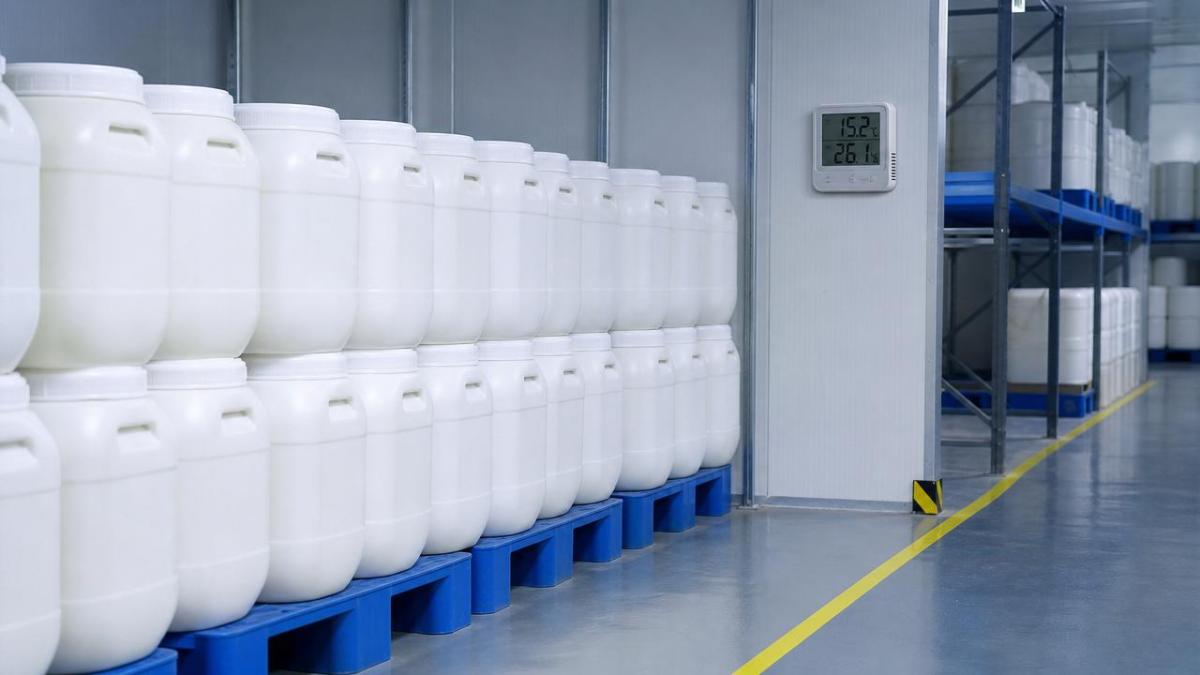
Bulk calcium hypochlorite is valued because it is a compact, transportable disinfectant and oxidizing agent. Yet concentration influences more than performance. As purity increases, the product may become less forgiving when exposed to heat, moisture, incompatible residues, or poor air circulation. In real warehouse conditions, a 5°C to 10°C temperature rise, repeated humidity exposure above 60%, or minor contamination from organics can create a significantly different hazard picture than many teams expect.
This matters especially in mixed-use industrial sites where oxidizers are stored near maintenance consumables, packaging waste, or agricultural inputs. Quality managers often focus on assay retention, while safety managers focus on ignition and decomposition risk. With higher-purity bulk calcium hypochlorite, both concerns converge. Product integrity and hazard control are tied to the same storage variables: temperature control, dryness, package integrity, and contaminant exclusion.
The chemical and operational triggers to watch
Three triggers commonly drive a need for upgraded storage controls. First is thermal stress. Calcium hypochlorite is not normally stored under refrigerated conditions, but prolonged exposure to hot warehouse zones, sunlight, or containerized heat buildup can accelerate decomposition. Second is moisture ingress. Even low-level humidity cycling can promote caking, available chlorine loss, and unstable localized reactions. Third is contamination. Dust, metal fines, oils, acids, and nitrogen-containing materials all raise concern.
In higher-purity inventories, those triggers often justify moving from a general chemical store to a dedicated oxidizer area with tighter inspection intervals, such as every 7 days instead of every 30 days during warm seasons. For facilities handling more than 1 metric ton per batch lot, these controls become less optional and more central to loss prevention.
Common signs that standard storage is no longer adequate
- Repeated drum swelling, lid distortion, or vent concerns during summer storage
- Visible caking, odor intensification, or chlorine-like off-gassing near opened packages
- Assay drift or available chlorine decline outside internal tolerance within 60 to 90 days
- Inventory stored within the same room as acids, fuels, wooden pallets, or organic absorbents
- Frequent repacking, partial use, or manual scooping that increases contamination pathways
The table below helps distinguish when a standard oxidizer storage approach may be sufficient and when higher-purity bulk calcium hypochlorite should trigger a more restrictive protocol.
The practical conclusion is clear: higher purity changes storage needs when heat, moisture, contamination, and dwell time combine. The product may remain compliant on paper, but the facility risk profile worsens quickly if those four variables are not controlled together.
Storage design priorities for quality and safety teams
A robust storage strategy for bulk calcium hypochlorite should be built around four design priorities: environmental control, compatible packaging, physical segregation, and inspection discipline. These are not abstract best practices. They are operational decisions that determine whether stock remains usable for 3 months, 6 months, or less than the expected shelf window under local site conditions.
1. Environmental control: keep the storage area cool, dry, and ventilated
For most facilities, the target is a shaded, dry, well-ventilated indoor area with stable temperatures below 25°C where feasible. Absolute values will vary by region, but once ambient conditions regularly cross 30°C, it is wise to increase inspection frequency and reduce stacking density. Ventilation should prevent heat buildup without pulling damp air directly across opened containers.
Where washdown operations occur nearby, a simple wall separation is often not enough. Airborne moisture and accidental splash can compromise packaging. Quality teams should also record seasonal trends. A warehouse that performs acceptably for 8 months may become unsuitable during a 6- to 10-week hot and humid period.
2. Packaging compatibility: container choice matters more at higher purity
Not every drum, liner, or closure system is equally suitable for higher-purity oxidizers. Procurement teams should verify chemical compatibility with the supplier rather than assuming that a package acceptable for one hypochlorite grade is acceptable for all. Reused containers, damaged seals, and mixed-material closures introduce avoidable uncertainty.
Facilities receiving bulk calcium hypochlorite in drums, pails, or intermediate pack sizes should inspect at least 6 points on arrival: label clarity, seal integrity, drum cleanliness, moisture marks, deformation, and batch traceability. If any one of these fails, quarantine is usually preferable to immediate put-away.
3. Segregation: separate from more than just obvious incompatibles
Most teams know to keep oxidizers away from acids and fuels. The more common failure is allowing proximity to low-visibility incompatibles such as wooden sweepings, fertilizer residues, paper sacks, lubricants, dye powders, or metal shavings from maintenance work. In shared industrial warehouses, these cross-contact sources are more realistic than major spills.
A practical rule is to create a clearly marked oxidizer zone with separate tools, dedicated spill cleanup materials, and controlled access. If the site stores more than 3 chemical families in the same building, a segregation matrix should be reviewed at least every 12 months or whenever new SKUs are introduced.
4. Inspection and stock rotation: shorter review cycles reduce surprises
Higher-purity bulk calcium hypochlorite benefits from disciplined first-expire, first-out handling rather than simple FIFO. Batch age, seasonal exposure, and container-opening history should be visible in the warehouse system. Monthly visual checks may be adequate in cool, low-humidity conditions, but 7- to 14-day intervals are more prudent during peak summer or after partial opening.
- Confirm temperature and humidity records for the storage zone.
- Check containers for swelling, caking, leakage, staining, or closure damage.
- Verify segregation distances and absence of incompatible residues nearby.
- Review lot age, opening status, and expected consumption within the next 30 to 60 days.
- Document corrective action and quarantine triggers in the site log.
The matrix below can support warehouse SOP updates and supplier discussions when bulk calcium hypochlorite purity or packaging changes.
What this table shows is that the storage decision is not based on purity alone. It is based on purity plus site conditions, handling frequency, and packaging performance. That combination should guide both specification review and warehouse SOP revision.
Receiving, sampling, and internal compliance checks
Many storage incidents begin at receiving, not long-term warehousing. Once bulk calcium hypochlorite arrives with damaged packaging, poor batch identification, or signs of moisture uptake, later storage controls become less effective. Quality control teams should therefore align receiving inspection with safety criteria, not treat them as separate workflows.
Receiving checklist for higher-purity lots
An effective receiving program usually includes 5 to 8 checks completed before unloading is finalized. At minimum, verify outer condition, closure integrity, correct product identification, supplier documentation, lot traceability, and transport cleanliness. If transport compartments carried acids, solvents, or fertilizer dust on prior runs without adequate cleaning, additional review is justified.
- Match lot numbers across label, shipping document, and internal PO.
- Inspect for moisture marks, damaged wraps, or visible residue on outer surfaces.
- Confirm package type and count against approved purchasing specification.
- Review storage instructions from the supplier before warehouse placement.
- Segregate suspect units immediately rather than placing them in active stock.
Sampling discipline and contamination prevention
Sampling can be a hidden contamination route. Opened containers should be sampled with clean, dry, dedicated tools and resealed promptly. Sampling in humid dock areas or with shared scoops undermines the entire control plan. Where only partial analysis is required, limit container-open time and avoid unnecessary transfers between packages.
For many industrial buyers, the issue is not laboratory precision alone. It is preserving the same product condition from receipt to use. A clean assay result on day 1 does not protect against poor resealing and a 45-day warm storage period after sampling.
Documentation and audit-readiness
Safety managers should ensure that SOPs define not just where bulk calcium hypochlorite is stored, but who may access it, what PPE is required, how incompatible waste is controlled, and when abnormal containers are quarantined. In regulated or customer-audited supply chains, a documented 3-part record is useful: receipt inspection, routine storage inspection, and disposition of nonconforming stock.
That level of documentation supports both compliance and supplier review. If a site repeatedly sees caking or packaging distortion within 30 to 60 days, it becomes easier to determine whether the root cause is local storage, excessive dwell time, seasonal heat, or packaging design.
Frequent mistakes in procurement and warehouse practice
The most expensive mistakes with bulk calcium hypochlorite are rarely dramatic on day 1. They tend to develop slowly through assumptions carried over from lower-risk chemicals or lower-purity grades. For procurement and warehouse leaders, correcting these habits often delivers more value than adding complex infrastructure.
Mistake 1: buying on chlorine content alone
Available chlorine is commercially important, but it should be evaluated alongside package format, expected storage duration, local climate, and warehouse segregation capacity. A higher-purity material may offer dosing efficiency, yet become a poorer fit if the site lacks dry enclosed storage or experiences 35°C afternoon temperatures for 3 months of the year.
Mistake 2: treating all sealed containers as equally stable
A sealed drum is not automatically a low-risk drum. Damage during transport, poor palletization, repeated movement, or long port dwell times can compromise packaging before goods even reach the warehouse. For importers and distributors, transit plus pre-use storage may easily exceed 45 to 90 days, making receipt condition a major risk variable.
Mistake 3: storing oxidizers in “dry enough” areas
A room that appears dry by casual observation may still be unsuitable if it sits next to steam lines, washdown zones, or loading doors that pull in humid air. Bulk calcium hypochlorite should not rely on visual dryness alone. Temperature and humidity trend checks provide a more reliable basis for release and retention decisions.
Mistake 4: failing to adjust inspection frequency by season
Static inspection schedules are a common weakness. If summer ambient conditions differ from winter by 12°C to 15°C, the same 30-day inspection interval may no longer be appropriate. Higher-purity stock should trigger more frequent checks when climate stress, stock age, or handling intensity increases.
A practical decision framework for industrial buyers
When deciding whether higher-purity bulk calcium hypochlorite requires upgraded storage, buyers and safety leads can use a simple four-question framework. If the answer to two or more questions is yes, the storage plan likely needs revision before the next purchase cycle.
- Will stock remain on site longer than 60 to 90 days under current consumption rates?
- Does the warehouse experience regular temperatures above 30°C or humidity excursions above 60%?
- Are containers likely to be opened multiple times or sampled outside a controlled dry area?
- Is the oxidizer stored in a mixed warehouse with changing neighboring materials or housekeeping variability?
This framework helps move the discussion from abstract purity claims to operational fit. It is especially useful for companies serving agriculture, fine chemicals, water sanitation, aquaculture support, and primary processing environments where warehouse realities differ from ideal lab conditions.
Bulk calcium hypochlorite can be a high-value, efficient product when matched with the correct handling model. For quality control and safety managers, the priority is not overengineering every storage room. It is identifying the point at which higher purity, warmer conditions, longer dwell time, and more frequent handling turn a routine oxidizer into a higher-management inventory line.
If your team is reviewing supplier specifications, updating oxidizer SOPs, or reassessing warehouse compatibility for bulk calcium hypochlorite, now is the time to align procurement, QA, and EHS criteria. Contact us to discuss technical content placement, request a tailored editorial solution, or explore more industry-focused guidance for chemical storage, risk control, and procurement decision support.
Related Intelligence
- Aeration & Water TechOcean Alliance Raises Aeration & Water Tech Freight Rates by 18%Aeration & Water Tech freight rates surge 18% by Ocean Alliance—impacting aerators, pumps & smart monitoring gear. Act now to mitigate costs & delays.
- Aeration & Water TechWater treatment chemicals bulk supply: signs a vendor may not be stableWater treatment chemicals bulk buyers: learn the warning signs of an unstable vendor, from price swings and quality drift to weak compliance and delivery risk.
- Aeration & Water TechSwimming pool chlorine tablets wholesale: is slower dissolve always better?Swimming pool chlorine tablets wholesale: discover why slower dissolve is not always better, and how smart buyers compare dosing performance, compliance, and total operating cost.
The Morning Broadsheet
Daily chemical briefings, market shifts, and peer-reviewed summaries delivered to your terminal.
