

The Authority in Global Agricultural Chemistry & Bio-Resources
Swimming pool chlorine tablets wholesale: is slower dissolve always better?
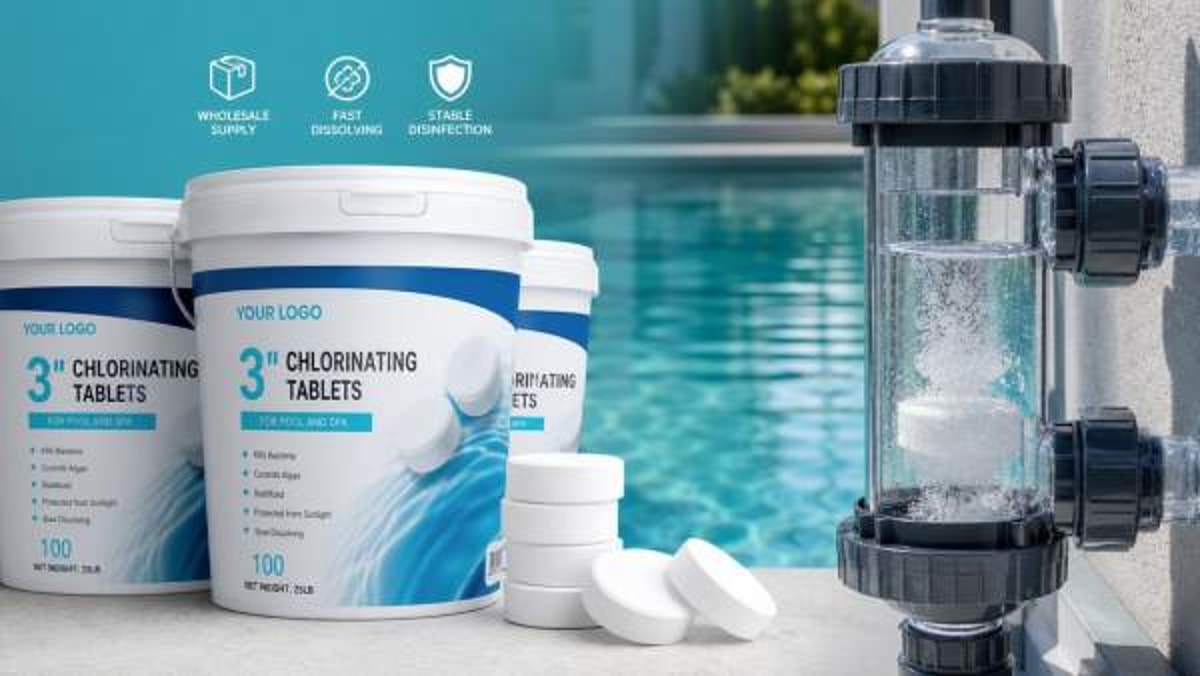
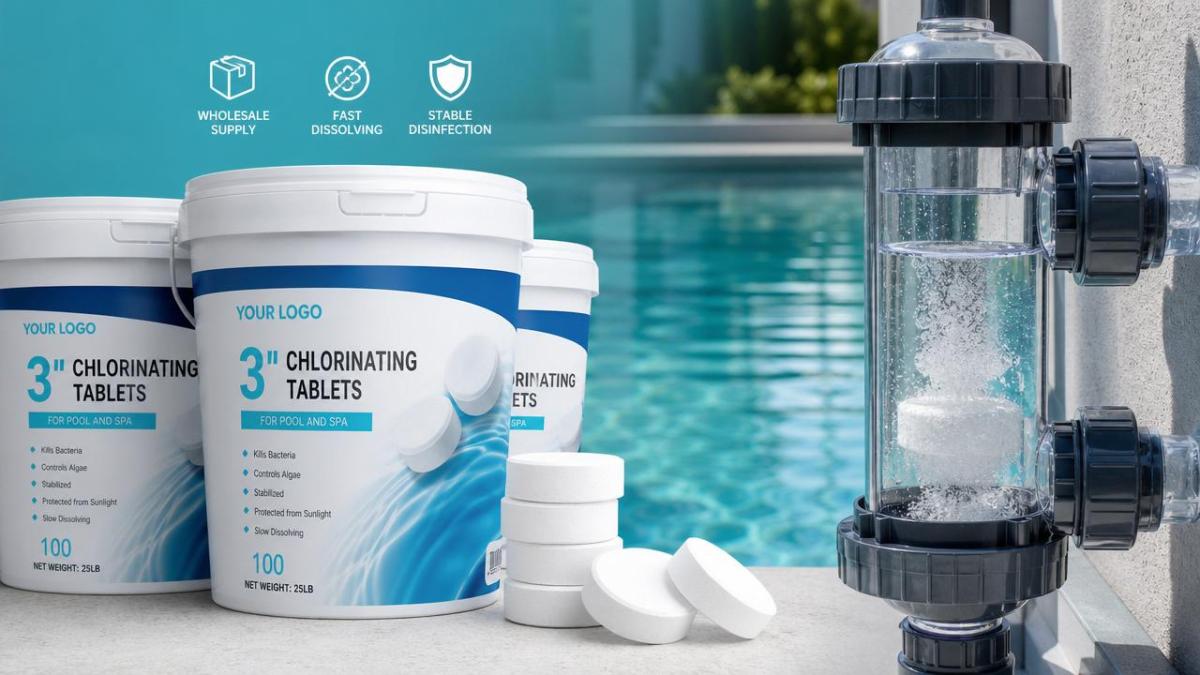
In swimming pool chlorine tablets wholesale, slower dissolve is not always better for commercial buyers. Dissolution rate affects sanitation consistency, dosing control, storage efficiency, and total operating cost across hotels, distributors, and facility managers. For business evaluators, the real question is not simply tablet longevity, but whether product performance aligns with water chemistry demands, compliance expectations, and procurement value.
Why the market is rethinking the “slower is better” assumption
A noticeable shift is taking place in swimming pool chlorine tablets wholesale. For years, many buyers treated slow dissolution as a universal mark of quality because longer-lasting tablets seemed to reduce labor, simplify replenishment, and improve shelf planning. That assumption is now being challenged by commercial operators who manage variable bather loads, stricter water quality documentation, and more demanding service-level expectations.
The change is not about rejecting slow-dissolving tablets entirely. It is about moving from a simplistic preference to a performance-based evaluation model. Hotels, aquatic centers, waterpark operators, and regional chemical distributors increasingly ask whether the dissolution profile matches feeder equipment, turnover rate, water temperature, cyanuric acid strategy, and local health rules. In other words, the wholesale conversation is becoming more technical and less slogan-driven.
This matters because commercial procurement teams are under pressure from both sides. Operations teams want stable chlorination with minimal intervention, while finance teams want predictable consumption and fewer avoidable service calls. If tablet performance is mismatched to the site, “longer-lasting” can produce under-chlorination during peak demand, uneven residual levels, and greater corrective chemical use later. That raises cost rather than reducing it.
The strongest trend signals shaping swimming pool chlorine tablets wholesale
Several practical signals explain why commercial buyers are becoming more selective in swimming pool chlorine tablets wholesale. First, facility use patterns are less predictable than before. Hospitality recovery, seasonal tourism spikes, and multi-use recreational properties create frequent swings in chlorine demand. Second, maintenance teams are expected to document water safety more carefully, especially in regulated or publicly visible venues. Third, buyers are comparing tablets not only by price per bucket, but by usable chlorine delivery over time.
A slower-dissolving tablet may still be ideal in one environment, such as a steady-load resort pool with calibrated erosion feeders. In a different environment, including warm-water pools with sudden occupancy surges, a tablet that dissolves too slowly can leave operators relying on supplemental shock dosing or more manual intervention. That operational friction is one of the key trend signals behind changing procurement behavior.
The core takeaway for business evaluators is clear: in swimming pool chlorine tablets wholesale, product suitability is replacing generic durability claims as the central buying criterion.
What is driving this shift in buyer judgment
The first driver is operational complexity. Commercial pools today often run under tighter staffing conditions. Lean maintenance teams need products that behave predictably in real conditions, not just in specification sheets. If a tablet dissolves very slowly in cooler weather but then behaves differently in hotter water or under higher circulation rates, the site may experience inconsistent chlorine residuals. Procurement teams therefore want evidence from comparable use cases, not only product claims.
The second driver is the rise of value-based sourcing. Buyers evaluating swimming pool chlorine tablets wholesale increasingly ask how a product affects labor hours, feeder blockages, emergency chemical corrections, customer complaints, and unplanned downtime. Dissolution rate is part of that equation, but not the whole equation. Tablet density, available chlorine content, binder quality, residue formation, packaging durability, and storage stability all influence practical value.
The third driver is regulatory and reputational exposure. Public pools, hospitality brands, and service contractors know that inconsistent sanitization can create legal, brand, and health risks. A tablet that lasts longer but feeds chlorine too slowly during heavy usage may create bigger consequences than a tablet that requires slightly more frequent replacement. That is why decision-makers are shifting from “How long does it last?” to “How reliably does it maintain the target range?”
How different buyer groups are affected
The impact of this trend is not uniform. Different participants in swimming pool chlorine tablets wholesale face different decision pressures. Distributors worry about customer retention and product claims. Hotels focus on guest safety, labor efficiency, and predictable operating budgets. Pool service companies care about route efficiency and reduced callbacks. Institutional buyers may be driven by tender specifications and audit readiness.
For wholesalers and manufacturers, this means a one-message sales approach is becoming less effective. Buyers no longer want to hear only that a tablet is harder, denser, or slower dissolving. They want to know where it performs best, under what feeder setup, and with what operating assumptions.
Why “slower dissolve” can help in some cases and hurt in others
There are still clear advantages to slower-dissolving tablets. They can reduce refill frequency, support more controlled erosion in compatible feeders, improve handling convenience, and help sites with stable demand avoid overfeeding. In swimming pool chlorine tablets wholesale, these benefits remain commercially relevant, especially for buyers seeking labor efficiency across multiple properties.
However, the downside emerges when buyers confuse longevity with universal performance. A very slow-dissolving tablet may underperform in pools with high organic load, elevated water temperature, rapid circulation changes, or intense weekend crowding. It may also be less suitable where operators depend on narrow chlorine residual windows or where service intervals are long and corrective dosing is costly.
Another overlooked issue is that tablet dissolution behavior interacts with equipment and environment. The same product can produce different outcomes depending on feeder design, pump runtime, water balance, and tablet storage condition. That is why business evaluators should view dissolution rate as a system variable rather than an isolated quality badge.
What smart procurement teams are checking now
A more mature evaluation process is emerging in swimming pool chlorine tablets wholesale. Instead of selecting products based on simple hardness claims or anecdotal preference, procurement teams are building a broader comparison framework. This is especially important for organizations operating across multiple pool types or geographic climates.
- Whether the tablet’s dissolution profile fits the feeder or skimmer method in actual use
- How available chlorine, residue behavior, and tablet integrity compare across batches
- Whether supplier documentation supports compliance, labeling clarity, and traceability
- How the product performs during occupancy peaks, not only under average conditions
- What total operating cost looks like after labor, supplemental chemicals, and service interventions
These checks reflect a larger market direction: buyers want fewer assumptions and more evidence. In a trend-driven purchasing environment, the winning product is often the one that creates stable outcomes, not the one with the most aggressive longevity claim.
How suppliers should respond to the new evaluation standard
Suppliers participating in swimming pool chlorine tablets wholesale should treat this shift as an opportunity rather than a threat. The market is rewarding clearer positioning, better technical communication, and stronger application matching. A supplier that can explain where a tablet works best, where it may require adjustment, and how it compares across operating conditions will stand out more than one relying on generic quality language.
This is especially relevant for B2B publishing and technical marketing. Commercial buyers in regulated or operationally sensitive environments respond better to practical intelligence than broad promotional claims. Clear product sheets, feeder compatibility guidance, batch consistency information, and scenario-based recommendations can significantly improve buyer confidence.
For industry media and technical journals such as AgriChem Chronicle, this trend also reinforces the value of evidence-led content. Buyers evaluating chemical inputs increasingly rely on authoritative, application-aware analysis to reduce procurement risk. In that context, nuanced discussion around dissolution rate has more value than simplistic best-versus-worst product narratives.
A practical decision framework for the next buying cycle
Looking ahead, the key judgment in swimming pool chlorine tablets wholesale is not whether slower dissolve is good or bad. It is whether the dissolve profile supports the sanitation outcome, staffing model, compliance burden, and cost target of the site. That is a more demanding question, but it produces better purchasing decisions.
Final market judgment for business evaluators
The direction of travel is clear. Swimming pool chlorine tablets wholesale is becoming more performance-led, more application-specific, and more accountable to operational outcomes. Slower dissolution still has value, but only when it supports the real sanitation rhythm of the facility. Buyers who continue to equate slow dissolve with automatic superiority risk selecting products that appear efficient on paper but create instability in practice.
If your organization is reviewing suppliers, contract terms, or product specifications, the most useful next step is to test assumptions. Confirm how tablet behavior aligns with water chemistry, equipment, usage variability, and compliance expectations. Ask where the product performs best, where it may be less suitable, and how total treatment economics compare over a season. In a changing market, that level of judgment is what turns swimming pool chlorine tablets wholesale from a routine purchase into a defensible business decision.
Related Intelligence
- Aeration & Water TechOcean Alliance Raises Aeration & Water Tech Freight Rates by 18%Aeration & Water Tech freight rates surge 18% by Ocean Alliance—impacting aerators, pumps & smart monitoring gear. Act now to mitigate costs & delays.
- Aeration & Water TechWater treatment chemicals bulk supply: signs a vendor may not be stableWater treatment chemicals bulk buyers: learn the warning signs of an unstable vendor, from price swings and quality drift to weak compliance and delivery risk.
- Aeration & Water TechSwimming pool chlorine tablets wholesale: is slower dissolve always better?Swimming pool chlorine tablets wholesale: discover why slower dissolve is not always better, and how smart buyers compare dosing performance, compliance, and total operating cost.
The Morning Broadsheet
Daily chemical briefings, market shifts, and peer-reviewed summaries delivered to your terminal.
